Jeju International Airport (CJU) is the most convenient gateway for travelers heading to one of Korea’s most popular vacation destinations without connecting through Seoul. The airport handled a record 3.02 million international passengers in 2025, providing easy access to attractions across the island. This guide highlights some of Jeju’s must-visit destinations along with nearby islands accessible by ferry.
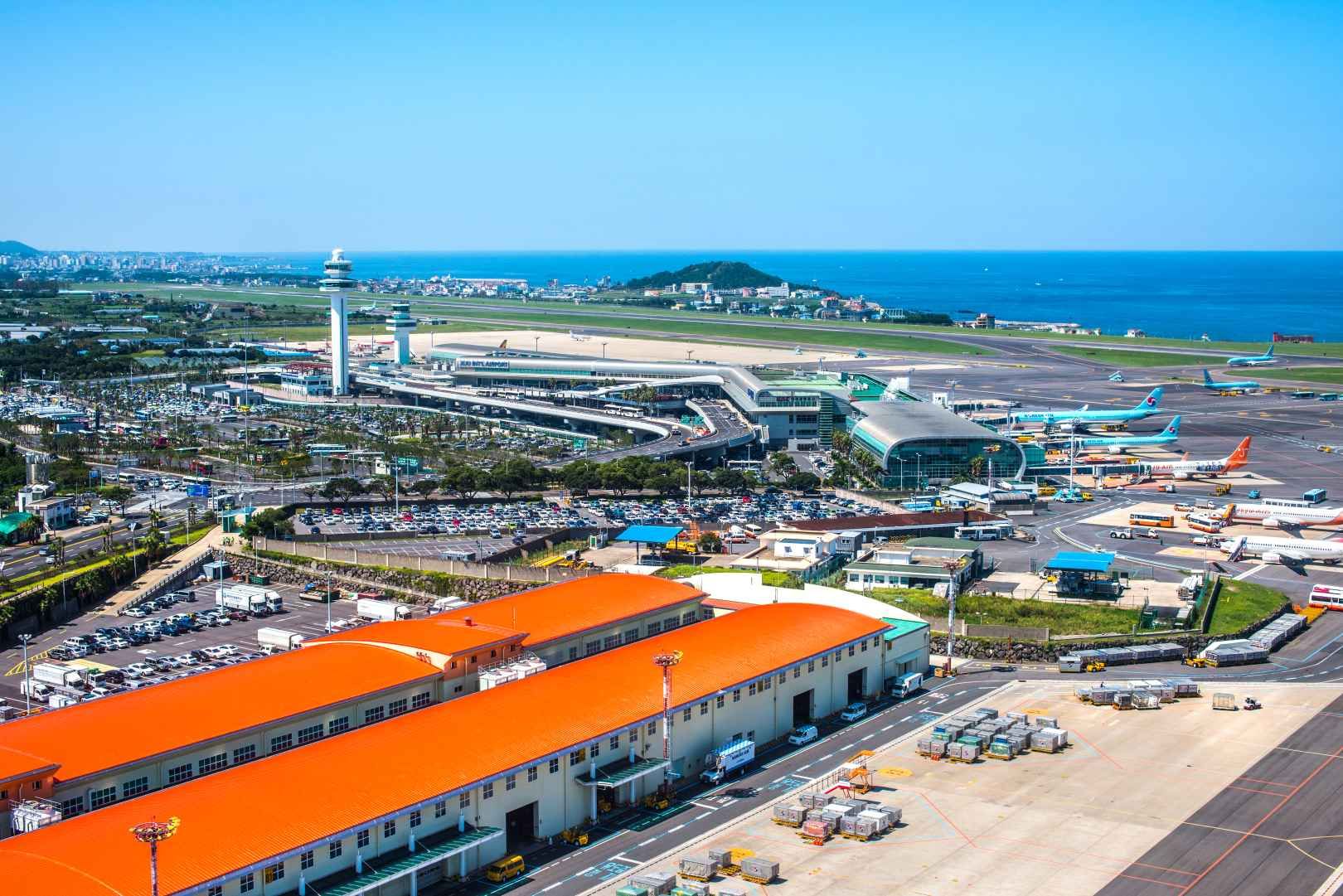
Jeju International Airport is one of Korea’s busiest airports, handling more flights than any airport in the country except Incheon International Airport. As of July 2026, nonstop international services connect Jeju with 23 cities across six regions including China, Japan, Taiwan, Hong Kong, and Singapore. Domestic routes also link the island with major Korean cities such as Seoul, Incheon, and Busan. Popular attractions including Hyeopjae Beach, Jungmun Tourist Complex, and Seongsan Ilchulbong Tuff Cone are just approximately 1 to 1.5 hours away from the airport by public transportation.
View Key Routes at Jeju International Airport
| Route | Airline | Flight Schedule |
|---|---|---|
| Shanghai/Pudong | Eastar Jet, Jin Air, Spring Airlines, Juneyao Airlines, China Eastern Airlines | Daily |
| Beijing/Capital | Jeju Air | Tue·Thu·Sat |
| Korean Air | Daily | |
| Air China | Mon·Wed·Thu·Fri·Sat·Sun | |
| Nanjing | Juneyao Airlines, Spring Airlines | Daily |
| Hangzhou | Spring Airlines , Beijing Capital Airlines , Loong Air | Daily |
| Tokyo/Narita | Korean Air | Mon·Wed·Fri·Sun |
| Osaka/Kansai | T’way Air | Daily |
| Taipei/Taoyuan | Eastar Jet , Jin Air , Tigerair Taiwan , T’way Air | Daily |
| Kaohsiung | T’way Air | Tue·Thu·Sat·Sun |
| Tigerair Taiwan | Mon·Wed·Fri·Sun | |
| Hong Kong | Jin Air , HK Express | Daily |
| Macao | T’way Air | Tue·Thu·Sun |
| Singapore | Scoot | Wed·Fri |
- * Schedules are subject to change due to airline and airport operations. Please check each airline’s website for the latest information.
- * View Jeju International Airport's Flight Schedules
Estimated Travel Times to Major Jeju Attractions
| Tourist Attraction | Travel Time | Tourist Attraction | Travel Time |
|---|---|---|---|
| Hamdeok Beach, Haenyeo’s Kitchen Bukchon Branch | Bus 60 min | Taxi 40 min | Hallasan National Park | Bus 60 min | Taxi 40 min |
| Hyeopjae Beach, Manjanggul Lava Tube | Bus 70 min | Taxi 60 min | Dongmun Traditional Market | Bus 20 min | Taxi 15 min |
| Soesokkak Estuary, Seogwipo Maeil Olle Market | Bus 90 min | Taxi 70 min | Seongsan Ilchulbong Tuff Cone, Haenyeo’s Kitchen Jongdal Branch | Bus 120 min | Taxi 70 min |
As Korea’s leading island getaway, Jeju brings together distinctive volcanic landscapes and expansive seas as well as a unique culture embodied by the haenyeo, women divers who free-dive without breathing equipment to collect seafood. Discover the island’s top destinations by theme, from marine tourism along emerald-blue beaches and geotourism exploring UNESCO-recognized natural heritage and volcanic landscapes to culinary tourism featuring the cuisine of Jeju’s haenyeo.
# Marine Tourism: What Makes Jeju’s Sea Special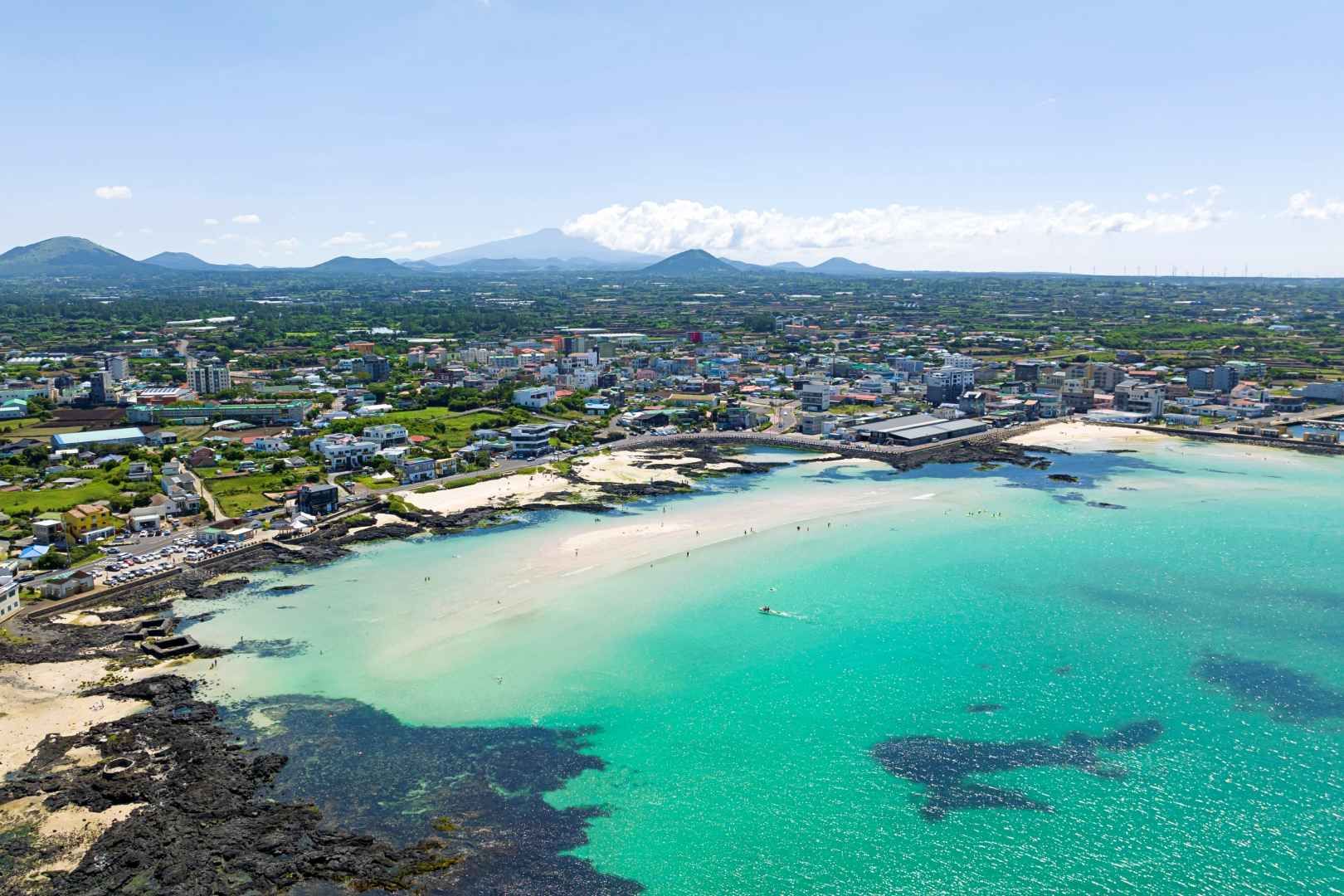
Jeju’s beaches stand out even in Korea, a country surrounded by the sea on three sides. Black basalt formed by volcanic activity creates a striking contrast with the island’s emerald waters. From crystal-clear seas to rocky gorges framed by dramatic cliffs, discover coastal scenery found only in Jeju.
Recommended Attractions
- Hamdeok Beach is one of the most popular beaches on the eastern part of Jeju along with Hyeopjae and Gimnyeong Beaches and is known for its beautiful turquoise waters. A short climb up Seoubong Volcanic Cone, visitors are rewarded with panoramic views of the sea and Hallasan Mountain by an oreum (volcanic cone) beside the beach.
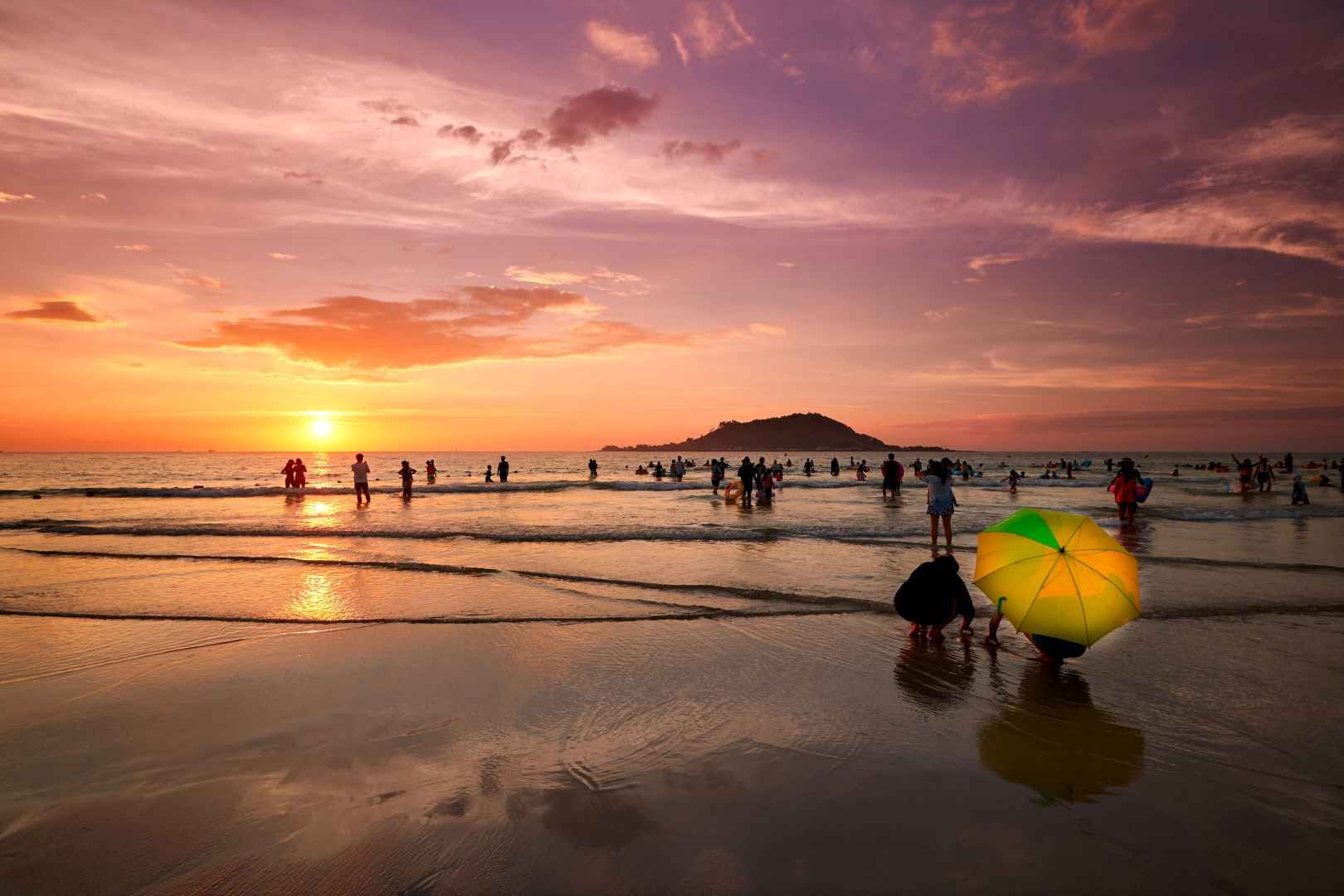
- With emerald waters and soft white sand, Hyeopjae Beach is one of the best-known beaches on the western part of Jeju. Its shallow waters make it a favorite among families with children, and the sight of the sun setting behind Biyangdo Island is especially breathtaking.
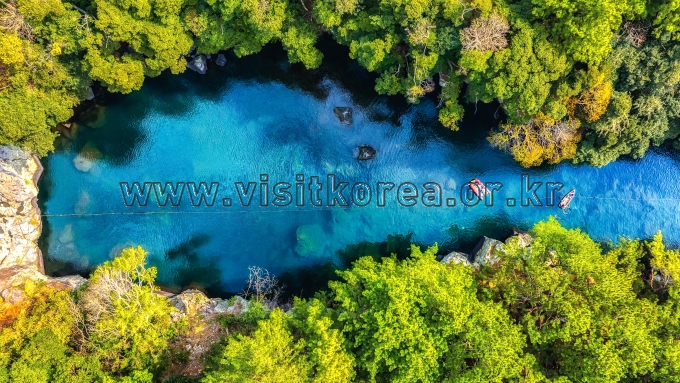
- This scenic gorge was formed where freshwater flowing down from Hallasan Mountain meets the sea, creating deep pools. Visitors can enjoy the scenery aboard a tewoo—a traditional Jeju raft—or in a small rowboat for two or three people.
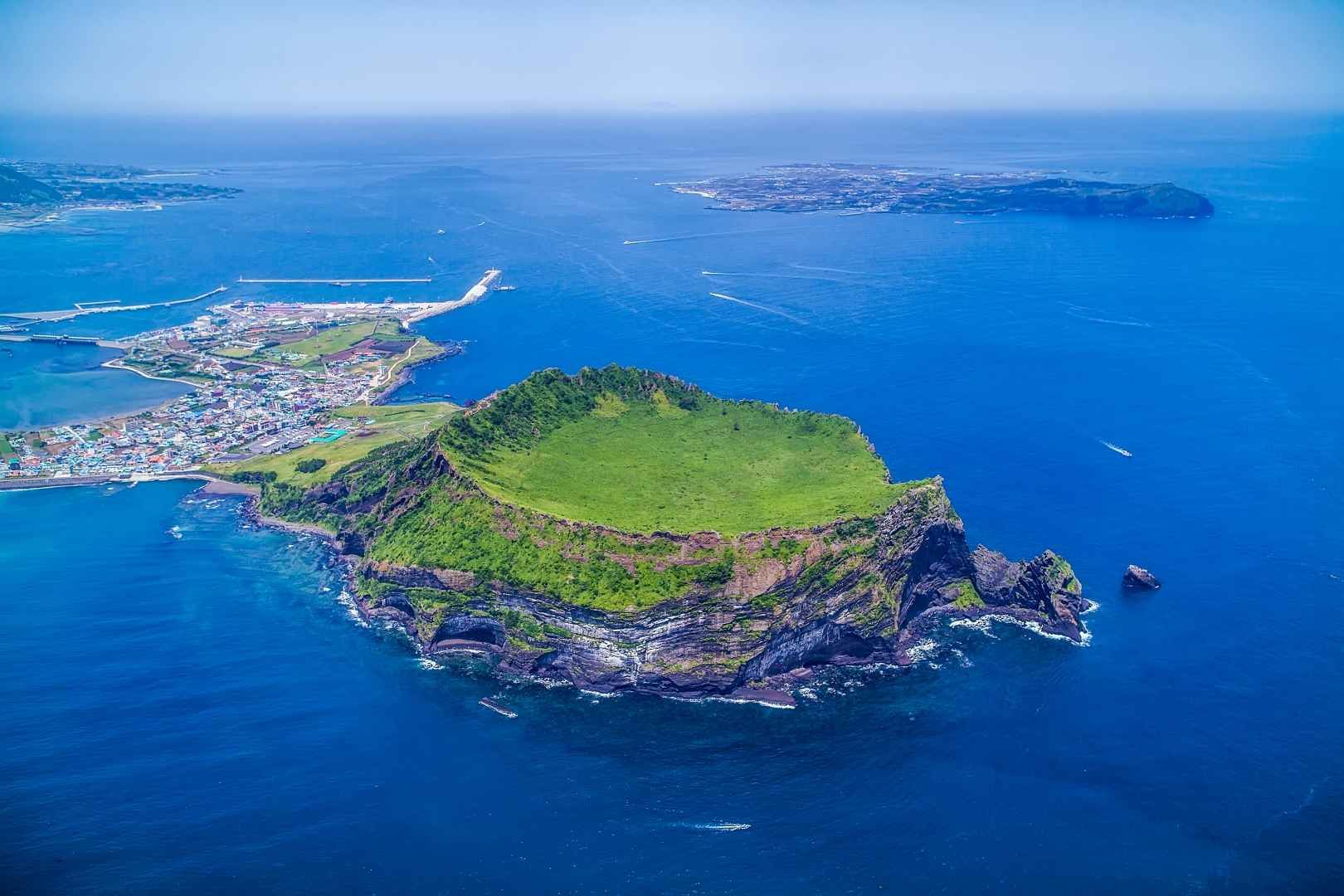
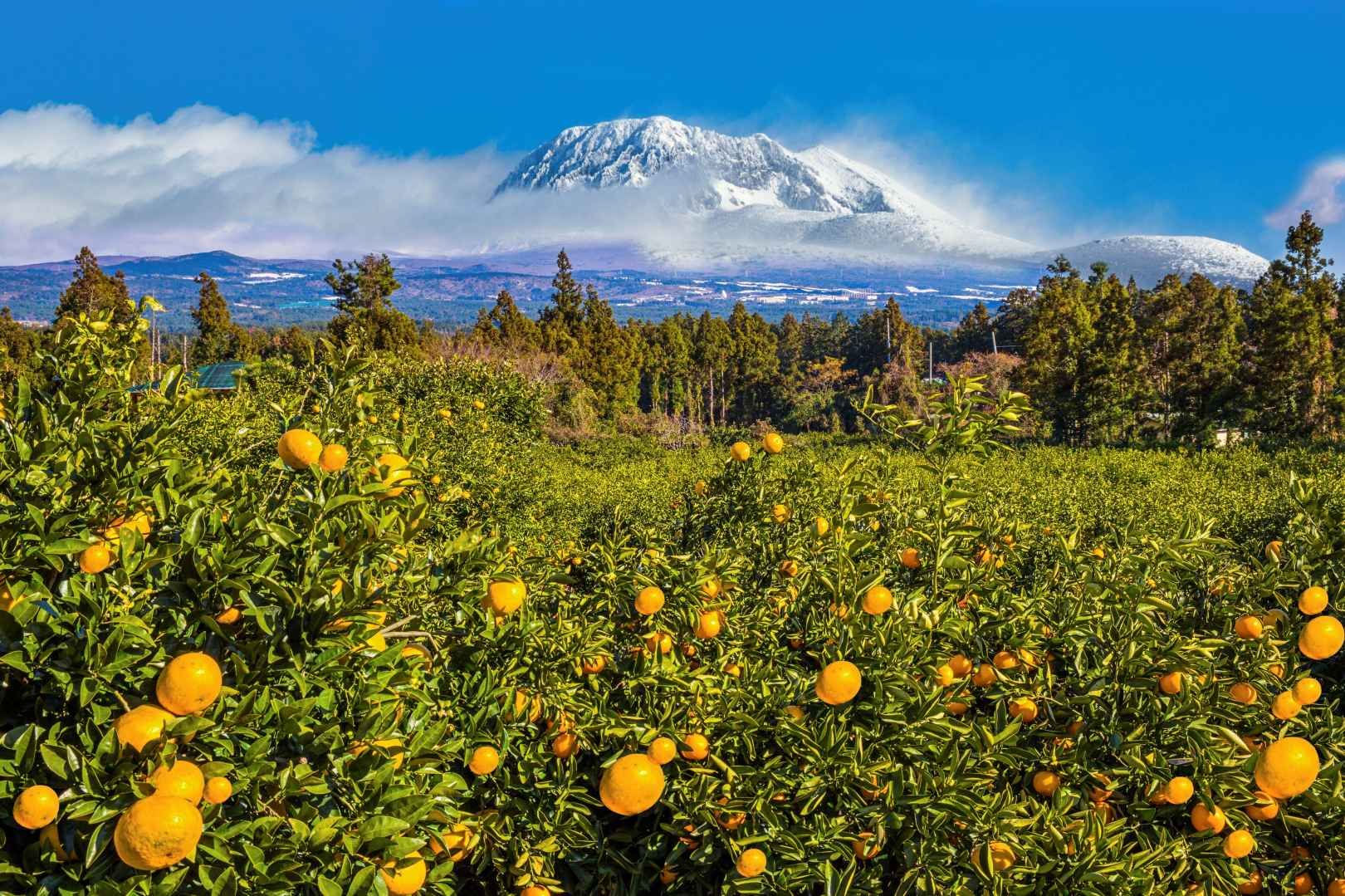
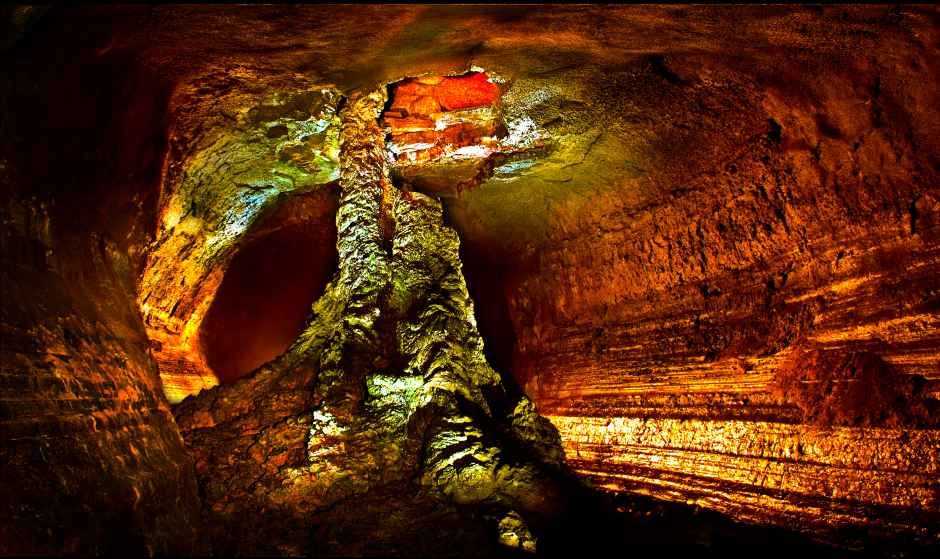
Jeju is a volcanic island formed by a series of eruptions that began around 1.8 million years ago. Hallasan Mountain, Seongsan Ilchulbong Tuff Cone, and Geomunoreum Lava Tube System were collectively designated as Korea’s first UNESCO World Natural Heritage site, with the entire island also recognized as a UNESCO Global Geopark and Biosphere Reserve. From craters rising above the sea to underground lava tubes created as molten lava that cooled and hardened, Jeju offers a glimpse into the island’s ancient natural history.
Recommended Attractions
[Seongsan Ilchulbong Tuff Cone]
- Seongsan Ilchulbong Tuff Cone was formed by an underwater volcanic eruption in shallow seas around 5,000 years ago and is now one of Jeju’s most popular sunrise spots. The summit, which can be reached after walking for about 30 minutes, features a crater approximately 600 meters across.
- At 1,947 meters high, Hallasan Mountain is the tallest mountain in Korea. Among its seven hiking trails, only the Seongpanak and Gwaneumsa routes lead all the way to Baengnokdam Lake at the summit. Walk through the woods along Hallasan Eco-trail—a trail which runs at elevations of 600 to 800 meters—for a more leisurely alternative.
- Formed thousands of years ago, this lava tube remains a cool 12°C year-round even at the height of summer. Visitors can explore about 1 kilometer of its total 7.4-kilometer length, including a 7.6-meter-high lava column considered the largest of its kind in the world.
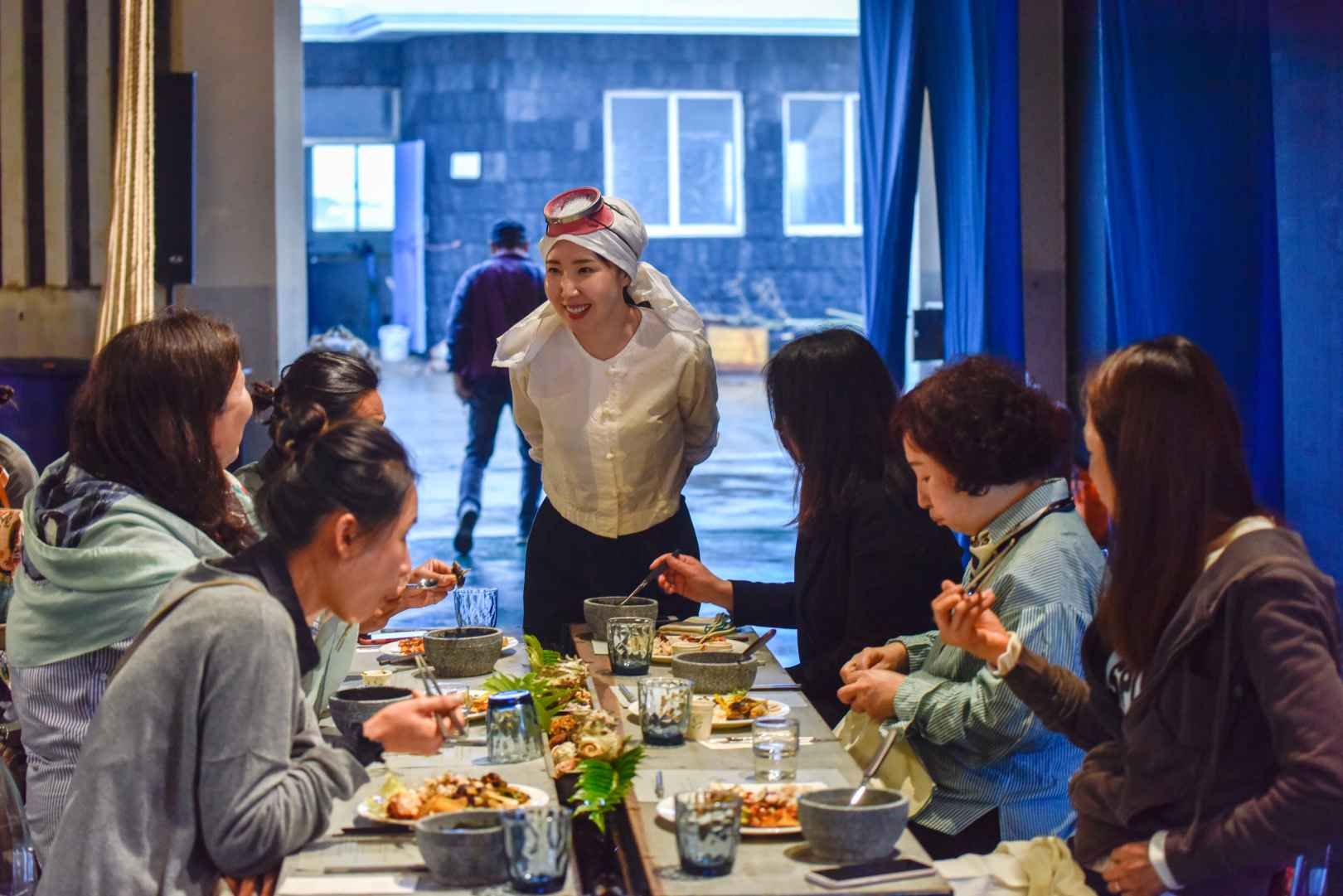


Jeju has one of Korea’s most distinctive food cultures, shaped by the island’s unique natural environment. Its local specialties include: seafood harvested by haenyeo, whose traditional diving culture is designated as National Intangible Cultural Heritage; pasture-raised Jeju black pork; and mandarins and hallabong grown on the island’s warm climate. Savor the distinctive flavors of Jeju, from the bounty of its land and sea.
■ Recommended Attractions
[Haenyeo’s Kitchen]
- At Haenyeo’s Kitchen, visitors can learn about Jeju haenyeo, which is inscribed on the Intangible Cultural Heritage of Humanity List, while enjoying seafood gathered by the divers themselves. The Jongdal Branch pairs a live performance with a buffet, with the Bukchon Branch offering a multi-course seafood meal accompanied by immersive media art. Nearby, the Jeju Haenyeo Museum provides an in-depth look at the lives and traditions of Jeju’s haenyeo.
- Jeju Dongmun Traditional Market is the island’s largest traditional market with history spanning more than 80 years. Every evening, the area around Gate 8 comes alive with a night market offering trendy street foods such as black pork kimchi rolls and abalone gimbap.
- Located in Central Seogwipo, this lively year-round market also turns into a night market in the evening. A covered arcade spans the entire market, making it easy to explore even on rainy days. Visitors can enjoy everything from Jeju specialties such as omegitteok (millet rice cake) and hallabong juice to a wide variety of fresh seafood.
- ✅ Want to explore an island by electric bike? ➡️ Udo Island
- ✅ Want to set foot on Korea’s southernmost island? ➡️ Marado Island
- ✅ Want to see a variety of volcanic landforms? ➡️ Biyangdo Island
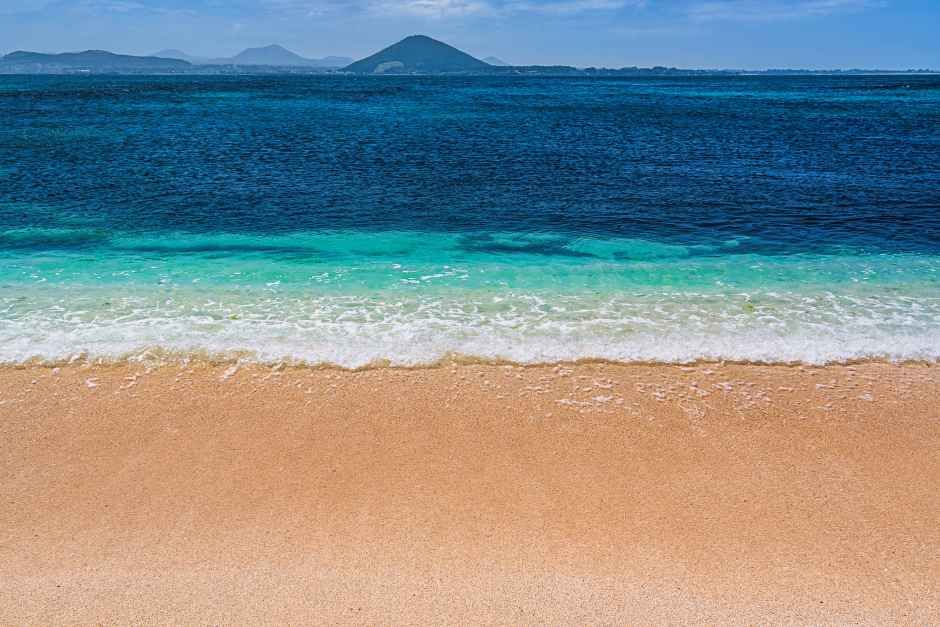
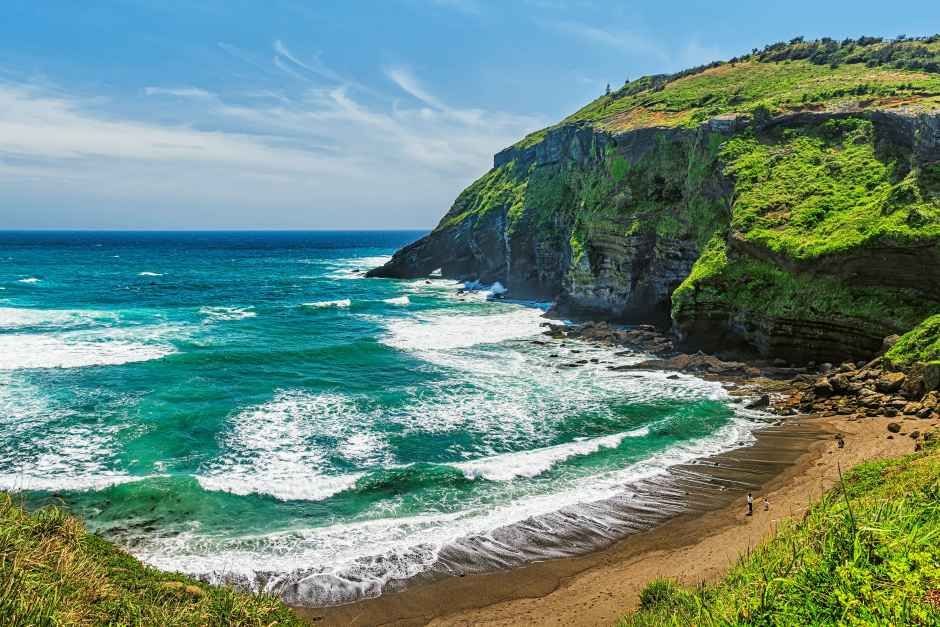
Udo Island is the largest and most popular among Jeju’s more than 60 surrounding islands. Visitors can get around by shuttle bus or rent an electric bike or a scooter to explore at their own pace. The 17-kilometer loop around the island takes about 2-3 hours by electric bike. The ferry ride from Seongsan Port on Jeju’s east coast takes about 15 minutes.
■ Recommended Attractions
- Udo Sanho Beach is one of the island’s most popular photo spots, with turquoise waters and dazzling white sand reminiscent of a South Pacific resort. The beach was formed from fragments of rhodoliths—red alga that calcified into stone-like nodules on the seafloor—making it a geologically rare site found in few places worldwide.
[Geommeolle Cave]
- Tucked beneath a coastal cliff, this vast sea cave is accessible only at low tide. A boat tour from Geommeolle Beach offers the chance to explore the cave and its striking rock formations up close.
[Someorioreum Volcanic Cone (Udobong Peak)]
- Udobong Peak is the highest point on Udo, rising 132 meters above sea level. A gentle trail leads to the summit, where sweeping views of the island and Seongsan Ilchulbong Tuff Cone await.
Marado Island is the southernmost island in South Korea. Its mostly flat landscape offers uninterrupted views of the land stretching out beneath a vast open sky. Only 500 meters wide and 1.3 kilometers long, the island can be explored at a leisurely pace in about an hour. Ferries from Unjin Port and Songaksan Port (Sanisudong Port) take approximately 30 minutes.
■ Recommended Attractions
[Korea’s Southernmost Point Monument]
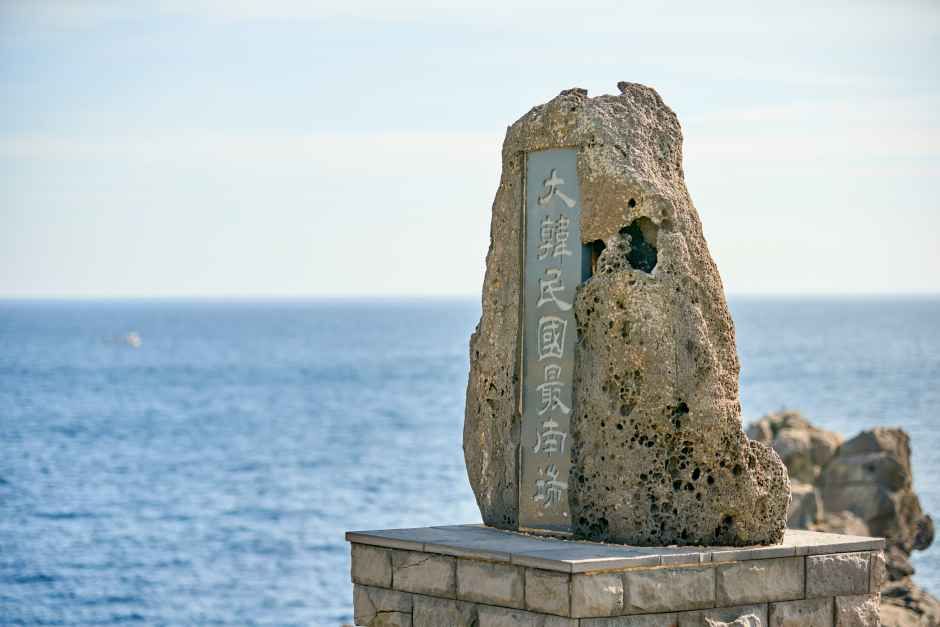
- Marking the southernmost point of South Korea, this monument is inscribed with the Chinese characters for “Southernmost Point of the Republic of Korea.” This is the most popular photo spot on Marado Island, where visitors stop to capture a souvenir photo of their trip.
[Marado Island Catholic Church]
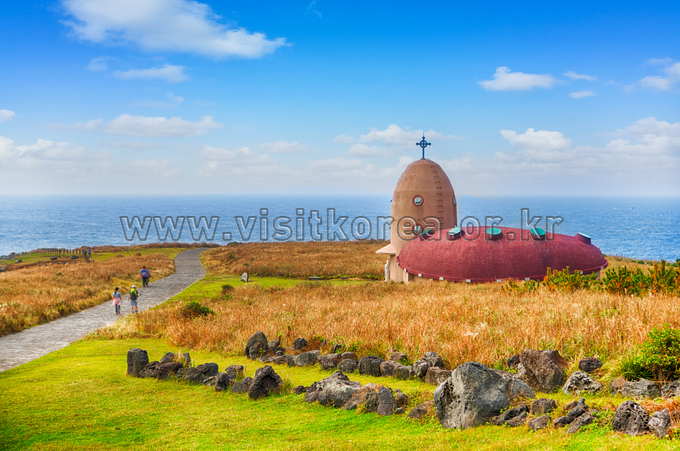
- Marado Island Catholic Church is one of the island’s most eye-catching landmarks with its distinctive abalone shell-shaped roof. Although no priest is permanently based at this small chapel, sunlight filtering through the rounded glass skylight gives the interior a quiet, reverent feel.
[Marado Lighthouse]
- Built in 1915, this 16-meter lighthouse has long guided ships sailing between the East China Sea and the waters south of Jeju. Standing at the highest point on Marado Island, it offers sweeping views of the island’s silver grass fields and the open sea.
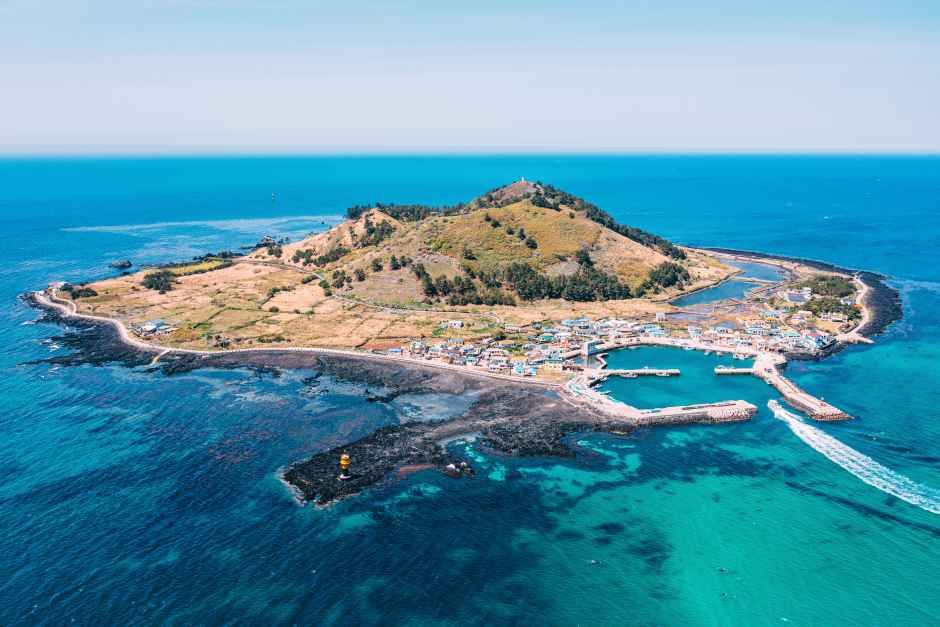
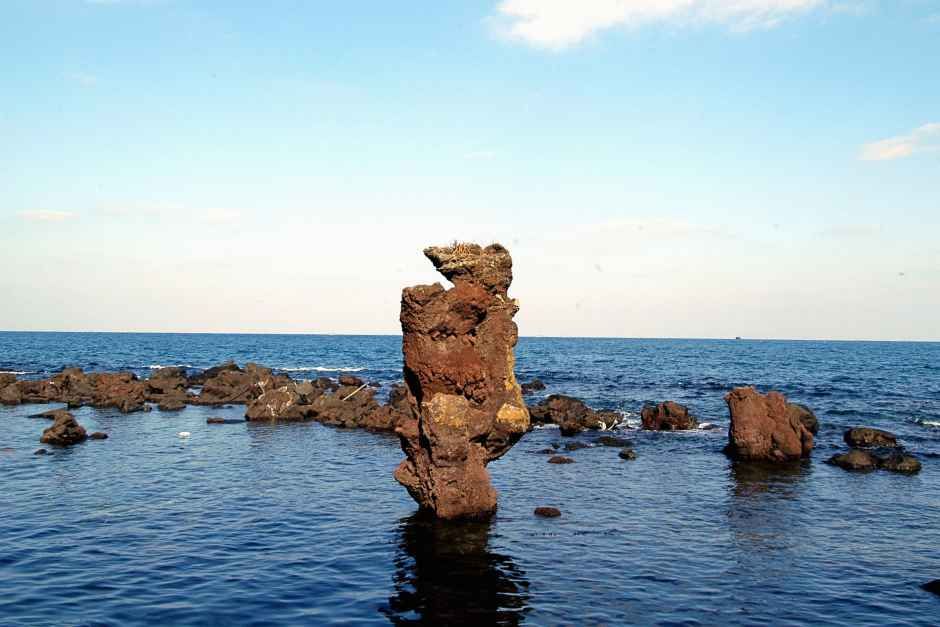
Biyangdo Island located just off Hyeopjae Beach may be small, but is dotted with remarkable traces of volcanic activity including hornitos or lava chimneys as well as a massive volcanic bomb weighing around 10 tons. Visitors can walk the coastal trail around the island or climb Biyangbong Peak for sweeping views. The ferry ride from Hallim Port on Jeju’s west coast takes about 15 minutes.
■ Recommended Attractions
[Biyangbong Peak]
- Biyangbong Peak is a 114-meter-high volcanic cone at the heart of Biyangdo Island. A 20-minute walk leads to the summit, where a viewing platform and a white lighthouse overlook the island. From the top, Hyeopjae Beach and Jeju’s western coastline stretch out in a sweeping panorama.
[Peollangmot Pond]
- One of Korea’s best-known coastal salt marshes, Peollangmot Pond fills with seawater at high tide and freshwater at low tide. A wooden boardwalk winds through the wetland, offering close-up views of migratory birds and salt-tolerant plants.
[Hornitos on Biyangdo Island]
- Hornitos are chimney-shaped volcanic formations created when gas escapes from flowing lava and the surrounding lava cools and hardens. Among the roughly 20 hornitos found along Biyangdo Island’s northern coast, the most famous is “Aegi eobeun dol,” or “Baby-Carrying Rock,” named for its resemblance to a person carrying a baby on their back.
Jeju International Airport FAQ
- Q. Can I exchange money or purchase a SIM card at Jeju International Airport?
- A. Yes. There is a currency exchange counter in the arrivals hall on the first floor, and SIM cards and eSIMs can be purchased at mobile carrier roaming counters and convenience stores.
- Q. Can I travel around Jeju using only public transportation?
- A. Yes. Buses departing from the first-floor bus stops at the airport take passengers to Jeju City, Seogwipo, major beaches, and Jungmun Tourist Complex. Local buses accept transportation cards, but cash is not accepted on some routes. A rental car may be more convenient if you plan to explore the island’s west coast or inland areas. For more information, see Driving in Korea.
- Q. Can I visit Jeju’s surrounding islands on a day trip?
- A. Yes. Udo Island is a 15-minute ferry ride from Seongsan Port, Marado Island takes about 30 minutes from Unjin Port or Songaksan Port (Sanisudong Port), and Biyangdo Island is about 15 minutes away from Hallim Port. Each island can easily be explored in half a day. Ferry schedules may change depending on weather conditions, so be sure to check before you go.
- Q. Where can I check the latest flight information for Jeju International Airport?
- A. Real-time arrival and departure information is available on the official Jeju International Airport website operated by Korea Airports Corporation.
- - Original article by Lee Su-lynn / Translated by KTO
- - Photos by Korea Tourism Organization, Jeju Tourism Organization (Visitjeju.net), Korea Heritage Services, ClipartKorea, and Haenyeo’s Kitchen