- Log in
-
- Sydney Overseas Office
- London Overseas Office
- Toronto Overseas Office
- Los Angeles Overseas Office
- New York Overseas Office
- Ulaanbaatar Overseas Office
- Dubai Overseas Office
- New Delhi Overseas Office
- Manila Overseas Office
- Jakarta Overseas Office
- Hanoi Overseas Office
- Kuala Lumpur Overseas Office
- Singapore Overseas Office
- Bangkok Overseas Office
- Map
- Sydney Overseas Office
- London Overseas Office
- Toronto Overseas Office
- Los Angeles Overseas Office
- New York Overseas Office
- Ulaanbaatar Overseas Office
- Dubai Overseas Office
- New Delhi Overseas Office
- Manila Overseas Office
- Jakarta Overseas Office
- Hanoi Overseas Office
- Kuala Lumpur Overseas Office
- Singapore Overseas Office
- Bangkok Overseas Office
- HOME
- Where to Go
- Suggested Itineraries
-
Pohang Seafood Tour: From Gwamegi to Mulhoe
-
94
-
0
0
The port city of Pohang is known for its abundant catches and cold winter sea winds, which produce local specialties like gwamegi (half-dried saury), mulhoe (cold raw fish soup), and snow crab. This journey begins with tasting fresh hoe (sliced raw fish) at the market, then strolling through the old streets of a seaside village and stopping by charming cafés. Next, take in the expansive East Sea from a coastal park steeped in legends, and finish with a selection of fresh seafood at beachfront stalls. Following this route from downtown to the coast, you can experience both the flavors and scenery of Pohang in one trip.
-
Pohang
-
food
-
café
-
restaurant
-
haesanmul
-
mulhoe
-
gwamegi
-
icon
Pohang
Total distance: Approx. 38 km
-
-
Recommended Course
-
1
Jukdo Market (죽도시장)
Pohang Jukdo Market, Korea’s East Coast's largest traditional market, serves as the ideal starting point for exploring Pohang. Its vast scale means there's much to discover—from fresh seafood and street snacks to everyday goods. A popular experience is buying fresh hoe (sliced raw fish) at bargain prices, then taking it to a nearby restaurant where you can enjoy it immediately for just a small plating fee.
-
2
Gwibigo (Yeonorang Seonyeo Theme Park) (연오랑세오녀테마공원 귀비고)
This coastal park is themed around Pohang’s famous legend, “Yeonorang and Seonyeo.” According to legend, when the couple Yeonorang and Seonyeo, who lived on the East Coast, left for Japan, the sun and moon over Silla lost their light. After a ritual using silk woven by Seonyeo, their light was restored. Visitors can experience this story through animated films and VR experiences at Gwibigo, the park’s exhibition hall. Climb to Irwoldae Pavilion for sweeping, unobstructed views of the East Sea.
-
3
Guryongpo Japanese House Street (구룡포 일본인 가옥거리)
This area features wooden buildings left by Japanese fishermen during the Japanese colonial era. Narrow alleys are lined with boutique shops and stylish cafés, making for an enjoyable stroll, while renovated old houses now serve as photo-worthy shops. The nearby Modern Culture and History Museum offers a glimpse into daily life from that era.
-
4
Homigot Sunrise Square (호미곶 해맞이광장)
Homigot Cape is renowned as the first place on the Korean Peninsula to see the sunrise. Next to Sunrise Plaza, a row of pojangmacha (street food stalls) serves up fresh assorted seafood, grilled shellfish, and hearty seafood kalguksu (knife-cut noodle soup).
-
-
map
-
Recommended travel tips
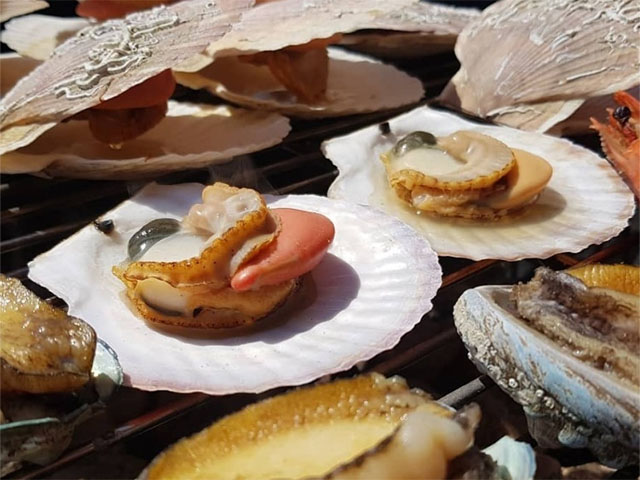
Wolnyeo's Haemul Pocha
This seafood restaurant near Homigot Cape features a modern, clean interior, a spacious parking lot, and a terrace. Popular dishes include generously portioned seafood ramyeon, haemul pajeon (seafood pancakes), and seafood kalguksu, while options like live octopus, sliced raw abalone, boiled whelk, and rock octopus are also available. Sitting by the window, diners can enjoy views of the harbor through large windows, enhancing the dining experience.
* VISITKOREA does not guarantee the quality of products or services introduced on this page and is not responsible for any direct or indirect loss resulting from use of said products or services.


Did you like this course? Leave a rating!