-
Gwangju is known as a center of art and culture. Its reputation as a region of art and culture is evident in how it weaves together flavors and flair as the center of Namdo culture. The Gwangju Biennale is in itself a reason to plan a trip to Gwangju, but there are many other festivals to enjoy, including the Gwangju World Kimchi Festival and Gwangju International Film Festival.
-
If you are visiting the Bitgoeul (Gwangju’s alternate name, meaning town of light), don’t forget to stop by the Mudeungsan National Park. Mudeungsan National Park, which is also certified as a UNESCO Global Geopark, offers a breather away from the hustle and bustle of cities. Mudeungsan Mountain’s columnar joint formations stand tall at 1,000m above sea level, sculpted by wind erosion, creating a view that is exceedingly rare even on a global scale. Mudeungsan Mountain is home to 20 geosites, including the columnar joint formations of Seoseokdae, Ipseokdae, and Gwangseokdae Rock Columns, as well as 42 historical and cultural sites. If you don’t feel like climbing the mountain, you can opt to use the lift and monorail.
-
Uncheon Reservoir is a summertime favorite when lotus flowers bloom from one side to another. The area is also home to 500m-long wood-decked trails, pavilions, water fountains, and acupressure trails for visitors. Watching the waves of pink blossoms swaying in the breeze as red lotus flowers bloom in full is a sight that cleanses one’s mind. Another important event associated with the city is the May 18 Democratic Uprising. The 5•18 Memorial Park was established on the site of the 505 Security Unit, which was managed as a historical site, to make it accessible to citizens. Sites throughout the city bear the traces of that momentous struggle, from Daein Market and the May 18th Memorial Culture Center in Geumnam-ro to Jeonil Building 245, the former Jeollanam-do Provincial Office building, and Namdong Catholic Church.
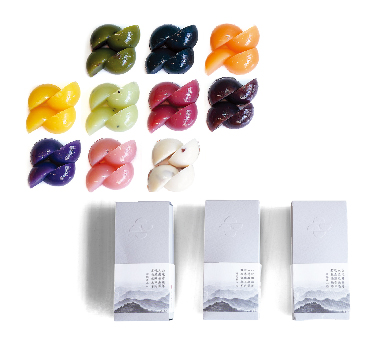
The world of desserts is no exception to the retro trend in Korea, specifically in the rising of yanggaeng (sweet red bean jelly), yakgwa (honey cookie), and other confections that have once been thought to be old-fashioned. Traditional sweets are now reimagined with contemporary sensibilities, creating desserts that are delectably Korean in appearance. In particular, sweet red bean jelly impresses with visuals that make one reluctant to take a bite, while honey cookies deliver satisfaction with their chewy texture.
 |
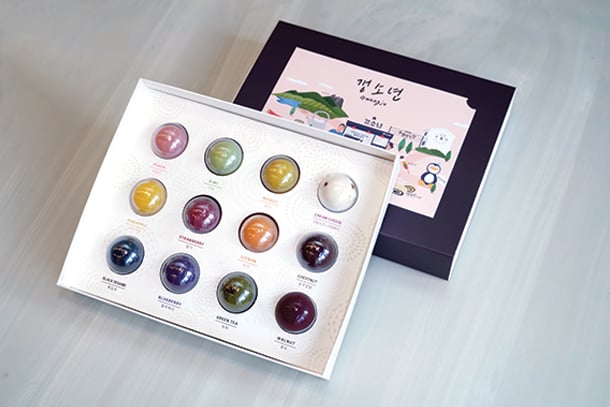
GAENGBOY SWEET BEAN JELLY BEADS
Located in Maeil Market, Gaengboy produces fruity sweet bean jelly with techniques learned from a 40-year master of the trade. Their jelly has only half the sugar content of conventional sweet red bean jelly, while their propriety individual packing ensures freshness and convenience.
|
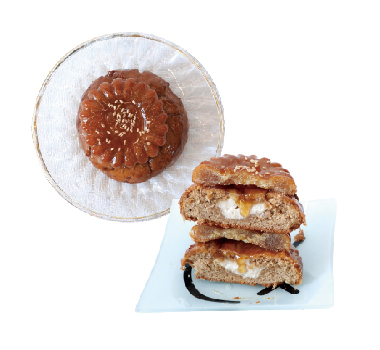 |
JANMANGMI COOKIE & CAKE YAKGWA COOKIES
Janmangmi Cookie & Cake serves Yakgwa Cookies full of cinnamon flavors. These cookies bring the best of two worlds together, with the chewy texture of yakgwa (honey cookie) meeting the crispy bite of cookies. A layer of cream cheese is sandwiched between the two layers for an even richer flavor.
|
Yangnim-dong was where modernity came to Gwangju a century ago and was marked with histories of sacrifice and sharing. It is a place where history and culture come together in modern buildings and hanok (traditional Korean house). It is home to the house where U Il-seon (R.M. Wilson), a missionary who contributed greatly to medical care and education in Gwangju, had lived; House of Yi Jang-u, an excellent example of Joseon-era aristocratic elegance; Jo Ahra Memorial Hall, which commemorates “the mother of Korean democratization” Jo Ahra, who dedicated her life to serving the less fortunate; Avison Memorial Center, which commemorates the work of Gordon Avison in Gwangju agriculture; Owen Memorial Hall, commemorating the martyrdom of Clement Owen; and the Penguin Village, which is made up of works of art jointly created by residents and artists using recycled materials.
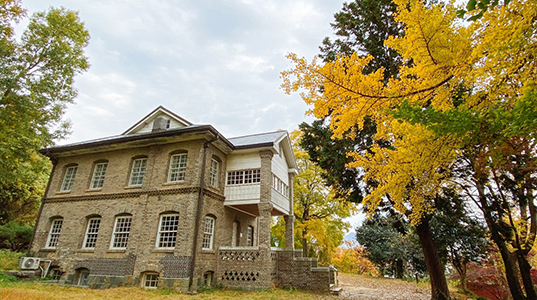
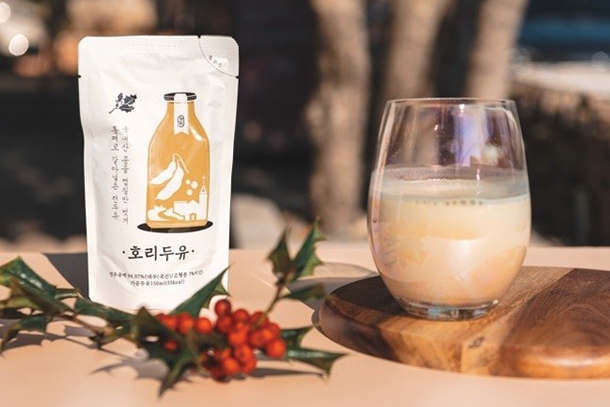
Holly Soy Milk began as a social project for impoverished children by a missionary couple working in Yangnim, Gwangju. It has now become a product that represents Yangnim-dong, made by a group of local creators. The soybeans are specifically sourced from contract farms in Jindo. It is quite filling, thanks to its rich and thick texture.
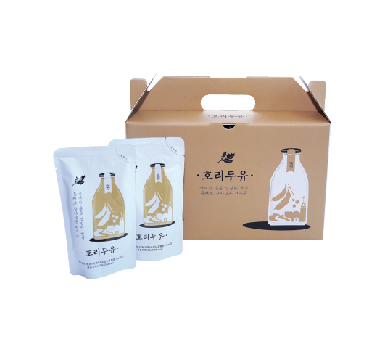 |
HOLLY SOY MILK
Holly Soy Milk uses only three ingredients: Korean soybeans, Korean sea salt, and organic sugar. It is made by grinding peeled soybeans whole, including pureed soybeans, so it completely preserves the soybean’s nutrients. Thanks to its rich and thick texture, it can be enjoyed as an afternoon snack or even a light breakfast.
|
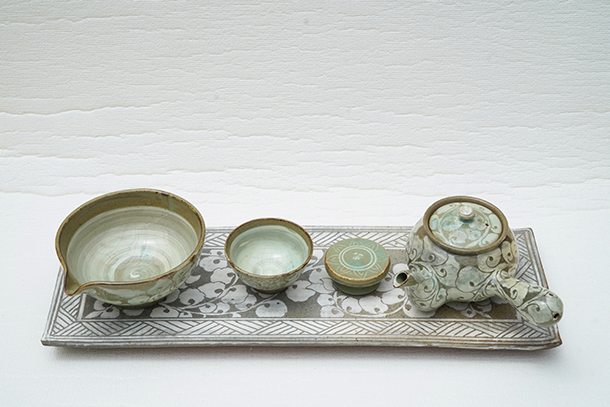
Produced in Chunghyo-dong during the 15th and 16th centuries, Mudeungsan Buncheong is a type of ceramic adorned with patterns made by applying white slip on the surface of the ceramic before glazing and firing. Buncheong is a uniquely Korean art of porcelainmaking, and Mudeungsan Mountain is known to be one of the foremost producers of porcelain in Korea.
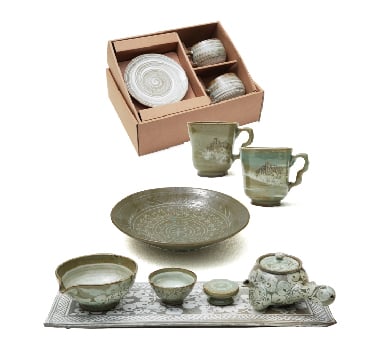 |
BUNCHEONG FROM PYEONGCHON CERAMICS WORKSHOP
The Pyeongchon Ceramics Workshop is dedicated to restoring the art of Buncheong and continuing its traditions using learning programs. Its Buncheong Tea Set is luxurious and practical, making it an ideal gift. Outside of the Tea Set, the workshop offers a variety of Buncheongware in various configurations.
|
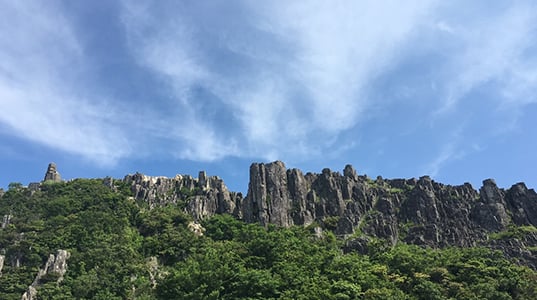
Mudeungsan Mountain is located at the border of Gwangju and the counties of Damyang and Hwasun. It stands 1,186m above sea level in height with a gentle and round silhouette. It is home to many famous rock formations like Gyubong Peak, Ipseokdae and Seoseokdae Rock Columns, as well as Buddhist temples like the Jeungsimsa, Wonhyosa, and Yaksasa Temples. Fall in Mudeungsan Mountain brings to mind the fall colors of Gyubongam Hermitage and the silver grasses of Jangbuljae Pass and Baengmaneungseon Ridge. In winter, flowers made out of snow and ice bloom across the mountain. From Jeungsimsa Temple at the foot of the mountain, one can reach the summit in 2 to 3 h. Roads leading northeast into the mountain allow you to reach the Wonhyogyegok Valley at the midpoint of the mountain by car in 30 min. From that point, it takes 1 h and 30 min to reach the summit.
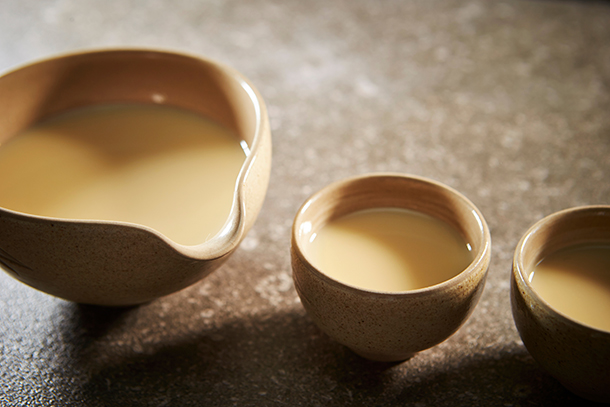
Mudeungsan Makgeolli is a takju (unrefined rice wine) originating in the 1960s. It is shipped with the enzymes intact, so you can enjoy a refreshing sense of carbonation and the savory notes characteristic of traditional takju. It is the first of its kind to be made with facilities that integrate cooling and freezing functions, which allow the company to produce highquality takju throughout the four seasons.
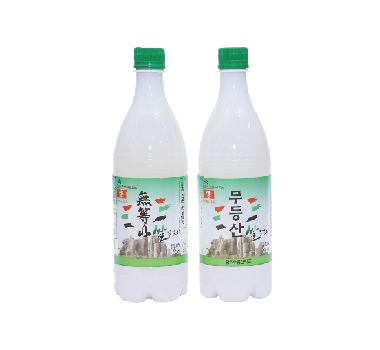 |
MUDEUNGSAN MAKGEOLLI
Mudeungsan Makgeolli combines refreshing carbonation from natural fermentation and savory and refreshing notes from traditional takju. It also showcases the characteristic smoothness of draft unrefined rice wine while maintaining freshness for extended periods, so it is a must-try alcoholic beverage in the Gwangju area.
|
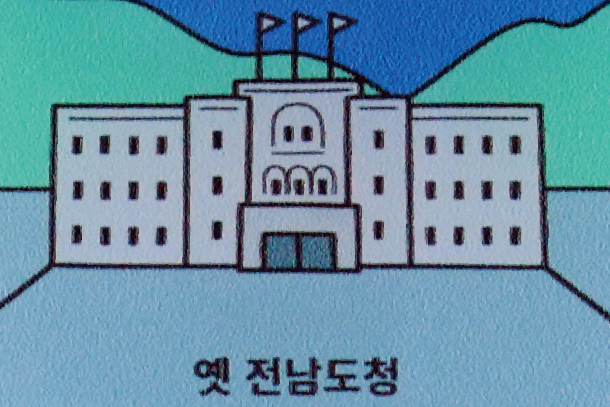
A local creator group in Gwangju came up with these items to help remember the May 18 Democratic Uprising. These items are inspired by the May 18th National Cemetery, where those who fell in the uprising are laid to rest, and the former Jeollanam-do Provincial Office building, the movement's center.
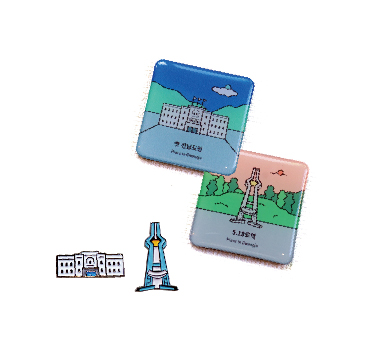 |
MAY 18 DEMOCRATIC UPRISING MEMORIAL ITEMS
“Yeora Market” selects and introduces items centered around the two keywords of local and valuable life. It is also the developer and the distributor of memorial items on the May 18 Democratic Uprising, inspired by the National Cemetery and the former Jeollanam-do Provincial Office building. One can, for instance, buy the five badges and magnets engraved with the sites that symbolize Gwangju, either individually or in a set.
|
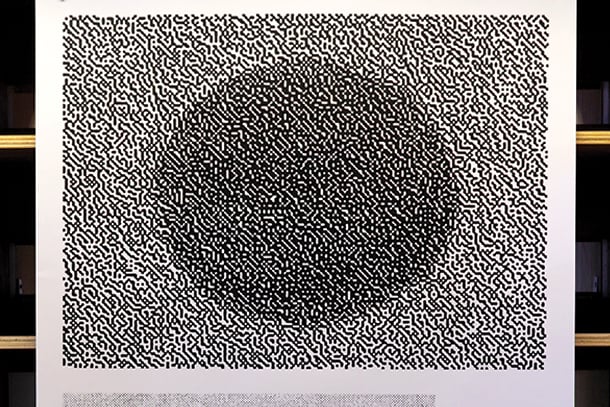
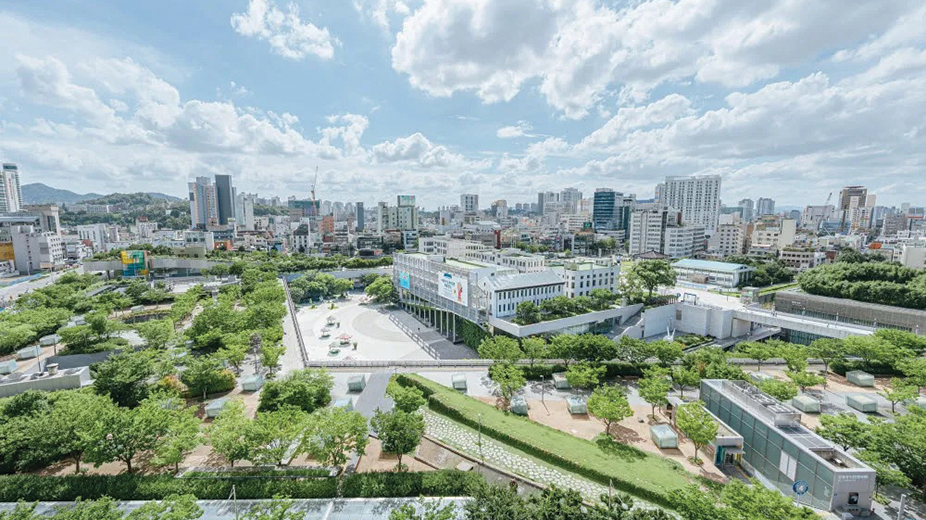
The Asia Culture Center (ACC) is a global cultural space that supports Asian cultural exchange, collection, research, content creation and production, exhibition, performance, archiving, and distribution all in one. It is home to the ACC Culture Exchange, ACC Archive & Research, ACC Creation, ACC Children, ACC Theater, Asia Plaza, Yeolin Madang, Hanul Madang, Rooftop Garden, the ACC Creation Studio, and other cultural facilities, where you can learn, create, and experience the unique cultures of the Asia Culture Center. DLAC is ACC’s cultural brand that signifies Asian Culture being unique like Dots, yet being as interconnected as Lines. It also refers to the Korean word for entering a space as a symbol of ACC’s wish to create a space where people can freely enter with joy, and this guides the brand’s lifestyle products created in collaboration with contemporary Asian artists, crafters, designers, and other creators.
 |
DLAC MERCH
The ACC Culture Shop presents a variety of products that utilize the DLAC brand, including 8 signature items and 22 product types. These products tend toward practical use, such as T-shirts, erasers, postcards, eco bags, and other items that make use of ACC’s new BI.
|
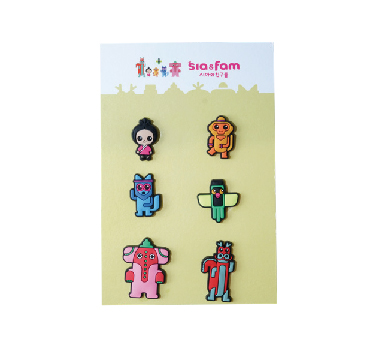 |
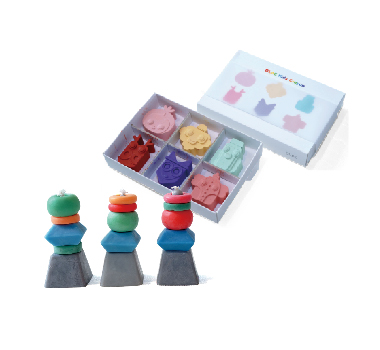
SIA AND FRIENDS MERCH
This merch line is inspired by “Sia and Friends,” the mascot characters of ACC Children. Sia and Friends Crayons, for instance, are made with EWG “green” certified materials, ensuring that they are safe for children’s use. Sia and Friends is a group of six characters symbolizing different regions in Asia: Sia symbolizes Korea, Gonee symbolizes Northeast Asia, Paree symbolizes Central Asia, Kalee symbolizes West Asia, Elee symbolizes South Asia, and Keynee symbolizes Southeast Asia.
|
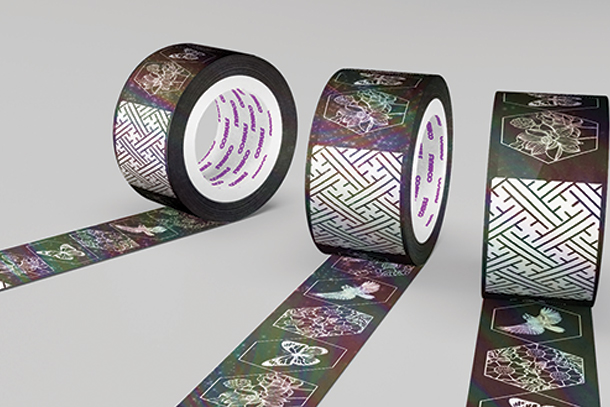
Known in Korean as najeonchilgi, this involves painting a wooden item with lacquer and inlaying mother-of-pearl on top of that. Gwang ju has historically been associated with lacquer, ink, and charcoal production, which has resulted in the city being named the “region of three black items.” Mother-of-pearl and lacquer craft is taken to be one of the pinnacles of Korean traditional craft.
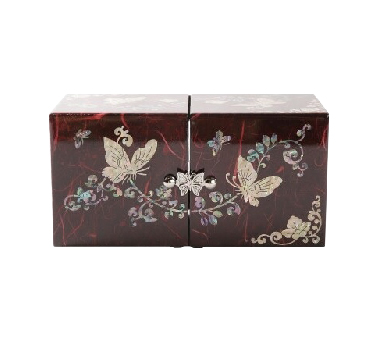 |
KOREAN PAPER JEWELRY BOX WITH LACQUER AND MOTHER-OF-PEARL INLAY
This double-door jewelry box is designed for convenience. A frame made out of wood is first painted with lacquer and then adorned with colored Korean paper before mother-of-pearl inlays are added. Mother-of-pearl inlays and colored hanji come together in brilliant harmony.
|
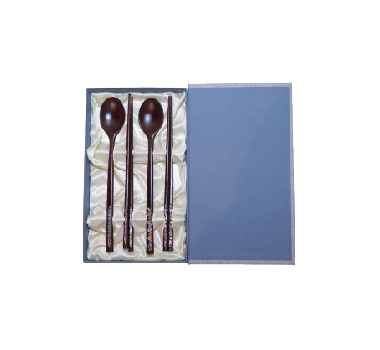 |
MOTHER-OF-PEARL AND LACQUER SPOON AND CHOPSTICKS SET
This spoon-and-chopstick set is made with natural wood, finely lacquered, and inlaid with mother-of-pearl by artisans. Its elegant design is brought to life with traditional flower and bamboo motifs. The resulting product is a dance of light captured in mother-of-pearl inlays and lacquer’s darkness.
|
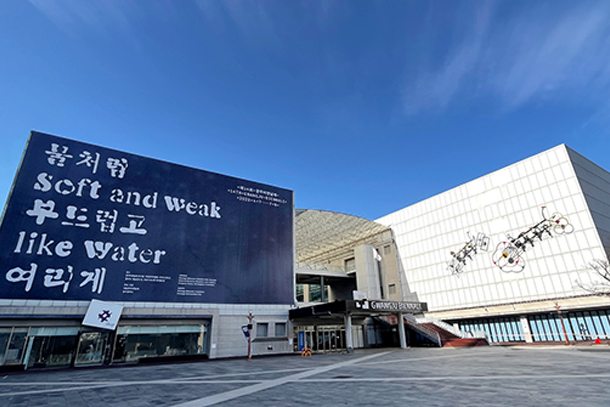
Gwangju Biennale is an international art exhibition held every two years in Gwangju. The first Biennale was held in 1995, and the latest, the 14th, was held in July 2023 to great fanfare. The event is centered around the neighborhood of Yongbong-dong. The 15th Gwangju Biennale, which will be held in September 2024, will commemorate the 30th anniversary of the event with discourse-oriented exhibitions that explore the spaces that surround us.
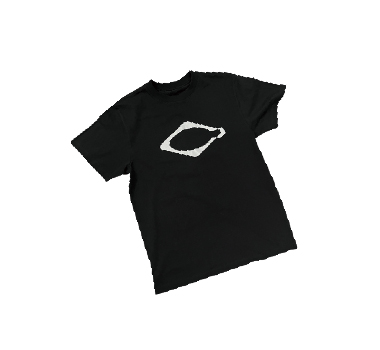 |
GWANGJU BIENNALE X MSCHF COLLABORATION MERCH
The Art Shop of the 14th Gwangju Biennale, which was held in July 2023, offered a variety of merch inspired by the event. One of the most popular among them was the collaboration project between Gwang ju Biennale and the fashion brand MSCHF through the Gwangju Biennale Enterprise Information Portal (EIP).
|
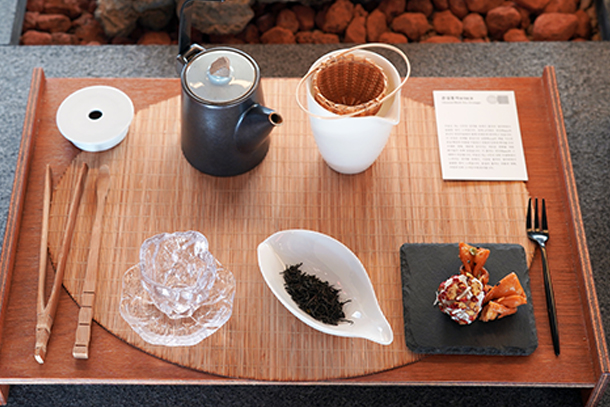
Chunseol tea originated from Heo Baek-ryeon (pen name: Uijae), a master of the Southern School, growing his own tea at Samae Tea Garden at the foot of Mudeungsan Mountain. Chunseol tea is grown at 700m above sea level without any fertilizers or insecticide, using only nature’s nourishments. Tea leaves are harvested by hand, then heated and dried ninefold to create their characteristic fragrance.
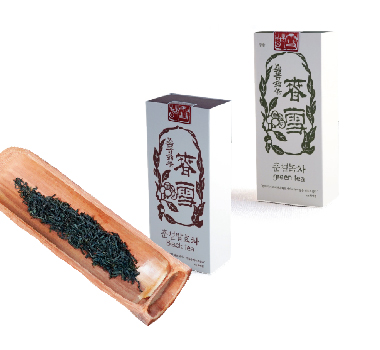 |
CHUNSEOL TEA
Tea houses that offer Gwangju and Jeollanam-do local teas carry Chunseol green and black tea. Chunseol green tea is available in Ujeon, Sejak, and Jungjak variants. When prepared by a tea sommelier, its gentle fragrance and deep flavor blooms in full. Chunseol black tea likewise retains the clear and sweet flavor of black tea, so even those who do not particularly like Pu’er tea enjoy it.
|
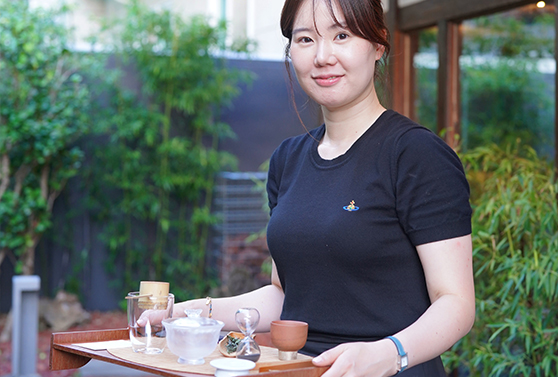
Q How did you come to open a tea shop at Uijae-ro, Gwangju? I was born and raised here. Uijae-ro is inspired by the pen name of the artist Heo Baek-ryeon. After the liberation of Korea, he cultivated the Samae Tea Garden in Mudeungsan Mountain, which helped pass on the tradition of tea-making. It was like fate, actually, for me to open a tea shop that can continue that tradition here.
Q As a tea sommelier, what do you think distinguishes Chunseol tea from others? Tea from different regions have different flavors because of the varying climates and conditions. Chunseol tea is notable for its mysterious and gentle flavor. Rather than leaning into a single flavor note, it swirls around your mouth and passes. It can be enjoyed as is, but it also goes excellently with tea foods.