- Log in
-
- Sydney Overseas Office
- London Overseas Office
- Toronto Overseas Office
- Los Angeles Overseas Office
- New York Overseas Office
- Ulaanbaatar Overseas Office
- Dubai Overseas Office
- New Delhi Overseas Office
- Manila Overseas Office
- Jakarta Overseas Office
- Hanoi Overseas Office
- Kuala Lumpur Overseas Office
- Singapore Overseas Office
- Bangkok Overseas Office
- Map
- Sydney Overseas Office
- London Overseas Office
- Toronto Overseas Office
- Los Angeles Overseas Office
- New York Overseas Office
- Ulaanbaatar Overseas Office
- Dubai Overseas Office
- New Delhi Overseas Office
- Manila Overseas Office
- Jakarta Overseas Office
- Hanoi Overseas Office
- Kuala Lumpur Overseas Office
- Singapore Overseas Office
- Bangkok Overseas Office
Contents View
- HOME
- Contents View
-
-
-
Express Bus & Intercity Bus
-
03/31/2023
-
200.3K
5
7
-
-
Bus_Tour
Korea_Tourism
Transportation_card
public_transport
bus
-
-
Express Bus & Intercity Bus
Buses reach areas that trains cannot, making them a convenient way to experience Korea’s beautiful scenery up close. In Korea, long-distance buses are divided into two types: express buses and intercity buses. While some terminals serve both, in certain regions the express and intercity terminals are located separately. As buses do not have onboard restrooms, mid- to long-distance routes include scheduled stops at service areas along the way. In Korea, these rest areas, called “hyugeso,” offer clean, convenient facilities and have even become destinations in their own right on long road trips, known for their food and unique roadside offerings.
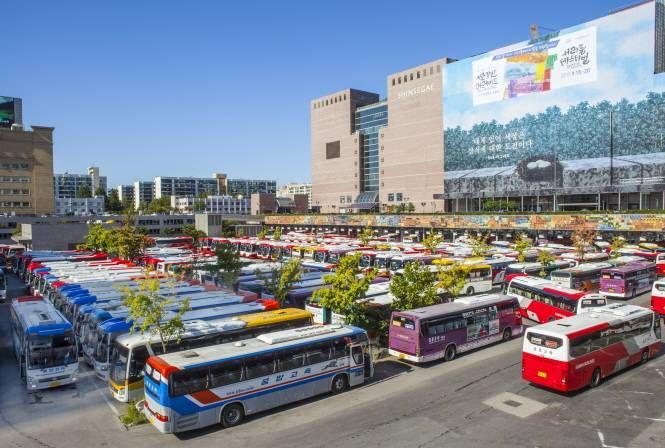 【 Seoul Express Bus Terminal (Credit: ClipartKorea) 】
1. Bus Types
Express busExpress buses use expressways for long-distance travel without stopping in cities along the way. Bus fares vary depending on the level of comfort and the number of seats, and extra charges apply during late-night hours.
Intercity busIntercity buses use expressways and national highways to get to destinations while making intermediate stops along the way. Unlike express buses, there are intercity buses that only drive on national routes without driving on expressways. There are a greater number of intercity bus routes than that of express buses, which make them a great choice when traveling to regional cities. There are various routes connecting smaller cities directly, making intercity buses a convenient option for such trips. Intercity buses are divided into standard and luxury classes with larger seats, and additional charges apply during late-night hours.
2. How to use buses
Bus tickets can be purchased online via affiliated platforms like Klook or Hanpass, or directly at ticket offices or kiosks inside bus terminals. Tickets can be purchased with cash, credit card, or mobile pay. If you purchased your ticket online, it’s advised to confirm your ticket one more time. Depending on your destination and booking method, you may have to print your ticket at the ticket office at the departing terminal before you board the bus. Check the platform number of your bus through a monitor or screen in the terminal’s waiting area and then board the bus at that platform. Typically, you can board a bus five to ten minutes prior to the time of departure.
- Integrated express bus booking platforms:
- www.klook.com/korea-bus (English, Japanese, Chinese, and more)
- go.hanpass.com (English, Japanese, Chinese, and more) - Integrated intercity bus booking platform: go.hanpass.com (English, Japanese, Chinese, and more)
3. Major bus terminals and routes
Take note that express buses and intercity buses often depart from and arrive at different terminals. Most terminals are located in city centers, which make them easy to find. However, in Seoul and some other regions, terminals may be located far away from one another so you must check the point of departure one more time before you leave. If a terminal is called “jonghap terminal,” it means the terminal is offers both express and intercity routes. Routes are subject to change travelers are advised to check for changes in advance.
Major routes- - Gyeonggi-do: Singal, Anseong, Yeoju, Yongin, Icheon, Pyeongtaek, Pocheon
- - Gangwon State: Gangneung, Donghae, Samcheok, Sokcho, Yangyang, Wonju, Chuncheon, Heongseong, Yeongwol, Cheorwon
- - Chungcheongbuk-do: Cheongju, Jecheon, Yeongdong (Hwanggan)
- - Chungcheongnam-do & Daejeon: Daejeon, Jochiwon, Gongju, Geumsan, Sejong, Asan Onyang, Cheonan
- - Gyeongsangbuk-do & Daegu: Gyeongju, Gumi, Daegu, Sangju, Andong, Yeongdeok, Yeongju, Yeongcheon, Yecheon, Jeomchon, Pohang, Punggi
- - Gyeongsangnam-do & Busan: Gimhae, Masan, Busan, Ulsan, Jinju, Changwon, Tongyeong
Website: www.exterminal.co.kr (Korean only)Major routes- - Chungcheongbuk-do: Cheongju, Cheongju Airport, Chungju, Goesan, Jeungpyeong, Boeun, Songnisan Mountain
- - Chungcheongnam-do: Daejeon, Nonsan, Dangjin, Seosan, Yesan, Taean, Hongseong, Anmyeondo, Boryeong, Cheongyang
- - Jeonbuk-do: Gochang, Gunsan, Gimje, Namwon, Buan, Sunchang, Iksan, Gangjin, Jeonju, Jeongeup, Jinan
- - Jeollanam-do: Gwangju, Gangjin, Goheung, Gwangyang, Naju, Damyang, Mokpo, Boseong, Suncheon, Yeosu, Yeonggwang, Okgwa, Wando, Jangseong, Jangheung, Jindo, Haenam, Hwasun, Muan, Yeongam, Hampyeong
Website: www.shinsegaecentralcity.com (Korean, English)Major routes- - Gyeonggi-do: Anseong, Pyeongtaek, Songtan
- - Gangwon State: Pyeongchang, Gangneung (Jumunjin), Taebaek, Jeongseon
- - Chungcheongbuk-do: Jincheon, Cheongju, Boeun, Songnisan Mountain, Eumseong
- - Chungcheongnam-do: Cheonan, Gongju, Buyeo, Gyeryong, Seosan, Taean, Hapdeok, Dangjin, Seocheon, Janghang
- - Gyeongsangbuk-do: Goryeong, Sangju, Seongju, Gimcheon
- - Gyeongsangnam-do: Busan, Tongyeong, Geochang, Hapcheon, Hadong, Jinju, Sancheong, Namhae, Yangsan, Sacheon, Goseong, Changnyeong, Geoje, Hamyang
- - Jeonbuk-do: Iksan, Jeonju, Jangsu, Wanju (Samnye), Muju, Imsil, Buan
- Jeollanam-do: Gurye
Major routes- - Gyeonggi-do: Gapyeong, Pocheon, Anseong, Ansan, Yangpyeong, Uijeongbu, Songtan, Yeoju, Pyeongtaek, Icheon, Osan
- - Gangwon State: Gangneung, Goseong, Donghae, Samcheok, Sokcho, Yanggu, Yangyang, Wonju, Jeongseon, Cheorwon, Chuncheon, Taebaek, Pyeongchang, Inje, Yeongwol, Hongcheon, Hwacheon, Hoengseong
- - Chungcheongbuk-do: Goesan, Danyang, Boeun, Eumseong, Jecheon, Jeungpyeong, Jincheon, Cheongju, Chungju
- - Chungcheongnam-do: Gongju, Nonsan, Dangjin, Daejeon, Buyeo, Seosan, Sejong, Asan, Cheonan, Taean, Boryeong (Daecheon), Yesan, Hongseong, Cheongyang
- - Gyeongsangbuk-do: Gyeongju, Gumi, Daegu, Mungyeong, Bonghwa, Sangju, Andong, Yeongju, Yecheon, Uljin, Pohang, Gimcheon, Yeongdeok, Yeongyang, Cheongsong
- - Gyeongsangnam-do: Geoje, Busan, Yangsan, Ulsan, Jinju, Tongyeong, Hamyang, Geochang, Uiryeong
- - Jeonbuk-do: Gunsan, Gimje, Namwon, Buan, Iksan
- - Jeollnam-do: Gurye, Mokpo, Suncheon, Yeosu, Haenam
Website: www.ti21.co.kr (Korean)Tip K-expressway rest stops, double the funKorean expressways comes with the excitement of not-to-be-missed rest stop service areas. Korean expressways rest stops are equipped with sanitary public restrooms, nursing rooms and tourist information centers as well as basic essential facilities including gas stations, restaurants, convenience stores and electric vehicle charging stations. You can also find famous K-street snacks such as sotteok sotteok (sausage and rice cake skewer), potato corndogs and hotteok (pancake filled with brown sugar) that you might have seen on social media. Also, certain service areas operate leisure facilities or themed food markets for unexpected fun.

 【 Sotteok sotteok (Credit: Korea Tourism Organization, Photo Korea – Alex Bundo) / Public rest area at rest stops (Credit: Getty Image Bank) 】
< FAQ >
- A. Korea's long-distance buses are divided into two types. Express buses travel exclusively on expressways for long-distance routes without stopping in any cities along the way. Fares vary by comfort level (standard vs. premium seating), and extra charges apply during late-night hours. Intercity buses use both expressways and national highways and make intermediate stops at cities along the route. Some intercity routes use only national highways. Intercity buses cover a wider range of destinations than express buses - including smaller regional cities - and also come in standard and luxury classes, with late-night surcharges. Some terminals serve both types, while in certain areas the express and intercity terminals are located separately.
- A. Bus tickets can be purchased online through official ticketing websites, mobile apps, or affiliated booking platforms such as Klook and Hanpass, or in person at ticket offices and kiosks inside bus terminals. Payment is accepted by cash, credit card, or mobile pay. If you bought your ticket online, confirm your booking before traveling - depending on your destination and booking method, you may need to print your ticket at the terminal's ticket office before boarding. At the terminal, check the departure platform number on the screen in the waiting area and board 5 to 10 minutes before departure. Express bus tickets: www.kobus.co.kr (Korean, English, Japanese, Chinese). Intercity bus tickets: txbus.t-money.co.kr or www.bustago.or.kr (Korean, English, Japanese, Chinese).
- A. Korean long-distance buses do not have onboard restrooms. Instead, mid- to long-distance routes include scheduled stops at highway service areas (called hyugeso) along the way. These rest areas are clean and well-equipped, featuring public restrooms, nursing rooms, tourist information centers, restaurants, convenience stores, gas stations, and electric vehicle charging stations. Many have become popular stops in their own right, known for Korean roadside snacks such as sotteok-sotteok (sausage and rice cake skewers), potato corndogs, and hotteok (sweet pancakes). Some service areas also operate themed food markets or leisure facilities.
- A. Seoul has four main long-distance bus terminals: (1) Seoul Express Bus Terminal (subway Lines 3, 7, 9 - Express Bus Terminal Station): serves eastern and southeastern Korea including Gangwon State, Chungcheongbuk-do, Gyeongsangbuk-do/Daegu, and Gyeongsangnam-do/Busan. Website: www.exterminal.co.kr. (2) Central City Express Bus Terminal (same subway station): serves southwestern Korea including Chungcheongnam-do, Jeonbuk-do, and Jeonnam-Gwangju. Website: www.shinsegaecentralcity.com. (3) Seoul Nambu Terminal (subway Line 3 - Nambu Terminal Station): intercity buses to parts of Gyeonggi-do, Gangwon State, Chungcheong, and Gyeongsangnam-do. (4) Dong Seoul Terminal (subway Line 2 - Gangbyeon Station): both express and intercity buses to Gangwon State, Gyeonggi-do, Chungcheong-do, Gyeongsang-do, and Jeonbuk-do. Website: www.ti21.co.kr. Note: express and intercity buses for the same destination may depart from different terminals.
- A. The terminal you need depends on your destination. For Busan, Daegu, Gyeongju, and Pohang (southeastern Korea): use Seoul Express Bus Terminal. For Gwangju, Jeonju, Mokpo, Suncheon, and Yeosu (southwestern Korea): use Central City Express Bus Terminal. For Gangneung, Sokcho, and most Gangwon State destinations: both Seoul Express Bus Terminal and Dong Seoul Terminal serve this region. For smaller cities in Gyeongsangnam-do such as Jinju and Tongyeong: Seoul Nambu Terminal has direct intercity routes. For cities in Gyeonggi-do, Chungcheong, and eastern Gangwon: Dong Seoul Terminal covers the widest range of destinations. Check www.kobus.co.kr for express buses and txbus.t-money.co.kr for intercity buses to confirm which terminal serves your specific destination.
- A. Yes. The integrated express bus booking website at www.kobus.co.kr is available in Korean, English, Japanese, and Chinese. Note that regional restrictions may affect access from certain countries. You can also book through affiliated international platforms: Klook at www.klook.com/korea-bus and Hanpass at go.hanpass.com, both available in English, Japanese, Chinese, and other languages. For intercity bus tickets, the websites txbus.t-money.co.kr and www.bustago.or.kr support Korean, English, Japanese, and Chinese. When booking online, confirm whether you need to print your ticket at the terminal before boarding.
- A. Yes - one of the main advantages of buses in Korea is that they reach many destinations not served by the railway network. Intercity buses in particular cover smaller regional cities and towns that do not have train stations, connecting them directly with major cities. There are also direct intercity bus routes between smaller cities, which would otherwise require a transfer via Seoul or another major hub by train. If you are traveling to a smaller destination in Gangwon State, the Chungcheong provinces, or rural areas in Jeolla or Gyeongsang, check whether a bus route offers a more direct connection than the train. Use www.bustago.or.kr or txbus.t-money.co.kr to search intercity routes.
* 1330 Korea Travel Hotline: +82-2-1330 (Korean, English, Japanese, Chinese, Russian, Vietnamese, Thai, and Indonesian)
* This page was last updated on June 5, 2026, and therefore the information may differ from what is presented here.- Integrated express bus booking platforms:


Start a FREE Online Call
(No charges for calls on Wi-Fi /
Data charges may apply)

Open 1330 Helpline Chat(Download not required)