Incheon is the gateway to Korea, home to Incheon International Airport and the Incheon Port. It takes about an hour to reach the city from Seoul via subway or bus, so it makes for a perfect day trip destination from Seoul. Incheon was an open port, the site where modernity first came to Korea. Because of that, it still retains its 100-year-old port facilities, the first modern buildings in Korea, the foreigners’ club, and other cultures associated with concessions. Incheon Jung-gu’s Open Port area, in particular, functions as an open-air cultural and historical museum detailing the history of the Incheon Port, which opened in 1883. From cultural heritage to modern buildings and cutesy cafés, the area is home to sceneries straight out of period films, so it is beloved by photographers.
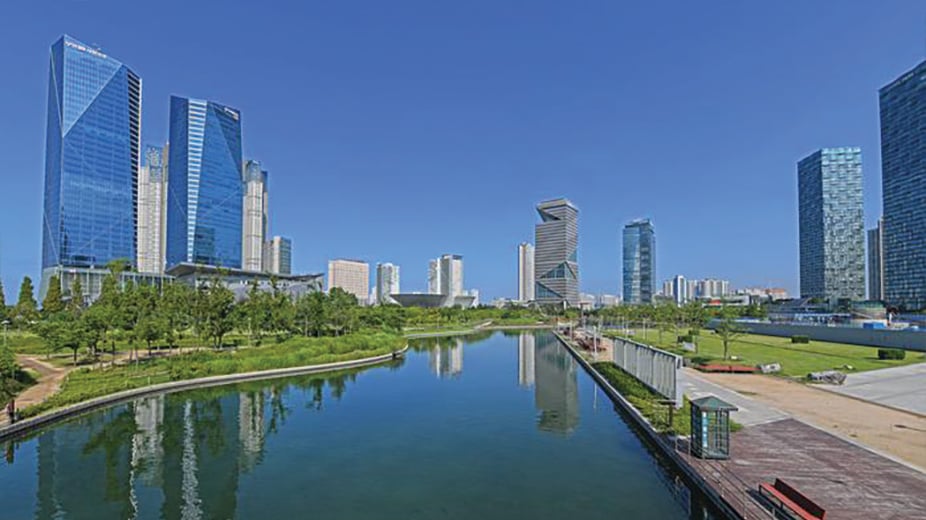
Ganghwado Island, called an “open-air museum,” is chock full of historical sites, from dolmen structures dating back to the prehistoric period to Goryeo and Joseon-era structures. It is also a beloved date spot for its retro-style art museums and cafés. Gyodongdo Island, connected to Ganghwado Island, is another throwback to the 1960s and the 1970s, particularly in its markets and schools. Seongmodo Island, which can be visited on the way out from Gyodongdo Island, is a well-known spot for sunsetwatching. If you want to see a different side of Incheon, head to Songdo. Songdo is a city of the future, with skyscrapers blending in seamlessly with wide lakes and green spaces. Hotels often offer great views of Songdo at night, while architecturally interesting buildings punctuate the scenery with their presence.
If you’ve had enough of the city, head to the far-flung islands of Incheon. From Sinsimodo Island of Bukdo-myeon, with a sculpture garden on a beach reachable in 10 min from Yeongjongdo Island, to Palmido Island, site of the first lighthouse in Korea; Seonjaedo Island, home to Mokseom Island, CNN’s choice for the most beautiful island in Korea; and Baengnyeongdo Island, the northernmost island of Korea requiring 4 h of traveling with a high-speed craft, the 168 islands of Incheon offer beautiful respite from your daily life.

Templestay programs are an ever-popular way to experience Korean Buddhist culture and nurture your body and mind. Incheon’s Lotus Lantern International Meditation Center and Jeondeungsa Temple are great places to enjoy Templestay near Seoul. Temples that offer Templestay programs also offers souvenirs that draw upon the traditions of Buddhism to create contemporary designs.
 | KKOTSALMUN BUSINESS CARD CASE This business card case is inspired by kkotsalmun, a flower-patterned door that showcases Korean aesthetics through its elaborate and elegant touches. Its malfunction-free opening and closing functions, soft grip, and light weight make it quite practical. The interior is spacious enough to store 20 business cards.
|
 | WOODEN FISH USB STICK A wooden fish is a sculpture symbolizing constant vigilance and dedication to enlightenment. USB memory sticks are often lost because of their small sizes, but this Wooden Fish USB Stick cannot be missed thanks to its distinct form and colors. It has a generous 64GB capacity.
|
 | BADGES, 3 TYPES These three pin badges are shaped like a cute boy monk, an elegant lotus flower, and a colorful wooden fish, bringing together Buddhist culture and traditional Korean beauty. Their vibrant colors and three-dimensional design make them a great addition to any bag, hat, or T-shirt.
|
Dongmak Beach is a great place to go for a swim, thanks to its cozy sand beach and lush pine forest. At high tide, you can bathe in the pristine waters, and at low tide, you can see a variety of shellfish and sea creatures such as sentinel crabs, Korean cyclina clams, and blow lugworms on the vast tidal flats. Next to Dongmak Beach is Bunori Fortification, a beloved sunset spot for Ganghwa. The view from the coastal road connecting Janghwa-ri to Dongmak-ri is also very beautiful, with plenty of pretty cafés by the road to stop by and enjoy a cup of coffee with the view.