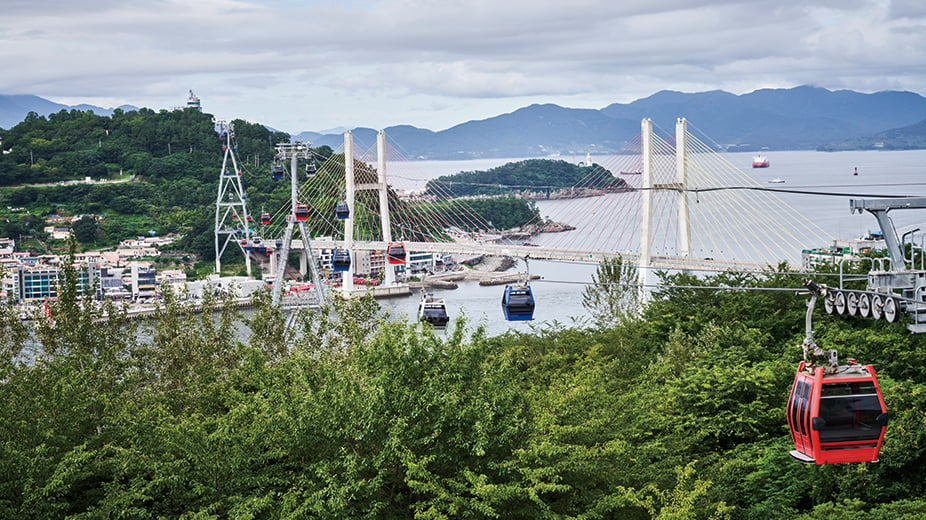
Jeollanam-do Province is full of beautiful places that maintain a tranquil ambience. There are many famous mountains, such as the Jirisan, Wolchulsan, and Mudeungsan Mountains, with natural sceneries so outstanding that you will never want to go back down. The coastal areas likewise impress with the islands of Dadohae and the wide tidal flats. One can even say that each step taken in Jeollanam-do brings you closer to cultural heritage, and delicious, sumptuous Namdo cuisine adds a gourmand’s joy to your Namdo trip. Damyang, the city of bamboo, is full of luscious green colors.
Sinan is a region with 1,004 islands embroidered above open seas. Another sight that must not be missed is the massive tidal flats, the largest in Korea, and the salterns that produce 70% of the sea salt produced in Korea. Goheung is considered a “space city” thanks to the presence of the Naro Space Center and the Goheung Space and Astronomy Museum. Citrus and pomegranate, grown in clean nature, are Goheung’s specialty. In November, you will find a beautiful view of citrus fields awash in a vibrant yellow and refreshing scent. Boseong is the oldest green tea farm in Korea. Don’t forget the silver sands and pine trees of Yulpo Beach and Beolgyo’s plump cockles harvested from endless tidal flats. There is even a hanok (traditional Korean house) village full of tranquil beauty, so you will find no shortage of places for healing. Haenam, located at the southernmost point of the Korean Peninsula, is a region of fertile earth, abundant water, and ancient historical sites.
Don’t miss Gwangyang’s white plum blossoms and yellow mustard flowers blooming along the winding curves of the Seomjingang River in the spring; Suncheon, famous for Suncheonman Wetland, one of the five greatest coastal wetlands in the world; and Gangjin, home to the thousand-year color of celadon and Namdo-style Korean table d’hote. Finally, head to Yeosu, considered to be one of the most beautiful ports in Korea. A must-visit site in Yeosu is the Yeosu Maritime Cable Car, which takes you atop the blue seas and along the beautiful sights.
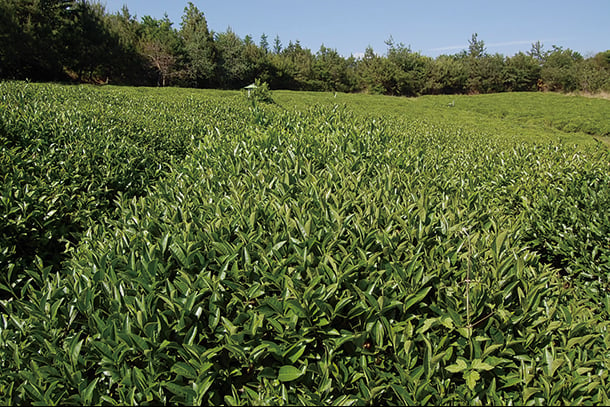
Boseong is blessed with warm temperatures and many foggy days, which provide plenty of moisture and shade during the growing season for the tea plants and help maintain the tea’s flavor. Boseong green tea’s gentle fragrance can be enjoyed both as is or in cooking. Jangheung is famous for Cheongtaejeon tea, a fragrant tea traditionally fermented and made into round discs.
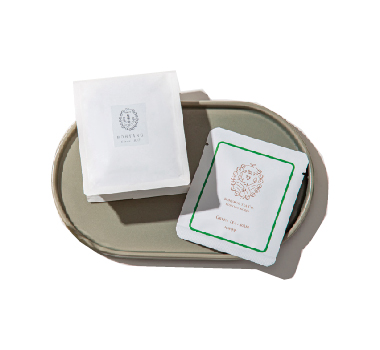 | BOHYANG TEA COMPANY MISTY TEA This premium tea is made according to traditional methods passed down for five generations by hand, using the green tea harvested earliest in the spring, right after the dew recedes. Its quality and taste have been recognized through a blind tasting session involving 12 tea sommeliers and experts. The Bohyang Tea Company offers a variety of tea products, from rich and fresh green tea to the gentle, savory flavors of yellow tea, fruity and flowery black tea, and sweet-andsour fermented tea.
|
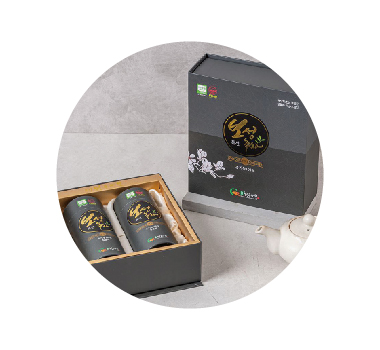 | CHEONGRYONG DAWON GISAN TEA This pure green tea is grown on pristine green tea farms by the 28th Organic Master Farmer of Jeollanam-do Province. Only the smallest, youngest leaves, freshly sprouted in the spring, are used, which imbue this tea with a mild and gentle flavor. It is also notable as the first green tea product in Korea to pass the US FDA’s inspection.
|
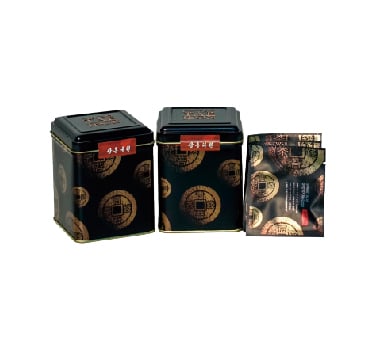 | JANGHEUNG DAYEWON CHEONGTAEJEON TEA Wild green tea leaves growing in the mountains are pulverized with a mortar and pestle to shape them into round discs, threaded with large skewers in groups of 10, naturally dried indoors for about 20 days, then fermented in a pot for more than a year. Cheongtaejeon discs are then roasted over Quartz porphyry over a low fire. During the fermentation process, the astringency of green tea naturally disappears, leaving only a mild flavor and nutty aroma that makes it uniquely appealing to drink.
|