- Log in
-
- Sydney Overseas Office
- London Overseas Office
- Toronto Overseas Office
- Los Angeles Overseas Office
- New York Overseas Office
- Ulaanbaatar Overseas Office
- Dubai Overseas Office
- New Delhi Overseas Office
- Manila Overseas Office
- Jakarta Overseas Office
- Hanoi Overseas Office
- Kuala Lumpur Overseas Office
- Singapore Overseas Office
- Bangkok Overseas Office
- Map
- Sydney Overseas Office
- London Overseas Office
- Toronto Overseas Office
- Los Angeles Overseas Office
- New York Overseas Office
- Ulaanbaatar Overseas Office
- Dubai Overseas Office
- New Delhi Overseas Office
- Manila Overseas Office
- Jakarta Overseas Office
- Hanoi Overseas Office
- Kuala Lumpur Overseas Office
- Singapore Overseas Office
- Bangkok Overseas Office
Travel Highlights
-
-
-
Ride, Stroll, Pedal & Soar: The Ultimate Ways to Enjoy Suwon
-
10/01/2025
-
19.7K
6
4
-
-
-
-
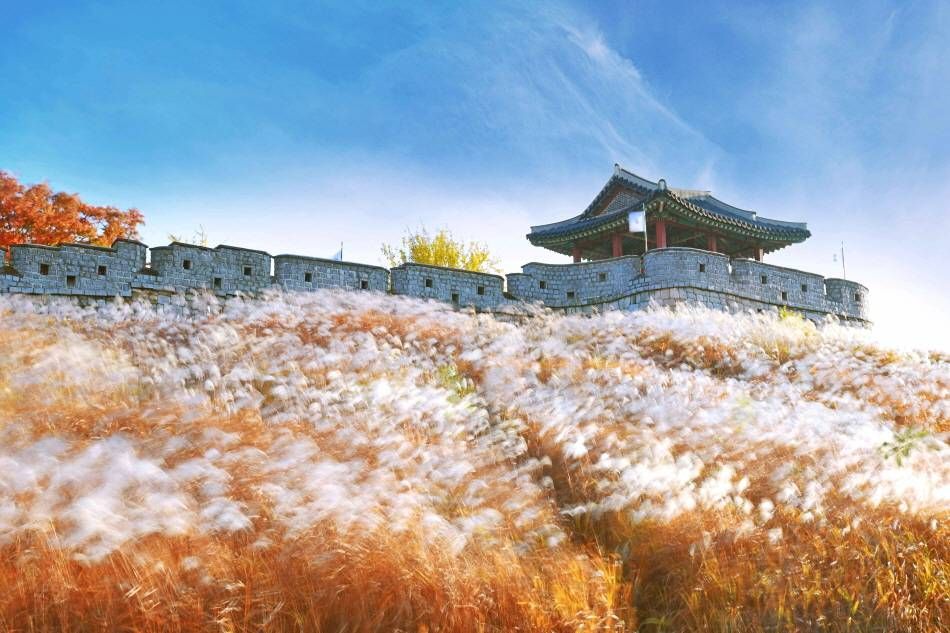
Autumn at Hwaseong Fortress ©Korea Tourism Organization Photo Korea – Oh Do-yeon
Suwon, home to UNESCO-listed Hwaseong Fortress, has become a favorite destination among Millennials and Gen Z travelers. The city seamlessly blends tradition with modern life, offers distinctive local flavors, and hosts cultural events that delight all the senses—creating a vibrant and trendy atmosphere. Read on to explore fresh ways to experience Suwon, from daytime attractions to nighttime festivals and experiences. This fall, discover unforgettable moments where Korea’s past and present come together in Suwon.
| Four Ways to Explore Suwon1. Hwaseong Fortress Tourist Trolley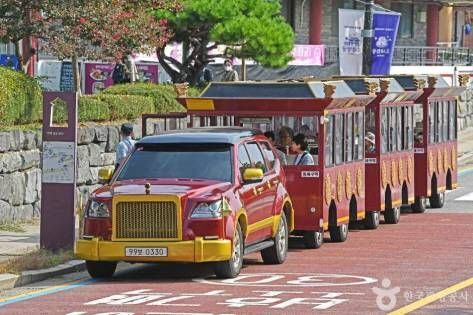
Hwaseong Fortress Tourist Trolley
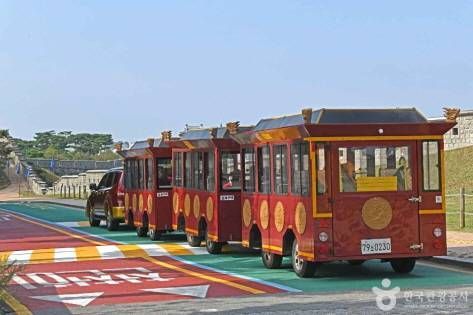
The trolley making a loop around the fortress
For a relaxed way to explore highlights of the Hwaseong Fortress, take the Hwaseong Fortress Tourist Trolley. Modeled after the royal palanquin of the Joseon kings and a car once used by Sunjong, the last emperor of Korea, the trolley departs from Yeonmudae and follows a 20-minute circular route that takes in Hwahongmun Gate, Janganmun Gate, Hwaseomun Gate, and nearby attractions. As the breeze brushes your face and the fortress walls and surrounding scenery unfold outside, you may just feel like royalty.
[Hwaseong Fortress Tourist Trolley]
- Address: Yeonmudae Ticket Office at Yeonmudae Martial Arts Arena, 8 Changnyong-daero 103beon-gil, Paldal-gu, Suwon-si, Gyeonggi-do (경기도 수원시 팔달구 창룡대로103번길 8 연무대활터 연무대 매표소)
- Operating hours: Tuesday–Sunday 09:40–17:00
- Route: Yeonmudae → Hwahongmun Gate → Janganmun Gate → Hwaseomun Gate → Maehyanggyo Bridge → Yeonmudae (every 20 min)
- * Audio guide available in English, Chinese, and Japanese
2. Hwaseong Fortress Trail (Suwon Palseok-gil)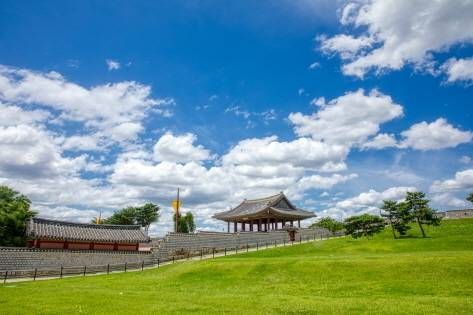
Hwaseong Fortress Trail ©Suwon City Tourism Division
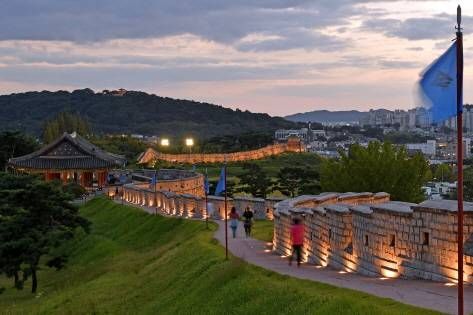
Night view of Hwaseong Fortress Trail ©Suwon City Tourism Division
If you enjoy walking, follow the fortress walls to explore Suwon on foot. The Hwaseong Fortress Trail connects traditional landmarks such as Janganmun Gate and Banghwasuryujeong Pavilion with trendy hotspots like Haengnidan Street and bustling traditional markets. It’s a rewarding walk by day, alive with natural energy, but even more enchanting at night when the fortress and city lights glow against the dark sky.
[Hwaseong Fortress Trail] (5.1 km, 2–3 hr)
- Address: Along Jeongjo-ro, Paldal-gu, Suwon-si, Gyeonggi-do (경기도 수원시 팔달구 정조로 일대)
- Route: Hwaseomun Gate → Hwaseo Park → Janganmun Gate → Hwahongmun Gate → Changnyongmun Gate → Paldalmun Market → Yeongdong Market → Motgol Market → Minari-gwang Market → Paldalmun Gate → Suwon Hyanggyo (Confucian School) → Paldalsan Mountain → Hwaseong Temporary Palace
TIP. Hwaseong Fortress Trail Stamp Tour
- Pick up a stamp booklet at a tourist information center. Collect stamps at seven or more of the ten designated spots along the trail to receive a souvenir. Souvenirs can be claimed at the Hwaseomun Gate Information Center or the Yeonmudae Information Center.
- * View Tourist Information Center locations
3. Bandicle (Suwon public bikes)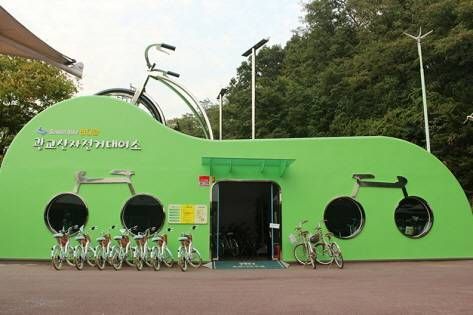
Bandicle Suwon rental station ©Suwon City Tourism Division
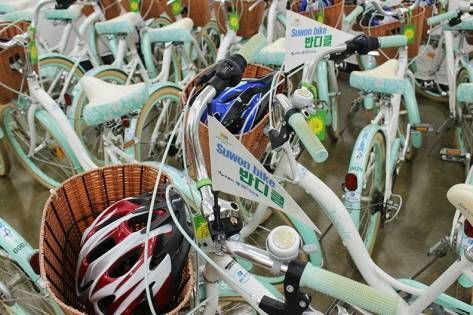
Bandicle Suwon bike ©Suwon City Tourism Division
For a faster way to explore Suwon, hop on a bike. The city operates a public bicycle service called Bandicle near Hwaseong Temporary Palace and Gwanggyosan Mountain. Its biggest advantage is the low rental fee—just 1,000 won for up to 4 hours on weekends, and unlimited riding on weekdays. A frog-themed helmet is provided and must be worn while riding.
[Bandicle]
- Haenggung Square station (1): Haenggung Square, 13-1 Namchang-dong, Paldal-gu, Suwon-si, Gyeonggi-do (경기도 수원시 팔달구 남창동 13-1 행궁광장)
- Gwanggyosan stations (2): Gwanggyosan Bus Terminal, 42-1 Sanggwanggyo-dong, Jangan-gu, Suwon-si (경기도 수원시 장안구 상광교동 42-1) / By the Firefly Restroom, 166 Gwanggyosan-ro, Jangan-gu, Suwon-si (경기도 수원시 장안구 광교산로 166)
- Operating period & hours: April 1 – November 30, 2025 / 10:00-18:00 (Gwanggyosan stations open on weekends only)
4. Flying Suwon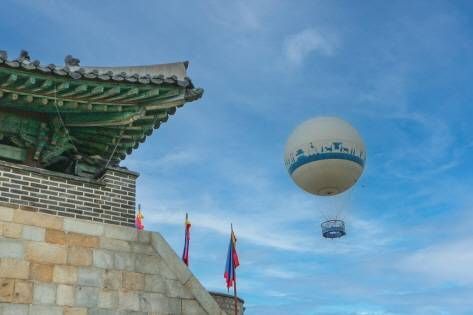
Flying Suwon ©Travel Leader 15th Gen., Son Hyun-seo
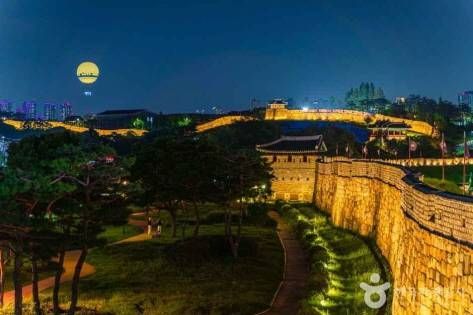
Night view of Hwaseong Fortress and Flying Suwon
For something unique and romantic, Flying Suwon is the perfect choice. This massive tethered helium balloon, 32 meters tall and 22 meters wide, rises 70 to 150 meters into the sky within moments. The thrill of lift-off quickly gives way to sweeping views of Hwaseong Fortress, Paldalsan Mountain, and Suwoncheon Stream. Any time of day is rewarding, but for the most unforgettable experience, ride at sunset and watch the city light up against the night sky.
- Address: 697 Gyeongsu-daero, Paldal-gu, Suwon-si, Gyeonggi-do (경기도 수원시 팔달구 경수대로 697)
- Operating hours: Weekdays 13:00–22:00 / Weekends & public holidays 11:00–22:00
| Cultural Festivals that Light Up Suwon by Day and Night1. Suwon Hwaseong Cultural Festival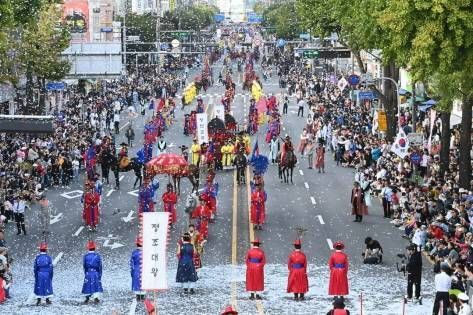
King Jeongjo’s Royal Procession (Joint Reenactment) ©Suwon City Tourism Division
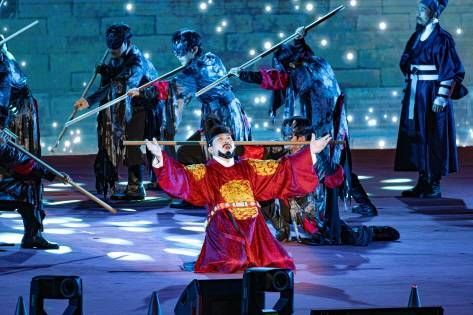
Suwon Fantasy “Yajo” performance ©Suwon City Tourism Division
The Suwon Hwaseong Cultural Festival has been the city’s signature event for over 60 years. It reimagines King Jeongjo’s historic eight-day royal procession with modern performances and interactive programs. Highlights include Korea’s largest royal parade, King Jeongjo’s Royal Procession (Joint Re-enactment), as well as nighttime military drills and water performances at Banghwasuryujeong Pavilion. With the fortress as its stage, music, dance, and media art come together in a dazzling spectacle. Visitors can also join in the fun through participatory programs like the high-energy Suwon Palanquin Race and Citizen Painters, a collaborative art project where everyone contributes to a giant painting.
[The 62nd Suwon Hwaseong Cultural Festival]
- Venue: Hwaseong Fortress area, 825 Jeongjo-ro, Paldal-gu, Suwon-si, Gyeonggi-do (경기도 수원시 팔달구 정조로 825 수원화성 일원)
- Event period: September 27 – October 4, 2025
- Inquiries: +82-31-5191-3647
- Website: shfestival.com/index
2. Suwon Hwaseong Media Art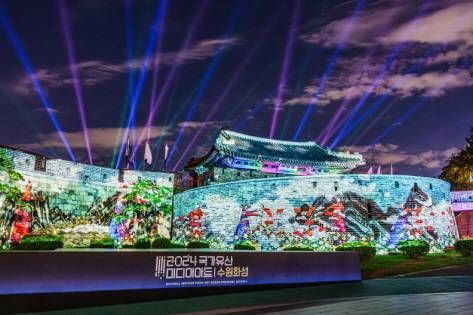
Suwon Hwaseong Media Art © Suwon City Tourism Division
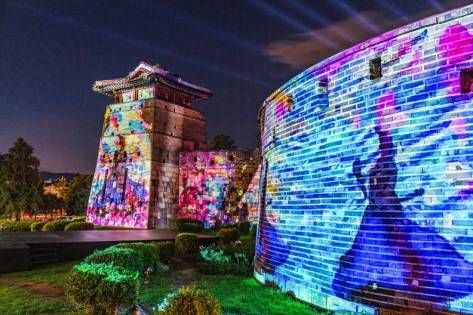
Suwon Hwaseong Media Façade © Suwon City Tourism Division
Alongside the Suwon Hwaseong Cultural Festival, the fortress transforms into a canvas of light. Now in its fifth year, the program showcases media artworks that reinterpret King Jeongjo’s achievements, philosophy, and dreams. Visitors can enjoy lighting installations that make use of the surrounding trees and walkways, immersive media experience zones, and more. Adding a global pop-culture touch, the event also features media façades, a pop-up store, and photo zones created in collaboration with the world-famous Peanuts franchise.
[2025 Suwon Hwaseong Media Art “Mancheonmeongwal: King Jeongjo’s Dream Becomes Light” Season 5 “Saebit Festa”]
- Venue: Hwaseong Fortress (Hwaseomun Gate, Janganmun Gate, Jangan Park), 320-2 Yeonghwa-dong, Jangan-gu, Suwon-si, Gyeonggi-do (경기도 수원시 장안구 영화동 320-2 수원화성 화서문, 장안문, 장안공원 일원)
- Event period: September 27 – October 12, 2025 / Friday–Sunday 18:00–21:30
- Inquiries: +82-31-290-3622
- Website: www.swcf.or.kr/?p=317
3. Hwaseong Temporary Palace Night Opening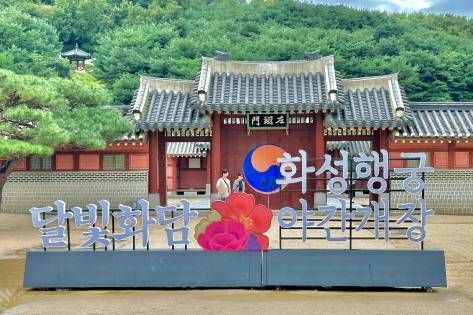
Hwaseong Temporary Palace © Travel Leader 15th Gen., Son Hyun-seo
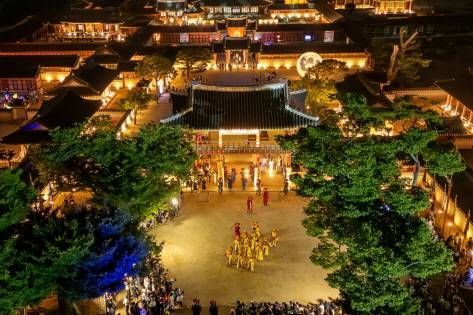
Hwaseong Temporary Palace Night Opening ©Suwon City Tourism Division
Curious what a royal palace looks like after dark? Don’t miss the Hwaseong Temporary Palace Night Opening, running through November under the theme “Dalbit Hwadam” (“Conversations in Moonlight and Flowers”). Six themed zones bring the palace to life at night, with flower-inspired installations, media art combining light and music, and hands-on experiences of traditional Korean games. Visitors wearing hanbok can even enter free of charge—making it the perfect chance to stroll the palace grounds in traditional style.
[2025 Hwaseong Temporary Palace Night Opening “Dalbit Hwadam”]
- Venue: Temporary Palace at Hwaseong Fortress, 825 Jeongjo-ro, Paldal-gu, Suwon-si, Gyeonggi-do (경기도 수원시 팔달구 정조로 825 화성행궁 일원)
- Event period: May 3 – November 2, 2025 / Friday–Sunday 18:00–21:30
- Inquiries: +82-31-290-3612
- * View English leaflet
| Suwon’s Trending Hotspots1. Haengnidan StreetHaengnidan Street alley / Café Montede
Once a quiet lane in Haenggung-dong, Haengnidan Street has rapidly risen as a hotspot for Millennials and Gen Z. The area generally refers to the stretch from Hwaseo Park to Hwahongmun Gate. Packed with characterful cafés, restaurants, studios, and select shops, it’s perfect for shopping, dining, or relaxing over dessert with friends and loved ones. The street has also featured as a filming location in hit K-dramas such as “Our Beloved Summer (2021),” “Extraordinary Attorney Woo (2022),” and “Lovely Runner (2024),” winning global attention.
- Address: 43 Hwaseomun-ro, Paldal-gu, Suwon-si, Gyeonggi-do (경기도 수원시 팔달구 화서문로 43)
- Operating hours: Vary by shop
2. Suwon Chicken Street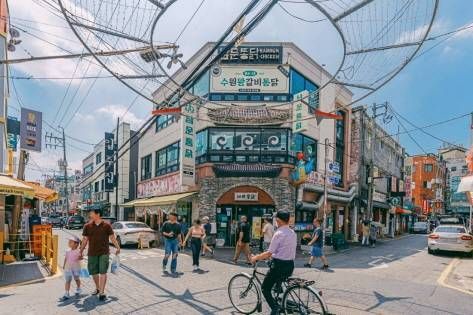
Suwon Chicken Street ©Danim 7th Gen., Jang Hana

Old-style whole fried chicken in a cauldron ©Danim 1st Gen., Cho Su-hong
Running along Suwoncheon Stream, Suwon Chicken Street is one of Korea’s most famous fried chicken alleys. Formed in the 1970s, it began as a cluster of vendors selling freshly slaughtered chicken, and has kept the tradition of deep-frying whole birds in large cast-iron cauldrons. Today, visitors can savor crispy-on-the-outside, juicy-on-the-inside old-style fried chicken, sweet and spicy sauced chicken, and Suwon’s signature Wanggalbi Chicken, chicken marinated in short rib seasoning—all at friendly prices.
- Address: 43 Hwaseomun-ro, Paldal-gu, Suwon-si, Gyeonggi-do (경기도 수원시 팔달구 화서문로 43)
- Operating hours: Vary by shop
3. Suwon Nammun Market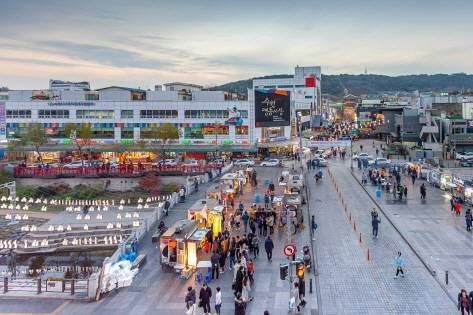
Exterior view of Suwon Nammun Market ©Korea Tourism Organization Photo Korea – Niotani Studio
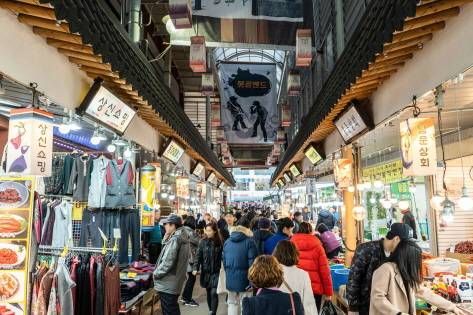
Interior view of Suwon Nammun Market ©Korea Tourism Organization Photo Korea – Niotani Studio
Suwon Nammun Market is the largest market complex in Gyeonggi-do, bringing together nine markets including Motgol Market, Minari-gwang Market, and Yeongdong Market. It’s beloved for its affordable yet delicious food—everything from snacks like doughnuts and hotteok to hearty Korean favorites such as stir fried gopchang sundae and kalguksu (noodle soup). Having served locals for generations, the market also sells a wide range of goods from daily necessities and clothing to fresh ingredients, making browsing itself part of the fun.
[Suwon Nammun Market]
- Address: 9 Paldalmun-ro, Paldal-gu, Suwon-si, Gyeonggi-do (경기도 수원시 팔달구 팔달문로 9)
- Operating hours: Vary by shop
- 1330 Korea Travel Helpline: +82-2-1330
- 1330 Text Chat: https://m.site.naver.com/1rEid
- (Korean, English, Japanese, Chinese, Russian, Vietnamese, Thai, and Indonesian)
* This column was last updated in September 2025, and therefore information may differ from what is presented here. We advise you to check for updates before visiting.

1330 Helpline Call/Chat

Start a FREE Online Call(No charges for calls on Wi-Fi /
Data charges may apply)

Open 1330 Helpline Chat(Download not required)