
Current language
English
- Log in
-
- Sydney Overseas Office
- London Overseas Office
- Toronto Overseas Office
- Los Angeles Overseas Office
- New York Overseas Office
- Ulaanbaatar Overseas Office
- Dubai Overseas Office
- New Delhi Overseas Office
- Manila Overseas Office
- Jakarta Overseas Office
- Hanoi Overseas Office
- Kuala Lumpur Overseas Office
- Singapore Overseas Office
- Bangkok Overseas Office
- Map
Popular search
- Sydney Overseas Office
- London Overseas Office
- Toronto Overseas Office
- Los Angeles Overseas Office
- New York Overseas Office
- Ulaanbaatar Overseas Office
- Dubai Overseas Office
- New Delhi Overseas Office
- Manila Overseas Office
- Jakarta Overseas Office
- Hanoi Overseas Office
- Kuala Lumpur Overseas Office
- Singapore Overseas Office
- Bangkok Overseas Office
Contents View
-
-
-
Andong Soju: The Premium Soju Representing Korea
-
02/20/2025
-
3.1K
0
0
-
-
-
-
Andong Soju: The Premium Soju Representing Korea
When & Where

Andong Soju (unrefined rice wine) can be enjoyed year-round.

Andong Soju can be found at restaurants near popular tourist spots in Andong, as well as at the Andong Soju Museum, Myeongin Andong Soju Sales Center, and the Il-yeop-pyeonju Distillery next to the Nongam Jongtaek.
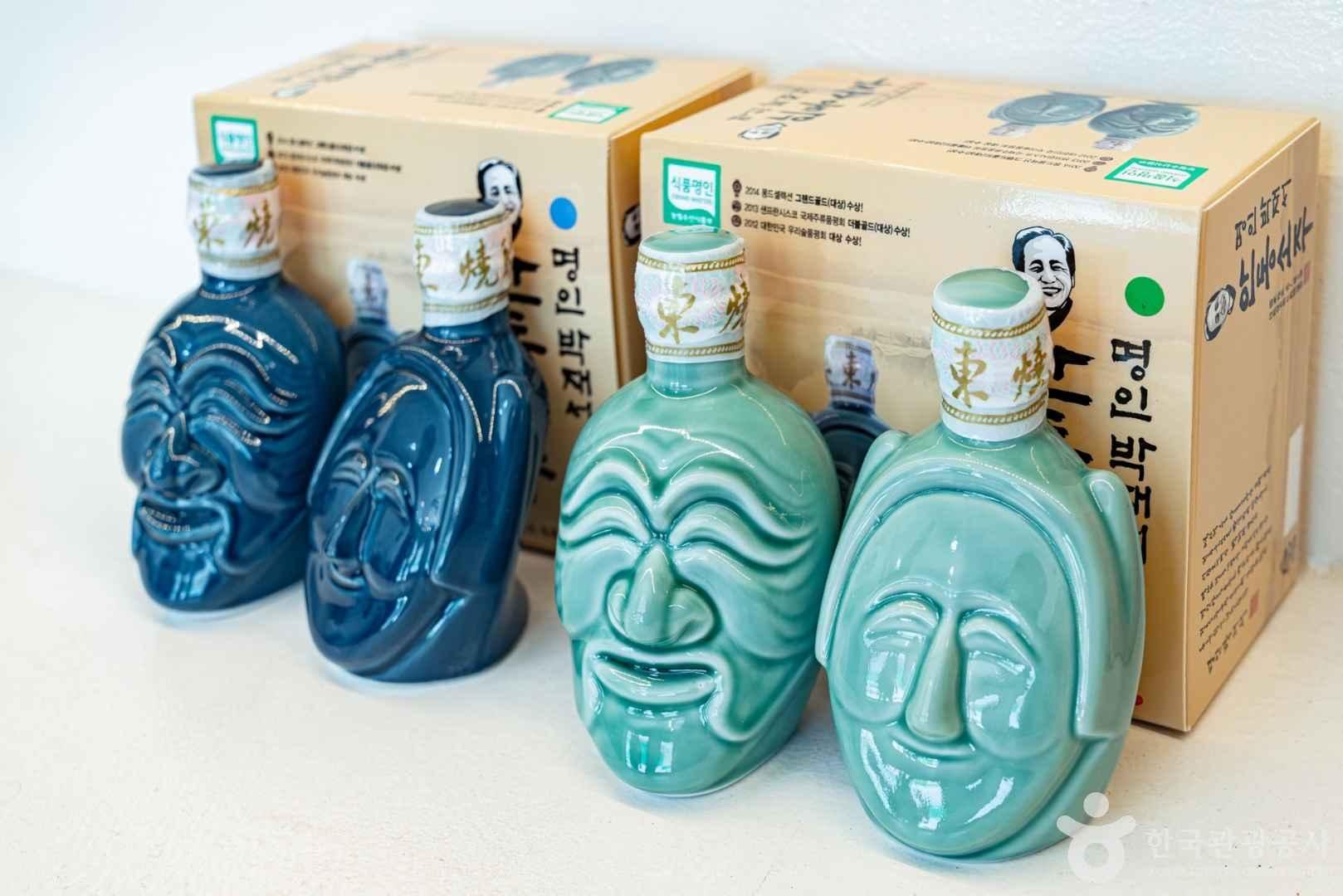
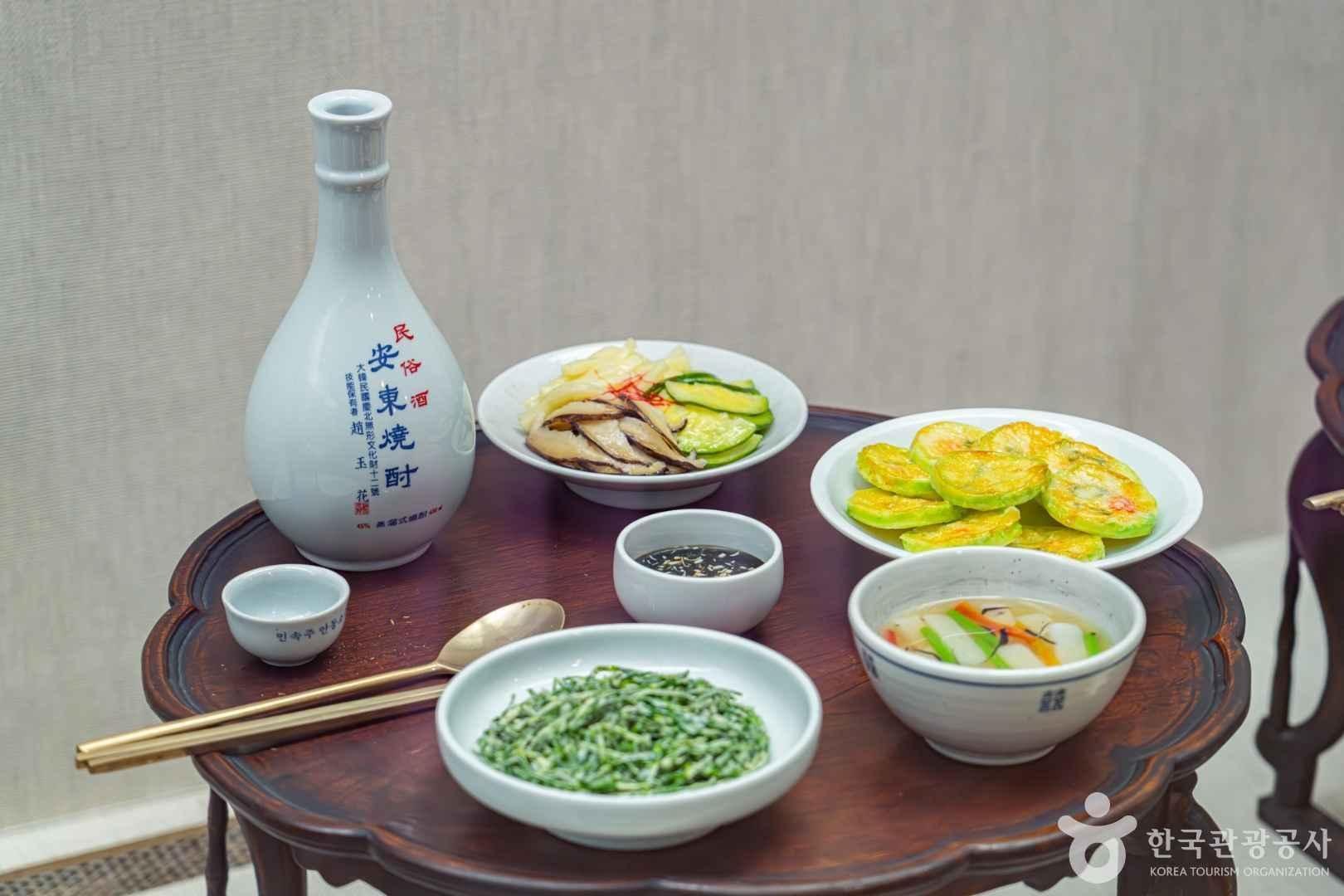

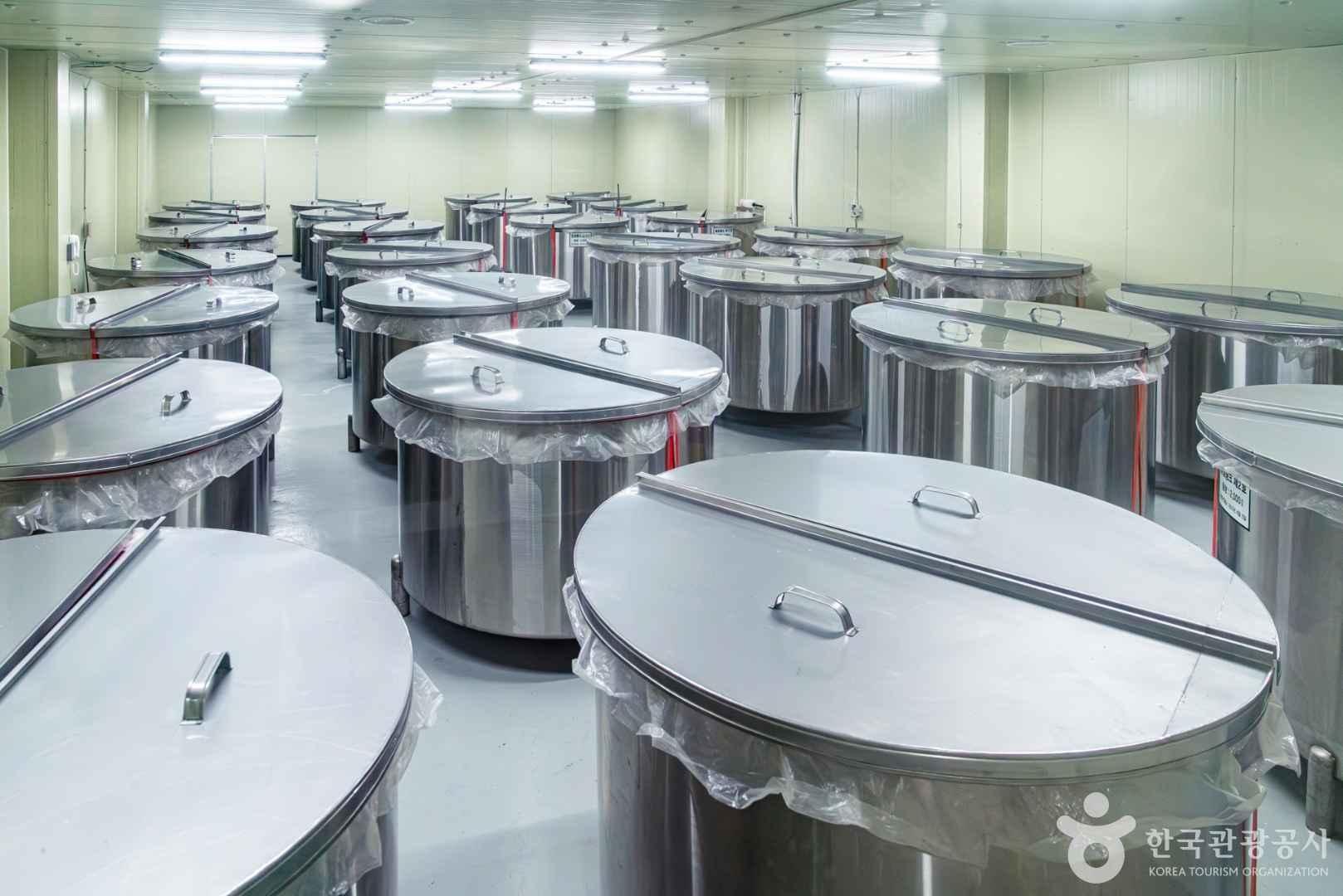
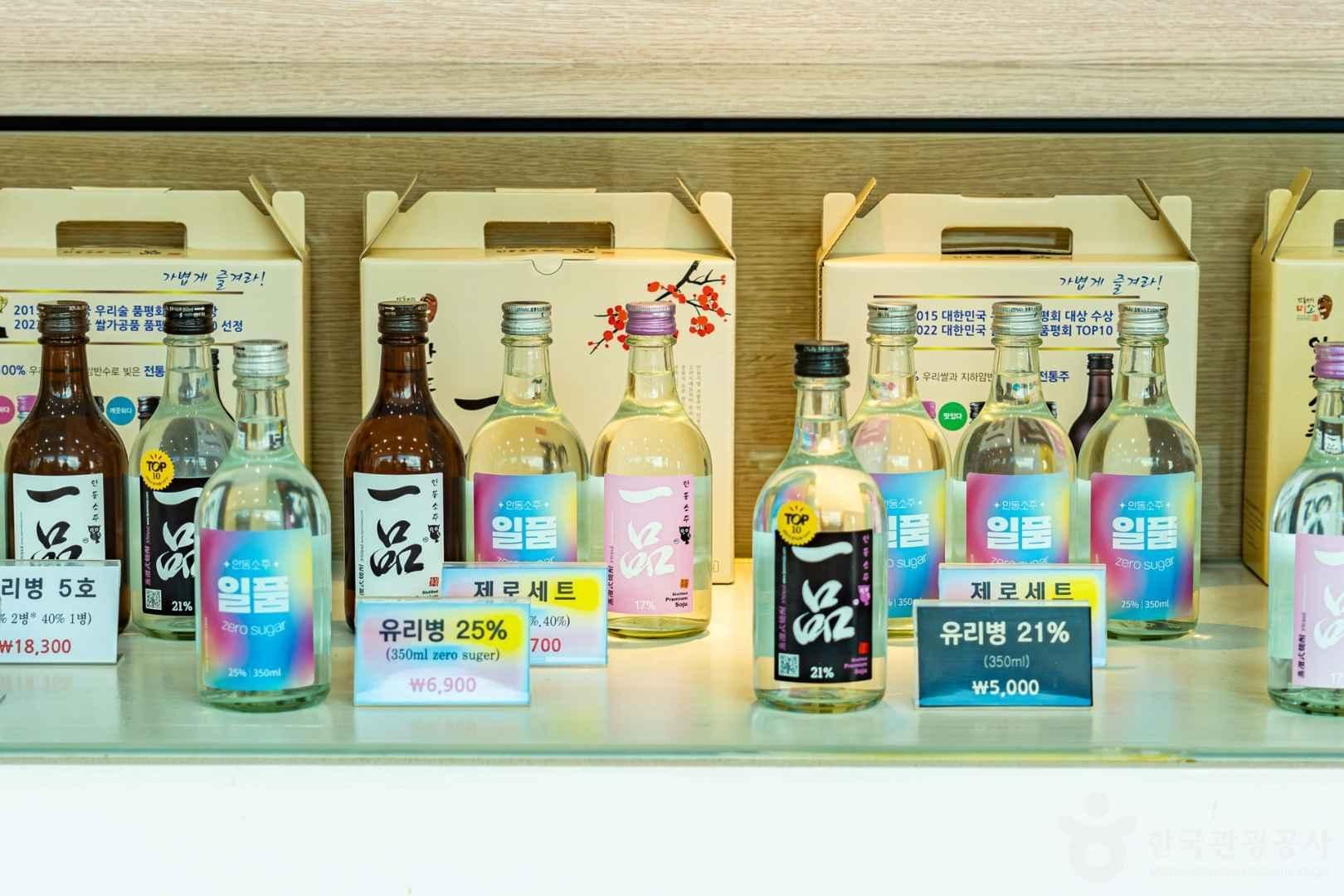
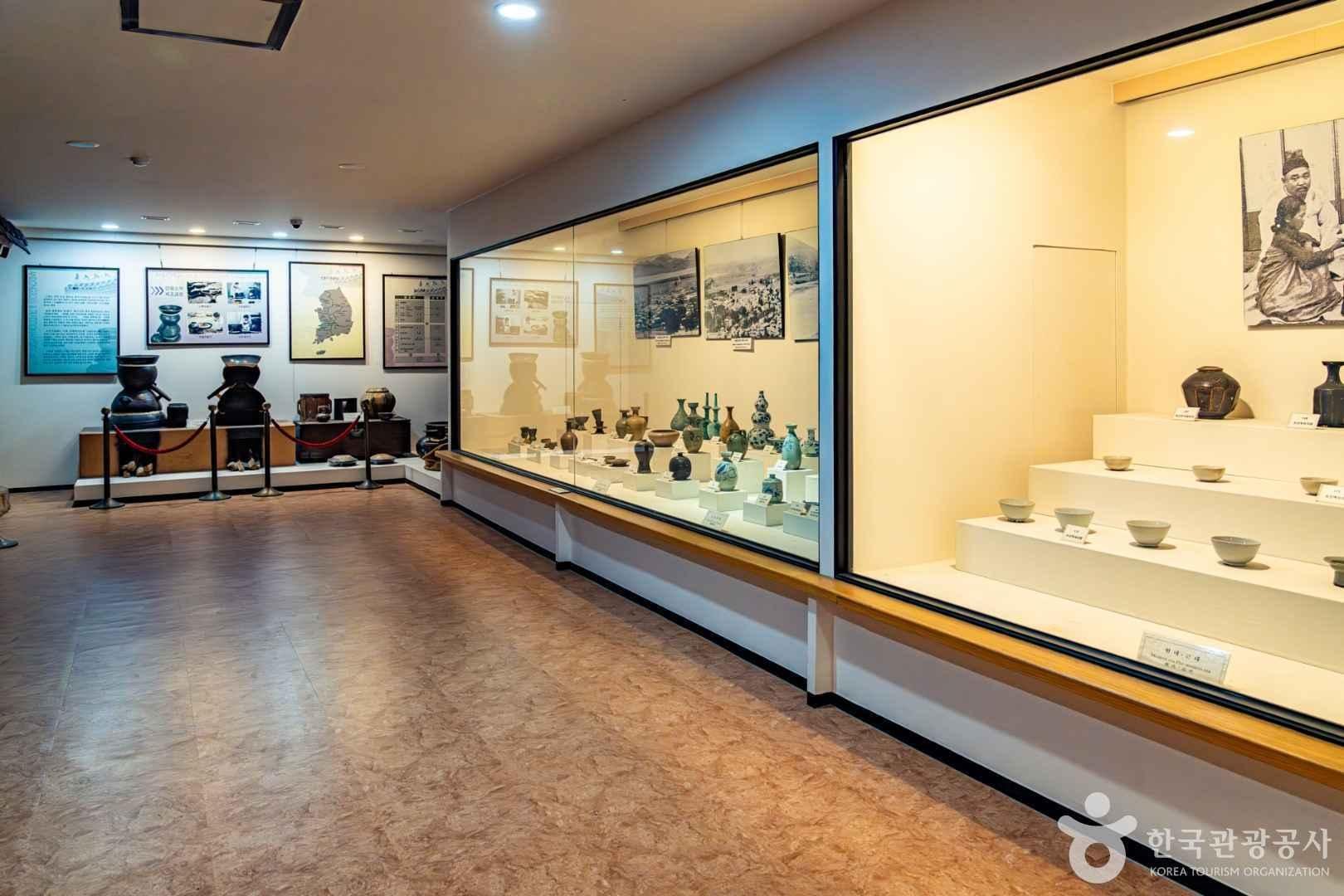
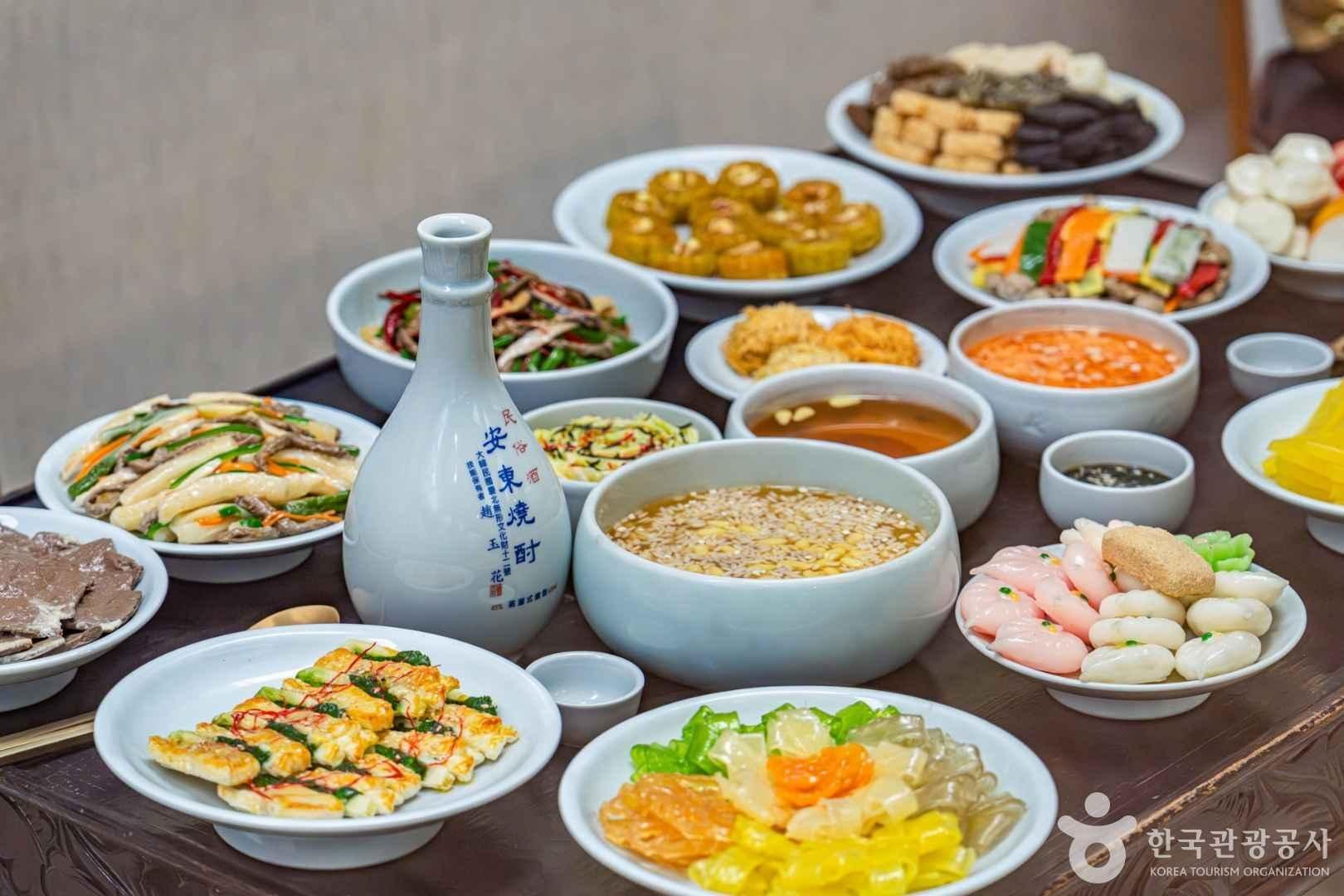
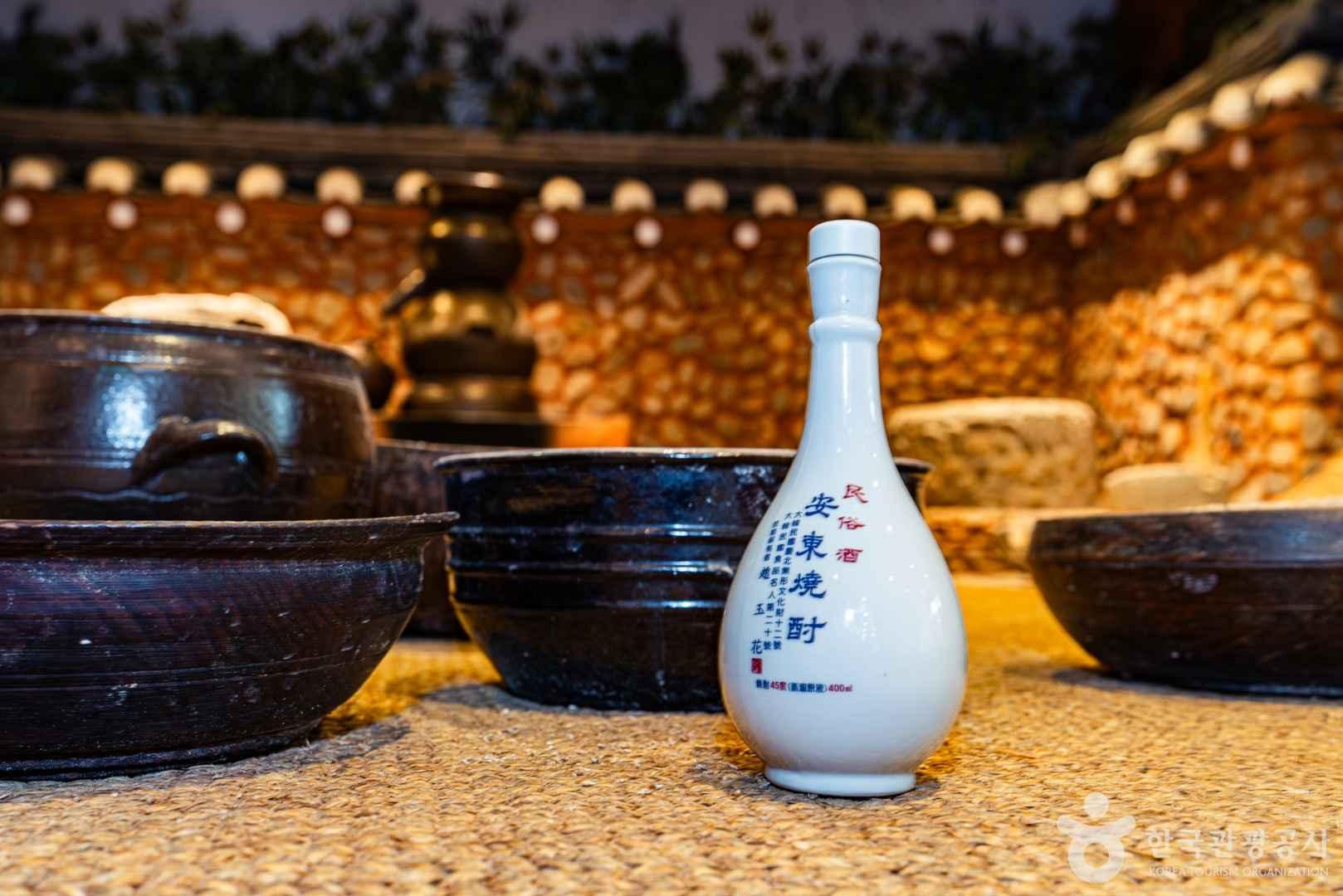
If we were to name the most beloved and enjoyed alcoholic beverage among Koreans, it would undoubtedly be soju. Koreans typically enjoy soju alongside rich foods like samgyeopsal (grilled pork belly) or with warm soups. However, it's a stretch to call the commonly available soju a traditional liquor. This is because it is a diluted form of soju, made by mixing distilled alcohol (derived from grains like corn and tapioca, which is close to pure ethanol) with water and various other ingredients to achieve the desired alcohol content.
On the other hand, liquors designated as “traditional Korean liquor” are made by distilling base alcohol made with traditional yeast culture (nuruk), much like how whisky or brandy are made.
Korea boasts a rich heritage of traditional liquors, and the most famous “distilled soju” is Andong Soju of Andong, Gyeongsangbuk-do. Andong was historically a region of “yangban” (aristocracy), and many brewers continue the tradition of distilled alcohol.
Traditional Korean Liquor in Korean Fermenting Culture
Traditional Korean liquor-making cannot be separated from Korea’s broader fermentation culture. After all, Korea is represented by a variety of fermented foods, such as kimchi, doenjang (fermented soybean paste), ganjang (soy sauce), and alcoholic beverages. Just as doenjang and other fermented sauces begin from meju (fermented soybean blocks), traditional liquor starts with nuruk (a fermentation starter made from wheat or rice). For instance, mixing this nuruk with cooked rice and allowing it to ferment for 10 to 15 days, followed by straining the sediment, results in makgeolli (unrefined rice wine), one of Korea's representative traditional liquors.
Cheongju (refined rice wine) requires a more intensive production process. The first step in cheongju-making is creating the base by mixing the nuruk into rice or wheat to create a base liquor. This base is fermented with additional rice, and then more nuruk and rice are added for a secondary fermentation. After multiple rounds of fermentation, the liquor is filtered to produce the clear cheongju. With an alcohol content ranging from 15% to 18%, cheongju is easy to drink, offering a delightful sweetness from the rice and aromas absorbed during fermentation. Furthermore, distilling this cheongju extracts alcohol to create traditional distilled soju.
History of Andong Soju
There are multiple theories on the origins of soju in Korea, but it is widely accepted that the distillation technique was introduced during the Goryeo Dynasty from the Yuan Dynasty (Mongol Empire). In the 13th century, In the 13th century, as the Yuan Dynasty sought to conquer Japan, they established temporary bases in various regions of Korea, one of which was the area now known as Andong, Gyeongsangbuk-do. When King Chungnyeol, a commander of the Goryeo army allied with the Yuan forces, stayed in Andong for a month, he is said to have learned the method of brewing soju from the Yuan people. This distillation technique became one of the primary ways the residents of Andong brewed liquor.
Andong was a region home to many powerful clans. These clans took on great power as members of the yangban (aristocracy) during the Joseon period, and as their size grew, liquor production for ancestral rites became a common sight in Andong. As mentioned earlier, distilled soju requires a complex production process and can only produce small amounts at times, so it was usually used for rituals or to receive valued guests.
Starting in the 1990s, mass production of Andong Soju began to take shape. Master Jo Ok-hwa, a designated intangible cultural asset of Gyeongsangbuk-do, adhered to traditional methods while producing Andong Soju. The "Jo Ok-hwa Folk Andong Soju," produced by Master Kim Yeon-bak, who succeeded Jo Ok-hwa, became a notable example. Additionally, Master Park Jae-seo, who uses the secret recipe of the historically significant Banam Park clan to craft "Myeongin Andong Soju," gained popularity. Notably, Master Park Jae-seo inherited the large-scale brewing techniques of Jebiwonpyo soju, which had made Andong Soju famous nationwide, employing modern distillation facilities and bottling equipment in the process.
Andong Soju and the ABV
Andong Soju is traditionally made by mixing godubap (steamed glutinous rice with less water to make it less starchy) with nuruk and water to create a base, which is fermented then distilled. The distillation process yields a strong alcohol at 45% ABV, which is then diluted with water to the desired ABV. No additional materials are used in the process.
Because the ingredients are mostly the same, what determines the characteristics of Andong Soju can be found in the production method. Breweries use either traditional atmospheric distillation or vacuum distillation, which involves lowering the pressure to lower the boiling point. These methods are not unique to Andong Soju, but they have been used recently to classify its flavors and fragrances.
Atmospheric distillation is distillation conducted at standard atmospheric pressure. It is the most widely used distillation technique in liquor production and is the method employed for the traditional production of soju and whisky. The process distills alcohol with different substances that add flavoring and fragrance to the liquor. However, some fragrance may be lost or changed because distillation happens at high temperatures. “Cho Ok Hwa Minsokju Andong Soju” by master distiller Kim Yeon-bak is made with this method.
Vacuum distillation involves lowering the pressure to lower the boiling point. It is used to distill heat-sensitive substances and preserve the fragrance of the spirit. Spirits made with vacuum distillation tend to be gentler and cleaner in the palate and better retain the unique flavors of materials used. Master distiller Park Jae-seo’s “Myeongin Andong Soju” utilizes this method.
The Emergence of New Andong Soju
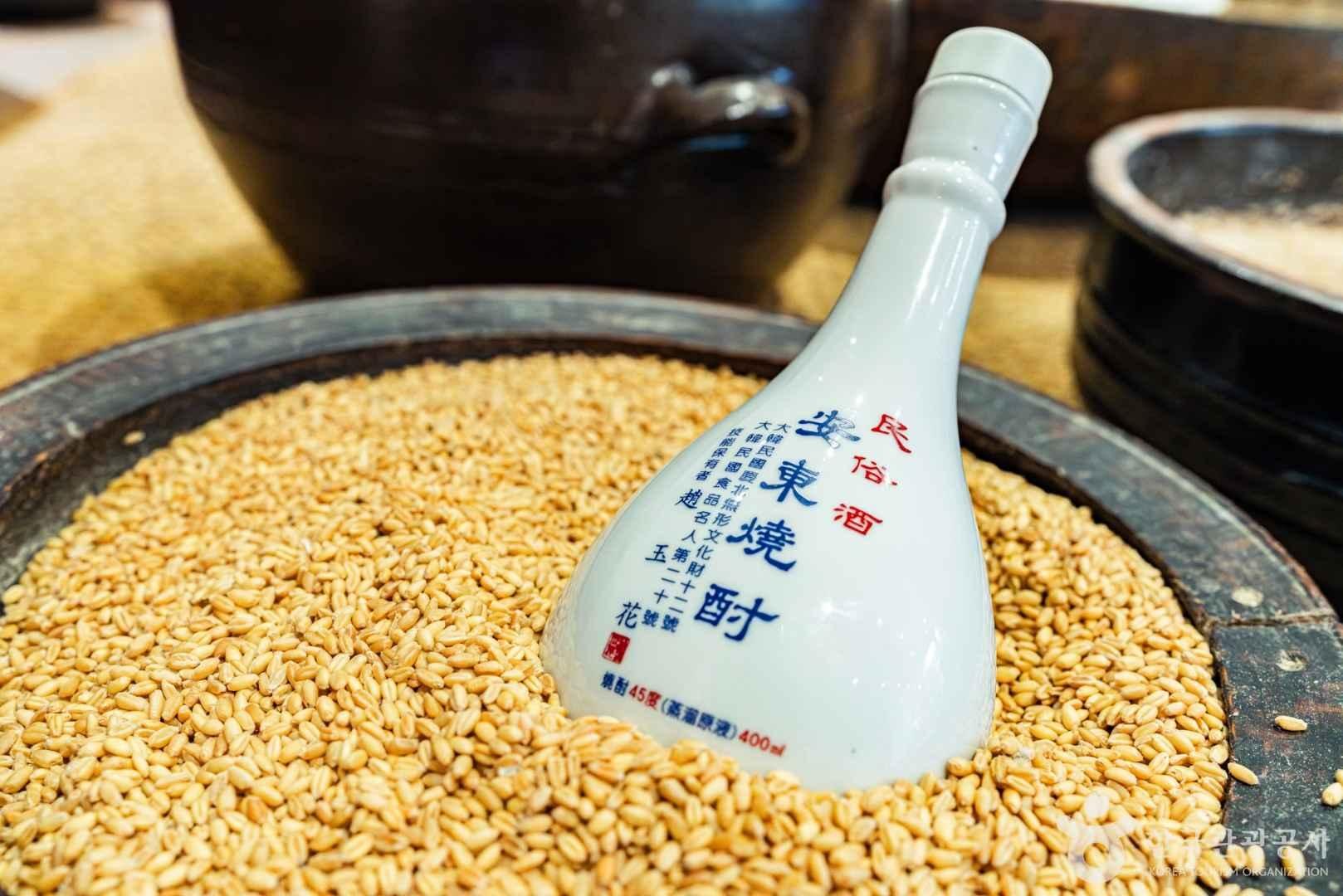
More recently, Andong Soju, produced with different techniques, ingredients, and flavors, has captured the attention of connoisseurs. Two examples of the new Andong Soju are Jinmaek Soju from Menge Craft Distillery and Ellyeop Pyunjoo from Nongam Head House. Jinmaek Soju is a wheat soju made with 100% organic wheat grown by the producer. Wheat soju was once a mainstay of Andong’s yangban families, so much so that it was featured in the cookbook Suunjapbang (A Selection of Culinary Recipes), written by Kim Yu in 1540, but its tradition was lost over time. In some ways, Jinmaek Soju managed to revive this tradition: Though Jinmaek Soju is not the exact recreation of wheat soju recorded in Suunjapbang, the fact that the lost tradition of wheat soju is being revived is certainly a notable one.
Ellyeop Pyunjoo of Nongam Head House is also quite interesting. Nongam Head House is a house built by Yi Hyeon-bo, a poet and a literary official during King Jungjong’s reign of Joseon, as the main house of his clan. Ellyeop Pyunjoo began in 2020 when the scion of the clan began producing the liquor according to traditional methods. Ellyeop Pyunjoo is characterized by its stringent adherence to tradition. It only uses water, rice, and nuruk, and all processes involved in its production are done by hand. This is the reason why you can often see nuruk being made in front of Nongam Head House. Because Ellyeop Pyunjoo is produced in very small batches, it can be quite difficult to acquire. Moreover, despite being a relatively new addition to Andong Soju, Ellyeop Pyunjoo has proven to be very popular among those seeking to sample Andong Soju, which is made with an unfailing dedication to traditional methods.
Experience Information
Nongam Head House
Nongam Head House is a house built by Yi Hyeon-bo, a poet and a literary official during King Jungjong’s reign of Joseon. His descendants still live in the house and produce makgeolli, soju, and other liquor according to traditional methods. Nongam Head House produces Ellyeop Pyunjoo using only water, rice, and traditional nuruk. All processes involved in its production are done by hand. Ellyeop Pyunjoo can be purchased in the shop in front of Nongam Head House, but it is often sold out, so it is recommended that you purchase it online. Nongam Head House also offers hanok stay programs.

Address:
162-133 Gasong-gil, Dosan-myeon, Andong-si, Gyeongsangbuk-do
Operating Hours:
10:00–16:00 (closed on weekends and holidays)
Traditional liquor sold:
Ellyeop Pyunjoo Soju, Ellyeop Pyunjoo Cheongju, Ellyeop Pyunjoo Takju
Parking:
No on-site parking; nearby parking available at the parking lot in front of Nongam Head House
Menge Craft Distillery
Menge Craft Distillery is the producer of Jinmaek Soju. Jinmaek Soju is made with 100% organic wheat grown in Maengge Village, a village at the midstream of Nakdonggang River. There are three variants on offer, at 22%, 40%, and 53% ABV, and the distillery also offers basic café beverages.
Address:
32 Seonseongjungang-gil, Dosan-myeon, Andong-si, Gyeongsangbuk-do
Contact:
+82-54-841-1105
Operating Hours:
10:00–18:00 (Closed every last Tuesday of the month)
Traditional liquor sold:
Jinmaek 22, Jinmaek 40, Jinmaek 53, Jinmaek Oak, etc.
Parking:
No on-site parking; nearby parking available at Yekki Village Public Parking Lot
Website:
3d.co.kr (language: Korean)
Andongsoju & Traditional Food Museum
This museum is run by the producers of Minsokju Andong Soju, which was developed by the late master distiller Cho Ok-hwa as a part of her efforts to keep the tradition of Andong Soju alive. It has an exhibition on the production process of Andong Soju and the like, and you can also sample and purchase Andong Soju.
Address:
71-1 Gangnam-ro, Andong-si, Gyeongsangbuk-do
Contact:
+82-54-858-4541
Operating Hours:
09:00–17:00
Admission:
Free
Program:
Andong Soju free tasting, Andong Soju production demonstration (irregular schedule)
Parking:
Available (up to 50 spaces)
Website:
andongsoju.net (languages: Korean, English, Japanese, and Chinese)

1330 Helpline Call/Chat

Start a FREE Online Call(No charges for calls on Wi-Fi /
Data charges may apply)

Open 1330 Helpline Chat(Download not required)



Open messenger app(Messenger app must be installed)