
Current language
English
- Log in
-
- Sydney Overseas Office
- London Overseas Office
- Toronto Overseas Office
- Los Angeles Overseas Office
- New York Overseas Office
- Ulaanbaatar Overseas Office
- Dubai Overseas Office
- New Delhi Overseas Office
- Manila Overseas Office
- Jakarta Overseas Office
- Hanoi Overseas Office
- Kuala Lumpur Overseas Office
- Singapore Overseas Office
- Bangkok Overseas Office
- Map
Popular search
- Sydney Overseas Office
- London Overseas Office
- Toronto Overseas Office
- Los Angeles Overseas Office
- New York Overseas Office
- Ulaanbaatar Overseas Office
- Dubai Overseas Office
- New Delhi Overseas Office
- Manila Overseas Office
- Jakarta Overseas Office
- Hanoi Overseas Office
- Kuala Lumpur Overseas Office
- Singapore Overseas Office
- Bangkok Overseas Office
Contents View
-
-
-
Skate: No Pain, No Gain
-
02/20/2025
-
1.4K
0
0
-
-
-
-
Skate: No Pain, No Gain
When & Where

Skate, or hongeo, is generally fermented and thus can be enjoyed anytime in the year, but it is most delicious from November to March when they fatten up for winter.

Restaurants serving skate can be found across Mokpo in Jeollanam-do.
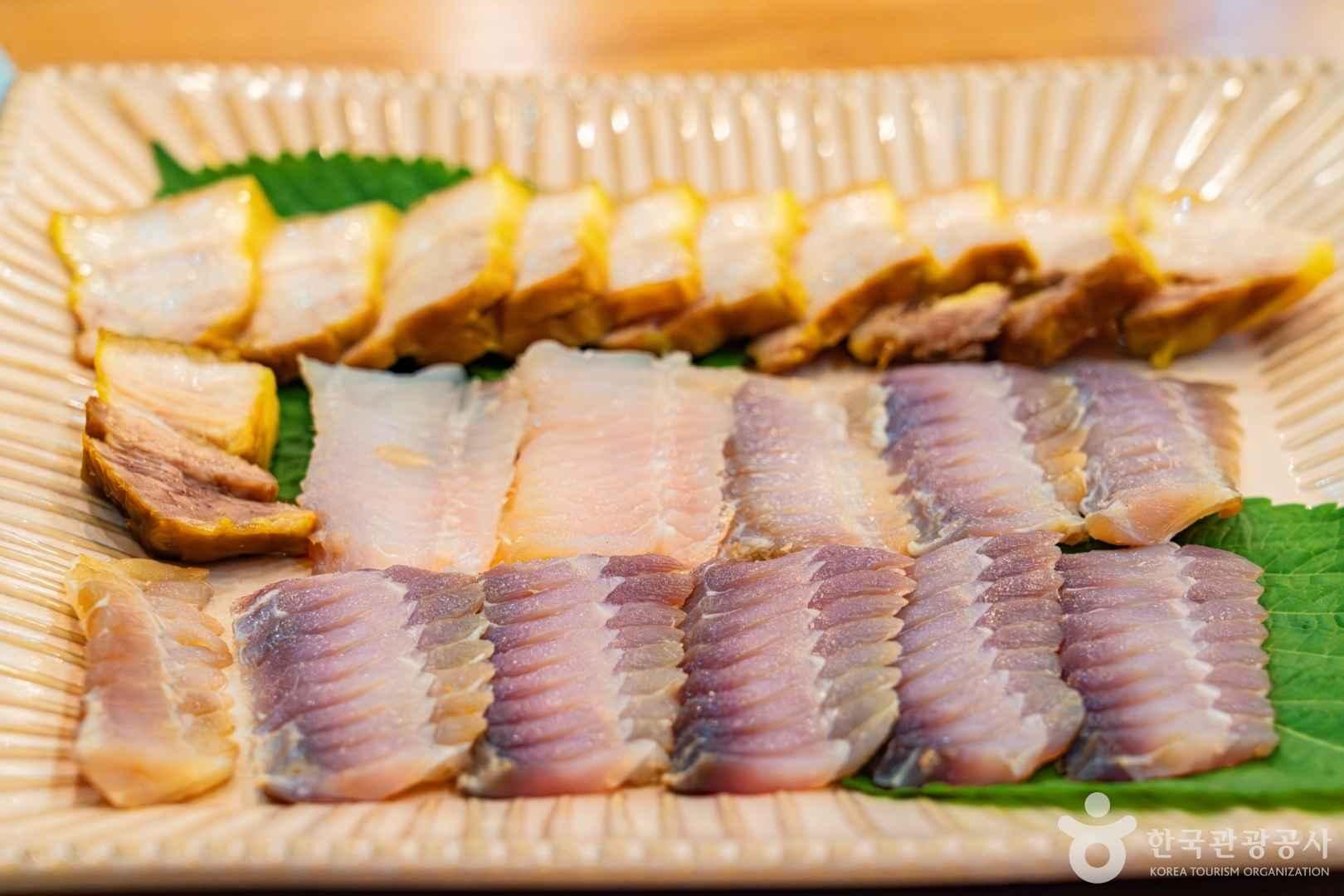
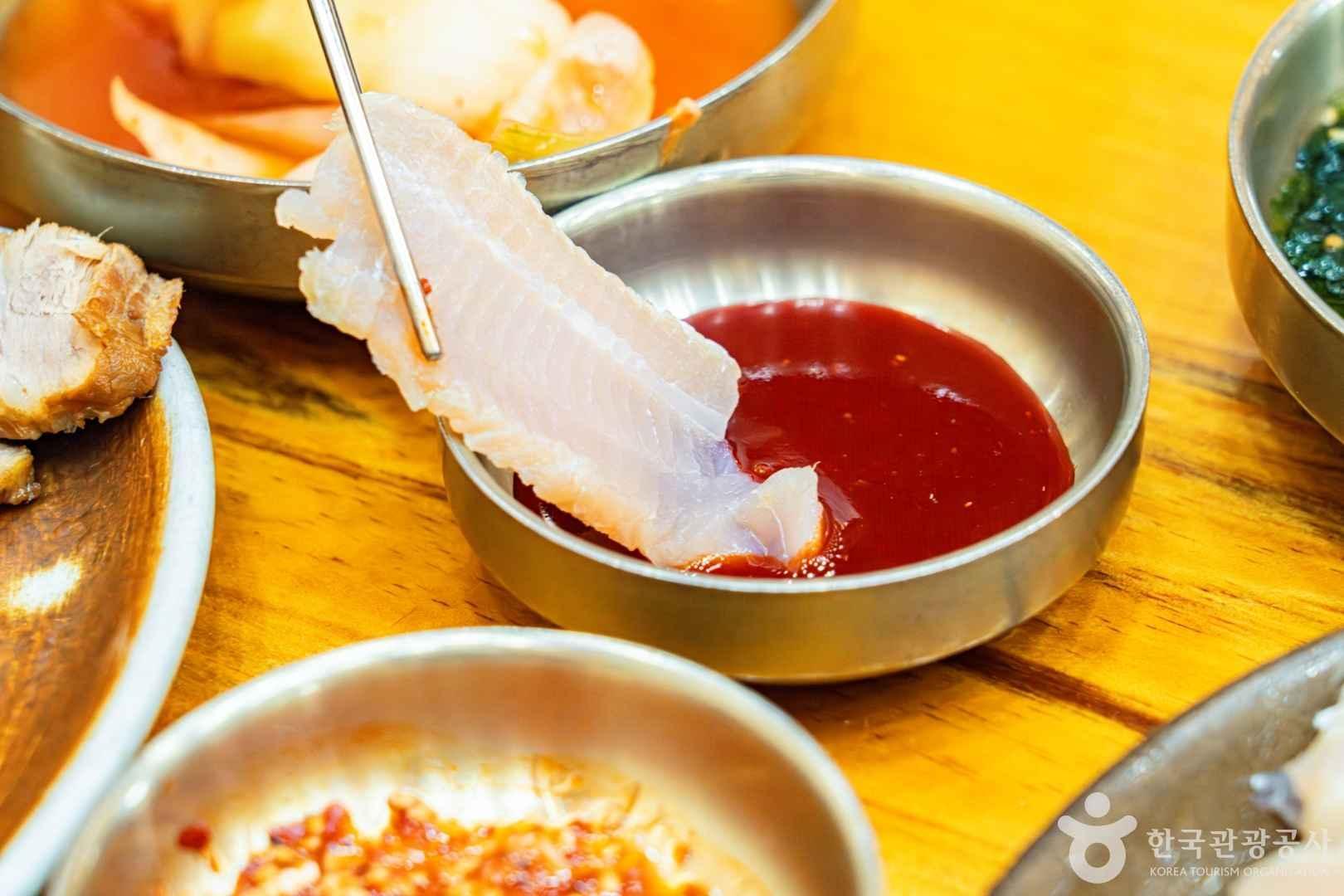

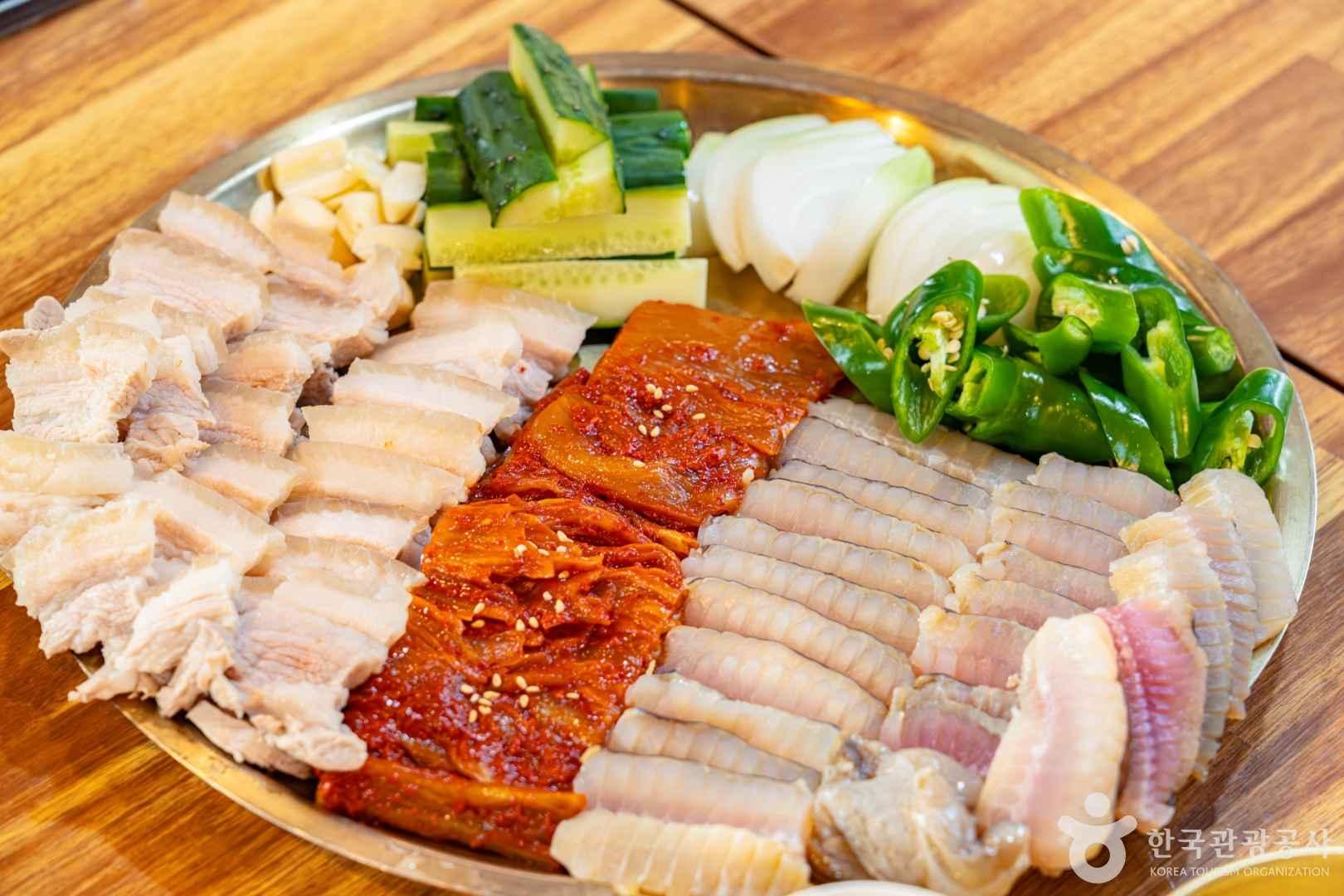
There is a Korean proverb, "gojingamnae (苦盡甘來)," which translates to "sweetness comes after bitterness." This phrase implies that one must endure hardships to achieve success. Why does this article begin with this idiom, then? Fermented skate is a food that requires some endurance of bitterness, so to speak, to be enjoyed.
Where to Find Skate
Skate, a sea fish belonging to Rajidae, can be found quite easily in Mokpo, Jeollanam-do. Mokpo is the place with the largest skate auction market in Korea. In fact, skate caught in the faraway Daecheongdo Island of Incheon is traded in Mokpo’s auction halls.
The former port of Yeongsanpo in Naju was more famous for skate in the past, but with the construction of the Yeongsangang River estuary bank, the river flow was blocked, shifting the center of skate distribution to Mokpo. But Naju’s reputation as a region for skate can still be felt, especially in restaurants that continue to offer skate.
Skate as a dish is most often associated with the people of Jeollanam-do, but it is caught across the western coast of Korea, as far south as Heuksando Island (in Sinan-gun, Jeollanam-do) and as far north as Daecheongdo Island (in Ongjin-gun, Incheon). The most famous among them is the skate caught on Heuksando Island. Heuksando Island skate is mostly sold in fish markets of Mokpo. However, the distance between Mokpo and Heuksando Island is 100 km. How did the people in the past bring their catch over to Mokpo without refrigeration?
The Discovery of Fermented Skate
It is said that people began enjoying skates fermented at room temperature when a skate fermented over the land journey from Heuksando Island to Mokpo or Yeongsanpo, Naju, was accidentally sampled. That is presumably the time when fermented skate began to be sold.
The reason why skate can be fermented without rotting can be found in the structure of its body. Cartilaginous fish, such as skates, rays, and sharks, store urea in relatively large amounts to maintain a proper level of osmosis in their plasma. When a skate dies, urea is broken down into ammonia and trimethylamine. These two substances ferment skate and give it its uniquely sharp flavor.
Fermented skate is a rather contentious dish, even among Koreans. Those willing to try it do so with a sense of challenge. If you get used to that, you begin to look for even more fermented ones, but if you can’t, you can still enjoy fresh skate. Fresh skate has a flavor that most seafood enjoyers can get behind. Such fresh skate can be found on Hongdo Island near Heuksando Island and the Incheon area.
Hongeosamhap: Science on the Table
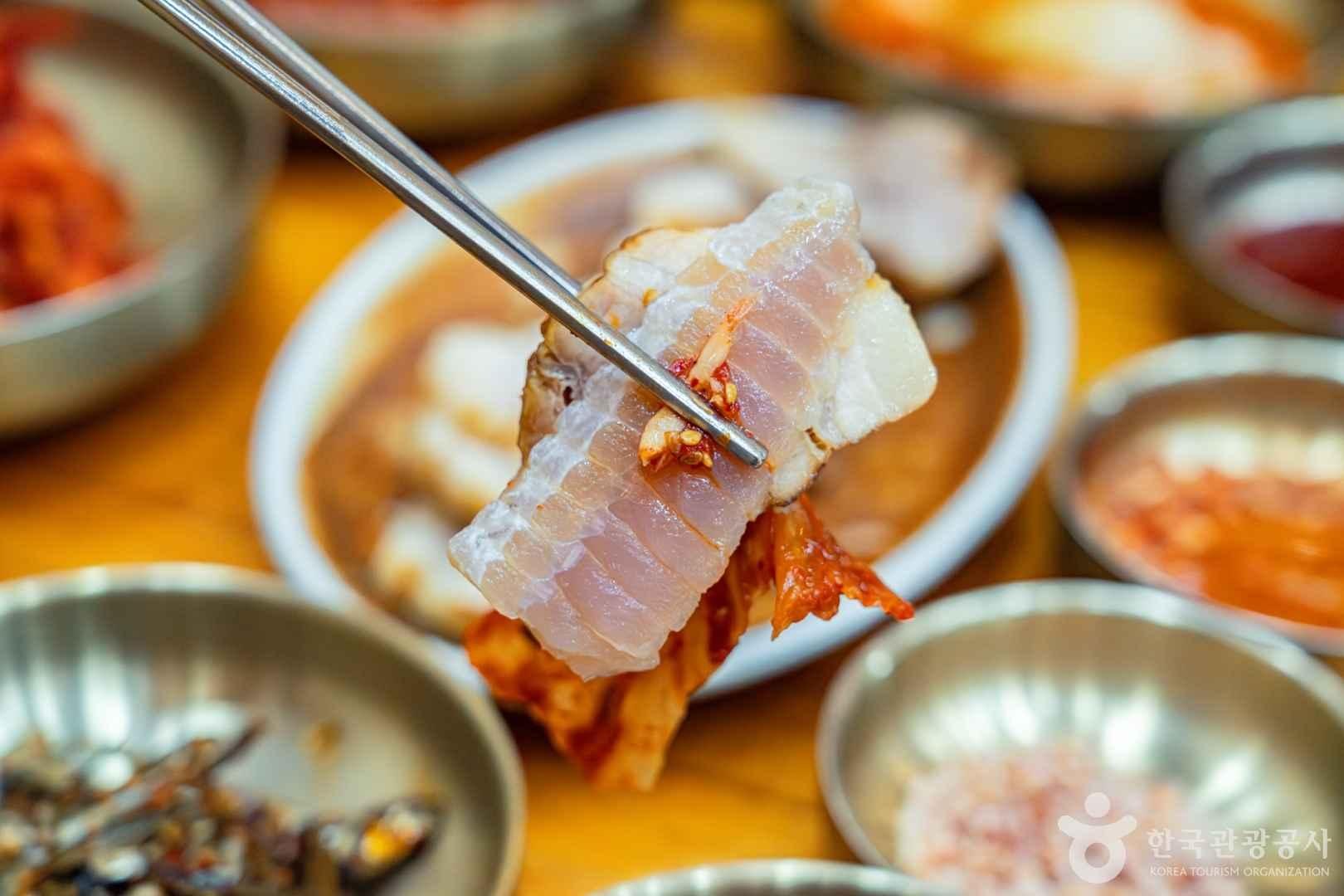
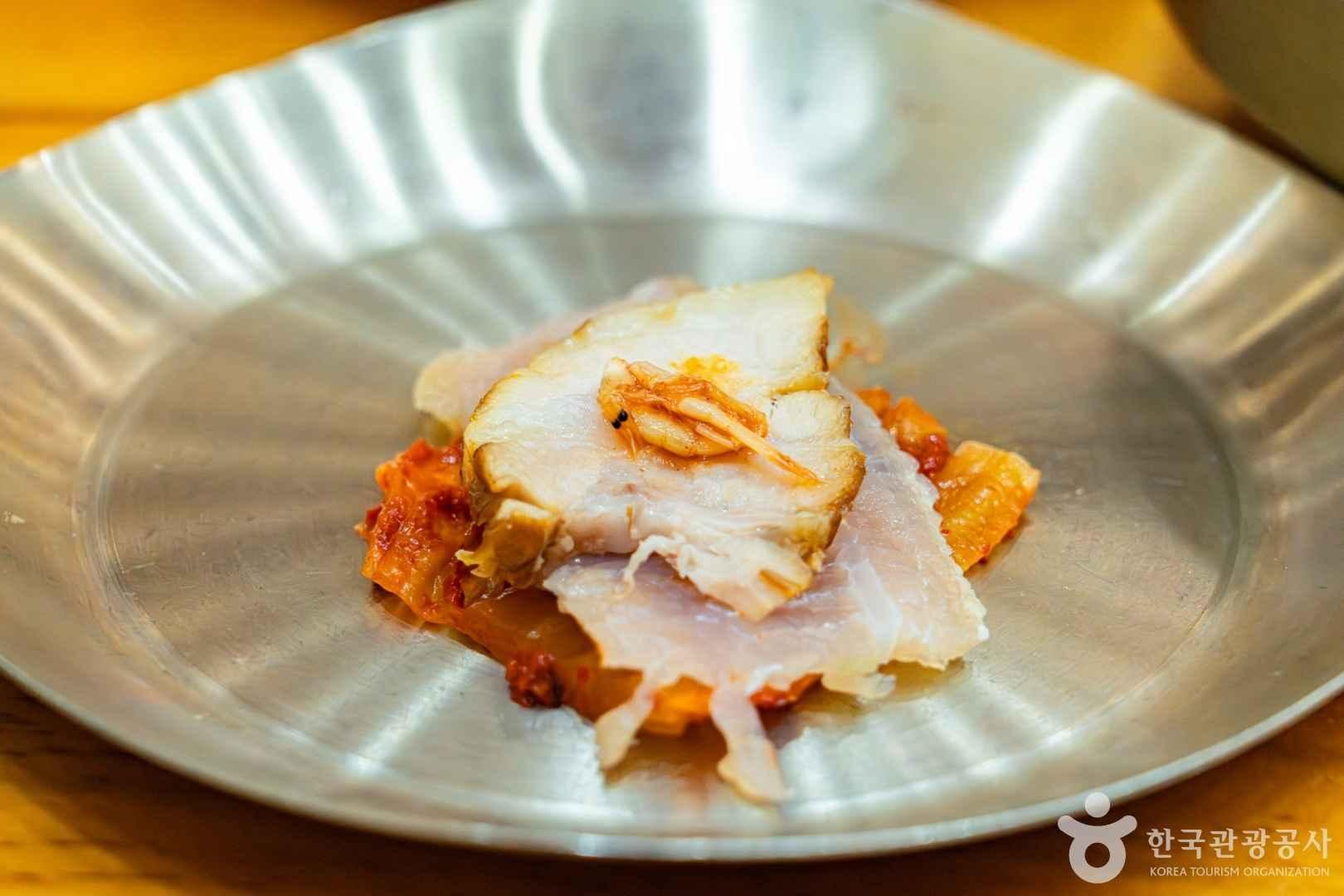
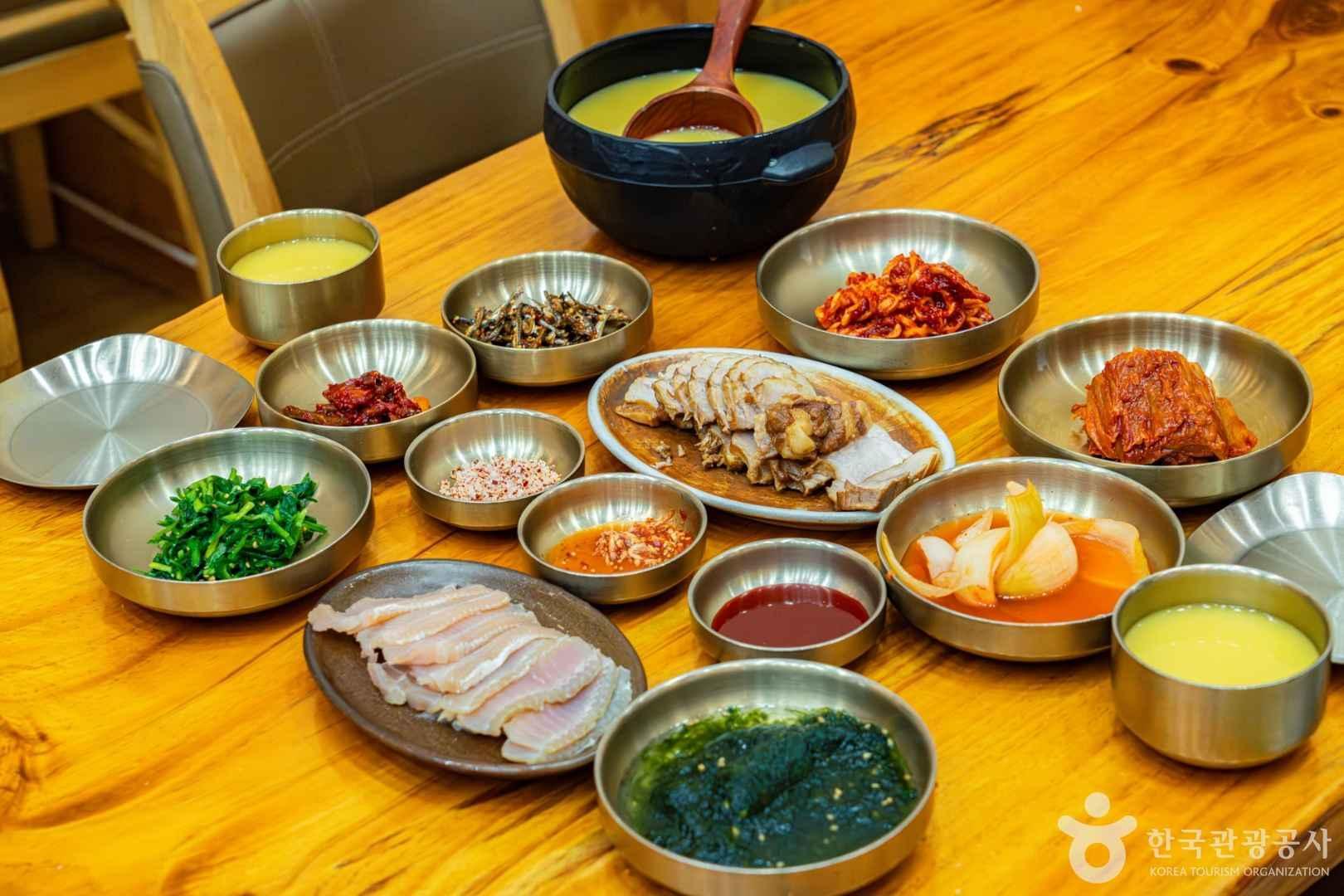
One way to enjoy fermented skate is to pair it with foods that mitigate the basic ammonia generated through fermentation. Aged kimchi is sour enough to mitigate the sharp flavor of ammonia, and once pork was made more common in the market, suyuk (boiled pork slices) was also added to complete the “hongeosamhap” (skate, pork, and kimchi combo) that we know today. Hongeosamhap’s combination of fermented skate, acidic kimchi, and fat and protein-rich pork is one of the most recognizable flavors of the Jeolla-do region.
The way to enjoy hongeosamhap is as follows: Place a piece of kimchi on a plate, then put a slice of fermented skate and suyuk onto the kimchi. You can add garlic or hot chili pepper to taste. The important thing about hongeosamhap is to put everything into your mouth at the same time, rather than cutting it up, and start chewing. At first, you feel the characteristic sting of fermented skate, but the flavor of kimchi dulls the sting. Moreover, the texture and flavor of pork round out the palate. Add a sip of makgeolli (unrefined rice wine), and you will know why its fans swear by it.
Different Ways to Enjoy Skate
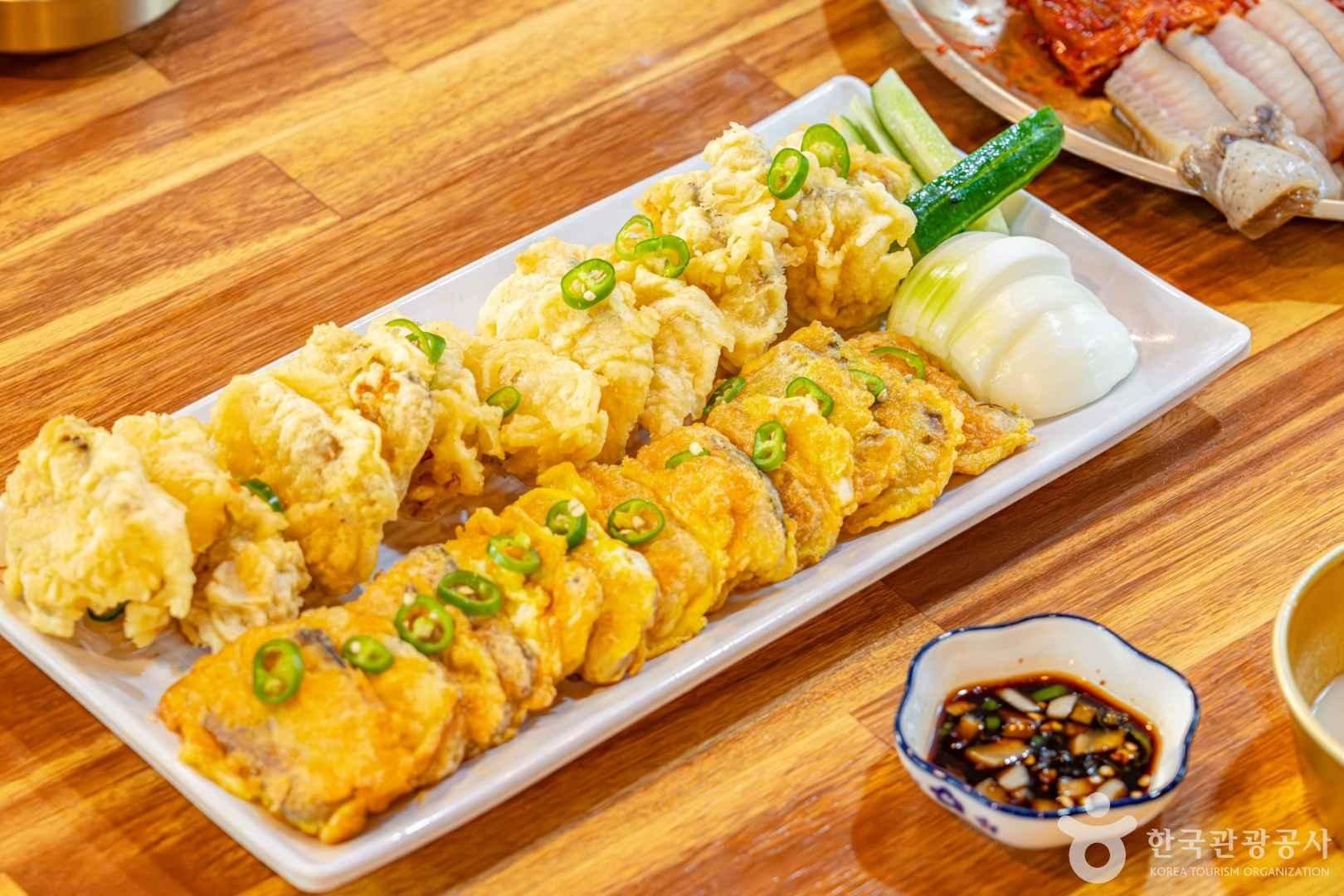
The next step up the ladder from hongeohoe (sliced raw skate) is hongeojeon (pan-fried battered skate fillet) and hongeotwigim (deep-fried skate fillet). This is because heating fermented skate amplifies the odor of ammonia as the batter traps the ammonia within itself. Because of this, the barriers to sampling them are higher, but they also offer the flavor and fragrance of skate in equal depth.
Another skate dish is made with skate intestines. The skate’s liver is known as “ae.” Hongeoae (skate liver) is lauded for its savory flavor when dipped into a sauce made of sesame oil and salt. Hongeoae is also made into soup. When boiled in a soup, the liver’s ammonia content dissipates into the air, resulting in a soup with less odor.
In coastal areas of Gangwon-do, dried skate or ray are steamed, seasoned with soy sauce, and placed on the offering table as a part of ancestral ceremonies.
Rays, Similar but different
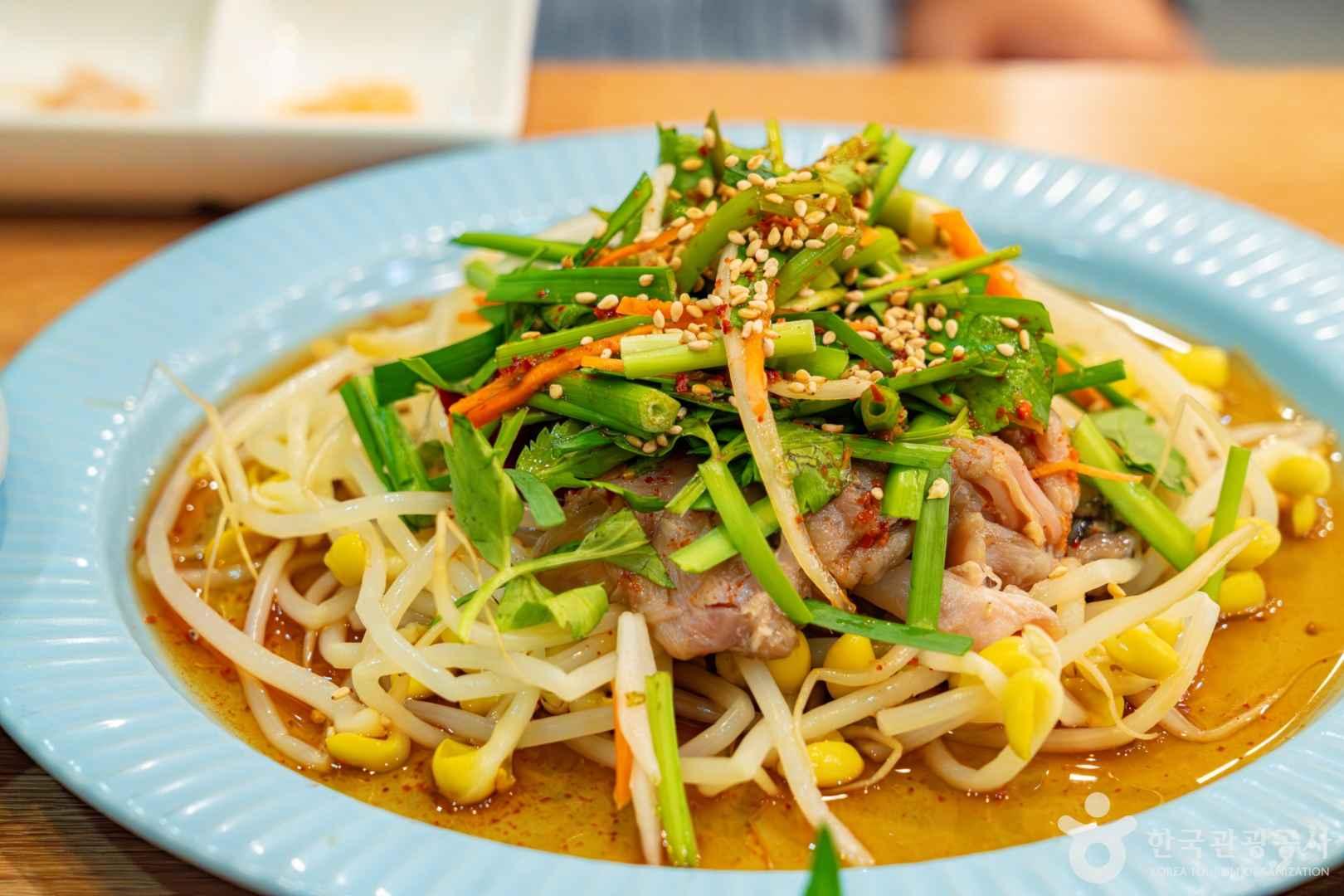
Skate and ray look rather alike, but there is an easy way to distinguish between them: The former has a pointy head, while the latter has a round head. Skate and ray fry are known as “ganjami” in Korea, and ganjami muchim (raw young skate and ray salad) can be found widely in portside restaurants on the western coast of Korea. Unlike other hoemuchim (spicy raw fish salad) dishes, ganjamimuchim has a crunchy texture thanks to cartilage. Because the skate and ray used in this dish are not fermented, it is an ideal dish for those who have not tried skate or ray before.
Restaurants Information
Namdo Arirang
This restaurant can be recommended to those who try skate for the first time, for the skate served in this restaurant is not as much fermented as the ones served in other restaurants. Its signature menu is the “Mokpoguhap” (nine Mokpo seafood combo), which includes the hongeosamhap and a variety of other seafood. Another popular set menu is the “Hongeo Ilpumsang” (premium skate set menu), a sumptuous table featuring dishes made with skate. Don’t miss the hongeoaeguk (fermented skate liver soup).

Address:
21 Yeongsan-ro 40beon-gil, Mokpo-si, Jeollanam-do
Contact:
+82-61-244-0089
Signature Menu:
Mokpoguhap 190,000 KRW /
Hongeo Jeongsik (skate set menu) (for 1) 36,000 KRW /
Hongeo Ilpumsang 49,000 KRW /
Hongeoaeguk 10,000 KRW
Getting There:
Approx. 16 km from Mokpo TG on Seohaean Expressway /
Approx. 750 m from Mokpo Station on Honam Line (KTX, regular trains)
Parking:
Free
Seating:
82 seats
Menu Languages:
Korean
Indongju Maeul
This is a popular destination for hongeosamhap in Mokpo, a shop offering both Korean skate and imported skate, which tends to be more affordable. You can also sample Indongju, a liquor of choice for former president Kim Dae-jung.
Address:
5 Boksan-gil 12beon-gil, Mokpo-si, Jeollanam-do
Contact:
+82-61-284-4068
Signature Menu:
Hongeosamhap (Korean) 65,000 KRW /
hongeosamhap (imported) 35,000 KRW
Getting There:
There: Approx. 12 km from Mokpo TG on Seohaean Expressway /
Approx. 6.1 km from Mokpo Station on Honam Line (KTX, regular trains) /
Approx. 2.8 km from Mokpo Bus Terminal
Parking:
Available (up to 40 spaces)
Seating:
160 seats
Menu Languages:
Korean, English
Mokpo Ramyeon Hongeo Ramyeon
This restaurant offers interestingly new ways to enjoy skate. Its signature menu, hongeoramyeon (skate ramyeon), is not simply a ramyeon with skate added. It is cooked with a deep and intense soup made from the restaurant’s propriety seasoning. Other popular dishes include hongeojeon, hongeotwigim, and hongeosamhap made with properly fermented Korean hongeo.
Address:
16 Yeongsan-ro 40beon-gil, Mokpo-si, Jeollanam-do
Contact:
+82-61-245-4564
Signature Menu:
Hongeoramyeon 12,000 KRW /
Hongeosamhap (medium) 100,000 KRW /
Hongeojeon (medium) 65,000 KRW /
Hongeotwigim (medium) 65,000 KRW /
Hongeohoe (medium) 60,000 KRW /
Hongeohoemuchim (sliced raw skate salad) (medium) 70,000 KRW
Getting There:
Approx. 16 km from Mokpo TG on Seohaean Expressway /
Approx. 690 m from Mokpo Station on Honam Line (KTX, regular trails)
Parking:
Free
Seating:
32 seats
Menu Languages:
Korean

1330 Helpline Call/Chat

Start a FREE Online Call(No charges for calls on Wi-Fi /
Data charges may apply)

Open 1330 Helpline Chat(Download not required)



Open messenger app(Messenger app must be installed)