
Current language
English
- Log in
-
- Sydney Overseas Office
- London Overseas Office
- Toronto Overseas Office
- Los Angeles Overseas Office
- New York Overseas Office
- Ulaanbaatar Overseas Office
- Dubai Overseas Office
- New Delhi Overseas Office
- Manila Overseas Office
- Jakarta Overseas Office
- Hanoi Overseas Office
- Kuala Lumpur Overseas Office
- Singapore Overseas Office
- Bangkok Overseas Office
- Map
Popular search
- Sydney Overseas Office
- London Overseas Office
- Toronto Overseas Office
- Los Angeles Overseas Office
- New York Overseas Office
- Ulaanbaatar Overseas Office
- Dubai Overseas Office
- New Delhi Overseas Office
- Manila Overseas Office
- Jakarta Overseas Office
- Hanoi Overseas Office
- Kuala Lumpur Overseas Office
- Singapore Overseas Office
- Bangkok Overseas Office
Contents View
-
-
-
Oyster: The Ocean's Flavorful Treasure of the Winter
-
02/20/2025
-
5.1K
0
0
-
-
-
-
Oyster: The Ocean's Flavorful Treasure of the Winter
When & Where

Oysters naturally build up flavor and richness as they store fat to endure the cold sea temperatures from November to March. This seasonal change enhances their taste and aroma.

Numerous oyster farms can be found in Tongyeong and Geoje in Gyeongsangnam-do. Tongyeong Port, where oysters from these farms are brought in, is surrounded by restaurants specializing in oyster dishes. Many of these restaurants are especially concentrated near the Gangguan Harbor area.
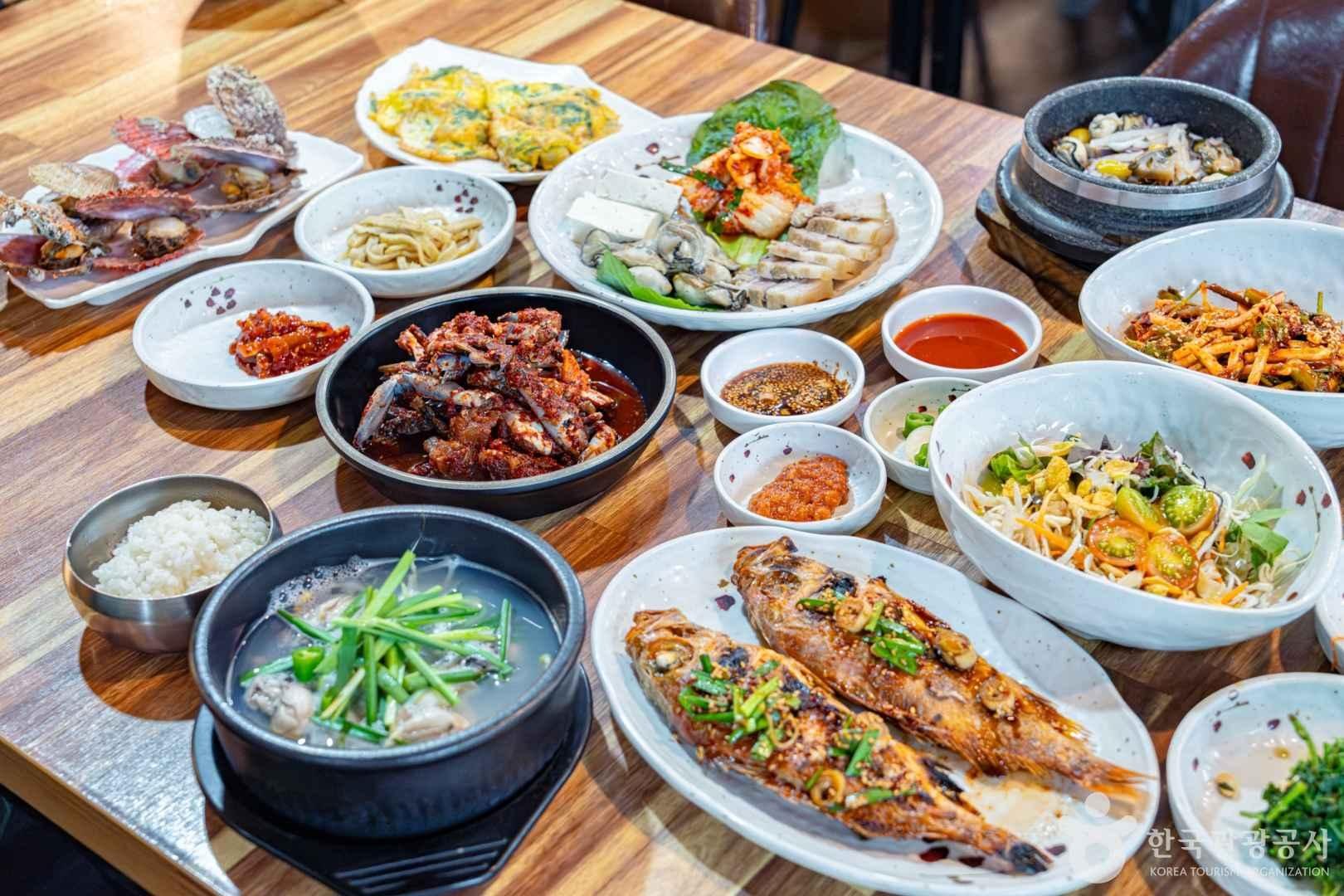
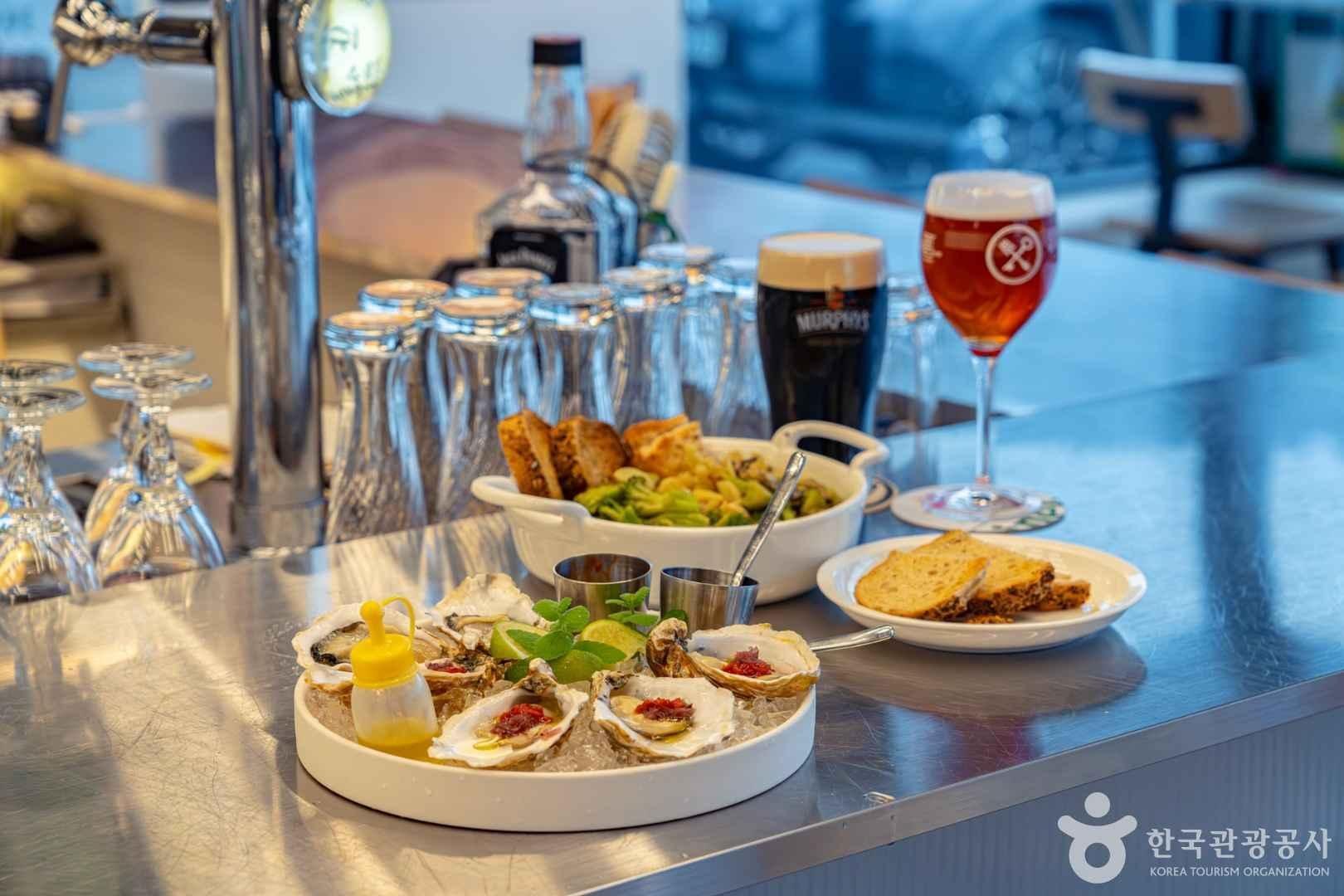
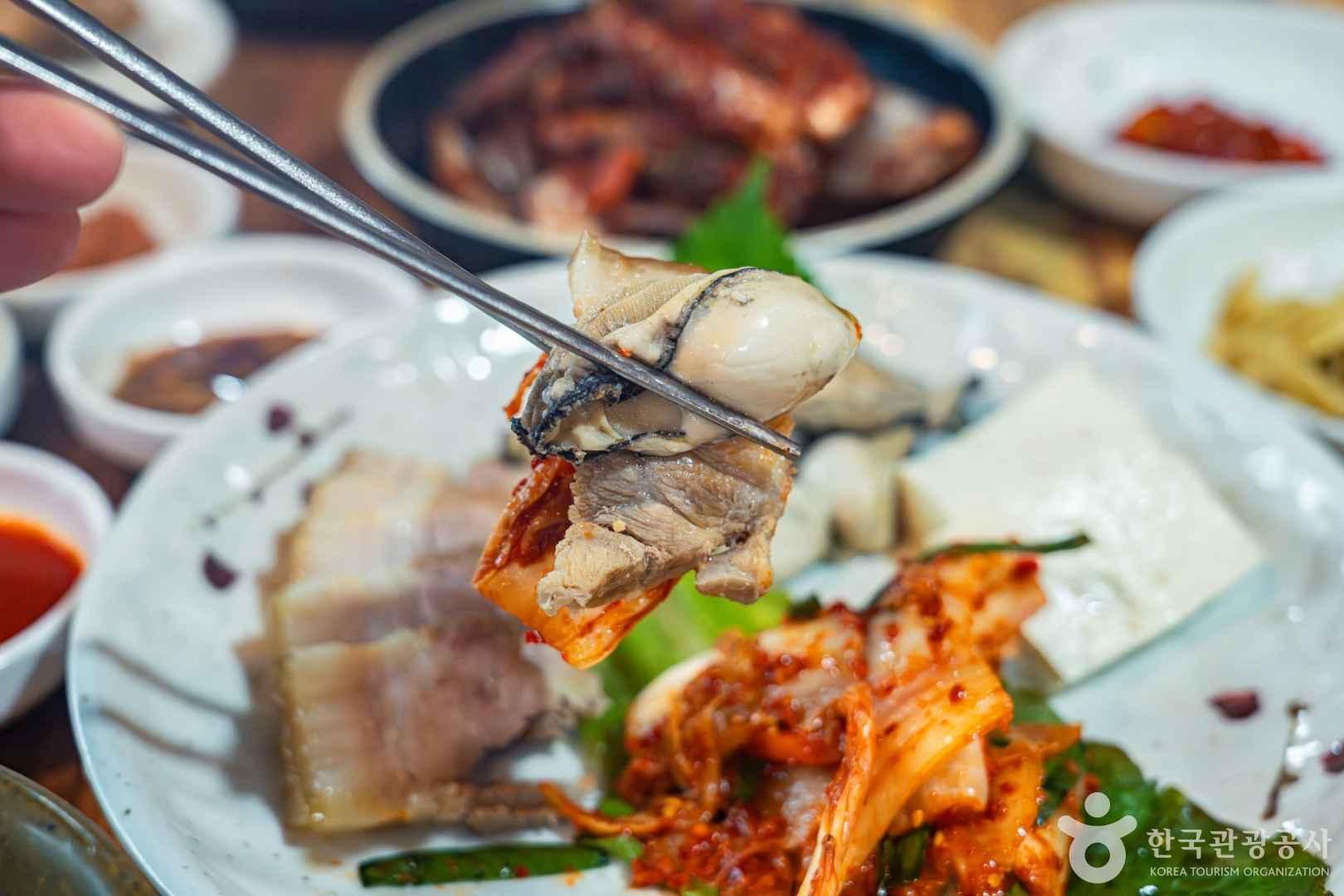
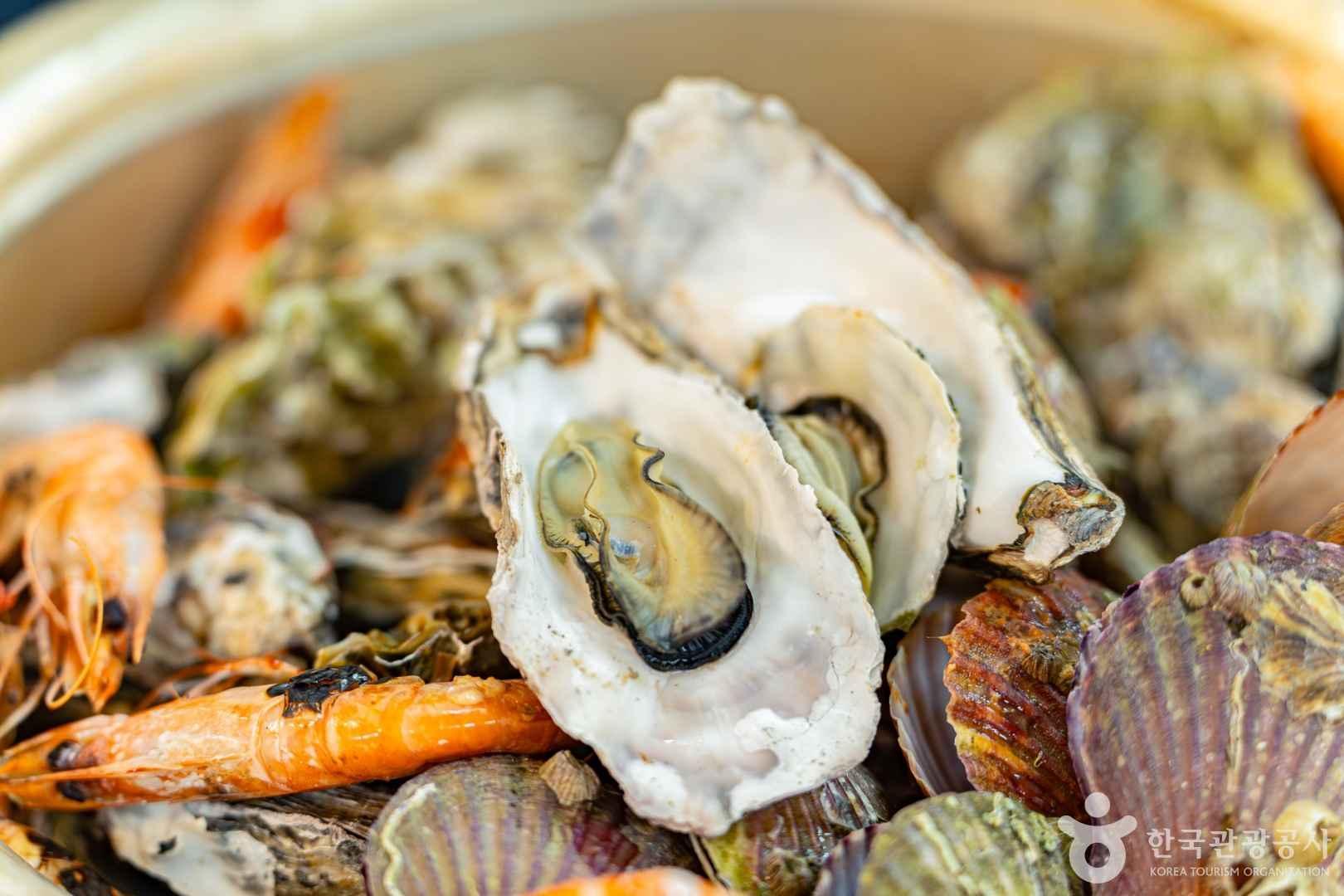
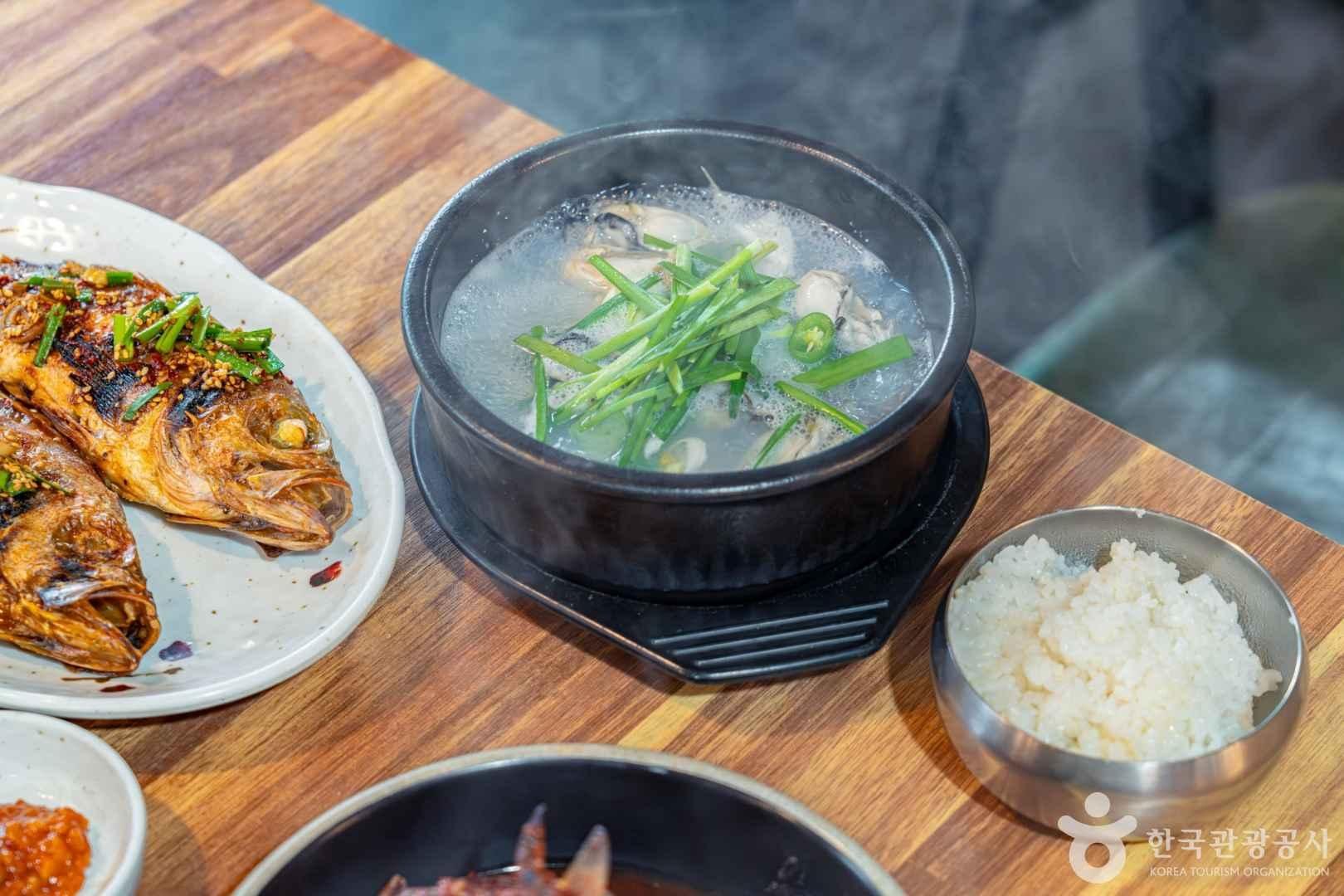
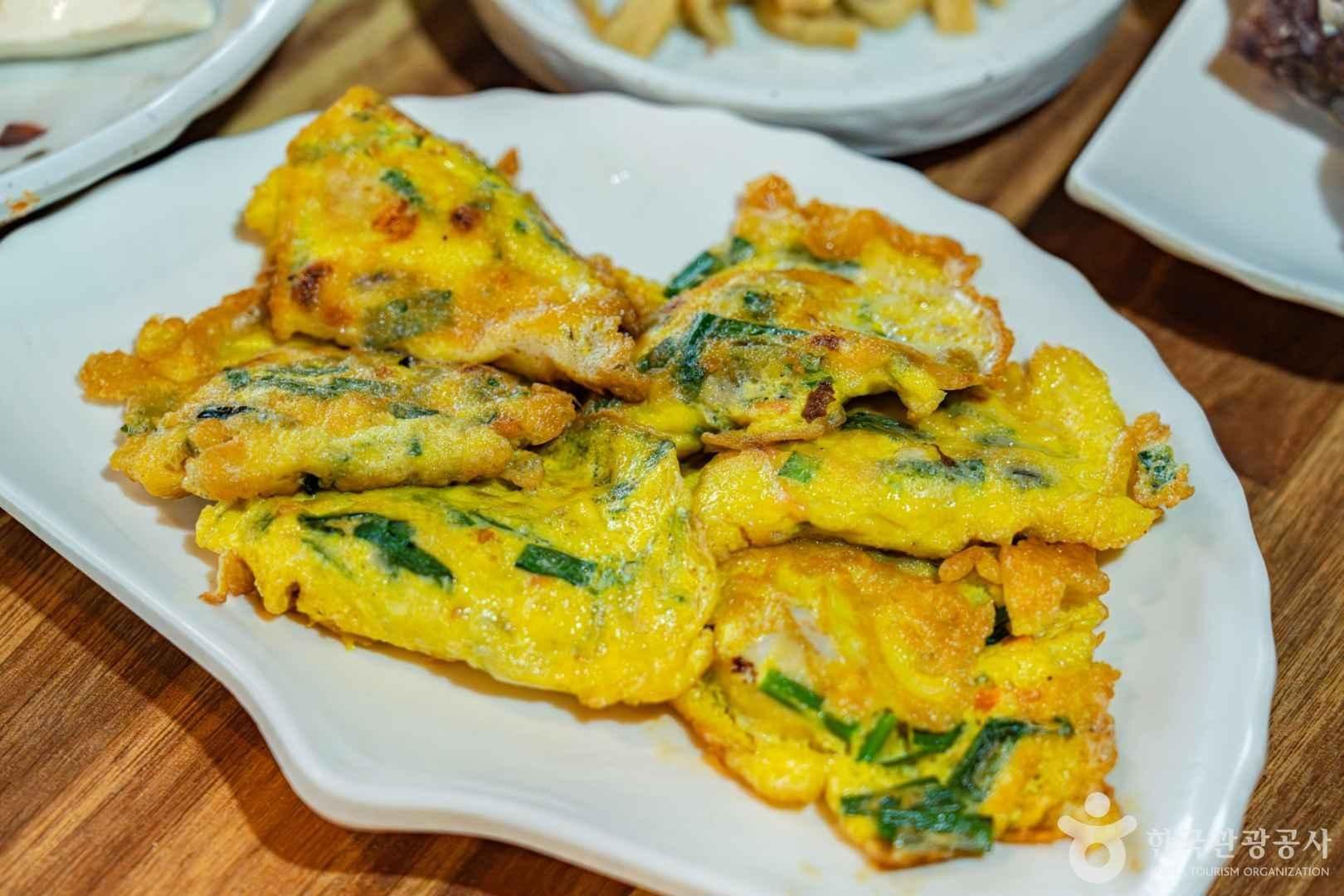
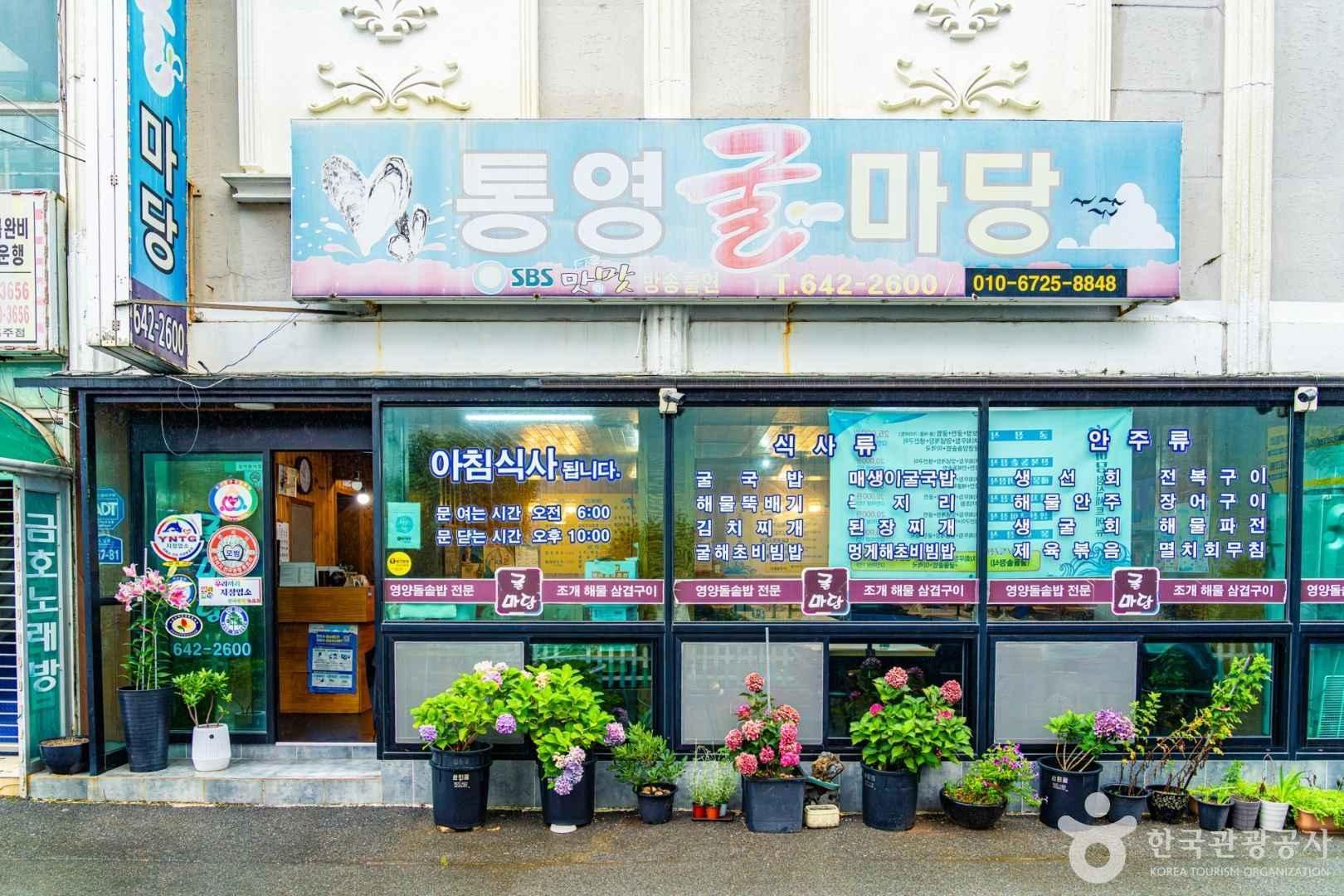
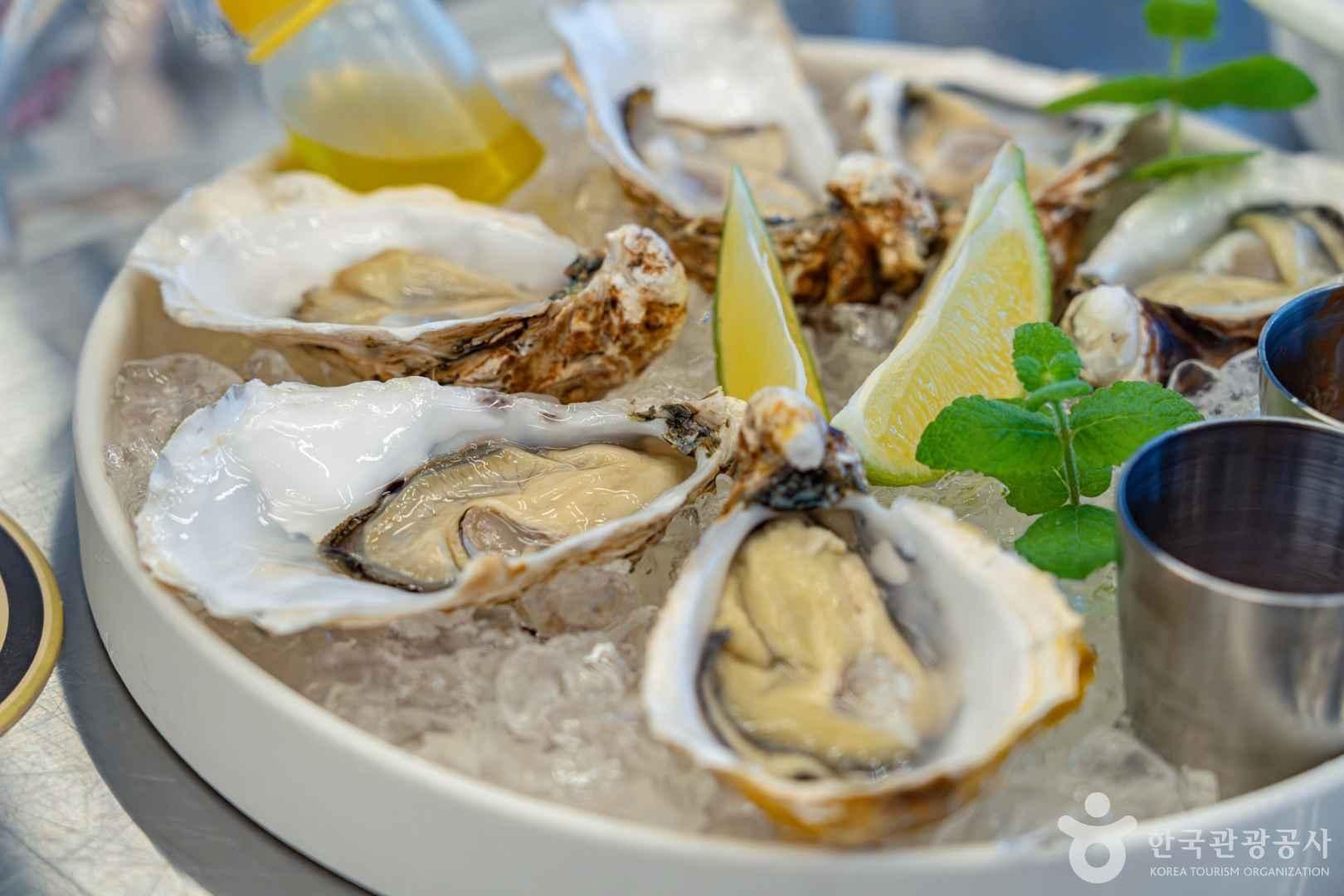
Winter is the season of choice for oysters in Korea. Oysters found in Korea are generally Pacific oysters, which are in season from late fall, when trees begin to shed their leaves, to early spring, when the flowers begin to bloom. Thanks to the glycogen oysters build up to survive the cold sea temperatures, they boast an exceptional flavor and aroma during this time.
Korea, An Oyster Lover’s Paradise
While oysters are considered a delicacy in the West, they are also valued in Korea, which produces them in abundance. Korea’s oyster farming industry allows people to enjoy this delicacy at relatively affordable prices. With an annual production of 326,000 tons, Korea contributes about 5% of the world’s oyster supply.
The reason why Korea produces oysters so extensively despite its relatively small coastal area is thanks to its natural conditions. The southern and western coasts of Korea are lined with ria coasts, which provide protection from rough waves and are very favorable environments for oyster farming. This environment not only supports large-scale farming but also yields high-quality oysters. In fact, about 80% of Korea’s oysters are cultivated in the expansive farms situated between Tongyeong and Geoje.
Types of Oysters
Types of oysters found in Korea include chamgul (Pacific oysters), togul (lamellated oysters), bawigul (Iwagaki oysters), and beotgul (densely lamellated oysters). Chamgul are generally farmed, while some are wild-caught by fishers and haenyeo (women divers). Over 80% of Korea’s oyster production consists of farmed chamgul from the waters between Tongyeong and Geoje.
Chamgul are the most common variety of oysters found in Korea. Most oysters farmed in Korea are chamgul, ranging from 8 cm to 15 cm in size. They have convex lower shells and nearly flat upper shells, though this can vary by oyster due to differences in habitat. Chamgul are mostly found in intertidal areas with large tidal differences.
Togul, or “tteokgul” in Jeolla Province, is a flat oyster resembling a scallop in shape and is similar in size to chamgul or slightly larger. Its yield is limited, making farming challenging, and even wild varieties are rare.
Bawigul are quite rare as well. They live in deeper seas, from 2 m to 15 m below sea level on Korea’s southern or eastern coast. Often attached to bedrock substrates, bawigul are around 20 cm in size. Due to the difficulty of harvesting them without professional divers, bawigul commands a high price. Their spawning season is September to October, meaning they’re at their peak in the summer. Bawigul’s availability in summer, exceptional size, and exclusivity—since they are not farmed in Korea—make it a rare, gourmet seafood.
Beotgul are generally found in brackish water and in Korea, they are found at the mouth of the Seomjingang River. The name beotgul, meaning “cherry blossom oysters” in Korean, refers to them being harvested when cherry trees bloom as well as their shells opening widely like a flower in the water. Another feature of the beotgul is that they are larger than chamgul. They have a milder aroma and less saltiness compared to sea-grown oysters, but are cherished for their tender texture and umami taste.
How to Farm Oysters
Oysters in Korea are mainly farmed using two methods: submerged farming and stone farming. Submerged farming, commonly seen at Tongyeong farms, involves placing scallop shells with attached oyster spat into the seawater. Since oysters feed by filtering organic materials from the water, there is no need for supplemental feeding. This method allows oysters to grow for around two years, maximizing their size and yield.
Stone farming, on the other hand, involves placing rocks along tidal shorelines to catch oyster larvae. Though these oysters are smaller than those grown via submerged farming, they have an exceptionally rich flavor. Oysters spawn between May and August, and oyster larvae, floating in the sea, attach to rocks left in the farms once they grow to be about 0.4 mm in size. These young oysters grow slowly in an environment where the rocks are exposed to the air during low tide. The twice-daily ebb and flow of the water create a natural selection process, as only the hardiest oysters survive this exposure. Once the surviving oysters reach a certain size, they are transferred to an oyster farm, where they grow for another year. This process takes approximately 18 months for the oysters to reach market size.
Enjoying Oysters Year-Round
Most restaurants serving oysters in Tongyeong only serve oyster dishes in winter (November–March), the season for chamgul. This is because most farms in the area utilize the subtidal method to farm oysters. In other seasons, these restaurants serve dishes made with other types of seafood, such as meongge bibimbap (sea squirt mixed rice) and jeonbok ttukbaegi (abalone hot pot). Some restaurants use frozen oysters to serve oyster dishes from spring to fall, but these naturally lack the freshness and flavor of live oysters.
Recently, however, the emergence of triploid oyster farming has made it possible for oyster lovers to enjoy oysters year-round. Currently, they are mostly available through online orders, but a few years ago, an oyster bar in Tongyeong began offering triploid oysters, making it easier to find fresh oysters any time of year.
* What are triploid oysters?
Triploid oysters are genetically modified with an extra set of chromosomes compared to regular oysters, which have two sets. Because they do not reproduce, they use the energy needed for reproduction to grow, making them typically larger than standard oysters. One notable feature of triploid oysters is that they do not accumulate any toxins during spawning seasons, making their taste consistent throughout the year.
How to Enjoy Oysters
Oysters are most commonly enjoyed through three primary cooking methods. The first is gul bossam (napa wraps with pork and oyster), where oysters are served with suyuk (boiled pork slices) and kimchi. This is done most commonly by tossing oysters in kimchi seasoning and wrapping the oyster and suyuk in lettuce or napa cabbage.
The second is gulgui (grilled oyster) or guljjim (steamed oyster). These cooking styles are not as prevalent in Europe or the U.S. due to the higher prices of oysters there. For gulgui, a flat iron plate is placed over charcoal, and the oysters, still in their shells, are grilled whole. As they heat up, the shells begin to open, indicating that they’re perfectly cooked. Guljjim is more ideal for home consumption because it is quite easy to prepare: just put the oysters in a steamer and steam away. Both methods keep the shells intact, so wearing gloves is recommended to avoid injury. The finished grilled or steamed oysters are typically enjoyed with a dipping sauce made from chojang (a spicy dipping sauce), but for those who want to fully savor the oysters' flavor and aroma, trying them without any sauce is also a great option.
The third is the gul gukbap (oyster and rice soup). While traditional gukbap (rice soup) is usually made with beef, pork, or chicken broth, in winter, oysters are often added to make a comforting soup. Oysters and winter seaweeds are rich in taurine content, which helps mitigate fatigue and hangovers. Indeed, a bowl of gul gukbap the day after drinking can bring you back to life quite quickly.
Restaurants Information
Daepunggwan
This restaurant serves seafood dishes made with fresh seafood in season. In spring, it serves sea squirt, abalone, and cutlassfish as mulhoe (cold raw fish soup), jeon (pan-fried battered dishes), sotbap (hot pot rice), and bibimbap. In fall and winter, oyster dishes take the fore. The restaurant is quite sizable, so it is ideal for group visits.

Address:
29 Haesongjeong 2-gil, Tongyeong-si, Gyeongsangnam-do
Contact:
+82-55-644-4446
Signature Menu:
Set A includes seokhwajjim (steamed oysters), saenggulhoe (raw oysters), gulmuchim (seasoned oysters), guljeon (oyster pancakes), gultwigim (fried oysters), haemul doenjangjjigae (seafood soybean paste stew), and gulbap (oyster rice) 28,000 KRW /
Seokhwajjim (steamed oysters) 28,000 KRW /
Saenggulhoe (raw oysters) 18,000 KRW /
Gulbap (oyster rice) 13,000 KRW
Getting There:
Approx. 6.3 km from Tongyeong Bus Terminal /
Approx. 4.3 km from Tongyeong TG
Parking:
Available (up to 12 spaces)
Seating:
92 seats
Menu Languages:
Korean, English
Hanmaeum Sikdang
This restaurant limits its offering to 100 tables per day to ensure the freshness of its dishes. Its signature dish is the gul samhap (oyster, kimchi, and pork belly combo). It also offers guljeon (oyster pancakes), gul tangsuyuk (deep-fried oyster with sweet and sour sauce), gul eomuk (oyster and fishcake soup), and other oyster dishes.
Address:
6 Haesongjeong 1-gil, Tongyeong-si, Gyeongsangnam-do
Contact:
+82-55-645-0971
Signature Menu:
Hanmaeum Gul Samhap (small) 75,000 KRW /
Hanmaeum Gul Samhap (for 1) 40,000 KRW /
Guljeon 20,000 KRW /
Gul Tangsuyuk 20,000 KRW /
Gul Eomuk 10,000 KRW
Getting There:
Approx. 6.3 km from Tongyeong Bus Terminal /
Approx. 4.4 km from Tongyeong TG
Parking:
Available (up to 2 spaces)
Seating:
152 seats
Menu Languages:
Korean
Tongyeong GulMadang
It's rare to find a restaurant in Tongyeong that serves oysters all year round. However, Tongyeong GulMadang offers oysters all year round. Its most popular menu is the set menu, which includes gul bossam (napa wraps with pork and oyster), guljeon (oyster pancakes), and gul yeongyang dolsotbap (nutritious oyster hot stone pot rice), and other oyster dishes.
Address:
257-81 Donam-ro, Tongyeong-si, Gyeongsangnam-do
Contact:
+82-55-642-2600
Signature Menu:
Gul Jeongsik (oyster set menu) (for 1; minimum order for 2) 25,000 KRW
Getting There:
Approx. 9.8 km from Tongyeong Bus Terminal /
Approx. 8.9 km from Tongyeong TG
Parking:
No parking on-site; nearby parking available at the Tongyeong Cruise Ship Terminal Public Parking Lot)
Seating:
68 seats
Menu Languages:
Korean
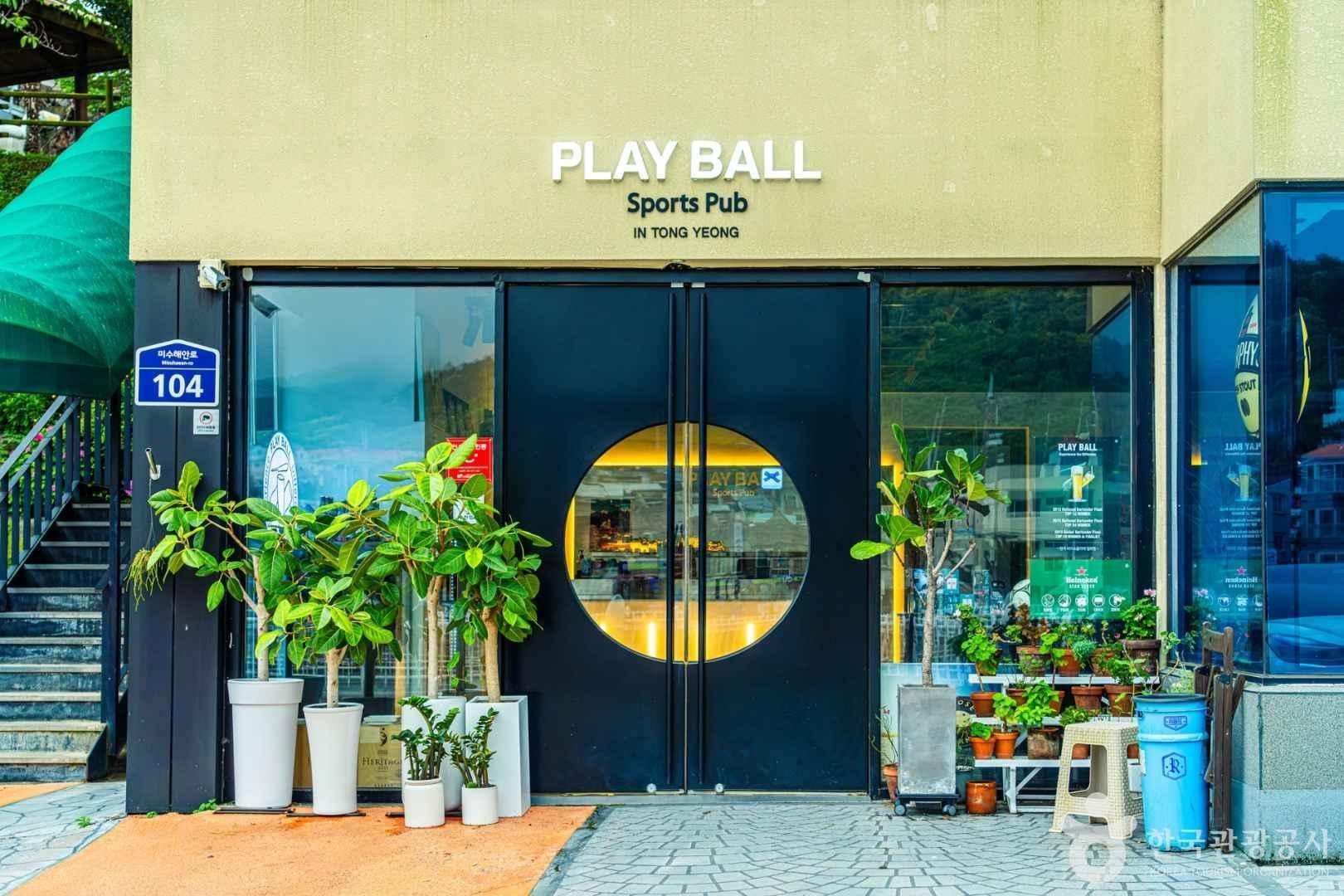
Playball IN Tongyeong
This place serves “Stella Maris,” a triploid oyster produced in Tongyeong, all year round. The ambiance is reminiscent of a Western “sports pub” or “oyster bar,” where you can enjoy various sports broadcasts while drinking. It has received certifications for “Guinness Master Quality” and “Heineken Star Serve Pouring Master” for strict quality control of draft beer.
Address:
104 Misuhaean-ro, Tongyeong-si, Gyeongsangnam-do
Contact:
+82-55-648-3339
Signature Menu:
Stella Maris 30,000 KRW /
Oyster Al Ajillo 23,000 KRW
Getting There:
Approx. 7.9 km from Tongyeong Bus Terminal /
Approx. 7 km from Tongyeong TG
Parking:
Available (up to 5 spaces)
Seating:
40 seats
Menu Languages:
Korean

1330 Helpline Call/Chat

Start a FREE Online Call(No charges for calls on Wi-Fi /
Data charges may apply)

Open 1330 Helpline Chat(Download not required)


Open messenger app(Messenger app must be installed)