
Current language
English
- Log in
-
- Sydney Overseas Office
- London Overseas Office
- Toronto Overseas Office
- Los Angeles Overseas Office
- New York Overseas Office
- Ulaanbaatar Overseas Office
- Dubai Overseas Office
- New Delhi Overseas Office
- Manila Overseas Office
- Jakarta Overseas Office
- Hanoi Overseas Office
- Kuala Lumpur Overseas Office
- Singapore Overseas Office
- Bangkok Overseas Office
- Map
Popular search
- Sydney Overseas Office
- London Overseas Office
- Toronto Overseas Office
- Los Angeles Overseas Office
- New York Overseas Office
- Ulaanbaatar Overseas Office
- Dubai Overseas Office
- New Delhi Overseas Office
- Manila Overseas Office
- Jakarta Overseas Office
- Hanoi Overseas Office
- Kuala Lumpur Overseas Office
- Singapore Overseas Office
- Bangkok Overseas Office
Contents View
-
-
-
Puffer Fish: Busan’s High-End Gourmet Dining
-
02/20/2025
-
4.3K
0
1
-
-
-
-
Puffer Fish: Busan’s High-End Gourmet Dining
When & Where

Puffer fish can be caught year-round, but its peak season is during winter (November to March) as this is when the fish builds up nutrients in preparation for spawning in spring and summer. This period also coincides with the peak season for minari (water celery), a key ingredient in puffer fish soup, making it the best time to enjoy the dish.

In the past, puffer fish were primarily sold in areas with fish markets, such as Nampo-dong and Jagalchi Market in Busan. However, nowadays, you can find many puffer fish restaurants throughout Busan.
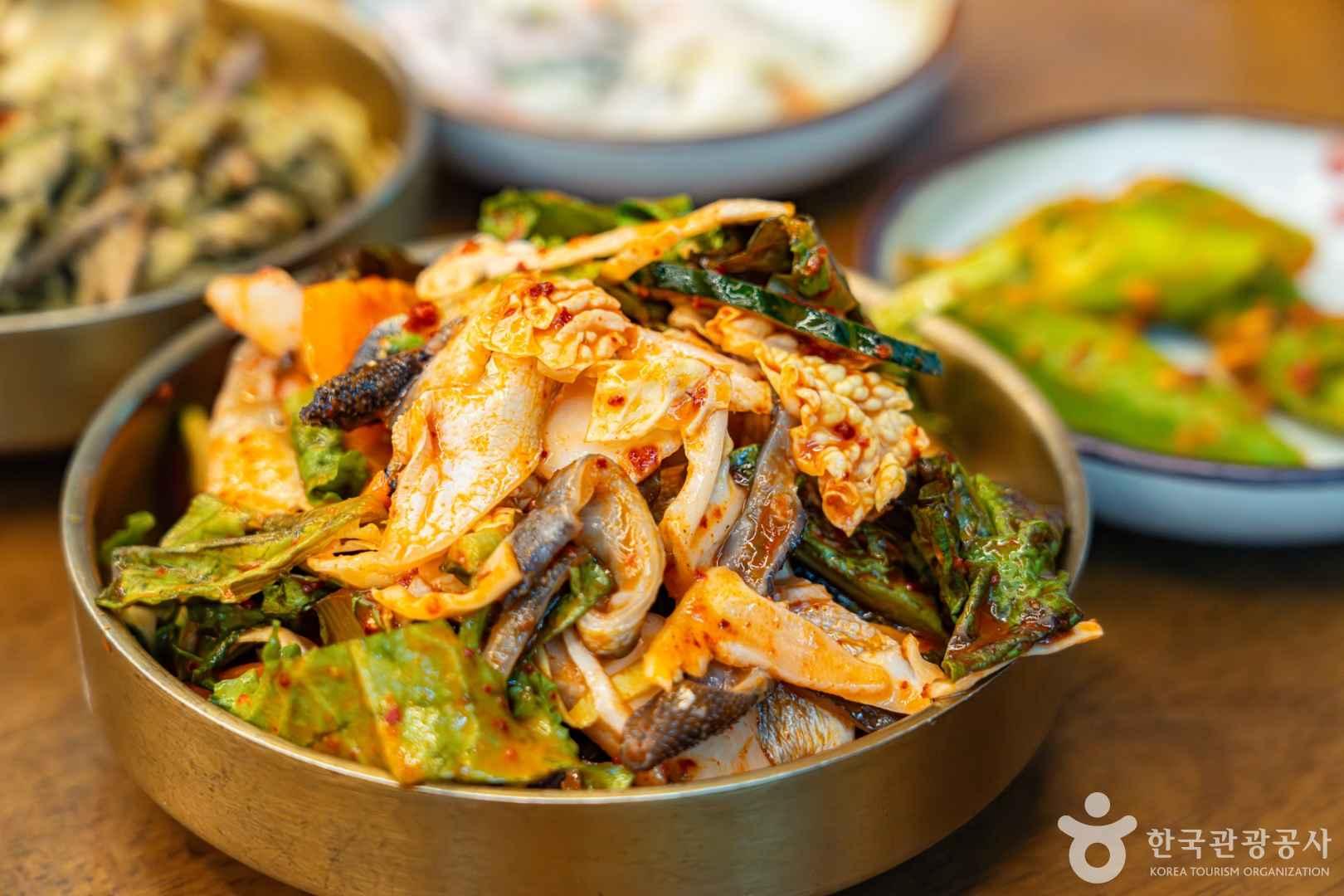
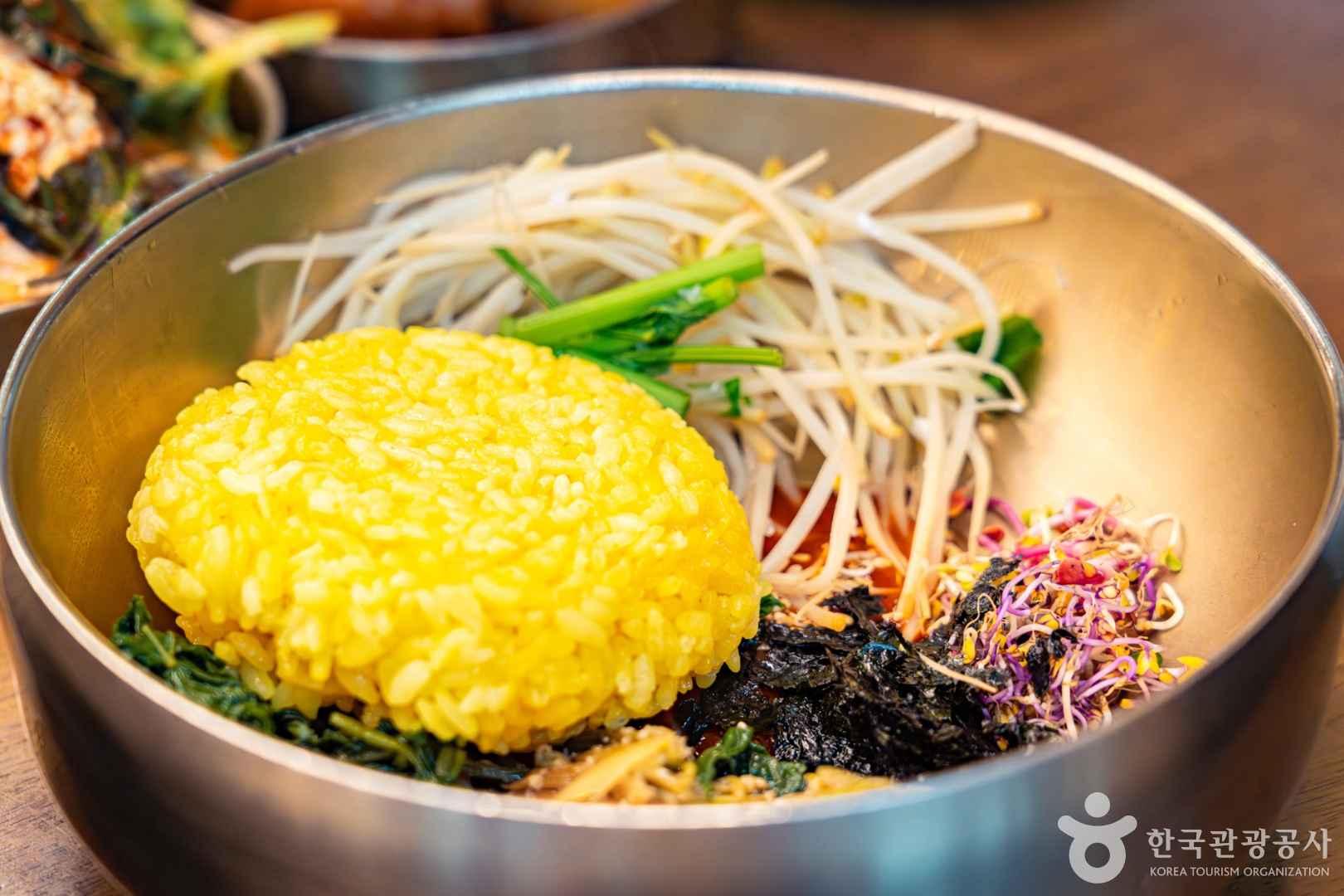
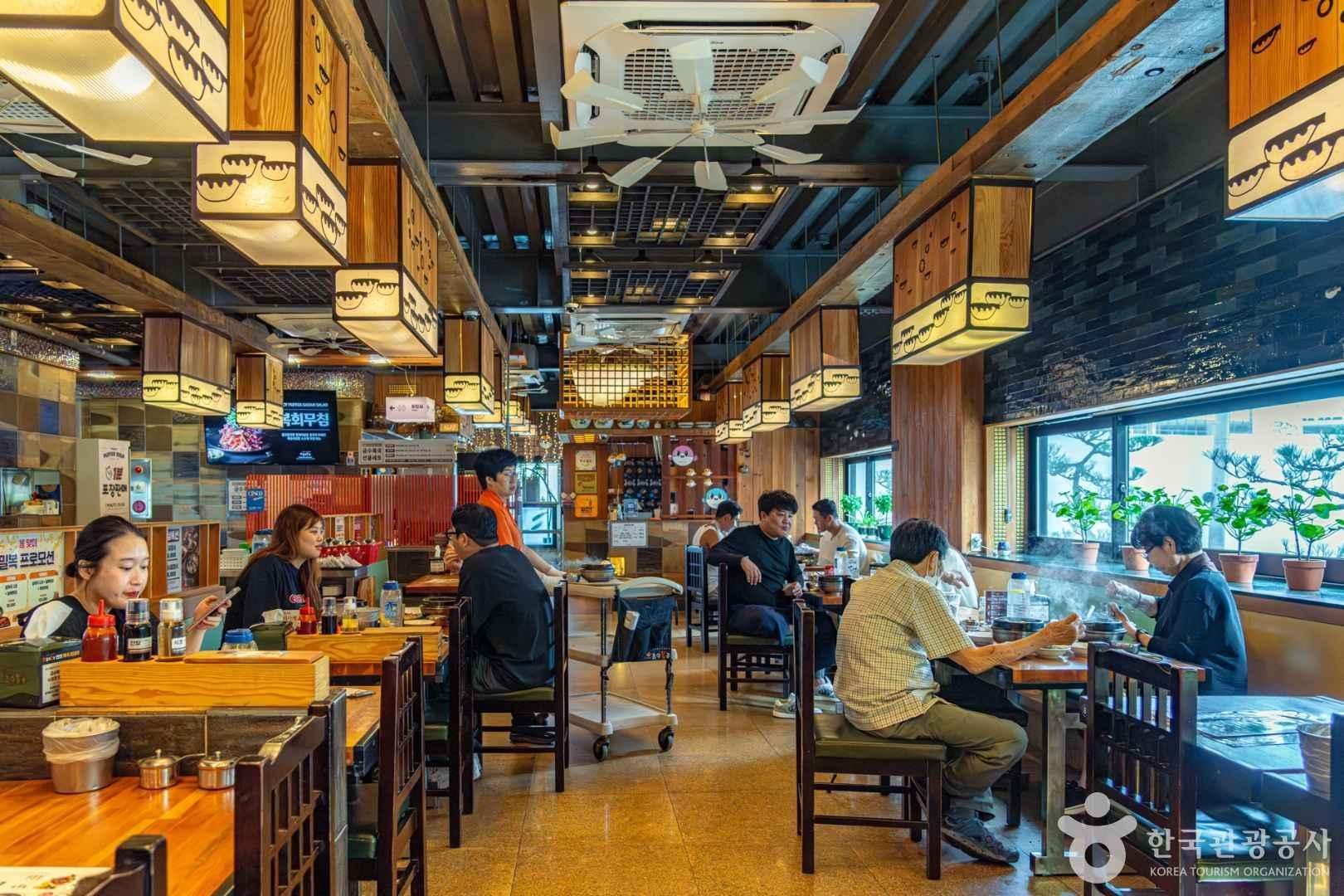
Puffer fish are a rare delicacy that are not easily accessible, as they cannot be prepared by just anyone. This is because puffer fish contain a deadly toxin, specifically tetrodotoxin, found in its internal organs, liver, eggs, and blood that can cause severe harm if ingested. Therefore, only certified puffer fish chefs are authorized to prepare them.
For a delicious puffer fish experience, visiting Busan is highly recommended. Busan has a long history of handling puffer fish, with fishermen and chefs influenced by Japan, and thus boasts a higher number of puffer fish specialty restaurants compared to other cities. Moreover, as puffer fish caught along the Busan and southern coastal areas naturally concentrate in Busan, it’s easier to find fresh puffer fish there.
Types of Puffer fish
Among the various types of puffer fish, the high-end species in Korea are the spotted puffer fish (chambok), the tiger puffer fish (jajubok), and obscure puffer fish (hwangbok). While the spotted and tiger puffer fish were once thought to be different species despite their similar appearances, recent studies show that they are, in fact, the same species.
The spotted puffer fish can grow to about 50 cm in length, with a dark back and white belly. Its body is somewhat round, tapering towards the tail, and all its fins are black. The tiger puffer fish is smaller, measuring around 40 cm, and is distinguished by several black spots on its back. The obscure puffer fish is a migratory species caught in river estuaries, notable for the yellow band on its belly.
Yellowfin puffer fish, often larger than the spotted puffer fish, is another common type. It has a dark blue back with white stripes that resemble a magpie’s pattern, which is why it is named “kkachibok,” meaning “magpie puffer fish.” Kkachibok is farmed and widely imported and is often regarded as lower in quality than spotted puffer fish and tiger puffer fish because it is easier to find, but the taste is quite similar, making it another excellent choice.
Other species commonly consumed in Busan and the Gyeongsangnam-do include the vermiculated puffer fish and the panther puffer fish. They are smaller and more common compared to the spotted puffer fish and tiger puffer fish. In Busan, the the vermiculated puffer fish is known locally as “milbok” (dark rough-backed puffer fish and is primarily used for making bokguk (puffer fish soup), although the originally refers to a different species. It grows to about 30 cm, with a yellow stripe between its back and belly and white spots on its dark brown back. Panther puffer fish grows to about 35 cm, with a brownish-yellow back speckled with dark brown spots and vertical yellow stripes on its white belly.
There is also a very small species known as grass puffer fish, often called “jjolbok,” which is the smallest among the puffer fish consumed. It is often used when making soup with several kinds of fish.
How to Enjoy Puffer fish Dishes
Puffer fish is mainly enjoyed as soup or porridge, but it can also be served raw or deep-fried. The type of puffer fish used varies depending on the restaurant, chef, and dish.
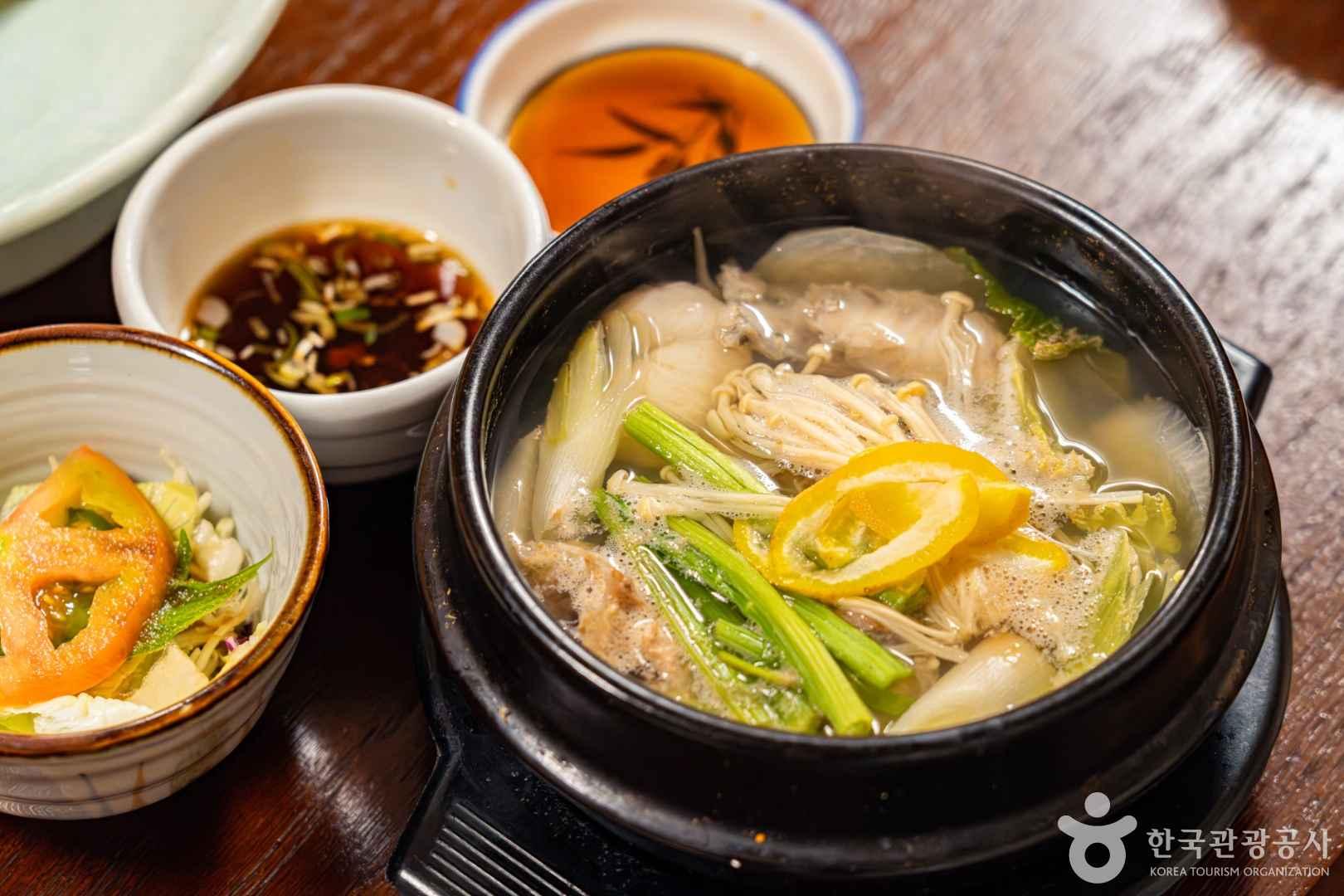
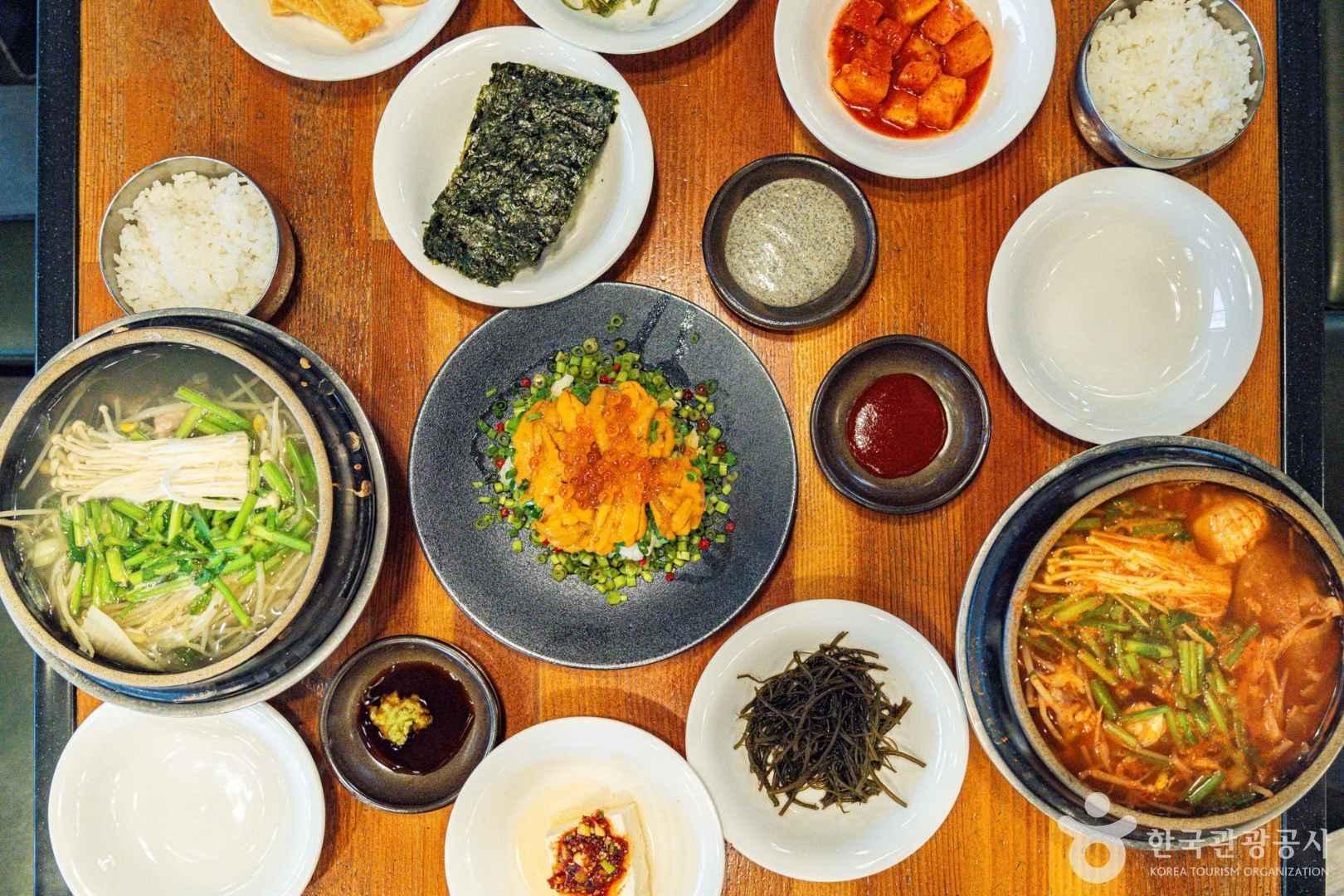
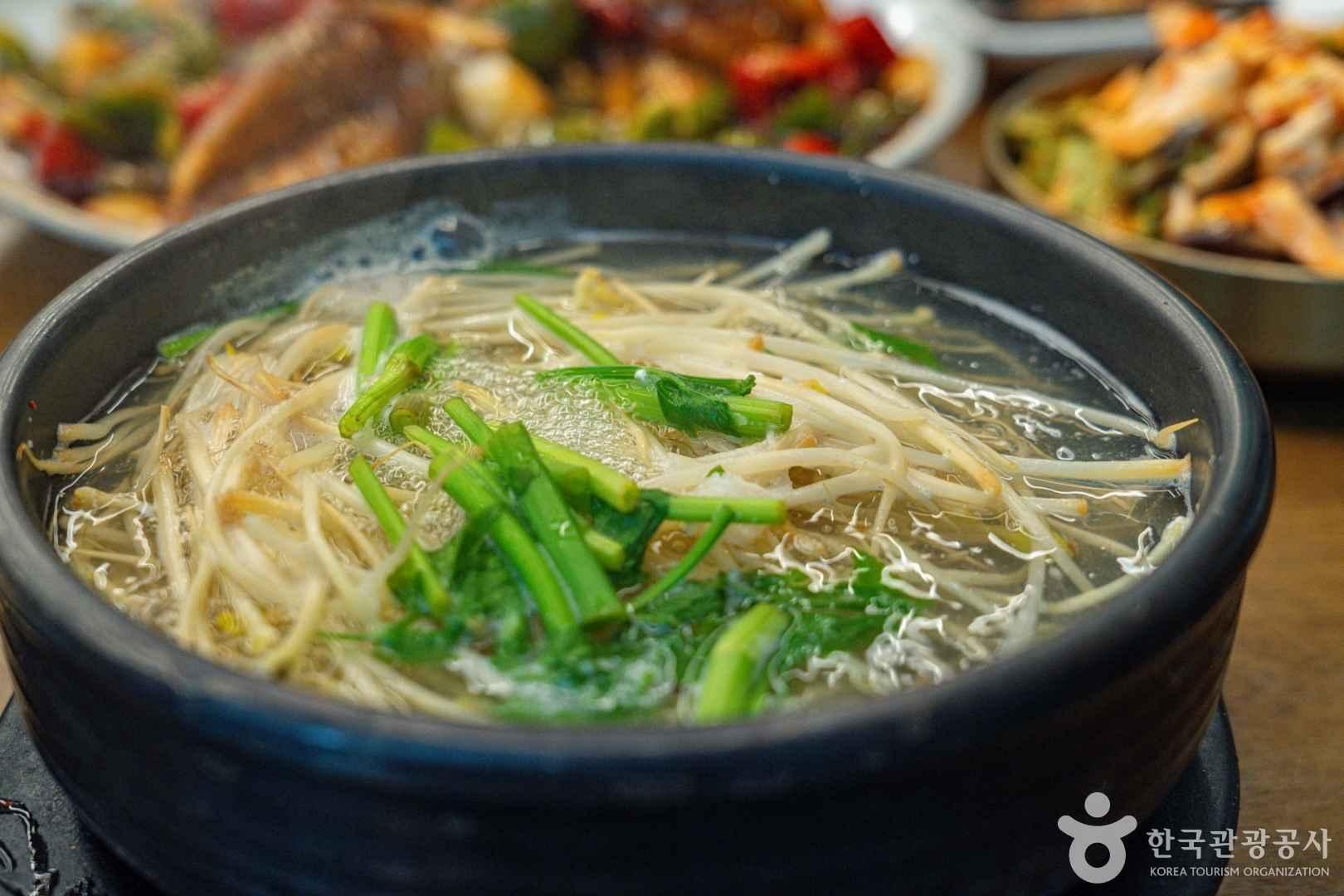
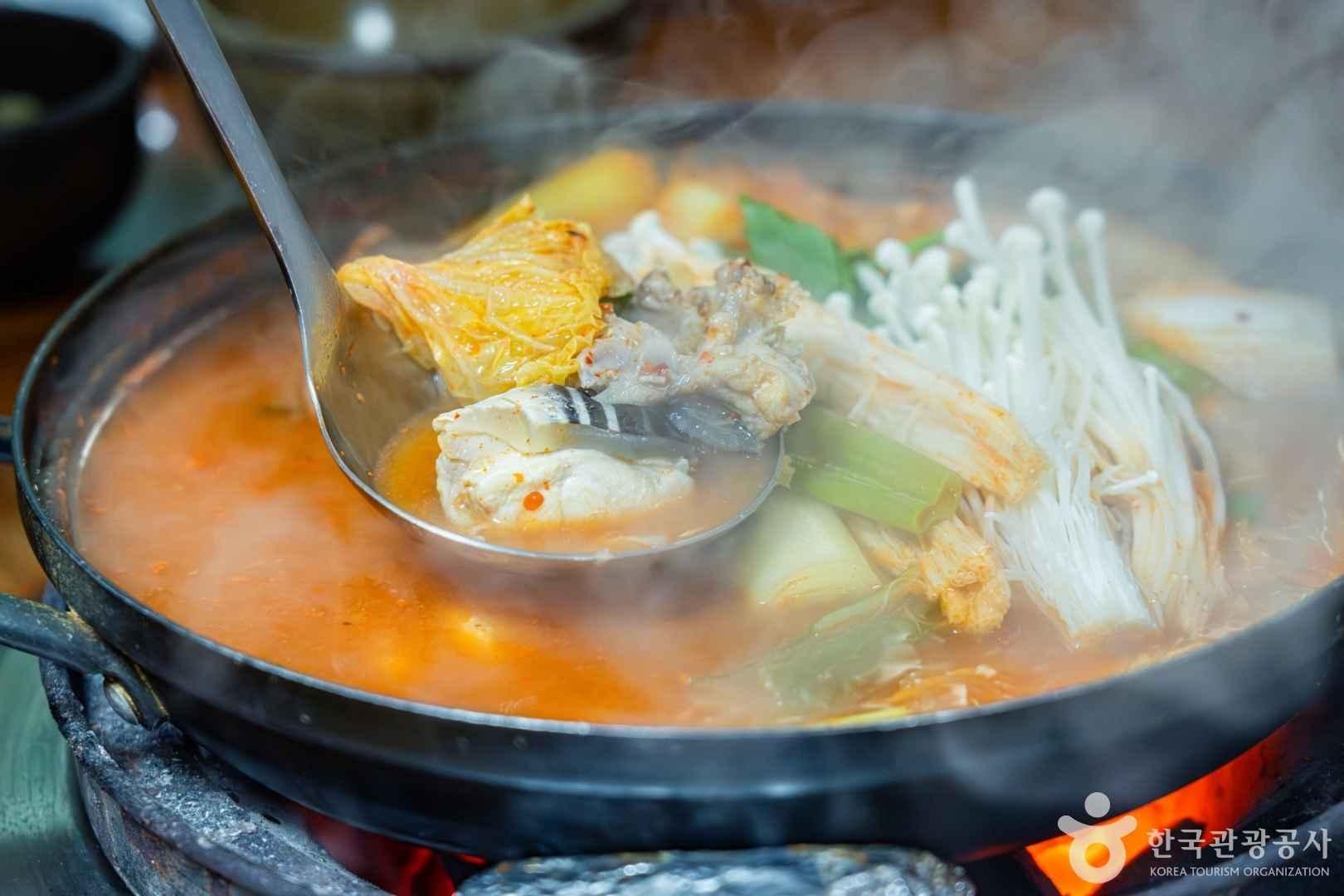
A popular puffer fish dish is bokguk, and each restaurant has its own way of preparing the broth. Generally, puffer fish, bean sprouts, and water parsley are added to kelp broth and simmered together. Some restaurants may also include napa cabbage. Bokguk is usually served as a malgeuntang (soup), but you can also request a maeuntang (spicy stew) if you prefer a kick.
When enjoying bokguk, be sure to add a few drops of vinegar. The vinegar helps eliminate any fishy odors from the puffer fish and balances the taste. Bokguk is typically served in a hot stone pot. Interestingly, after a spoonful of the hot broth, you might experience a refreshing feeling, which is more about psychological comfort than actual cooling. This is why Koreans often describe hot soups as “siwonhada,” which means “cool” or “refreshing."
When ordering bokguk, you'll often receive several side dishes, with puffer fish skin being one of the most notable. The texture of puffer fish skin differs between the outer and inner surfaces. The outer surface is adorned with intricate patterns and tiny bumps, while the inner layer consists of collagen. For dishes using puffer fish skin, the inner side of the skin is separated and used. When prepared cold, puffer fish skin has a chewy texture. Some restaurants even make special jelly from the collagen in the skin, which is another delicacy. In some restaurants, bokguk is served with a large bowl of rice. You can mix the bean sprouts and water parsley from the soup into the rice to create a delicious bibimbap.
Restaurants Information
Geumsubokguk Haeundae Main Branch
The restaurant was featured in the Michelin Guide Seoul and Busan 2024 as a "Michelin Selected Restaurant" (a restaurant offering outstanding cooking). Established in 1970, it has over 50 years of history. You can choose one of four types of puffer fish to order bokguk, with each type offering slightly different flavors and textures.

Address:
23 Jungdong 1-ro 43beon-gil, Haeundae-gu, Busan
Contact:
+82-51-742-3600
Signature Menu:
Hwal chambokguk (spotted puffer fish clear soup) 50,000 KRW (special 65,000 KRW) /
Hwal chambokguk maeuntang (spicy spotted puffer fish stew) 51,000 KRW (special 66,000 KRW) /
Kkachibokguk malgeuntang (yellowfin puffer fish clear soup) 22,000 KRW (special 26,000 KRW) /
Kkachibokguk maeuntang (spicy yellowfin puffer fish stew) 23,000 KRW (special 27,000 KRW) /
Kkachibokguk jeongsik (yellowfin puffer fish soup set menu) 33,000 KRW /
Hwal chambokguk jeongsik (spotted puffer fish soup set menu) 55,000 KRW /
Boksashimi jeongsik (sliced raw puffer fish set menu) 55,000 KRW /
Bok yukhoe (puffer fish tartare) 30,000 KRW /
Cheolpan bokbulgogi (griddled puffer fish bulgogi) 28,000 KRW /
Boksashimi (sliced raw puffer fish) (small) 70,000 KRW
Getting There:
Approx. 600 m from Exit 1 of Haeundae Station on Busan Metro Line 2
Parking:
Available (up to 12 spaces)
Seating:
270 seats (176 on the first floor, 48 on the second floor, and 46 in private rooms)
Menu Languages:
Korean, English, Japanese, and Chinese
Halmae Bokguk
This puffer fish specialty restaurant was established in 1986. The restaurant is renowned for its bokguk or bokjiri. Its clean broth and generous serving of puffer fish fillets enhance the flavor. The collagen jelly made from puffer fish skin is also considered a delicacy.
Address:
1 Dalmaji-gil 62beon-gil, Haeundae-gu, Busan
Contact:
+82-51-742-2790
Signature Menu:
Hwinmilbok bokjiri (smooth-back puffer fish clear soup) 14,000 KRW /
Kkachibok bokjiri (yellowfin puffer fish clear soup) 22,000 KRW /
Hwinmilbok maeuntang (spicy smooth-back puffer fish stew) 14,000 KRW /
Kkachibok bokmaeuntang (spicy yellowfin puffer fish stew) 22,000 KRW /
Bogeojorim (braised puffer fish) 17,000 KRW /
Hwinmilbok boksuyuk (boiled smooth-back puffer fish puffer fish slices) small 40,000 KRW /
Kkachibok boksuyuk (boiled yellowfin puffer fish slices) small 60,000 KRW
Getting There:
Approx. 430 m from Exit 1 of Busan Station on Busan Metro Line 1
Parking:
No on-site parking; nearby parking available at Muntan Road Public Parking Lot
Seating:
54 seats
Menu Languages:
Korean, English, and Chinese
Samsong Chobap
This is a Japanese restaurant that began in the early 1960s in Nampo-dong. While it is well-known for its Japanese-style gimbap called “gimchobap,” regular patrons consistently order its puffer fish dishes. The bokjiri (malgeuntang) is noted for its rich flavor, achieved by combining seasonal vegetables and puffer fish. The boksashimi (sliced raw puffer fish) menu offers a variety of options, including outer skin, inner skin, and shabu-shabu.
Address:
13 Gwangbok-ro 55beon-gil, Jung-gu, Busan
Contact:
+82-51-245-7870
Signature Menu:
Bokjiri 40,000 KRW /
Samsong special sushi omakase 100,000–160,000 KRW /
lunch special (sliced raw fish, sushi, tempura, grilled fish, and soup) 43,000 KRW
Getting There:
Approx. 500 m from Exit 1 of Nampo Station (Haedong Hospital) on Busan Metro Line 1
Parking:
Free
Seating:
100 seats
Menu Languages:
Korean, English, Japanese

1330 Helpline Call/Chat

Start a FREE Online Call(No charges for calls on Wi-Fi /
Data charges may apply)

Open 1330 Helpline Chat(Download not required)


Open messenger app(Messenger app must be installed)