
Current language
English
- Log in
-
- Sydney Overseas Office
- London Overseas Office
- Toronto Overseas Office
- Los Angeles Overseas Office
- New York Overseas Office
- Ulaanbaatar Overseas Office
- Dubai Overseas Office
- New Delhi Overseas Office
- Manila Overseas Office
- Jakarta Overseas Office
- Hanoi Overseas Office
- Kuala Lumpur Overseas Office
- Singapore Overseas Office
- Bangkok Overseas Office
- Map
Popular search
- Sydney Overseas Office
- London Overseas Office
- Toronto Overseas Office
- Los Angeles Overseas Office
- New York Overseas Office
- Ulaanbaatar Overseas Office
- Dubai Overseas Office
- New Delhi Overseas Office
- Manila Overseas Office
- Jakarta Overseas Office
- Hanoi Overseas Office
- Kuala Lumpur Overseas Office
- Singapore Overseas Office
- Bangkok Overseas Office
Contents View
-
-
-
Fried Chicken: Find it in Daegu, Korea’s Crispy Capital
-
02/20/2025
-
2.6K
0
0
-
-
-
-
Fried Chicken: Find it in Daegu, Korea’s Crispy Capital
When & Where

Fried chicken can be enjoyed anytime, in any season.

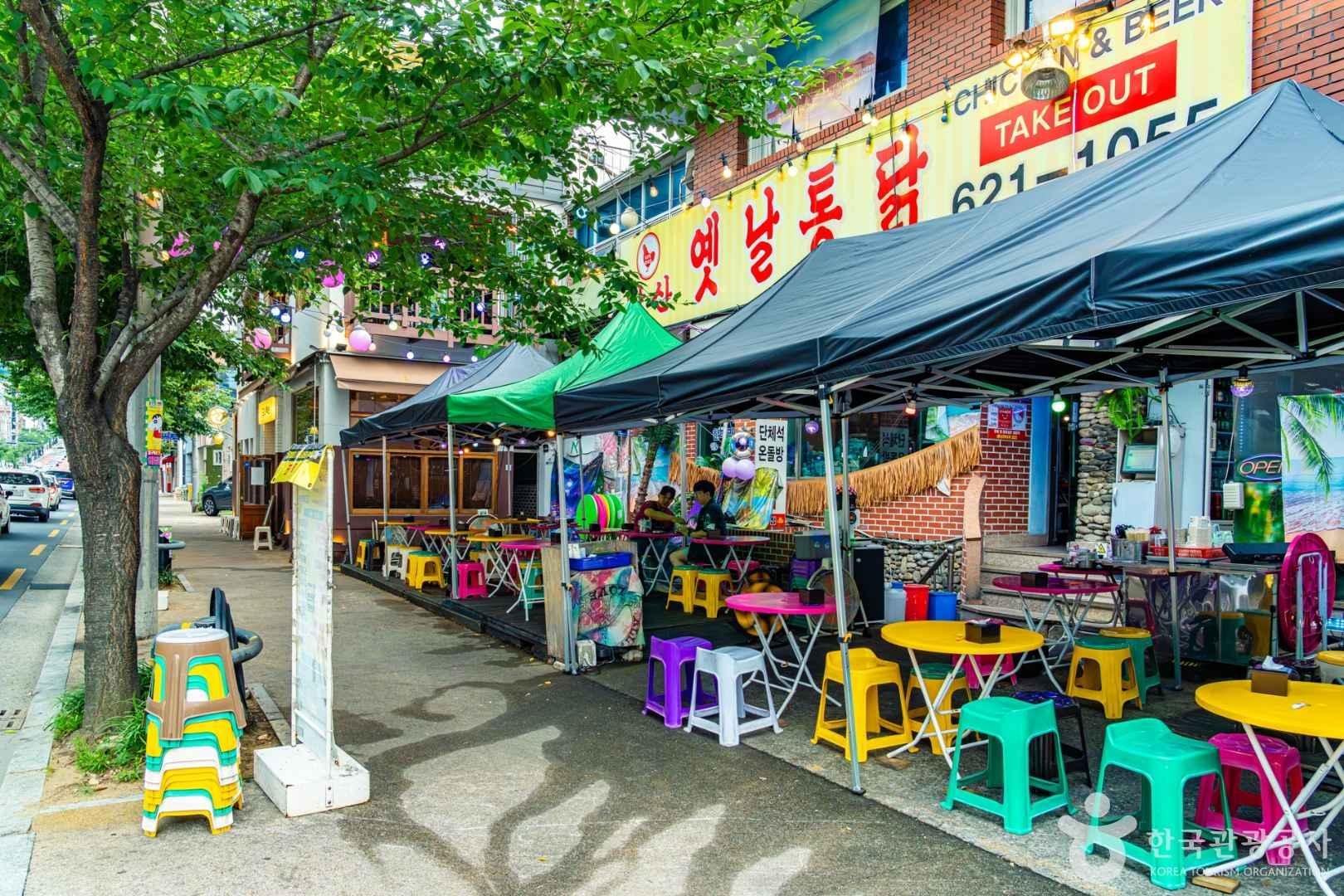
Daegu’s Pyeonghwa Market has the “Pyeonghwa Market Dakttongjip Street” (Ayang-ro 9-gil, Dong-gu, Daegu, and the surrounding areas), which offers fried chicken, jjimdak (braised chicken), and dakttongjip twigim (deep-fried chicken gizzard).
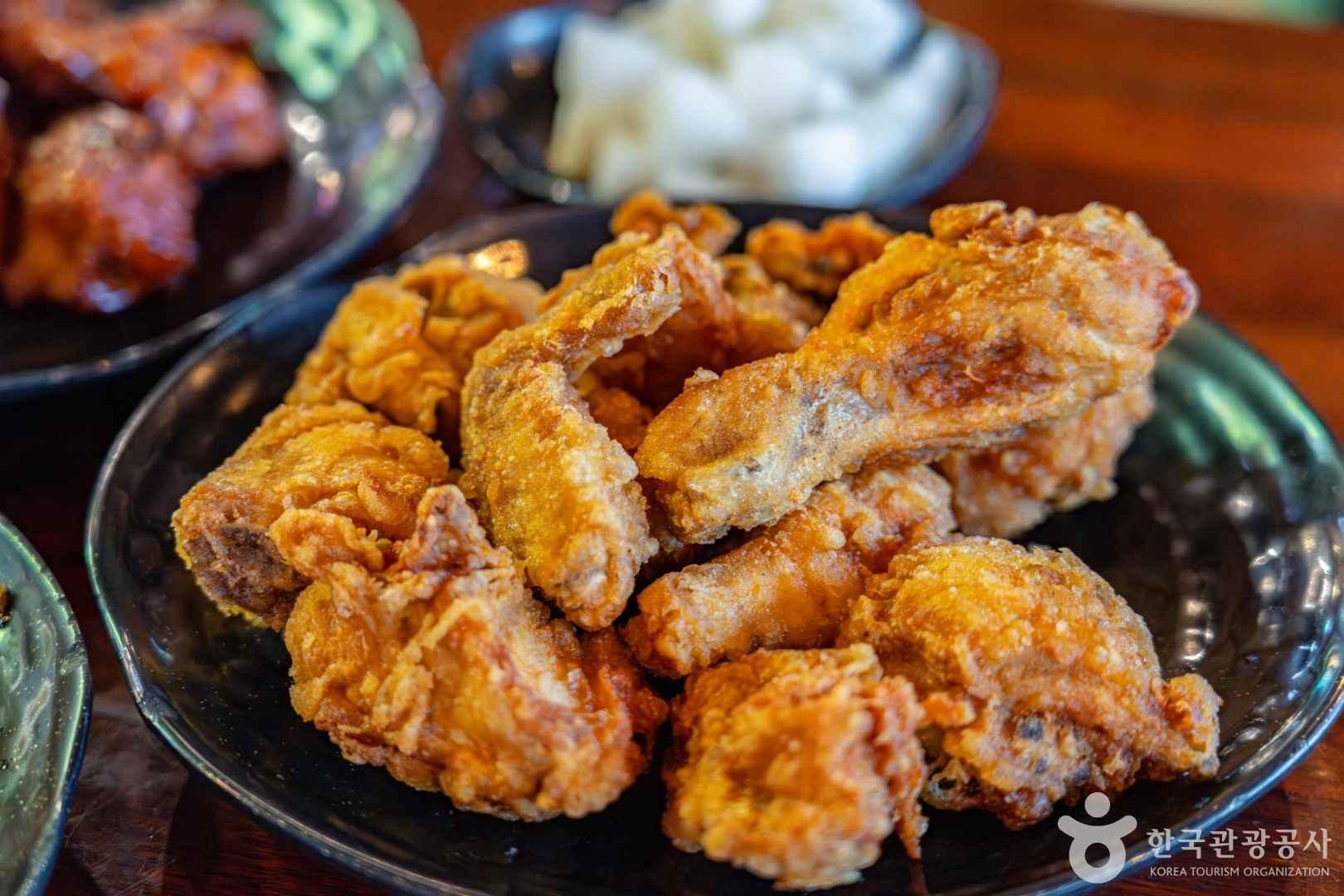
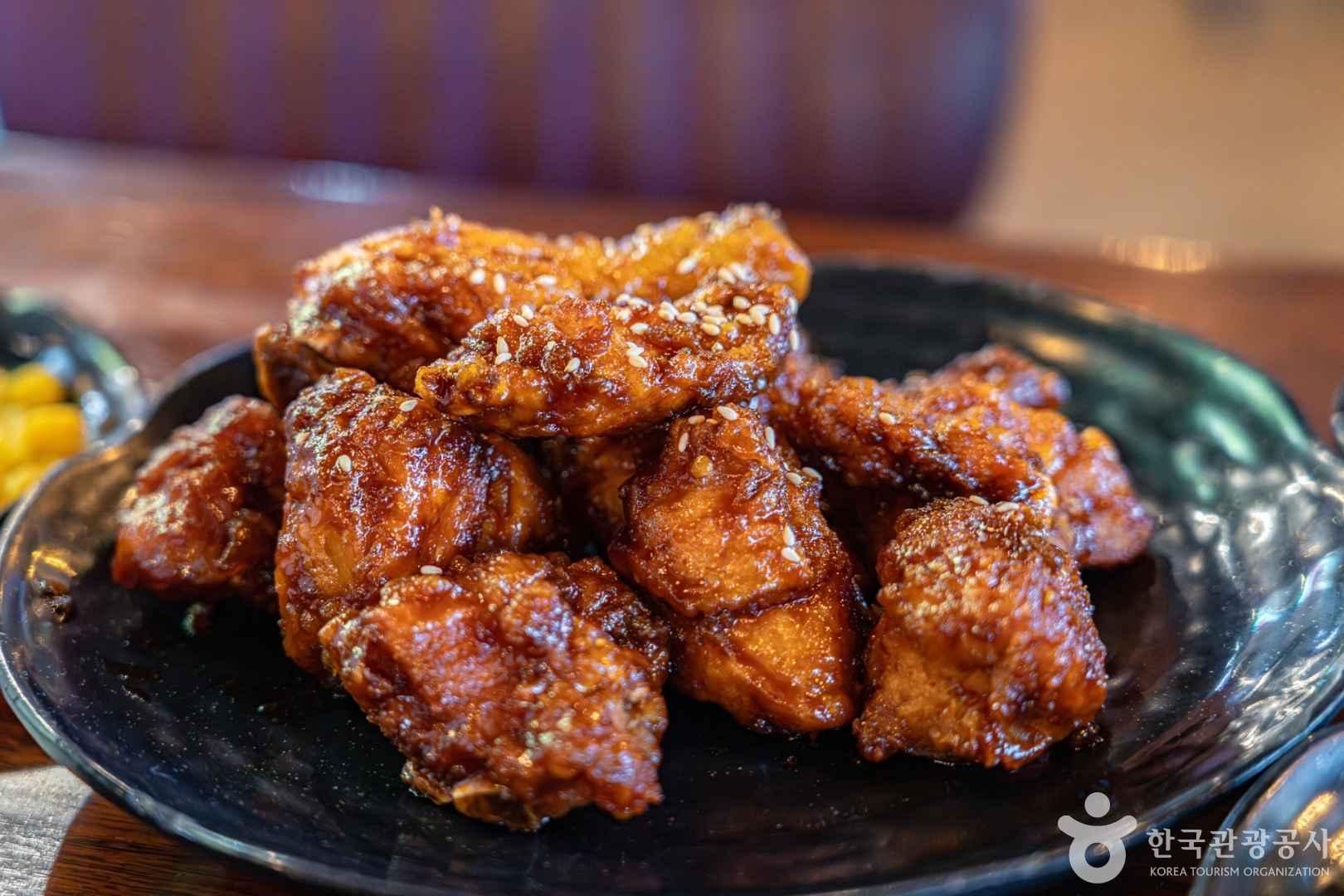
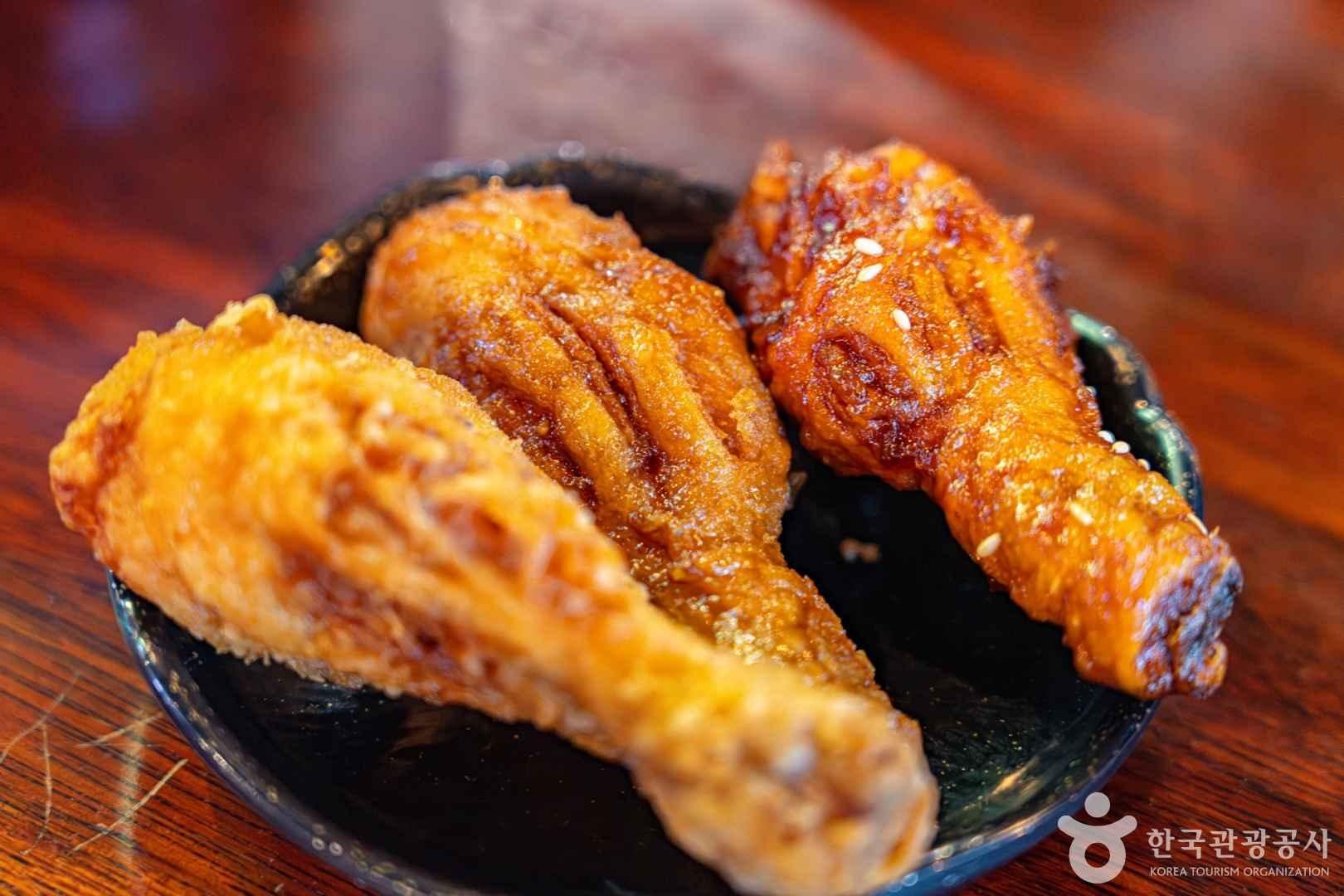
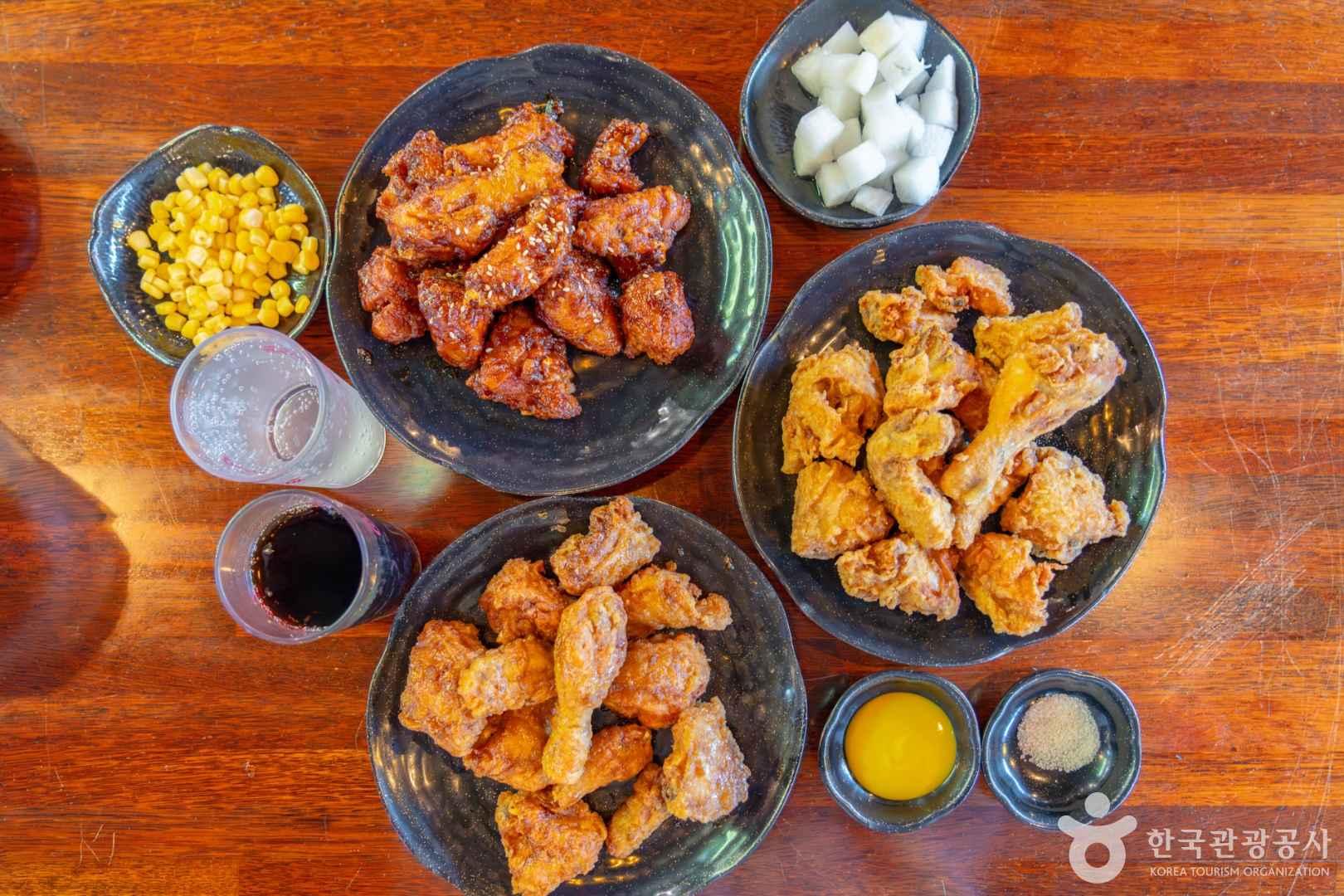
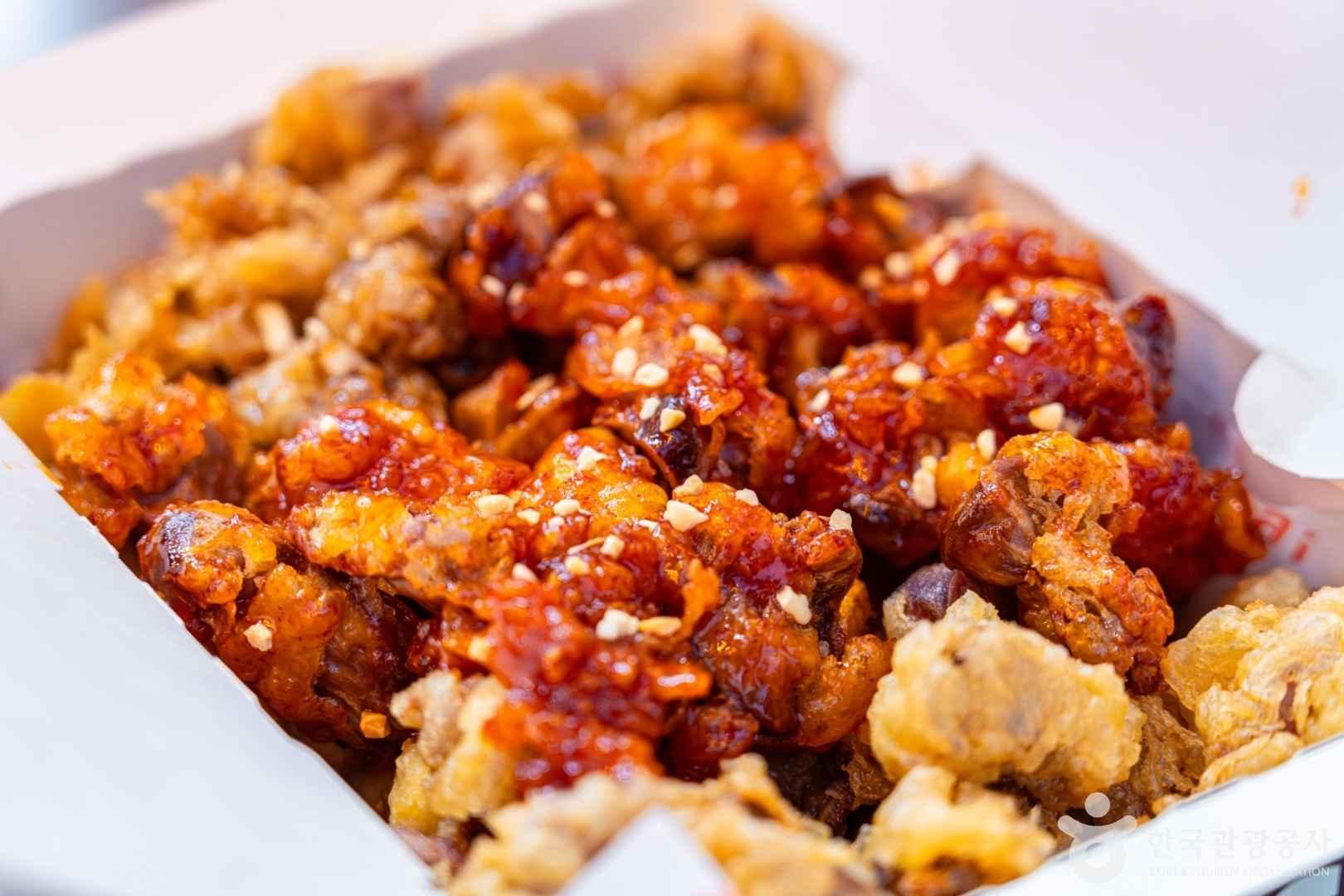
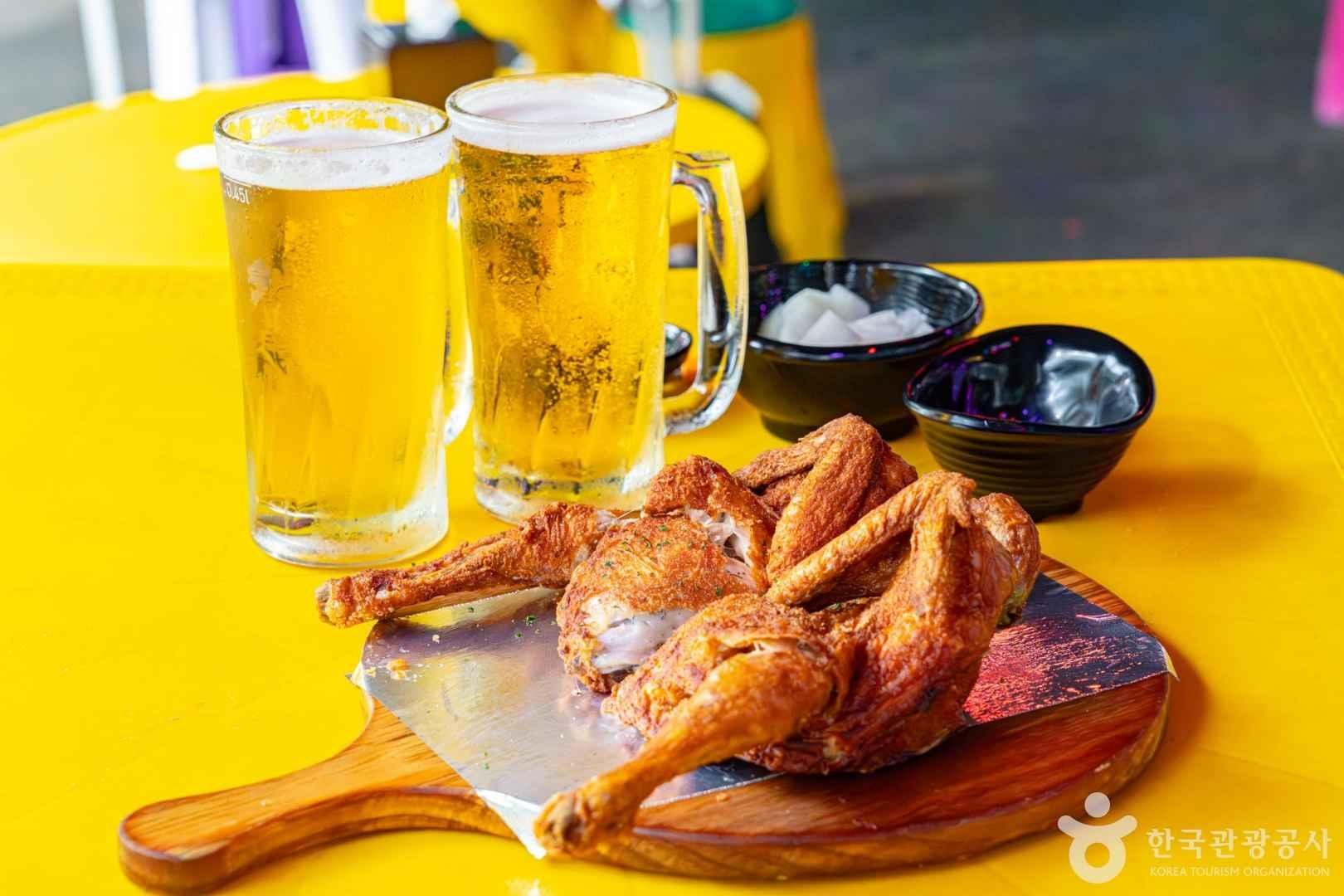
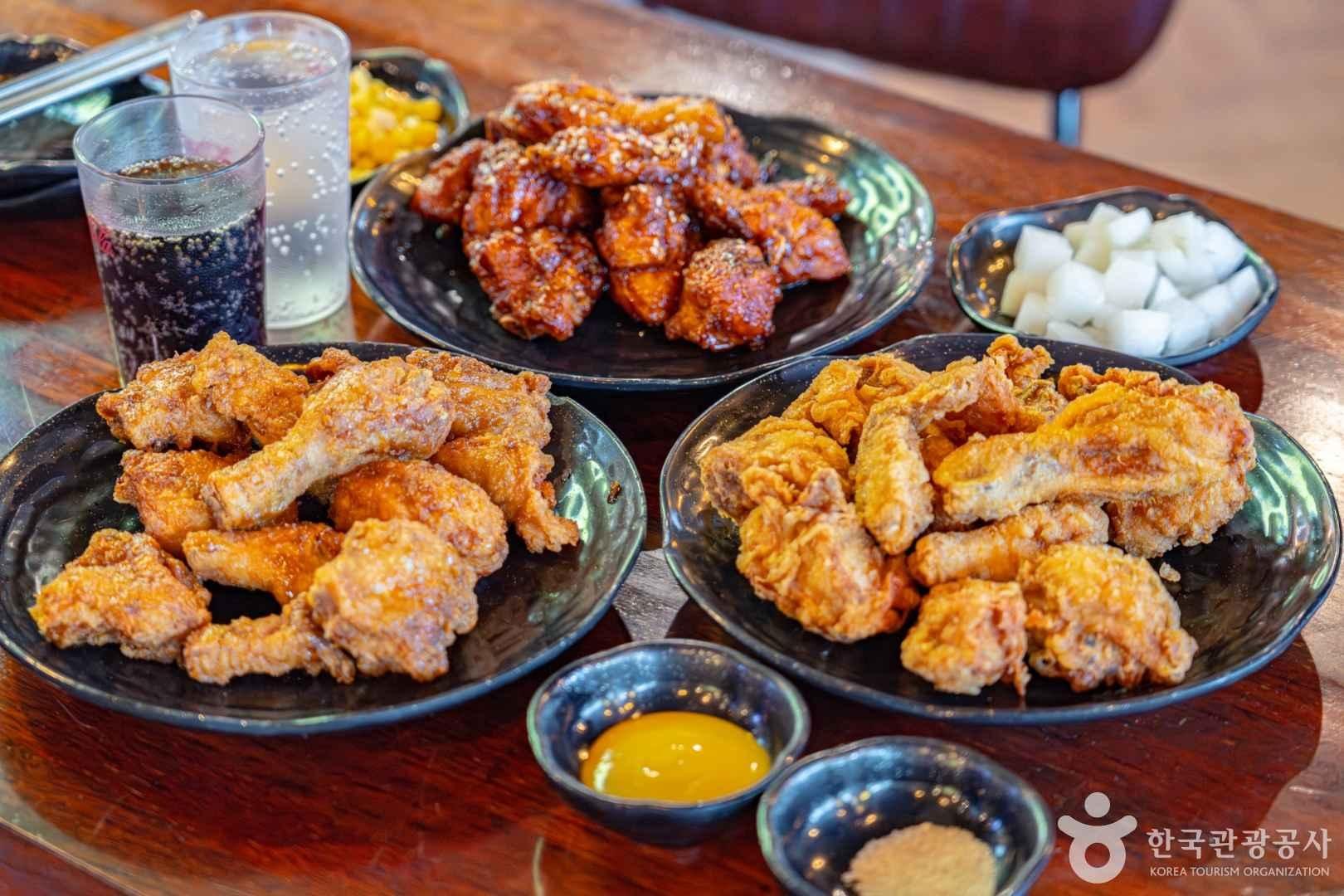
Jeong Eun-jeong, a writer and a scholar of rural societies, describes fried chicken as a “food for celebrations” in her work The Korean Chicken Collection. Fried chicken is indeed one of the most popular dishes enjoyed at sports games, holidays, festivals, or events in Korea.
History of Fried Chicken
In 1960, a restaurant specializing in grilled chicken, ‘Wonjo Yeongyang Center,’ opened in Myeongdong, Seoul. This restaurant served whole grilled chicken cooked in an electric oven to retain its juices. It has maintained its loyal following under its new name, ‘Yeongyang Center Main Branch.’ The opening of Wonjo Yeongyang Center spurred the rapid growth of grilled chicken restaurants throughout Korea, with the dish reaching peak popularity in the mid-1960s.
In the 1970s, fried chicken rose to popularity. In 1971, Dongbang Yuryang (today SAJO HAEPYO) released its ‘Haepyo Cooking Oil,’ a soybean oil product, to the market. This marked the beginning of what was then called “tongdak twigim,” or the whole fried chicken. As the new cooking oil became popular, merchants began selling whole chickens deep-fried in oil. With the expansion of Korea’s poultry industry and government policies promoting the consumption of non-rice grains, wheat flour became widely available, allowing fried chicken to become ingrained in the collective consciousness of Koreans.
In 1977, the opening of 'Lim's Chicken' in the basement of the Shinsegae Department Store's flagship location marked the beginning of a significant shift in the Korean chicken market. While fried chicken in Korea had traditionally involved frying whole chickens in oil, Lims Chicken created a new trend of frying individual chicken pieces. In 1981, ‘Pelicana Chicken’ made another significant impact by popularizing seasoned fried chicken. Many view this moment as the true birth of the “Korean fried chicken” we know today.
The popularity of fried chicken in Korea peaked with the 2002 FIFA World Cup in Korea and Japan. Before the World Cup, the number of shops offering fried chicken in Korea hovered around 10,000. After the event, the number more than doubled to 25,000. While cooking oil initially brought the idea of fried chicken into the market, the 2002 FIFA World Cup played a key role in establishing Korea as a haven for fried chicken.
Types of Fried Chicken
For many, fried chicken is divided into two categories: fried chicken and seasoned fried chicken. However, that’s not quite accurate. The true distinction in the world of fried chicken lies in the type of batter used (the batter for fried chicken often features a mixture of flour, starch, water, and salt): “Crispy” fried chicken, which has a thick batter, and “embo” fried chicken, which has a thinner coating. Most varieties of Korean fried chicken that we know today stem from these two types.
The former has a thick, crispy skin thanks to its thick batter, commonly used for seasoned or soy sauce seasoned fried chicken. The thick batter helps maintain the crispy texture when glazed with liquid sauces. Since it can be mixed with a variety of sauces, crispy fried chicken tends to follow trends quite closely. For instance, crispy fried chicken topped with cheese seasoning or pickled green onions has become very popular in the past. Some collaborative menu items combine fried chicken with seasonings inspired by popular snacks.
On the other hand, “embo” fried chicken is characterized by whole fried chicken. This style uses smaller chickens, often associated with samgyetang (ginseng chicken soup), lightly battered and deep-fried whole. One advantage of this style is its affordability, as smaller chickens are often less expensive. Some restaurants even offer two embo fried chickens for the price of one crispy fried chicken. The hallmark of embo fried chicken is the crispy texture of deep-fried chicken skin. After deep-frying, the chicken is cut into pieces and enjoyed with salt or sauce. That is why embo fried chicken is not tossed in seasoning, and seasoning is served on the side.
In Daegu, dakttongjip twigim is considered a unique variation of fried chicken. This dish uses gizzards, a part of chicken’s digestive system. This somewhat unfamiliar organ serves a role akin to teeth for birds. Since chickens are toothless, they swallow food whole, with food entering their digestive tract intact. The gizzard then grinds this food with the help of small stones or sand that the chickens ingest. As food passes through the digestive tract, these particles crush it, making it easier for nutrients to be absorbed.
Because of this, gizzards are full of muscles and have a uniquely springy and chewy texture. Chicken gizzards are cheaper than meat, making them a popular snack to pair with alcohol. Dakttongjip twigim are chicken gizzards deep-fried and tossed with seasoning, and the Pyeonghwa Market Dakttongjip Street, next to Daegu’s Pyeonghwa Market, has a collection of restaurants specializing in this dish.
Chicken and Beer
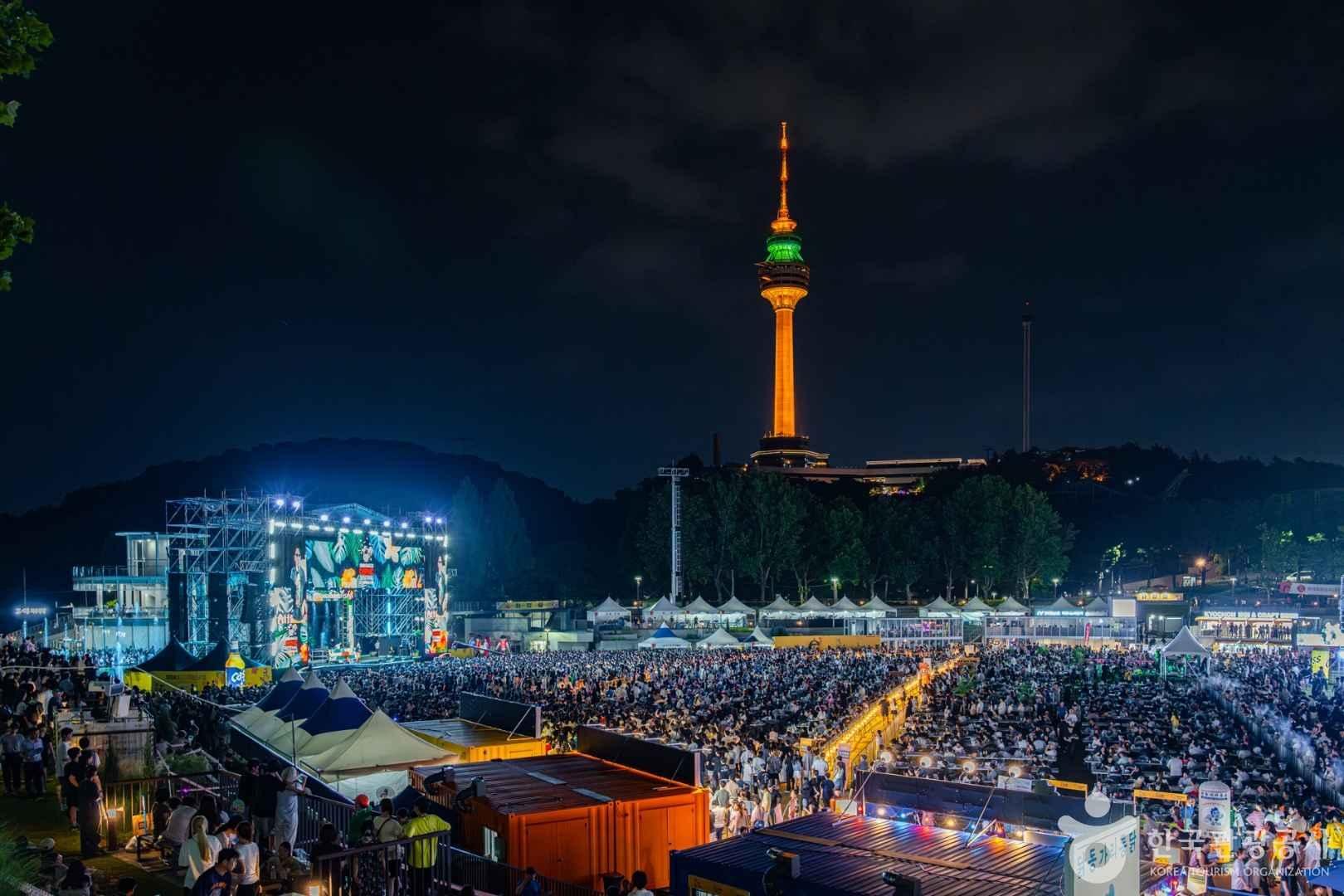
The best beverage to have with fried chicken is, of course, beer. In particular, crisp American lager-style beers, widely produced in Korea, pair well with chicken. In Korea, this combination is popularly known as "chimaek" (a portmanteau of "chicken" and "maekju," the Korean word for beer). In Daegu, Duryu Park is the ideal place to enjoy this chimaek. Duryu Its spacious grass fields have long been a popular spot for picnics in Daegu.
“Daegu Chimac Festival” at the “Fried Chicken Capital” of Korea
A great majority of fried chicken franchises beloved across Korea trace their origin to the Daegu and Gyeongsangbuk-do areas. Brands like Mexican Chicken, Mexicana, and Cheogajip Chicken, which enjoyed great popularity in the 1970s and 1980s, are the best examples. Even today, brands like Kyochon Chicken, Ttang Ttang Chicken, Jong Kuk 2 Chicken, and Hosigi Double Chicken have taken their business from Daegu and the surrounding areas to reach the rest of the country, captivating customers with their unique recipes and fresh twists on classic fried chicken.
If you want to see the future of Korean fried chicken, head to Daegu. Even better—especially in the summer. Summer is when the Daegu Chimac Festival is held around Duryu Park. Daegu Chima Festival is one of the most popular festivals in this vibrant city. During the festival, fried chicken brands that have begun in Daegu come together to present an impressive selection of fried chicken at affordable prices. What’s more, you can also get ice-cold draft beer with them.
Experience Information
Chicken Theme Park “Ttang Ttang Chicken Land”
This is the first fried chicken theme park in the world, established by PlanFood, the company that runs the fried chicken franchise ‘Ttang Ttang Chicken.’ The park features a hands-on fried chicken-making experience, which is easy enough for anyone to take part in. What’s more, you can get to taste your handmade fried chicken at the end. For safety, a cook handles the deep-frying process, but you can watch through a glass wall as your chicken is prepared.

Address:
220-2 Palgong-ro, Dong-gu, Daegu
Contact:
+82-53-721-7599
Operating Hours:
Tuesday–Sunday 10:00–18:00
Admission:
Ticket price 10,000 KRW (fried chicken and beverage included)
※ The entrance fee is waived with the purchase of an experience program
Program:
- Fried Chicken-making Experience: Adults: 20,000 KRW | Children: 17,500 KRW
- Chicken-making + burger-making experience: Adults: 26,500 KRW | Children: 22,500 KRW
※ Up to 60 participants per experience (children above the age of 36 months can take part in the experience; children under the age of 13 must be accompanied by a guardian)
Parking:
Available (up to 20 spaces)
Website:
ttland.co.kr (Korean)
Pyeonghwa Market Dakttongjip Street
The origins of dakttongjip twigim date back to 1972, when Pyeonghwa Market’s ‘Sama Tongdak’ began to serve chicken gizzards deep-fried with leftover gizzards to laborers as cheap accompaniments to makgeolli (unrefined rice wine). Over time, many restaurants specializing in dakttongjip twigim moved into the area, creating the street that we know today.
Address:
Ayang-ro 9-gil, Dong-gu, Daegu, and the surrounding areas
Daegu Chimac Festival
Each summer, this food festival is held in Daegu, the proud center of the Korean fried chicken industry. It is held in Duryu Park, a popular picnic spot in the city, and features a variety of fried chicken brands.
Period:
Every July
Location:
36 Gongwonsunhwan-ro, Dalseo-gu, Daegu
Admission:
Entry free of charge
* Some programs (performances, etc.) require reservation and pre-purchase
Program:
Fried chicken and beer sales, performances, Chimac Play Zone & Photo Zone, etc.
Website:
www.chimacfestival.com (Korean, English, Japanese, and Chinese)

1330 Helpline Call/Chat

Start a FREE Online Call(No charges for calls on Wi-Fi /
Data charges may apply)

Open 1330 Helpline Chat(Download not required)



Open messenger app(Messenger app must be installed)