
Current language
English
- Log in
-
- Sydney Overseas Office
- London Overseas Office
- Toronto Overseas Office
- Los Angeles Overseas Office
- New York Overseas Office
- Ulaanbaatar Overseas Office
- Dubai Overseas Office
- New Delhi Overseas Office
- Manila Overseas Office
- Jakarta Overseas Office
- Hanoi Overseas Office
- Kuala Lumpur Overseas Office
- Singapore Overseas Office
- Bangkok Overseas Office
- Map
Popular search
- Sydney Overseas Office
- London Overseas Office
- Toronto Overseas Office
- Los Angeles Overseas Office
- New York Overseas Office
- Ulaanbaatar Overseas Office
- Dubai Overseas Office
- New Delhi Overseas Office
- Manila Overseas Office
- Jakarta Overseas Office
- Hanoi Overseas Office
- Kuala Lumpur Overseas Office
- Singapore Overseas Office
- Bangkok Overseas Office
Contents View
-
-
-
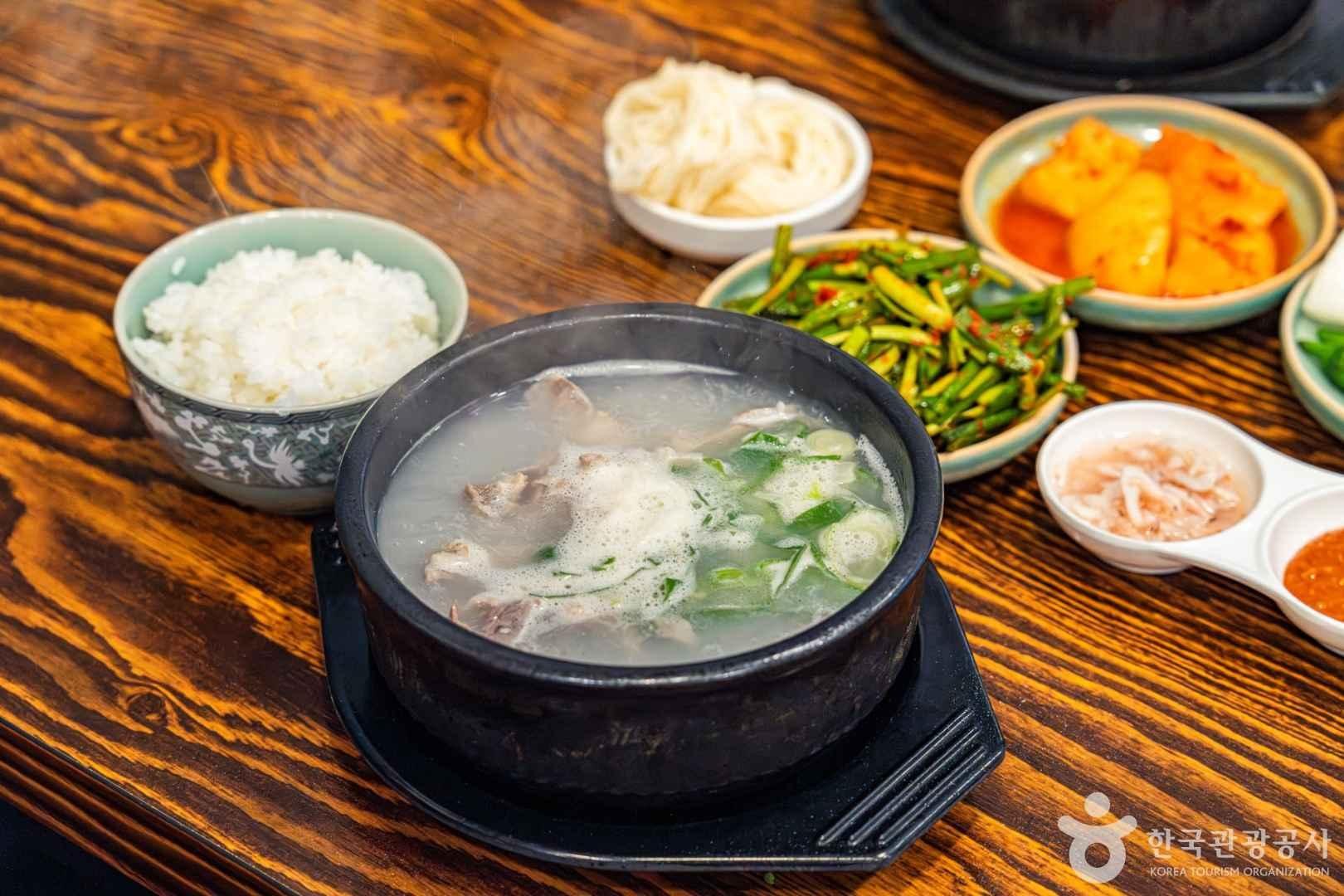
Dwaejigukbap: Busan's Representative Local Dish
-
02/20/2025
-
5.4K
0
0
-
-
-
-
Dwaejigukbap: Busan's Representative Local Dish
When & Where

Gukbap (rice soup) can be enjoyed any time of the year, but spring is the best season to enjoy the fresh taste of the chives in it.

Busan is known as the “city of dwaejigukbap (pork and rice soup),” with many restaurants dedicated to it. Near Seomyeon Station, you’ll find "Seomyeon Local Food Street" (Seomyeon-ro 68beon-gil, Busanjin-gu, Busan, the alley next to Seomyeon Market), where many eateries specialize in dwaejigukbap.
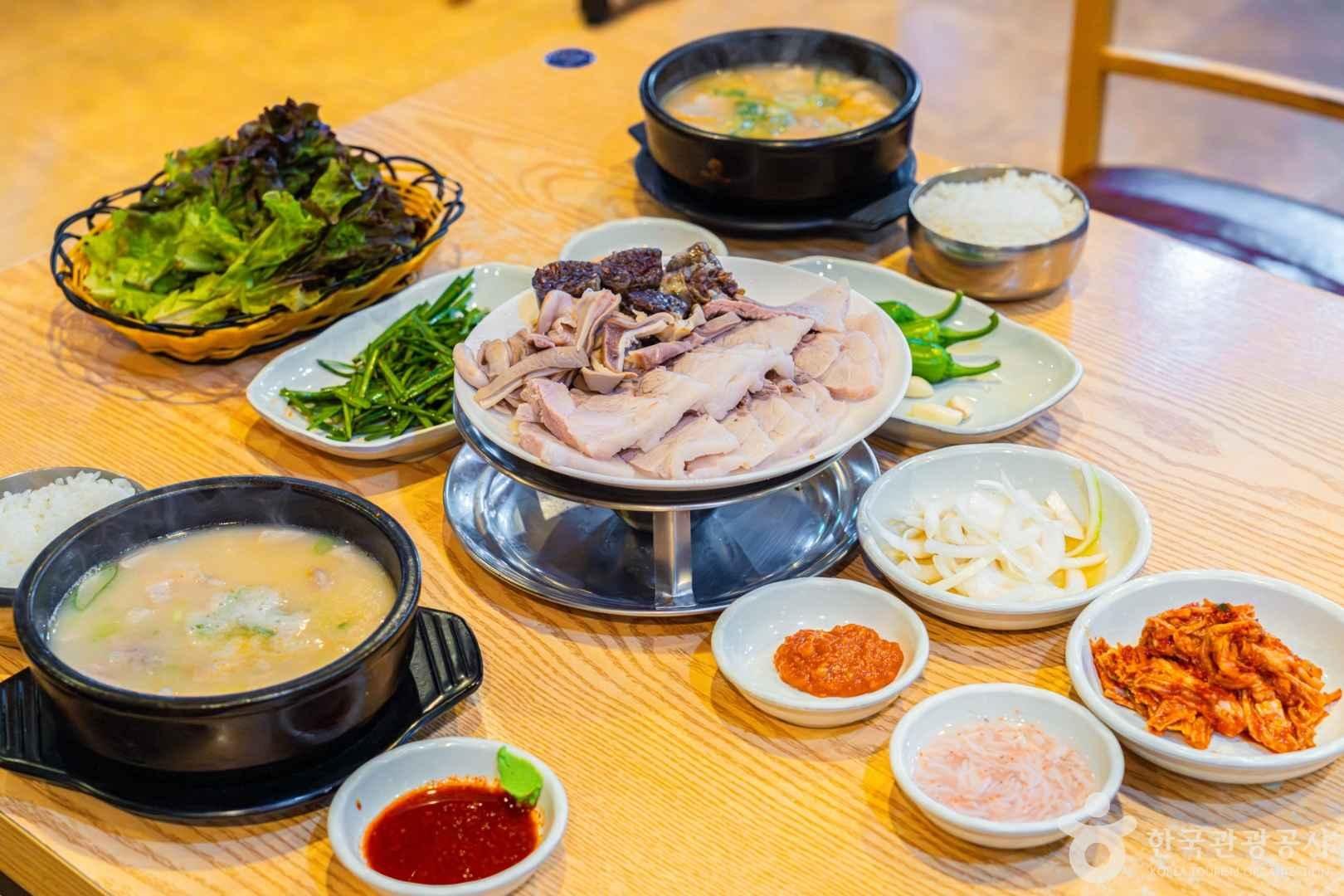
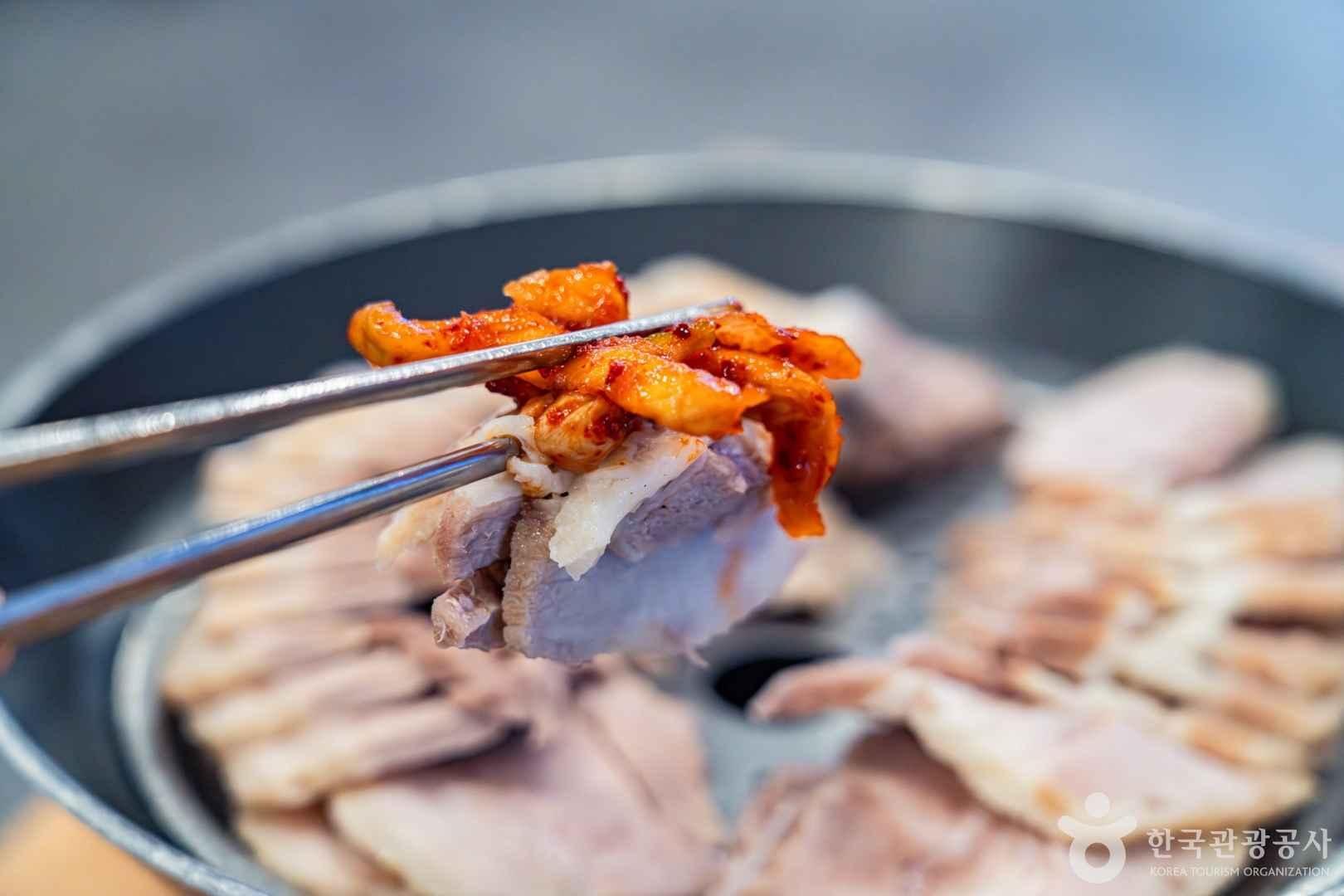
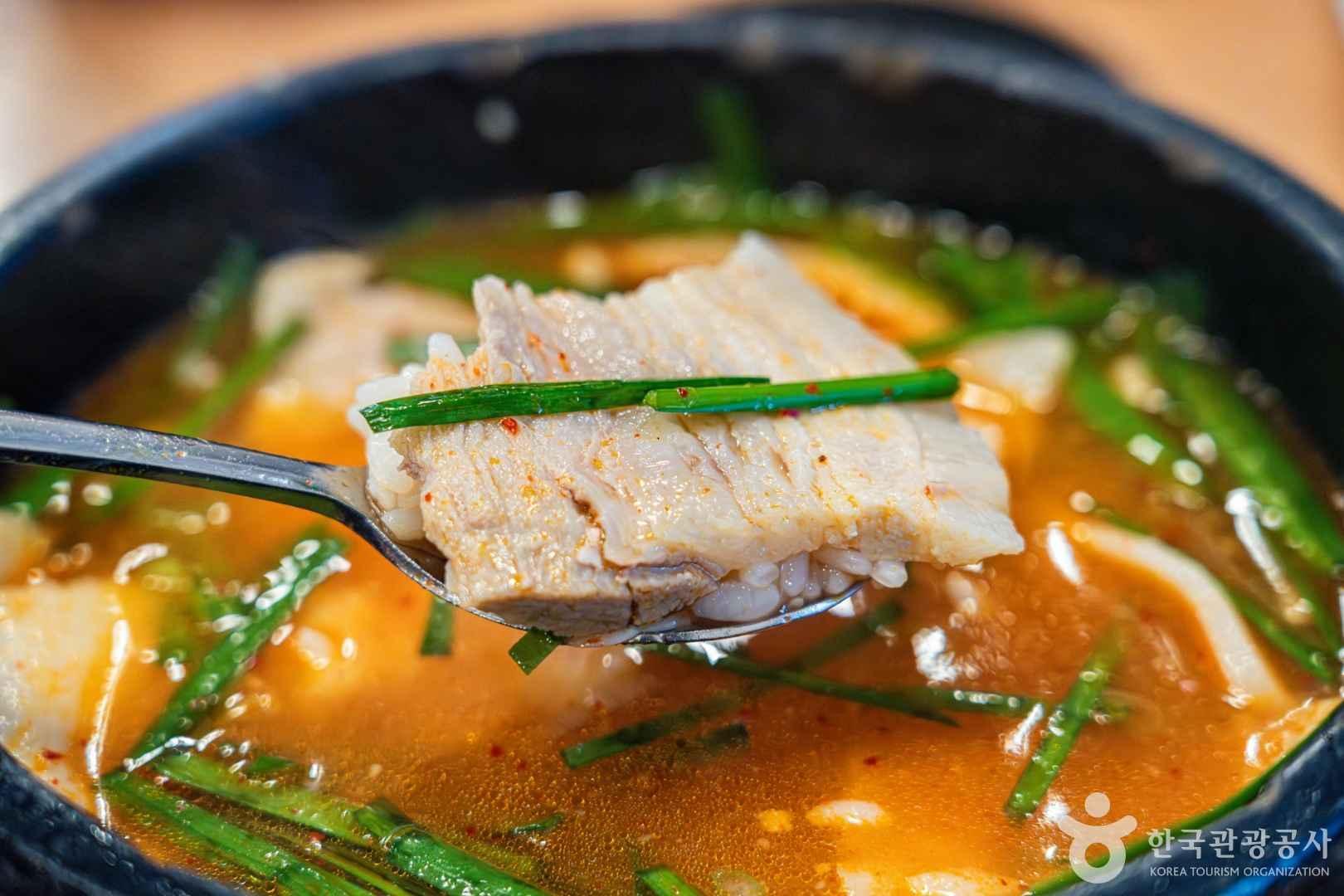

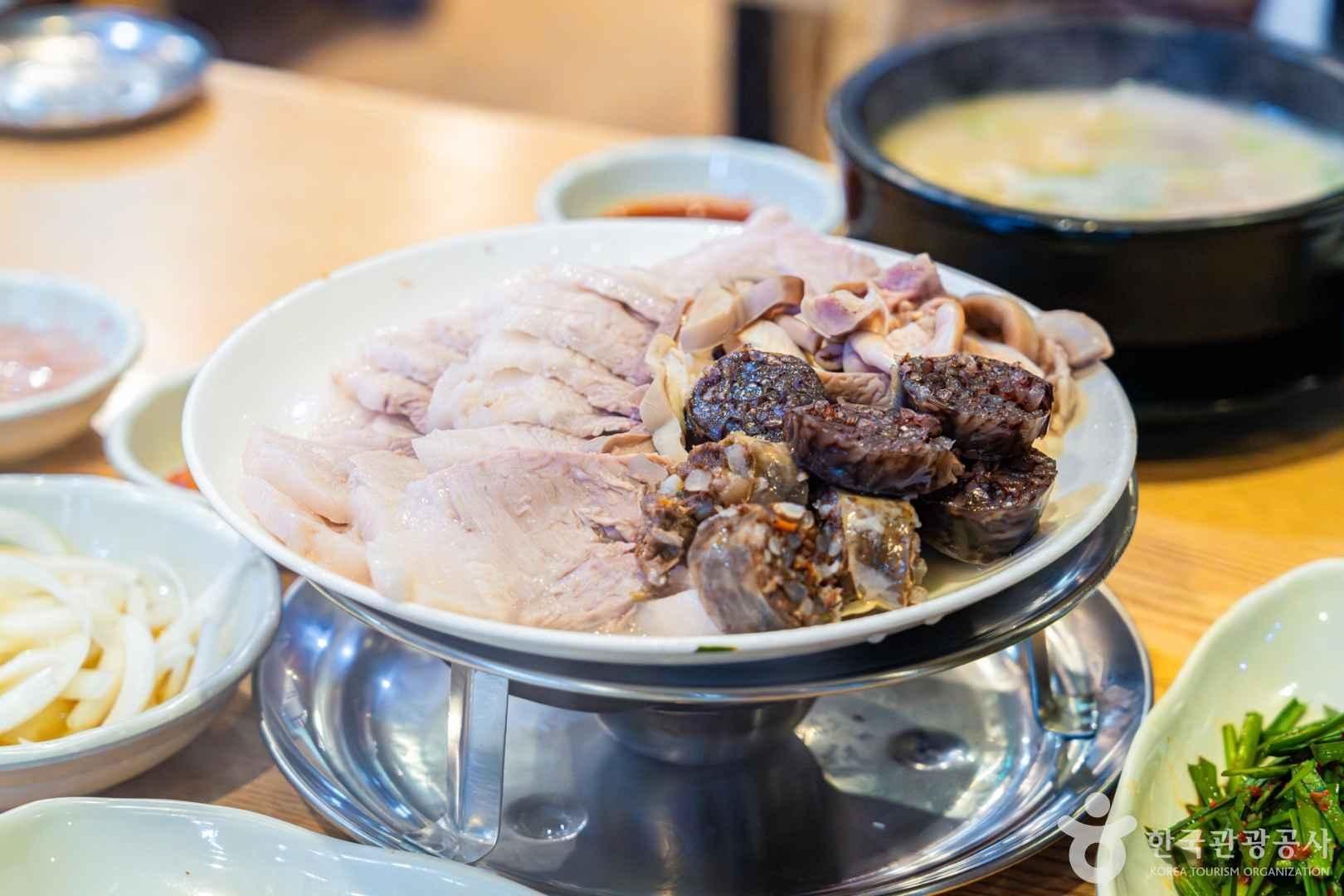
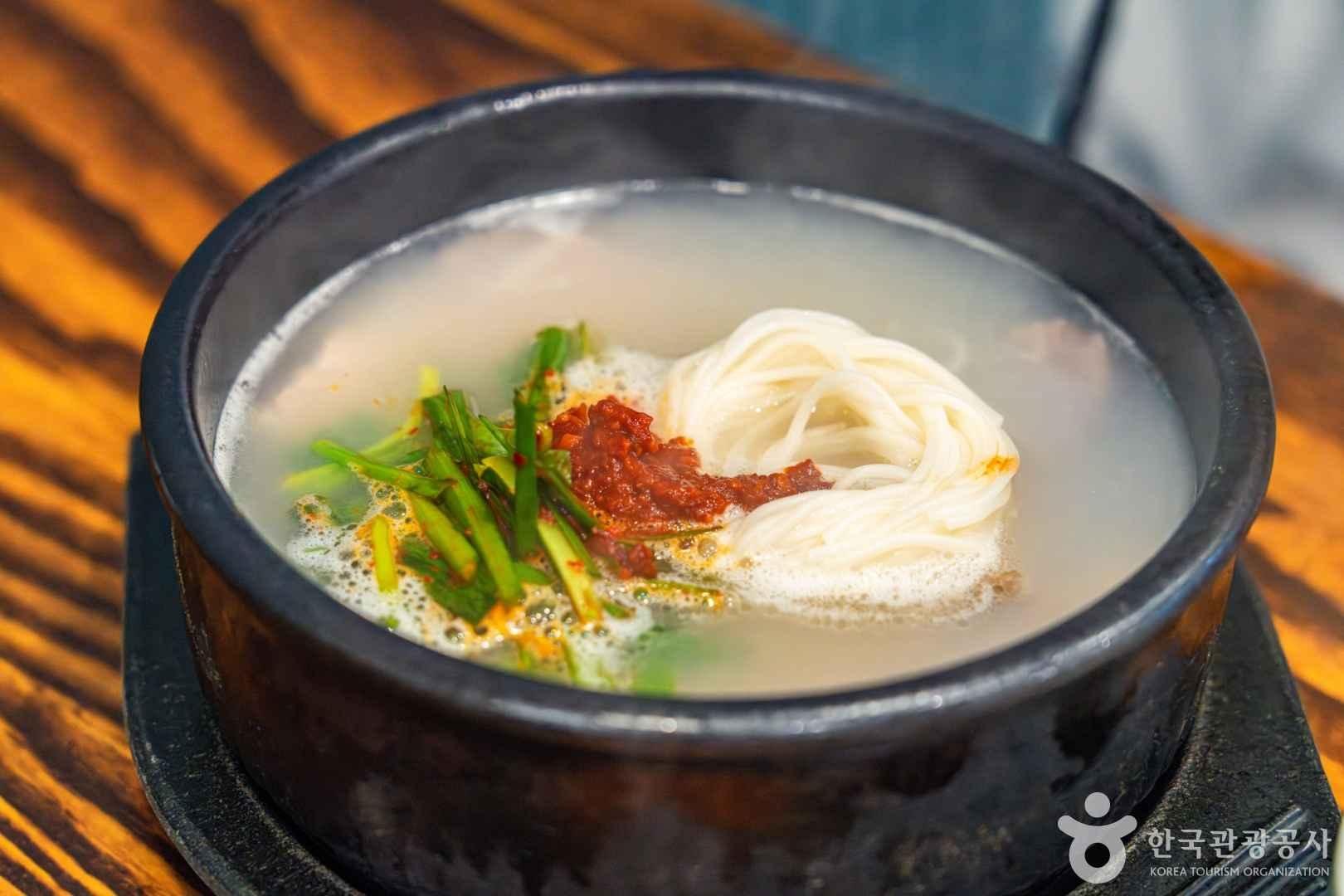
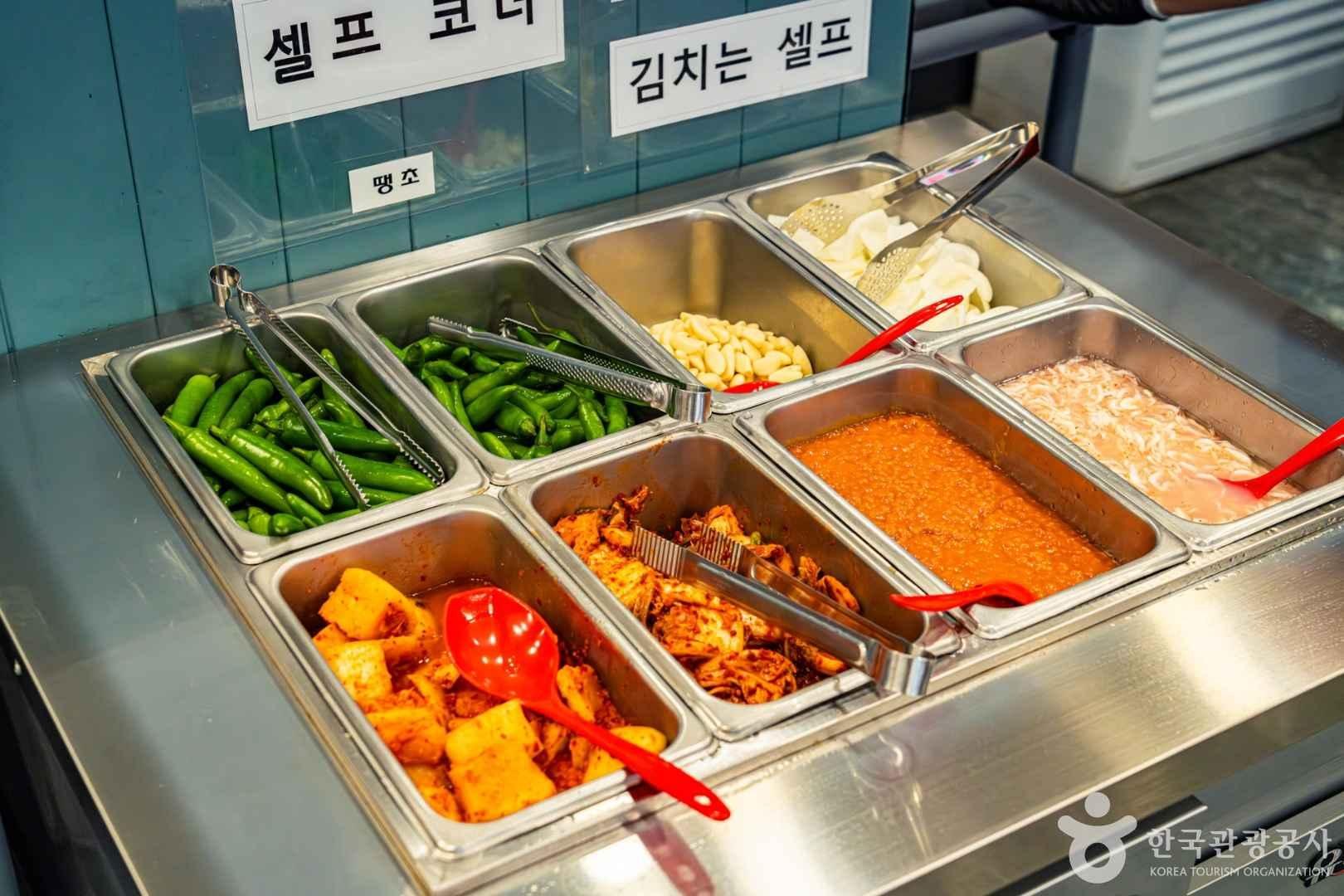
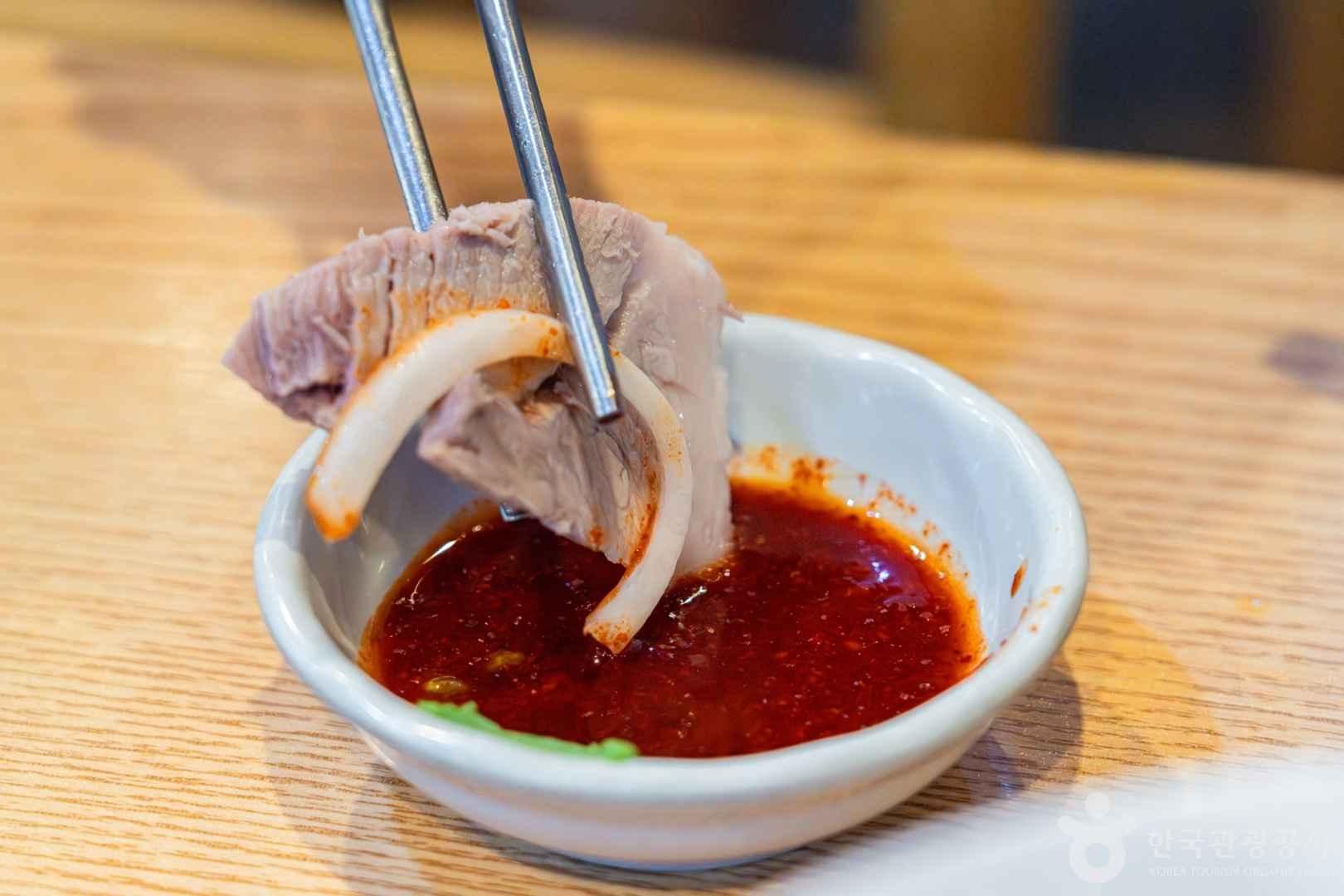

Gukbap (rice soup), a unique dish and culinary genre in its own right, has long been beloved by Koreans. Historically, when Koreans needed a quick meal, they would turn to gukbap. Its simple preparation and satisfying nature are key reasons for their popularity—It’s essentially Korean fast food.
It was also popular among travelers. In the past, merchants and Confucian scholars traveling between their hometowns and the capital often stopped at inns to enjoy a bowl of gukbap. For those on long journeys, it was the perfect way to quickly and easily satisfy their hunger, rather than taking the time for a more elaborate meal. That might be why rice soup is still easily found throughout Korea today. With its wide appeal, straightforward preparation, and readily available ingredients, it’s no surprise it has remained a staple dish.
Gukbap soup is usually made by simmering beef or pork to create a broth, which is then combined with various ingredients and simmered again. Often, large batches are prepared in big pots to develop a deeper flavor. In restaurants, the broth is typically pre-cooked before or after hours, allowing it to be quickly reheated and served when ordered.
How Did Dwaejigukbap Become Popular?
In the past, beef was the primary meat used in gukbap, as most households kept a cow or two, and alternatives were limited to chicken. Beef-based gukbap included dishes like someori gukbap (beef head meat and rice soup), kkori gomtang (oxtail soup), and seolleongtang (ox bone soup), which utilized less commonly used cuts or bones, as well as galbitang (short rib soup), made with meaty beef ribs.
After the 1970s, with industrialization, large-scale pig farms emerged across the country. This led to a significant increase in pork production, making it cheaper than beef. Pork exports also grew, and to support this, meat processing facilities began to appear in Busan and surrounding cities.
With these facilities in place, the people of Busan began selling dwaejigukbap made from the pork by-products. Around this time, dwaejigukbap began to be seen by Busan residents as both a form of “Korean fast food” and a type of “soul food.”
Today, the number of dwaejigukbap restaurants in Busan is double that of Chinese restaurants. According to a 2019 survey by Busan Ilbo, there are over 700 specialized dwaejigukbap restaurants in Busan.
There Are Different Types of Dwaejigukbap
Dwaejigukbap can be prepared in two distinct styles based on the cooking method: clear broth and rich broth. A clear broth is made by cooking pork in water alone, while a rich broth is achieved by cooking pork with bones. The meat-based broth has a clean taste, while the bone-based broth has a deep, savory flavor.
Dwaejigukbap is usually made with the pork picnic meat. However, some higher-end restaurants use pork neck (the meat from the area between the neck and shoulder) instead, which is fattier and more flavorful.
When you arrive at a dwaejigukbap restaurant, you might find the menu a bit complicated. On the menu, “offal only” refers to a dwaejigukbap with only pork offal, while “sundae only” means it comes with only sundae. “Mixed” means it comes with meat and offal or meat and sundae. If you'd like to sample a bit of everything, “assorted” is a good choice. Dwaejigukbap with just meat is deliciously savory, and adding offal gives it a chewy texture.
What is "Toryeom?”
When ordering gukbap, you might often encounter the term “toryeom.” This traditional method involves gradually warming the dish by repeatedly pouring hot broth over cold rice and then draining it until it reaches an ideal temperature. It was also a way to keep the soup warm in the days before electric rice cookers were available.
How to Enjoy Dwaejigukbap Deliciously
When you order dwaejigukbap, it typically comes with kimchi, salted shrimp, and chives. Start by adding chives to the gukbap, then taste the broth with a spoon. Next, adjust the seasoning to your preference with chopped condiments, salted shrimp, or salt. Some restaurants also add noodles to the soup.
Dwaejigukbap offers countless variations depending on the type of broth, meat, and seasonings—no two bowls are exactly alike. It’s worth visiting various renowned dwaejigukbap spots in Busan to taste and enjoy the different styles available.
*Reference: Busan Ilbo's "Busan Dwaejigukbap Road"(porksoup.busan.com)
Restaurants Information
Yangsanjip
A long-standing dwaejigukbap restaurant beloved by both vendors and visitors of the Kkangtong Market. The restaurant is small, so it’s often necessary to wait for a seat. Despite this, it remains popular among regulars, who are more than willing to wait. The popular menu item is the suyuk baekban, which includes soup, rice, and separately served boiled pork.

Address:
30 Junggu-ro 47beon-gil, Jung-gu, Busan
Contact:
+82-51-245-8294
Signature Menu:
Suyuk Baekban – 13,000 KRW /
Rice in soup with meat – 10,000 KRW /
Rice and soup served separately – 10,000 KRW /
Suyuk (boiled pork slices, large) – 45,000 KRW /
Pyeonyuk (pressed boiled pork slices, small) – 30,000 KRW
Getting There:
Approx, 570 m from Exit 3 of Jagalchi Station on Busan Metro Line 1
Parking:
No on-site parking; available at Bupyeong Public Parking Lot
Seating Capacity:
20 seats
Menu Languages:
Korean, English, Japanese, and Chinese
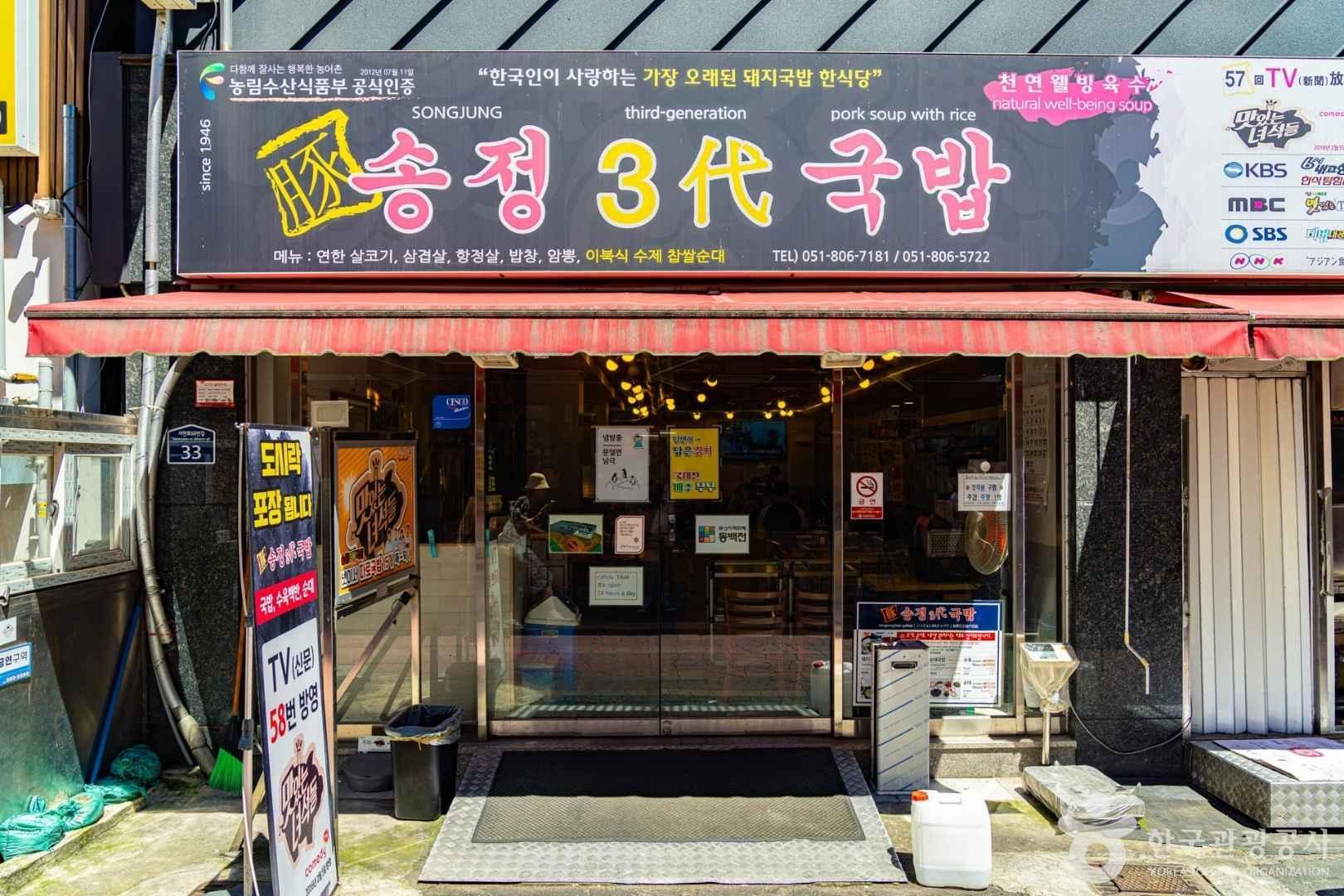
Songjeong Samdae Gukbap
Established in 1946, this restaurant is renowned as one of Busan’s iconic dwaejigukbap spots. It serves dwaejigukbap made with a broth from pork bones, and customers can customize their bowls by adding the ingredients to their preferences, such as adding pork, sundae, or offal. The restaurant is open 24 hours, with a 2-hour break from 2:30 AM to 4:30 AM.
Address:
33 Seomyeon-ro 68beon-gil, Busanjin-gu, Busan
Contact:
+82-51-806-5722
Signature Menu:
Dwaejigukbap – 9,000 KRW /
Suyuk Baekban (boiled pork slices set menu) – 11,000 KRW /
Suyuk (small) – 28,000 KRW, Sundae (small) – 10,000 KRW
Getting There:
Approx. 200 m from Exit 1 of Seomyeon Station on Busan Metro Line 1
Parking:
No on-site parking; available at street public parking lot (in front of Seomyeon Market)
Seating Capacity:
136 seats
Menu Languages:
Korean, English, Japanese, and Chinese
Anmok
Dwaejigukbap is made with a broth that has been simmered for over 24 hours using pork bones. The rich flavor of the pork bones requires no additional seasoning to enjoy the soup’s natural taste. A variation with noodles, known as dwaeji ramyeon (pork ramyeon), offers a unique twist on this delicacy.
Address:
3 Gwangnam-ro 22beon-gil, Suyeong-gu, Busan
Contact:
+82-70-8778-0519
Signature Menu:
Dwaejigukbap – 10,000 KRW /
Dwaejigukbap (head meat) – 11,000 KRW /
Dwaejigukbap (mixed) – 10,500 KRW /
Dwaeji Ramyeon – 10,000 KRW
Getting There:
Approx. 320 m from Exit 1 of Namcheon Station (KBS, Suyeong District Office) on Busan Metro Line 2
Parking:
Free
Seating Capacity:
14 seats
Menu Languages:
Korean
Subyeon Choego Dwaejigukbap Millak Main Store
The signature dish is hHangjeong gukbap (pork neck and rice soup) made with pork neck. The soup is known for its rich flavor, as it is prepared by simmering pork bones to extract a deep broth.
Address:
9-32 Gwanganhaebyeon-ro 370beon-gil, Suyeong-gu, Busan
Contact:
+82-51-754-9222
Signature Menu:
Hangjeong Gukbap (pork neck and rice soup) – 12,000 KRW /
Gogi Gukbap (pork meat and rice soup) – 10,000 KRW /
Naejang Gukbap (pork offal and rice soup) – 10,000 KRW /
Seokkeo Gukbap (mixed pork and rice soup) – 10,000 KRW
Getting There:
Approx. 1.6 km from Exit 1 of Millak Station on Busan Metro Line 1, adjacent to Millak Waterside Park
Parking:
No on-site parking; available at Waterside Children’s Park Public Parking Lot
Seating Capacity:
66 seats
Menu Languages:
Korean, English, Japanese, and Chinese

1330 Helpline Call/Chat

Start a FREE Online Call(No charges for calls on Wi-Fi /
Data charges may apply)

Open 1330 Helpline Chat(Download not required)


Open messenger app(Messenger app must be installed)