
Current language
English
- Log in
-
- Sydney Overseas Office
- London Overseas Office
- Toronto Overseas Office
- Los Angeles Overseas Office
- New York Overseas Office
- Ulaanbaatar Overseas Office
- Dubai Overseas Office
- New Delhi Overseas Office
- Manila Overseas Office
- Jakarta Overseas Office
- Hanoi Overseas Office
- Kuala Lumpur Overseas Office
- Singapore Overseas Office
- Bangkok Overseas Office
- Map
Popular search
- Sydney Overseas Office
- London Overseas Office
- Toronto Overseas Office
- Los Angeles Overseas Office
- New York Overseas Office
- Ulaanbaatar Overseas Office
- Dubai Overseas Office
- New Delhi Overseas Office
- Manila Overseas Office
- Jakarta Overseas Office
- Hanoi Overseas Office
- Kuala Lumpur Overseas Office
- Singapore Overseas Office
- Bangkok Overseas Office
Contents View
-
-
-
Dakgalbi: A Stir-Fried Delicacy on an Iron Plate
-
02/20/2025
-
2K
0
0
-
-
-
-
Dakgalbi: A Stir-Fried Delicacy on an Iron Plate
When & Where

Dakgalbi, or spicy stir-fried chicken, is delicious year-round, but the best time to savor the rich flavors of the vegetables in the dish is from late winter to spring, when they add a deep, natural sweetness.

Chuncheon is the birthplace and the epicenter of dakgalbi. Dakgalbi restaurants can be found in Chuncheon’s Myeongdong Dakgalbi Street (Geumgang-ro area in Chuncheon-si, Gangwon-do), Namchuncheon Station intersection, and the commercial district next to Soyang Dam (Sinsaembat-ro area in Chuncheon-si, Gangwon-do).
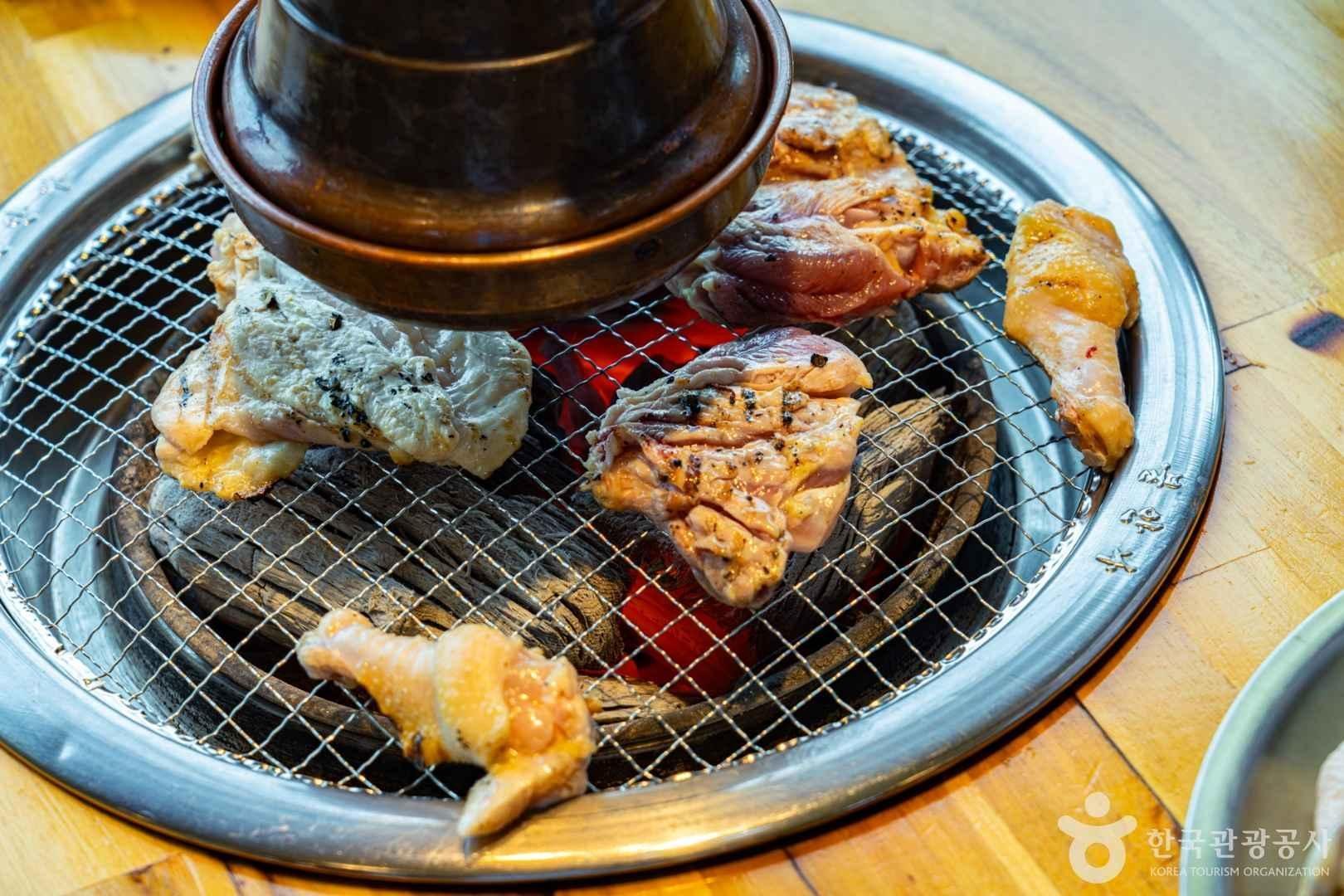
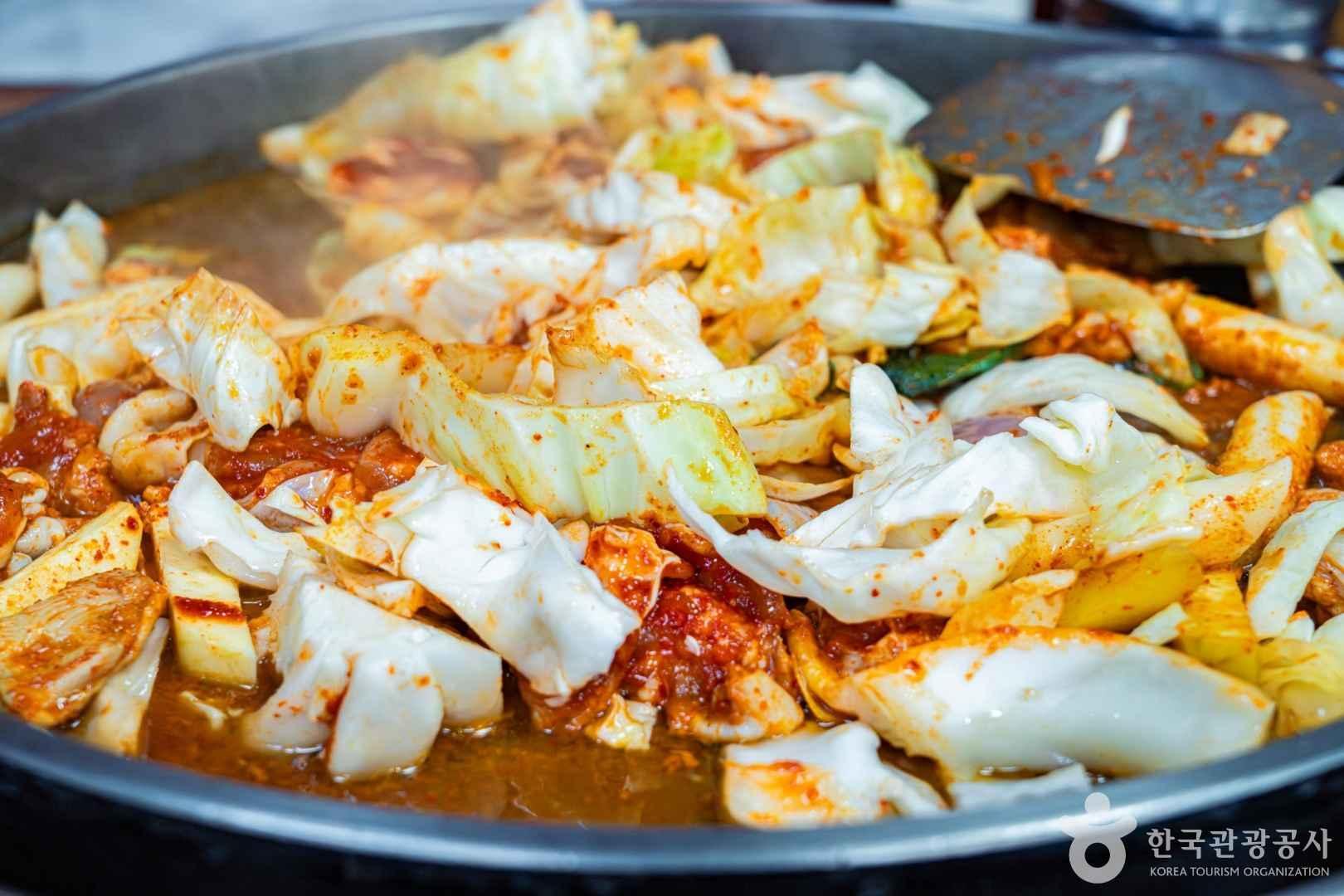
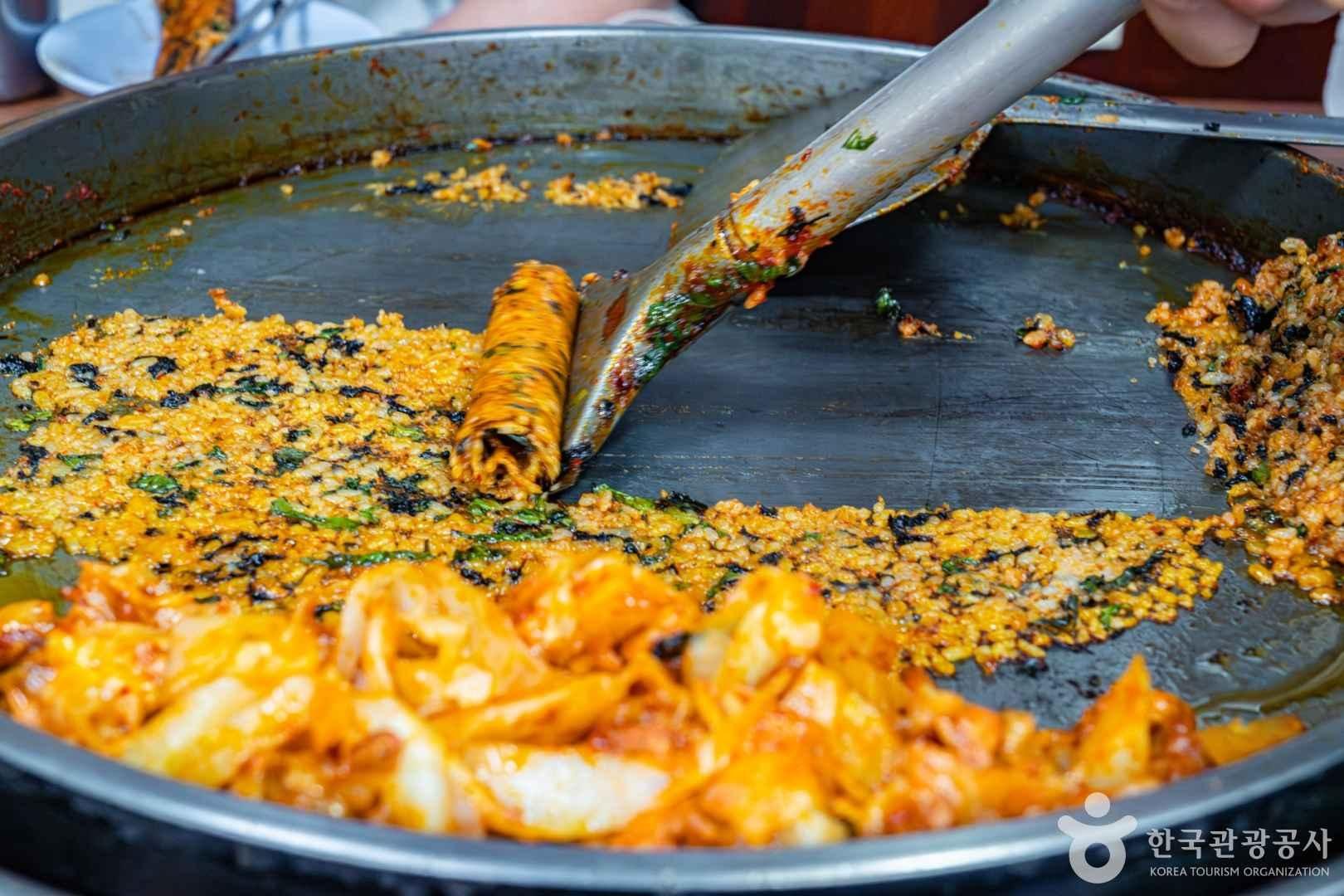
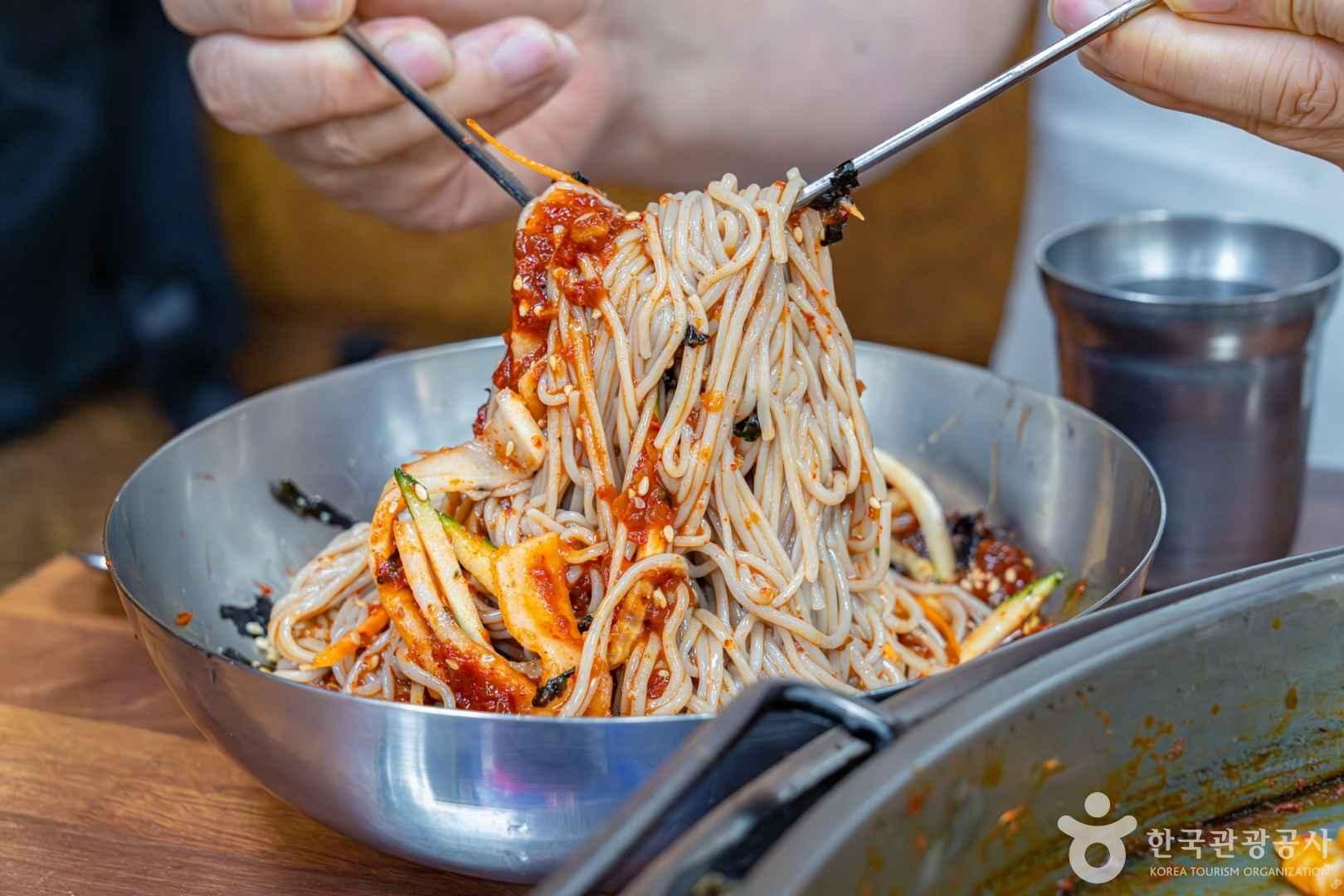
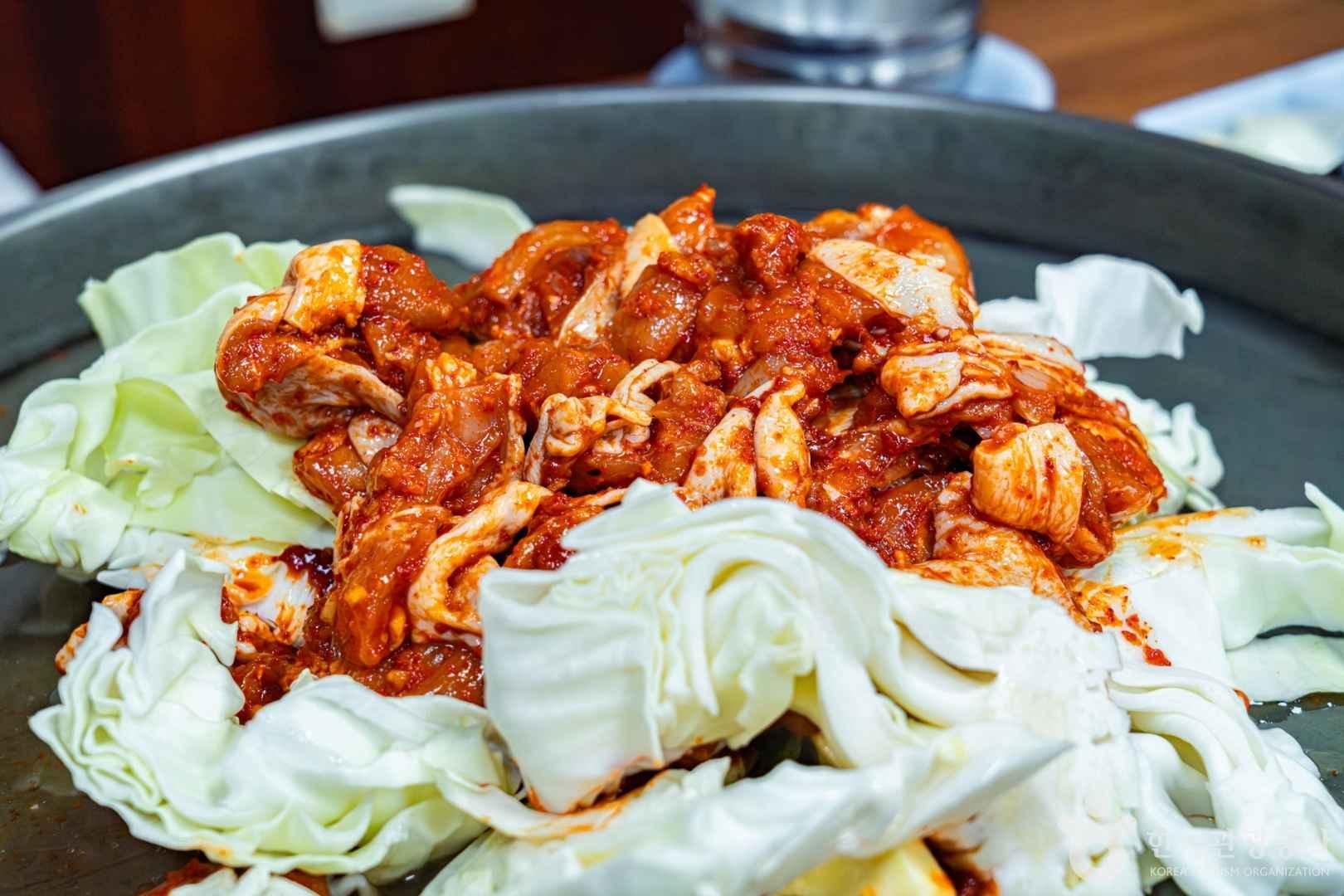
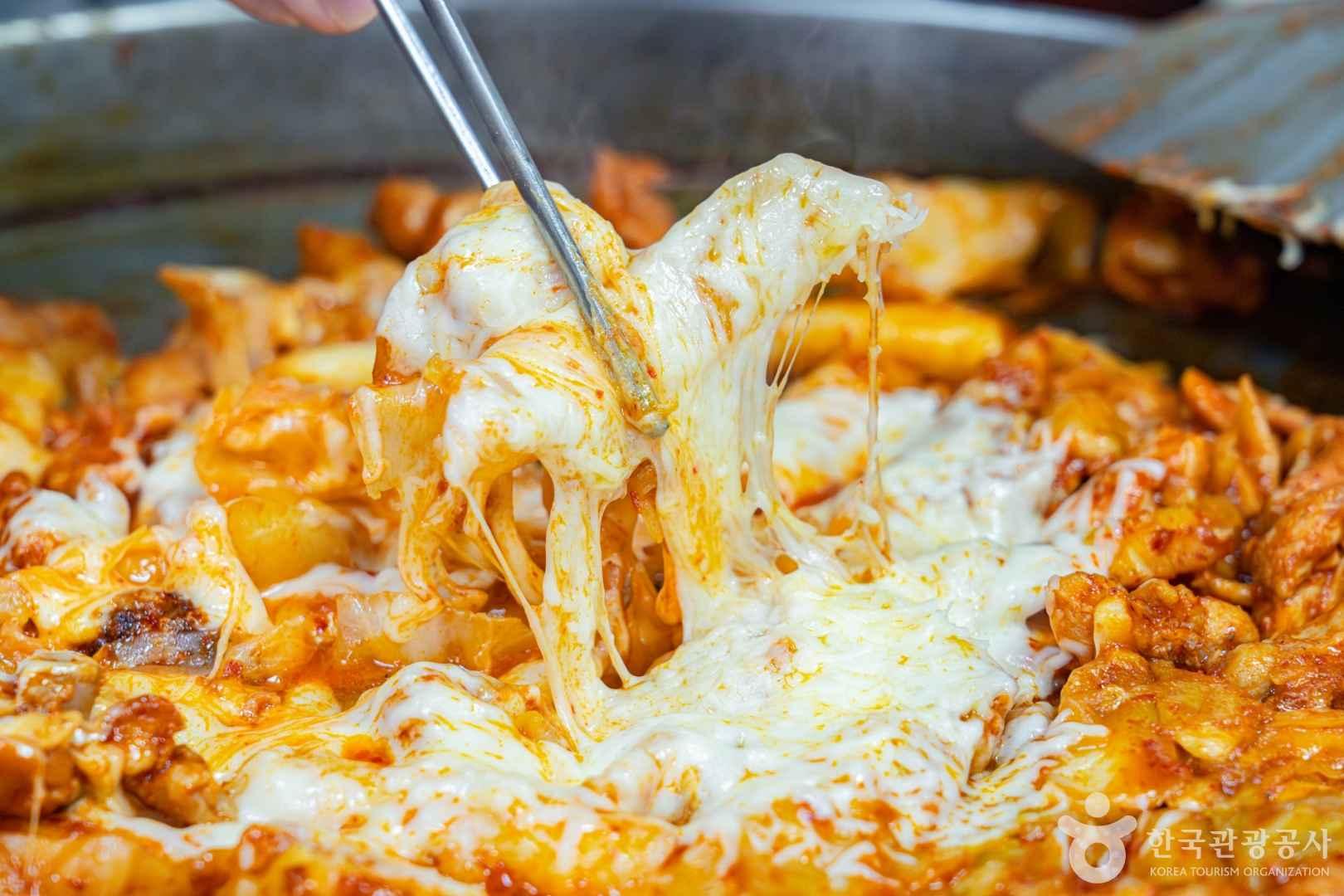
Galbi, a Korean favorite, typically refers to grilled bone-in meat. This is the reason why galbi is often synonymous with grilled beef galbi. But galbi is sometimes used to describe other bone-in grilled dishes, like dakgalbi.
The Origin of Chuncheon Dakgalbi
Dakgalbi was originally named dakbulgogi. It began in 1970 when a dwaejigalbi (grilled pork galbi) restaurant changed its name to “Dakbulgogijip” and started selling dakbulgogi instead of dwaejigalbi. This change, driven by the pork shortage at the time, involved marinating and charcoal-grilling chicken. The popularity of this dish led to the restaurant to fully commit to the new name and the menu. As the restaurant’s success continued, other merchants in the area began offering dakbulgogi.
We know “Chuncheon Dakgalbi” as a dish cooked on a hot iron plate, but originally, dakgalbi was a charcoal-grilled dish. As gas stoves became more common, dakgalbi began to be cooked on a hot iron plate for convenience. The introduction of boneless chicken also brought further changes, and different experimentation with different cuts eventually led to using boneless chicken thighs for better flavor and texture. Since there was no longer a need to cook the bone-in chicken for extended periods, vegetables like cabbage and onion were added to the dish.
What Defines Authentic Dakgalbi: Cheolpan Dakgalbi or Sutbul Dakgalbi?
Generally, cheolpan dakgalbi is considered as the standard version of dakgalbi. However, in Chuncheon, two types coexist: cheolpan dakgalbi (spicy stir-fried chicken on hot iron plate) and sutbul dakgalbi (spicy charcoal-grilled chicken). Although these are entirely different dishes, locals refer to both simply as “dakgalbi”. But charcoal-grilled dakgalbi is sometimes distinguished as “sutbul dakgalbi”.
Cheolpan dakgalbi is a dish where chicken marinated in red chili paste-based sauce is stir-fried on an iron plate with cabbage, sweet potatoes, onions, and green onions. You can enjoy the stir-fried dakgalbi wrapped in vegetables or add garlic and chili pepper to enjoy their harmony. We recommend trying dakgalbi on its own first, then with vegetable wraps. Once you’re done, you can make a bokkeumbap (stir-fried rice) with the remaining sauce—a ritual so beloved that it’s sometimes called “Korea’s official dessert.” If you order bokkeumbap, the staff will stir-fry the rice with the leftover sauce and extra seasoning, and their skillful stir-frying is often mesmerizing to watch.
Sutbul dakgalbi, on the other hand, highlights the sauce and the meat. Generally, there are three types of marinades: salt-based, soy sauce-based, and red chili paste-based marinades. The salt-based marinade is ideal for savoring the pure flavor of the chicken, the soy sauce-based marinade offers a balanced sweet and savory taste, and the red chili paste-based marinade adds a deliciously spicy kick. If you want to try all three, we recommend starting with the salt-based marinade, then moving on to the soy sauce-based, and finishing with the red chili paste-based marinade. This sequence helps minimize burning on the grill.
Cheolpan Dakgalbi, A Harmony of Different Ingredients
Sari (topping) is essential to a fun cheolpan dakgalbi dining experience. You can add various toppings, or sari, to the iron plate, such as rice cakes, sweet potatoes, cheese, and noodles–experiment with different combinations to find what you enjoy. (“Sari” is a unique aspect of Korean culinary culture, referring to toppings added to completed dishes).
After the chicken, cabbage is the second most important ingredient in determining the taste of cheolpan dakgalbi. Cabbage is at its best in winter, and cheolpan dakgalbi served during this season captures the cabbage’ deep, sweet flavor more fully.
Restaurants Information
Woomi Dakgalbi (Main Branch)
Established in 1970, this restaurant helped build the reputation of the Chuncheon Myeongdong Dakgalbi Street. It specializes in serving seasoned dakgalbi stir-fried on a hot iron plate, with optional additions such as tteok (rice cake) or cheese. Its spicy dakgalbi, limited to 50 servings per day, is a popular choice. They also offer a variety of dakgalbi options, including soy sauce dakgalbi and natural cheese dakgalbi.

Address:
4 Geumgang-ro 62beon-gil, Chuncheon-si, Gangwon-do
Contact:
+82-33-253-2428
Signature Menu:
Original Dakgalbi – 15,000 KRW /
Spicy Dakgalbi – 16,000 KRW /
Soy Sauce Dakgalbi (kids' menu) – 15,000 KRW /
Natural Cheese Dakgalbi – 19,000 KRW
Getting There:
Approx. 1.2 km from Exit 1 of Chuncheon Station on Gyeongchun Line (ITX)
Parking:
Not available
Seating Capacity:
120 seats
Menu Languages:
Korean
Wonjo Sutbul Dakbulgogijip
This restaurant is one of the original places where Chuncheon’s dakgalbi tradition began. It retains the original method of charcoal-grilling marinated chicken. Another dish beloved among regulars is the doenjang jjigae (soybean paste stew), made with traditionally made soybean paste and anchovy broth.
Address:
28-4 Nagwon-gil, Chuncheon-si, Gangwon-do
Contact:
+82-33-257-5326
Signature Menu:
Boneless Dakgalbi – 14,000 KRW /
Bone-in Dakgalbi – 14,000 KRW /
Ganjang (soy sauce) Dakgalbi – 14,000 KRW
Getting There:
Approx. 1.2 km from Exit 1 of Chuncheon Station on Gyeongchun Line (ITX)
Parking:
No on-site parking; available at Nagwon Outdoor Parking Lot
Seating Capacity:
150 seats
Menu Languages:
Korean
Gyereuk
This restaurant specializes in sutbul dakgalbi made with native Korean chicken. Here, the sutbul dakgalbi is made with salt-based marinade, enhancing the chicken’s savory flavor even without a sauce. Conveniently located between Chuncheon and Hongcheon, it is an ideal stop if you’re planning to visit both areas.
Address:
351 Gimyujeong-ro, Namsan-myeon, Chuncheon-si, Gangwon-do
Contact:
+82-33-262-8623
Signature Menu:
Teukseon Sogeum Dakhanmari (special salt-grilled whole chicken; 3-4 servings) – 120,000 KRW /
Sogeum Dakbanmari (salt-grilled half chicken; 2 servings) 50,000 KRW /
Sogeum Dakhanmari (salt-grilled whole chicken; 3-4 servings) – 87,000 KRW
Getting There:
Approx. 2.1 km from Namchuncheon TG on Seoul–Yangyang Expressway
Parking:
Available (up to 15 spaces)
Seating Capacity:
84 seats
Menu Languages:
Korean

1330 Helpline Call/Chat

Start a FREE Online Call(No charges for calls on Wi-Fi /
Data charges may apply)

Open 1330 Helpline Chat(Download not required)



Open messenger app(Messenger app must be installed)