- Log in
-
- Sydney Overseas Office
- London Overseas Office
- Toronto Overseas Office
- New York Overseas Office
- Ulaanbaatar Overseas Office
- Dubai Overseas Office
- New Delhi Overseas Office
- Manila Overseas Office
- Jakarta Overseas Office
- Hanoi Overseas Office
- Kuala Lumpur Overseas Office
- Singapore Overseas Office
- Bangkok Overseas Office
- Map
- Sydney Overseas Office
- London Overseas Office
- Toronto Overseas Office
- New York Overseas Office
- Ulaanbaatar Overseas Office
- Dubai Overseas Office
- New Delhi Overseas Office
- Manila Overseas Office
- Jakarta Overseas Office
- Hanoi Overseas Office
- Kuala Lumpur Overseas Office
- Singapore Overseas Office
- Bangkok Overseas Office
- HOME
- Contents View
-
-
-
[Night Tour 01] A Romantic Journey through Andong: Woryeonggyo Bridge by Night and an Overnight Stay at a Historic Head House
-
10/13/2026
-
151
0
0
-
-
-
-
Named one of Korea’s Bam Bam Gok Gok 100, Woryeonggyo Bridge transforms into a destination filled with romance after dark. Beneath the bridge, illuminated in an array of colors, the Nakdonggang River flows serenely. Step aboard a colorful Moon Boat, and a gentle evening breeze drifts across the water. Spending the night in a treasure-designated historic house and experiencing the many charms of Korean tradition are special pleasures found only in Andong.
Recommended 2-Day, 1-Night Itinerary
Day 1: Andong Old Market Jjimdak Alley → Woryeonggyo Bridge night view → Moon Boat ride → Historic house stay in Hahoe Village
Day 2: Explore Hahoe Village → Hahoe Byeolsingut Tallori performance → Byeongsanseowon Confucian AcademyWoryeonggyo Bridge, a Dreamlike Nightscape Awash in Color
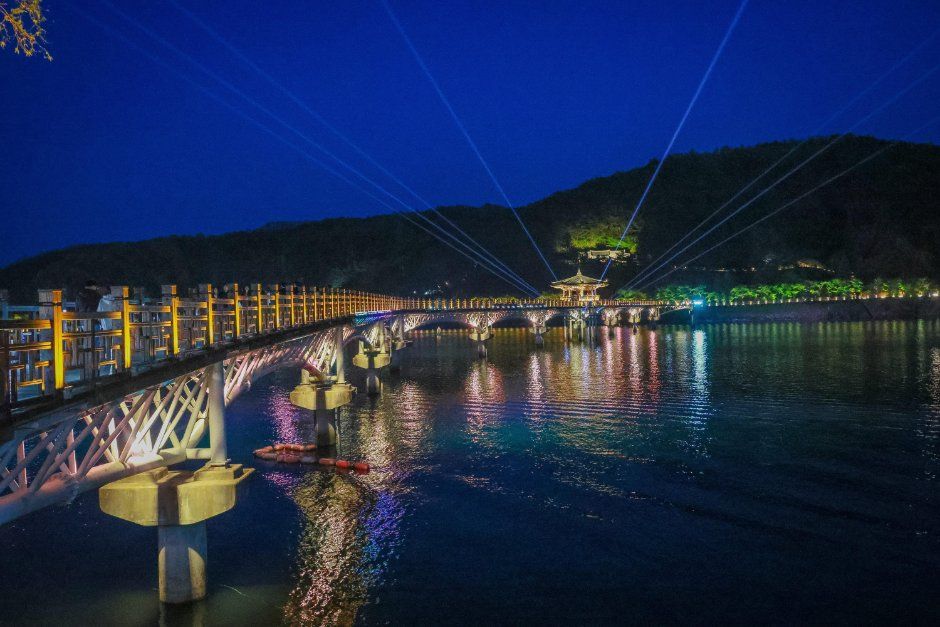
Woryeonggyo Bridge Illuminated in Five Colors
Stretching 387 meters, Woryeonggyo Bridge is Korea’s longest wooden pedestrian bridge. At its center stands Woryeongjeong Pavilion, an elegant octagonal structure that adds to the bridge’s charm. From the pavilion, the gently flowing Nakdonggang River appears as peaceful as a lake, framed by the beautiful surrounding mountains. True to its name, which means “a bridge illuminated by moonlight,” Woryeonggyo Bridge is even more beautiful by night than by day. As darkness gradually descends, multicolored lights begin to glow one by one, while laser beams sweep across the night sky. Reflections of the lights shimmer over the water, creating an exceptionally romantic atmosphere.
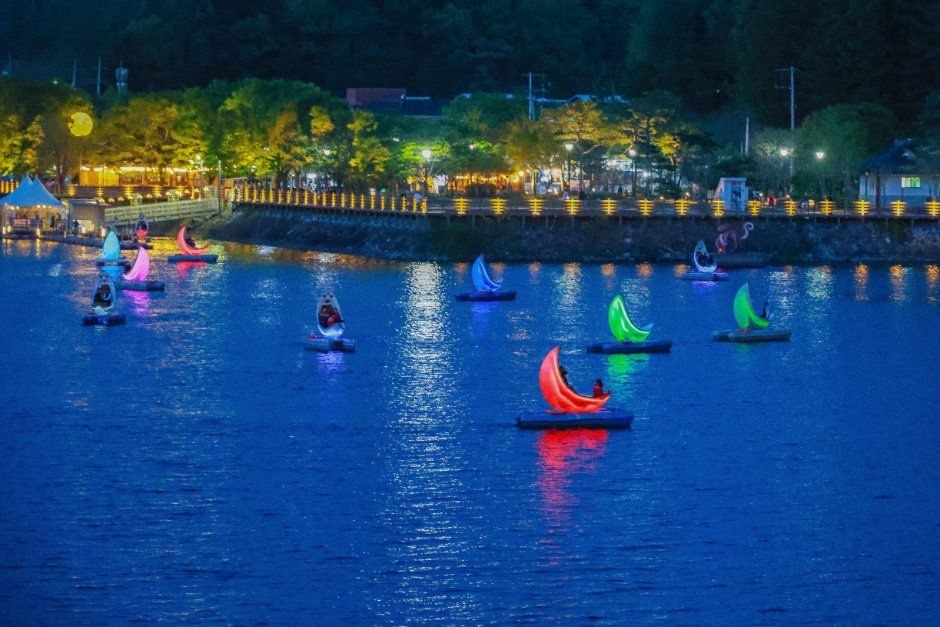
Crescent-shaped Moon Boats Gliding across the Water
As the night deepens, colorful crescent moons appear to float beneath Woryeonggyo Bridge. These are the Moon Boats, another highlight of the bridge’s nighttime scenery. A Moon Boat is a crescent-shaped electric leisure boat equipped with LED lighting. Its simple control lever makes it easy for anyone to operate. Gliding gently over the water while cutting through the evening river breeze creates an unforgettable memory. The boats operate from Gaemoknaru, located to the left after crossing Woryeonggyo Bridge. A charming park has been created around Gaemoknaru, and several nearby cafés offer ideal places to enjoy a cup of coffee while admiring the lights of the bridge and Moon Boats.
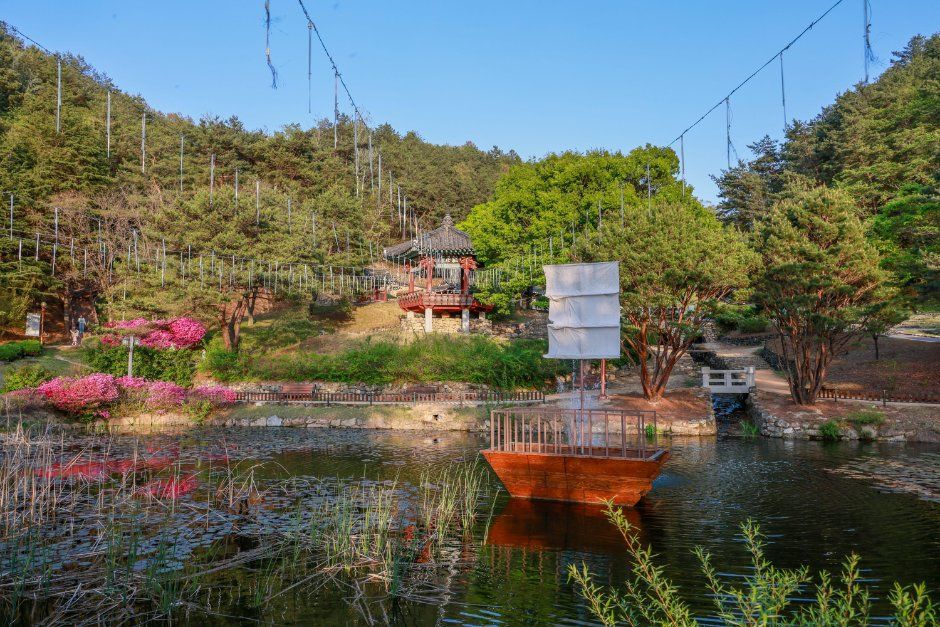
Park near Gaemoknaru
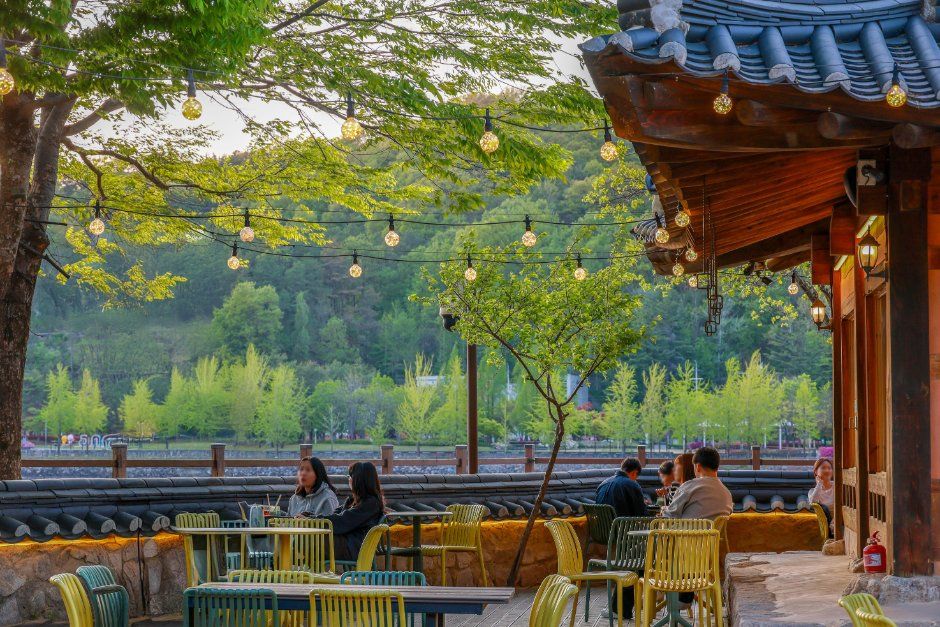
Café overlooking the Nakdonggang River
A poignant love story is associated with Woryeonggyo Bridge. In 1998, a mummy dating from the Joseon period was excavated and identified as Lee Eung-tae, who died at the age of 31. Beside his head lay a pair of mituri—traditional shoes similar to straw sandals—woven from human hair, along with a lengthy letter. “Could anything as heartbreaking as this ever happen again beneath the heavens? … I cannot forget my love for you in this life, and my sorrow and grief know no end.” The letter conveyed the profound sorrow of his young wife, who was pregnant with their son Woni when her husband passed away. Woryeonggyo Bridge was designed with the mituri as its motif to commemorate her devoted love. Across the bridge lies Woni Mom Theme Road, a pleasant riverside walking trail that follows the Nakdonggang River. As the streetlights remain on until midnight, the trail is popular with evening walkers.
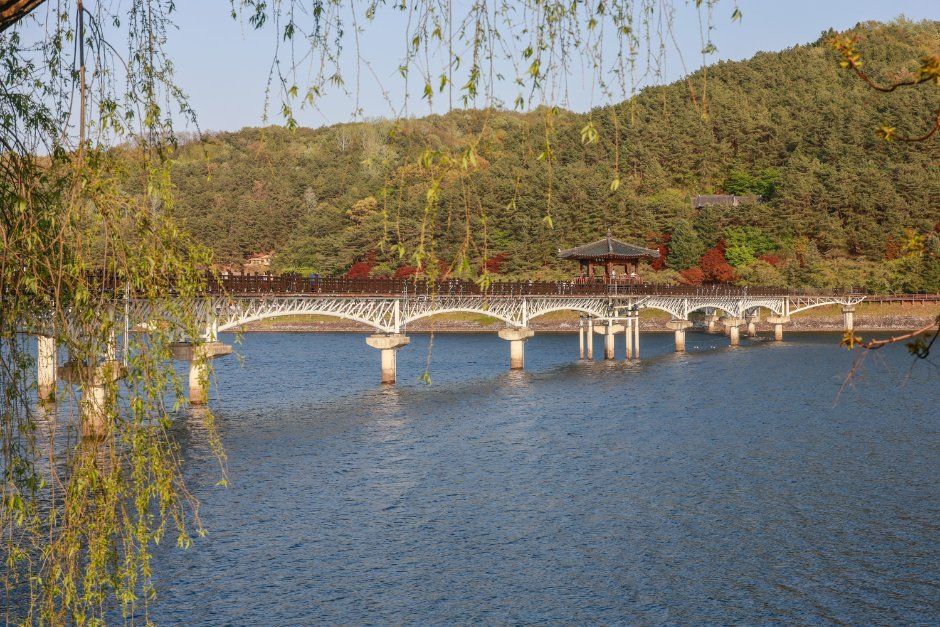
Woryeonggyo Bridge, inspired by a poignant love story
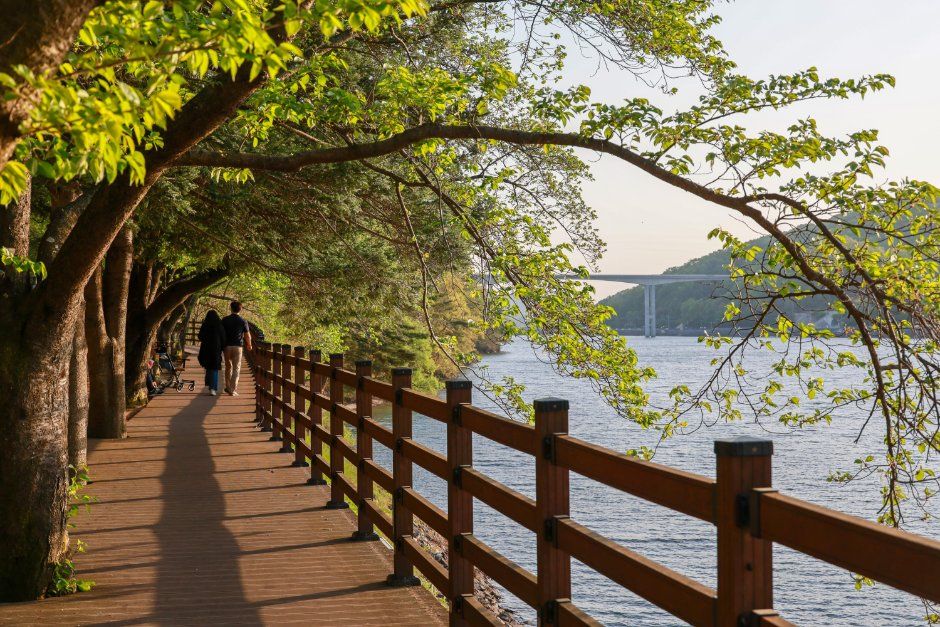
Woni Mom Theme Road running alongside the Nakdonggang River
Woryeonggyo Bridge
- Address: 569 Sang-a-dong, Andong-si, Gyeongsangbuk-do
- Inquiries: Andong Municipal Folk Museum +82-54-821-0649 / Gyeongsangbuk-do Tourist Information Center +82-54-852-6800
- Operating hours: Open year-round
- Admission: FreeAndong Hahoe Village, Beloved by Queen Elizabeth II
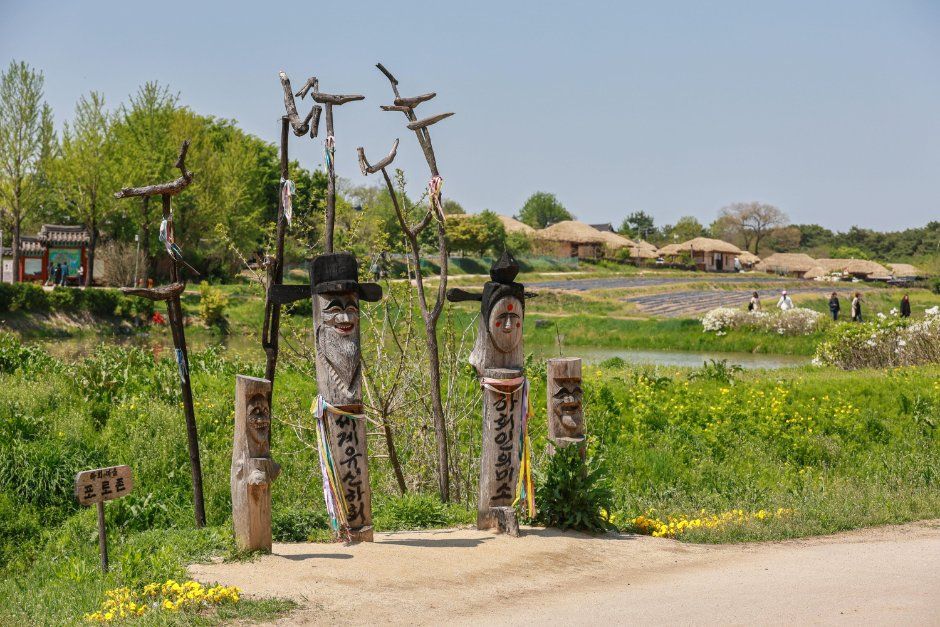
Andong Hahoe Village, One of Korea’s Most Celebrated Traditional Villages
Andong Hahoe Village is one of Korea’s most representative traditional villages and has been home to the Pungsan Ryu clan for approximately 600 years. Its profound history and distinctive beauty earned it a place on the UNESCO World Heritage List. The village was the birthplace of two brothers: Gyeomam Ryu Un-ryong, a distinguished Confucian scholar of the Joseon period, and Seoae Ryu Seong-ryong, who served as Chief State Councilor during the Imjin War. It also attracted international attention following a visit by Queen Elizabeth II of the United Kingdom in 1999.
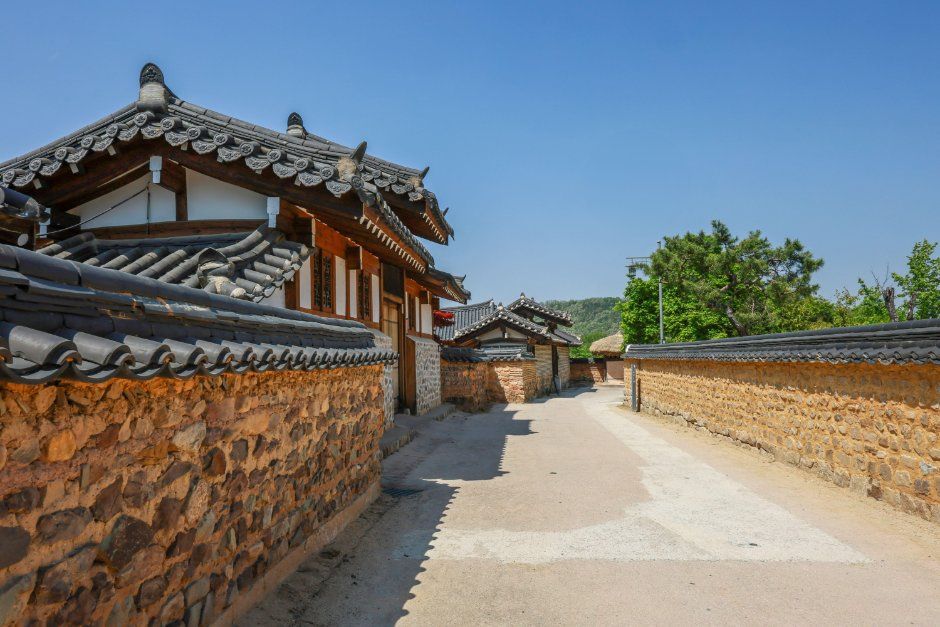
An Alley That Feels Like a Journey Back to the Joseon Period
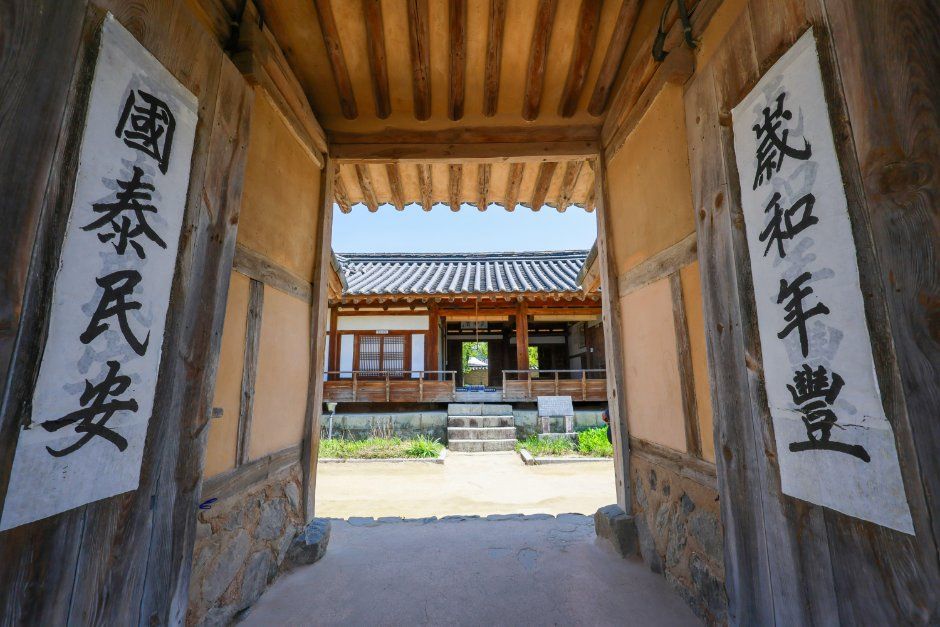
Chunghyodang House, the Head House of Ryu Seong-ryong’s Family
Walking through the narrow alleys between tile-roofed and thatched-roof houses feels like traveling back in time to the Joseon period. The village is filled with traditional homes, ranging from historic residences such as Hadong Old House, Namchondaek House, Yangjindang House and Chunghyodang House to thatched cottages once occupied by tenant farmers. Among the village’s most notable historic residences are the treasure-designated Yangjindang and Chunghyodang houses. Yangjindang House, the head house of the Pungsan Ryu clan, is the oldest residence in Hahoe Village. Chunghyodang House is the head house of the family of Ryu Seong-ryong. Its name derives from his teaching to “remain loyal to the nation and devoted to one’s parents.” The signboard bearing the name “Chunghyodang,” displayed in the main reception hall, was written by the scholar Misu Heo Mok. Within the grounds stands Yeongmogak Museum, where visitors can view the National Treasure-designated Jingbirok, or “Book of Corrections,” along with royal documents and manuscripts preserved by the head family.
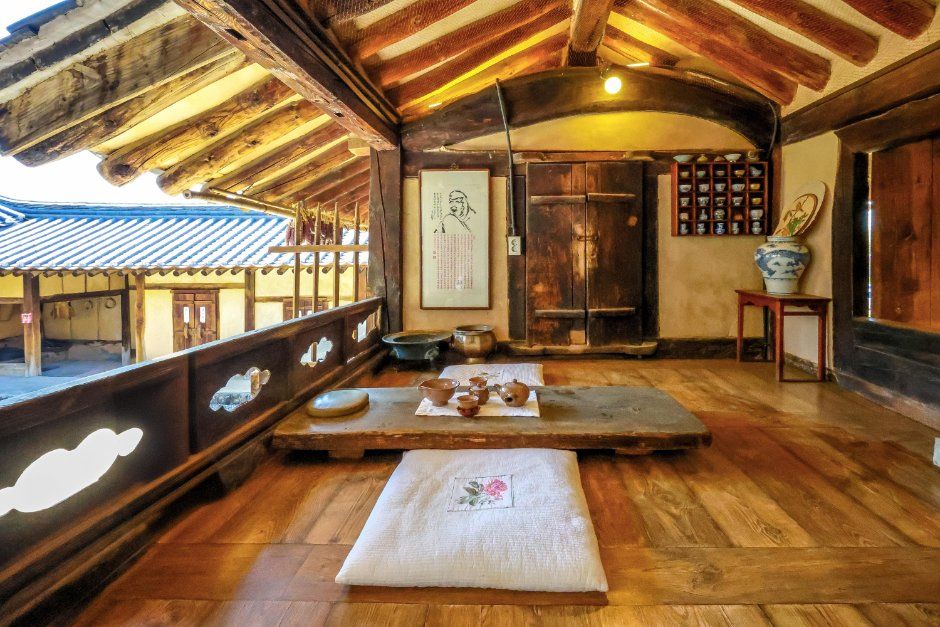
Chunghyodang House, Which Offers Historic House Stays
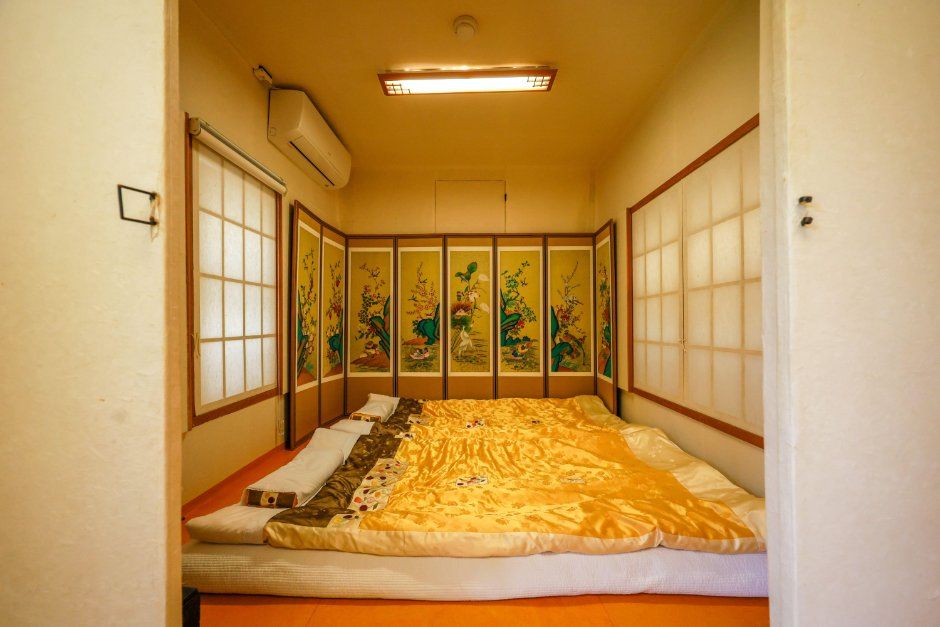
A Room Used by Queen Elizabeth II during Her Visit
Several houses in the village offer overnight stays. Chunghyodang House is rewarding simply to explore, but spending a night there provides an opportunity to experience the atmosphere and character of a historic residence more fully. Overnight guests are also granted access to the anchae, the private inner quarters that are normally closed to general visitors. They can step onto the raised wooden platform prepared for Queen Elizabeth II’s visit and may stay in the room she used while visiting the house. Thick silk bedding is laid out with care, and at night, starlight appears to pour down as guests enjoy tea on the open wooden floor. It is equally memorable to walk through the quiet village in the morning before other visitors arrive and to enjoy the traditional breakfast table of a historic head family.
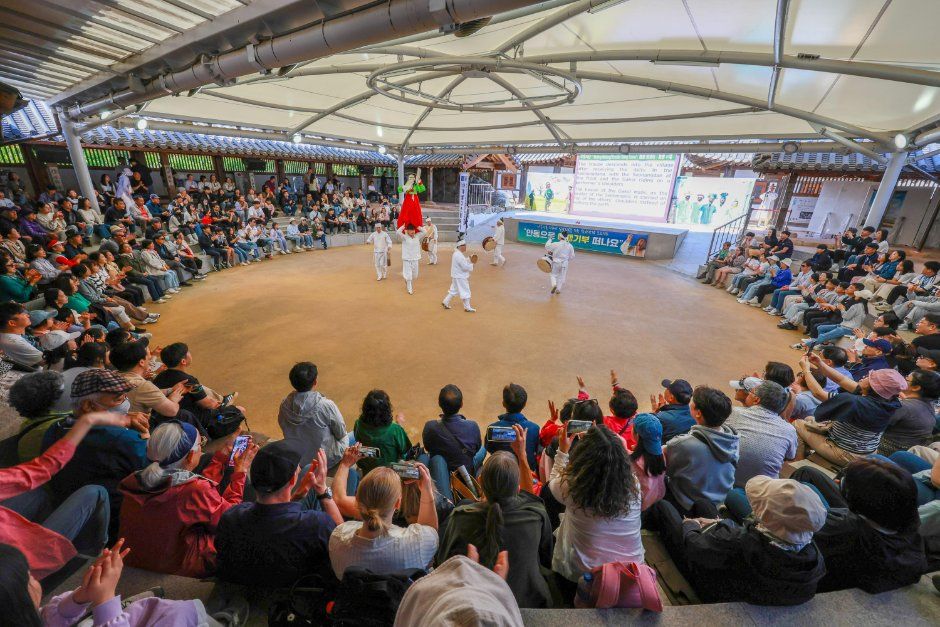
A Must-See Performance: Hahoe Byeolsingut Tallori
A performance of Hahoe Byeolsingut Tallori, or the Mask Dance Drama of Hahoe, is not to be missed. Passed down in Hahoe Village since the Goryeo period, it is regarded as Korea’s oldest surviving mask-dance tradition. The traditional work comprises eight madang, or episodes, beginning with the lively Mudong Madang. Current regular performances generally present six of these episodes. The satire of corrupt monks and the yangban aristocracy draws bursts of laughter, while the vibrant sound of the small gong has audiences moving their shoulders to the rhythm. The eleven surviving masks, including the Yangban Mask, have been designated a National Treasure for their vivid and distinctive portrayal of Korean faces. Performances take place at the Hahoe Mask Dance Training Center near the entrance to Hahoe Village. The regular performance lasts approximately one hour and begins at 14:00.
- January–February: Saturdays and Sundays
- March–June and September–December: Fridays, Saturdays and Sundays
- July–August: Wednesdays through Sundays
Schedules may change, so please check the official website before visiting.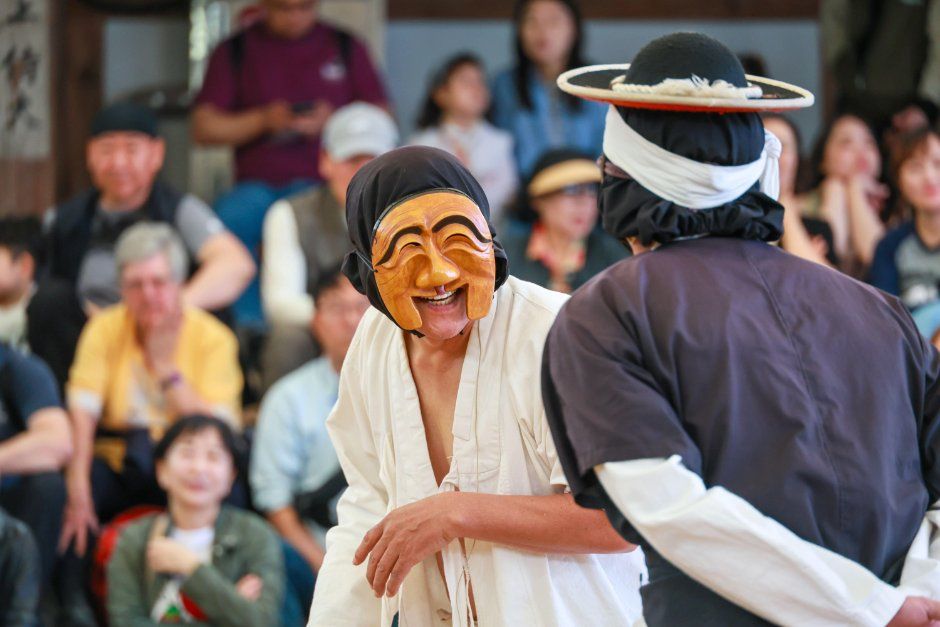
Hahoe Byeolsingut Tallori, Filled with Laughter and Emotion
At the heart of the village stands the Samsindang Zelkova Tree, which has witnessed the long history of Hahoe Village. This enormous tree measures approximately 18 meters in height and 6 meters around the trunk at chest level. A protective fence surrounds the tree, covered with wish papers on which visitors have written their hopes and prayers. As you explore the village, you can also take part in a variety of traditional activities, including straw crafts and pottery making. The family-motto calligraphy experience is particularly popular with international visitors. The name “Hahoe” derives from the way the Nakdonggang River curves around and embraces the village in an S shape. From the top of Buyongdae Cliff, visitors can take in a panoramic view of the river winding around Hahoe Village.
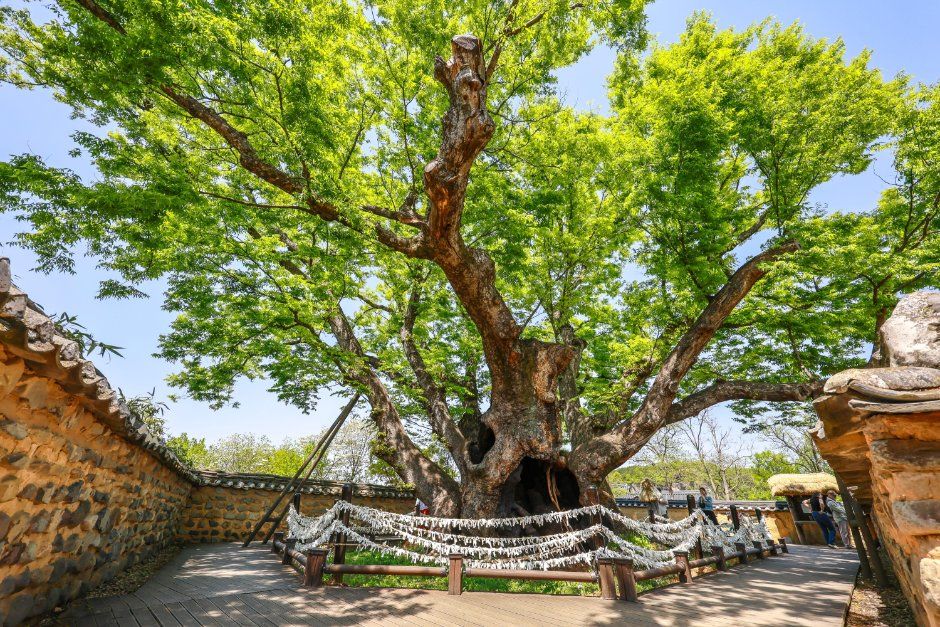
The Samsindang Zelkova Tree, which has shared the village’s history
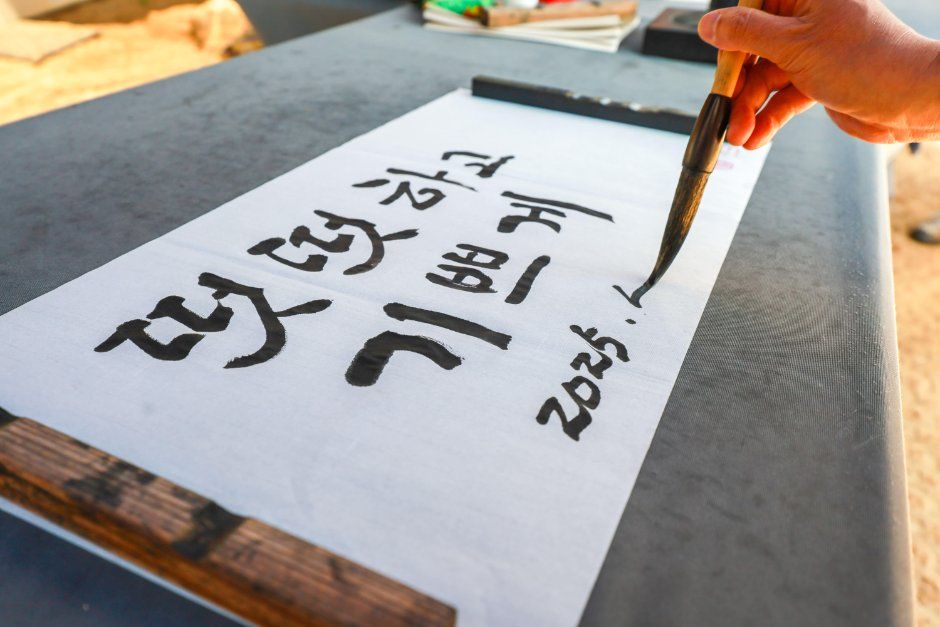
Family-motto calligraphy, a popular experience among international visitors
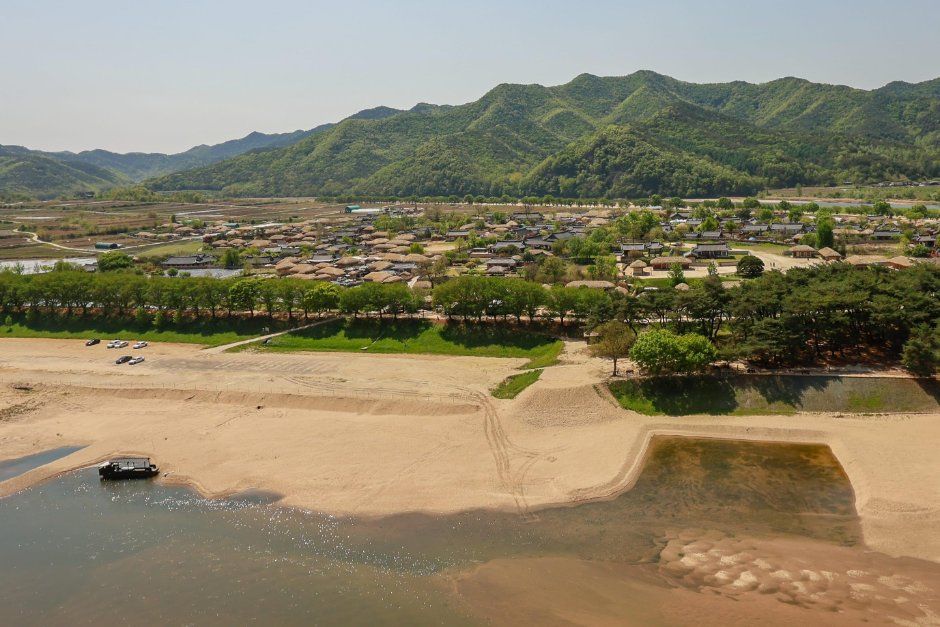
Hahoe Village viewed from Buyongdae Cliff
Andong Hahoe Village
- Address: 186 Jeonseo-ro, Pungcheon-myeon, Andong-si, Gyeongsangbuk-do
- Inquiries: Hahoe Village Tourist Information Center +82-54-852-3588
- Website: http://www.hahoe.or.kr/
- Operating hours:
- April–September: 09:00–18:00; last admission at 17:30
- October–March: 09:00–17:00; last admission at 16:30
- Admission: Adults KRW 5,000 / Teenagers and military personnel KRW 2,500 / Children KRW 1,500
- Tip: A village shuttle bus operates between the village entrance and ticket office. Buses run every 5–10 minutes and cover the 1.2-kilometer route in approximately three minutes each way.
※ Performance schedules, admission fees and operating hours are subject to change. Please check the official website before visiting.Andong Old Market, the Home of Andong Jjimdak Loved Across Korea
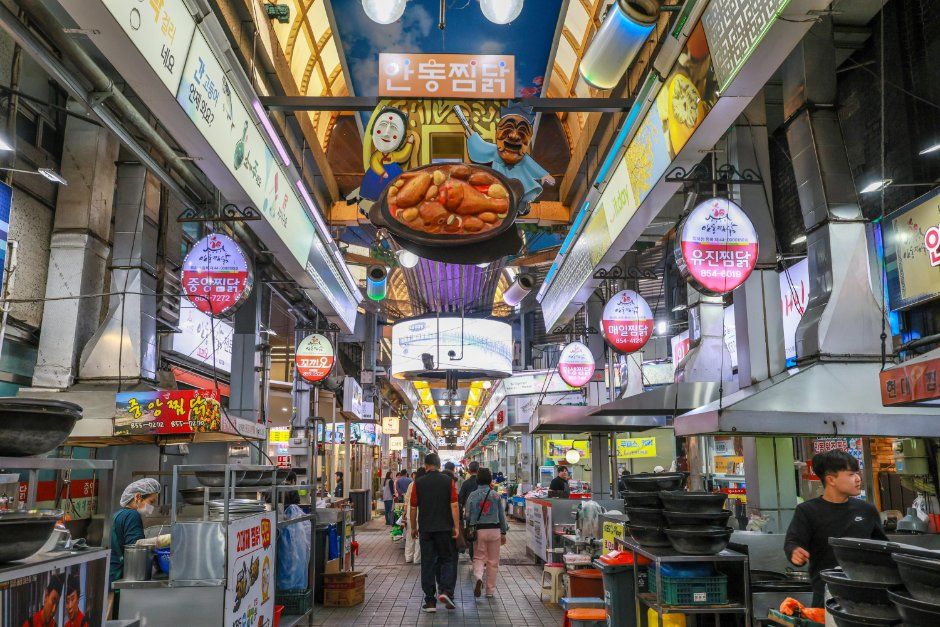
Andong Jjimdak Alley, a highlight of Andong Old Market
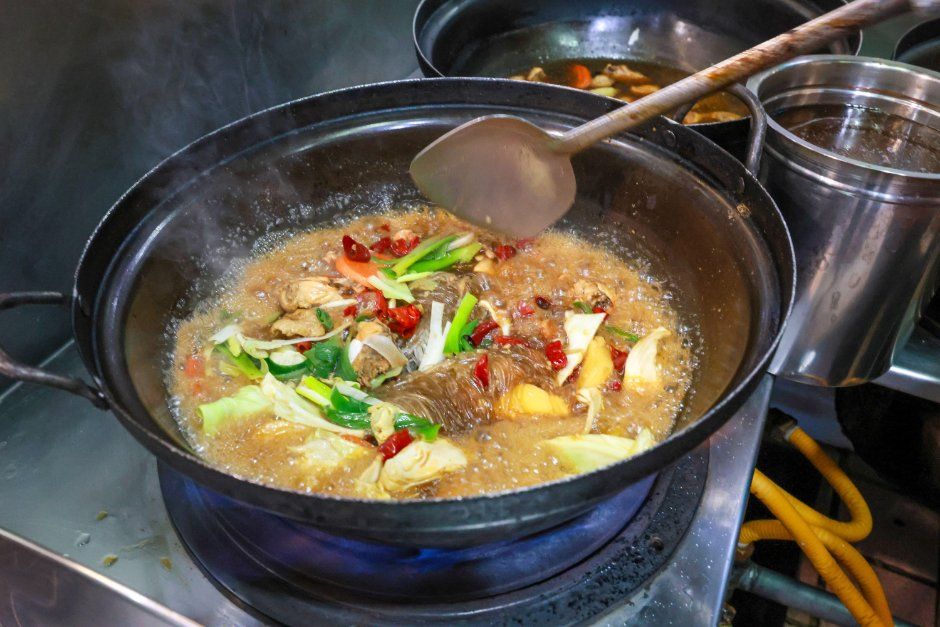
Jjimdak simmering outside a restaurant
Andong Old Market is the oldest traditional market in the region, dating back to the Joseon dynasty. Its best-known specialty is Andong jjimdak, and visitors to Andong naturally make their way to Andong Jjimdak Alley. Designated as Gyeongsangbuk-do’s only themed alley in 2011, the street is home to around 30 jjimdak restaurants, many of which have specialized in the dish for 15 to more than 30 years. At the entrance of each restaurant, large pots of jjimdak simmer enticingly over powerful burners.
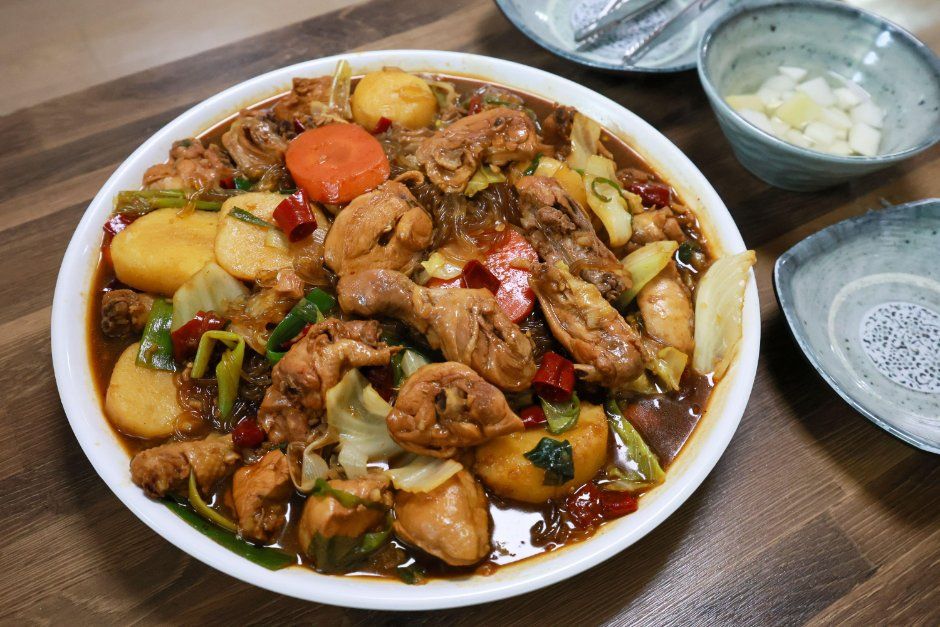
Generous and flavorful Andong jjimdak
Andong jjimdak is a hearty dish prepared with a whole chicken, assorted vegetables, and glass noodles. Seasoned with soy sauce, garlic, sugar, and other ingredients, it offers an appealing balance of sweet and savory flavors. Diagonally sliced red chili peppers add the dish’s distinctive spicy kick. For an even more satisfying meal, order a bowl of rice and enjoy it with the chicken, glass noodles, and rich sauce. The market is also known for popular tteokbokki and gimbap stalls that draw long lines, making it an ideal destination for a culinary journey.
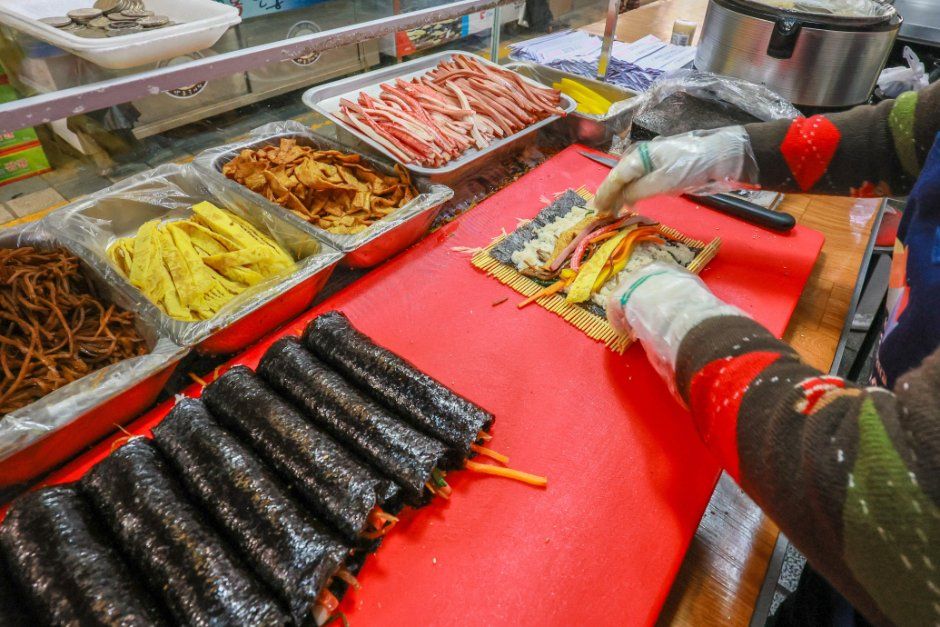
Gimbap worth waiting in line for
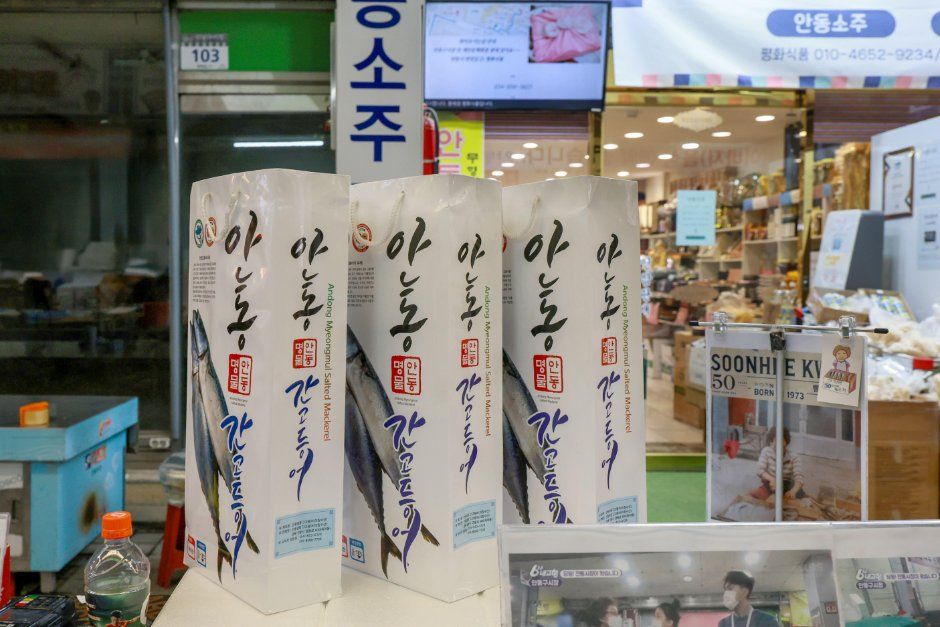
A market filled with Andong specialties
Andong is also renowned for its salted mackerel. After enjoying jjimdak, visitors can explore the market and shop for local specialties such as Andong salted mackerel, Andong soju, and Andong yam. Mammoth Bakery, another celebrated local establishment, is located about a three-minute walk from Andong Old Market. This long-established bakery is particularly famous for its cream cheese bread.
Andong Old Market
- Address: 185 Seobu-dong, Andong-si, Gyeongsangbuk-do
- Inquiries: +82-54-858-9002
- Andong Jjimdak Alley hours: 08:30–22:00
- Andong jjimdak: KRW 32,000 per whole chicken
- Written and photographed by travel writer Yoo Eun-young
* This column was last updated inApril 2025, and therefore the information may differ from what is presented here. We advise you to check for updates before visiting.


Start a FREE Online Call
(No charges for calls on Wi-Fi /
Data charges may apply)

Open 1330 Helpline Chat(Download not required)