Korea is home to more than six million Catholics as well as beautiful churches and sacred sites commemorating the country’s Catholic martyrs found throughout the country. The history of Catholicism in Korea is particularly remarkable: Koreans themselves formed a Catholic community even before the arrival of foreign missionaries, and the faith survived more than a century of persecution. Follow Korea’s Catholic heritage from Myeongdong Cathedral in Seoul, Jeonju Jeondong Catholic Cathedral, and Daegu Gyesan Cathedral to sacred sites visited by popes.
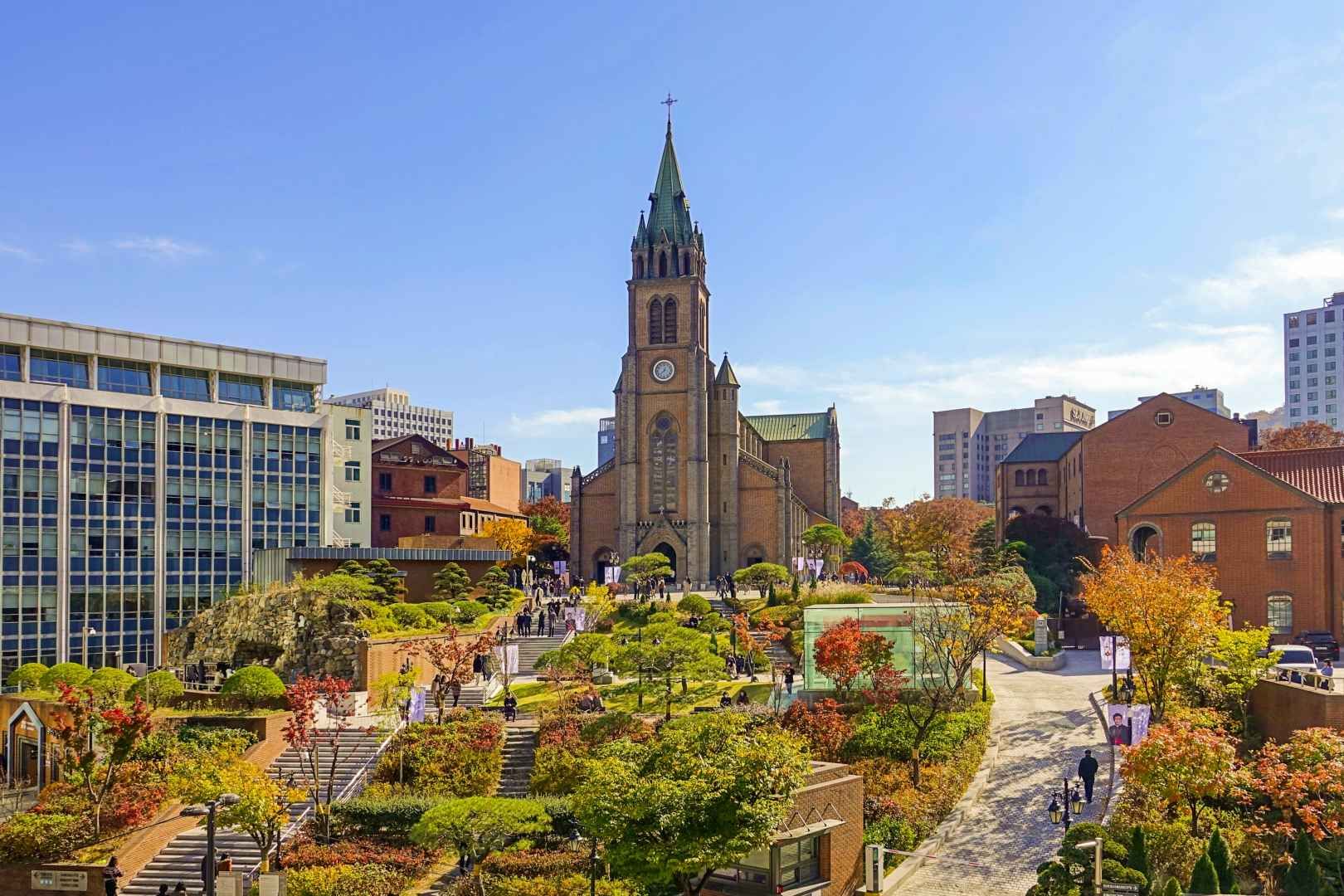
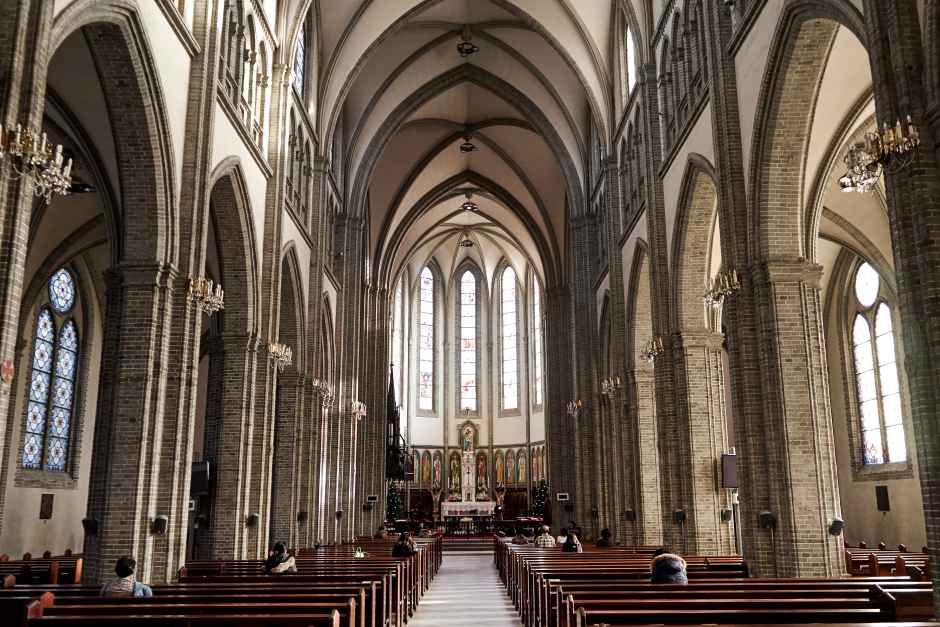
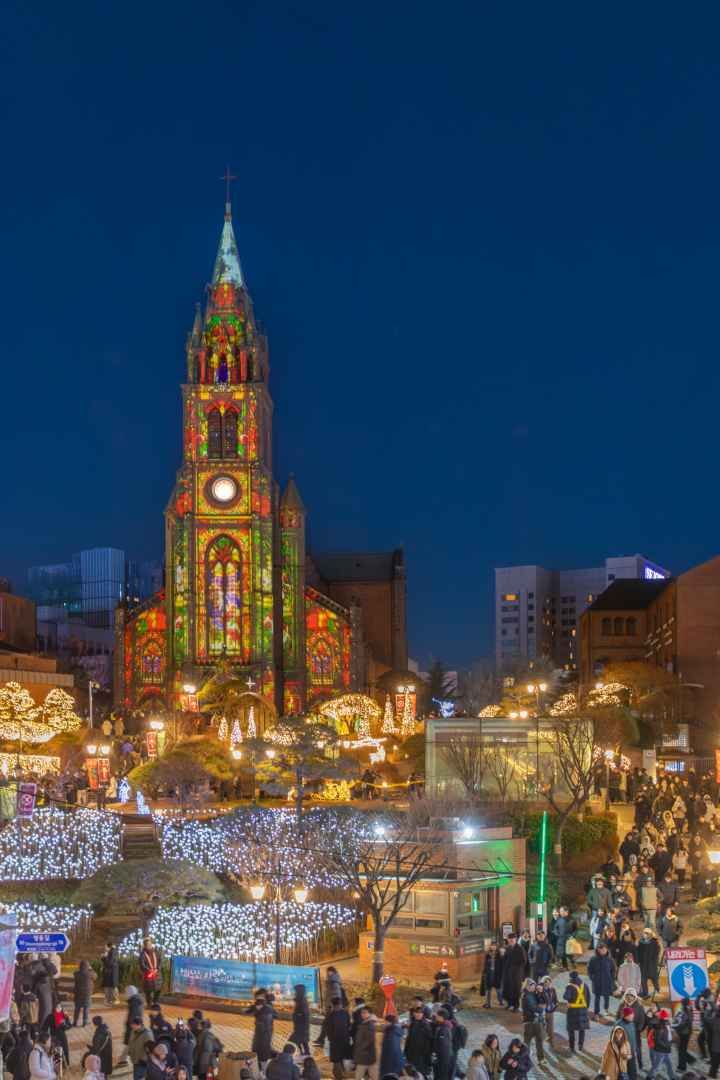
Located at the heart of Seoul, Myeongdong Cathedral is one of Korea’s most important Catholic landmarks. Completed in 1898, it was the country’s first large-scale Gothic Revival or Neo-Gothic church. Its red-brick façade, 45-meter spire, and stained-glass windows give the cathedral its distinctive beauty. During his 2014 visit to Korea, Pope Francis celebrated the “Holy Mass for Peace and Reconciliation” here. Thousands of LED roses and lights illuminate the cathedral grounds each winter, making it a popular place to visit after dark.
- - Address: 74 Myeongdong-gil, Jung-gu, Seoul (서울특별시 중구 명동길 74)
- - Hours: Sunday 07:00-20:00 / Monday-Saturday 09:00-19:00
- * Hours may vary depending on the Mass schedule
- - Website: www.mdsd.or.kr (English)
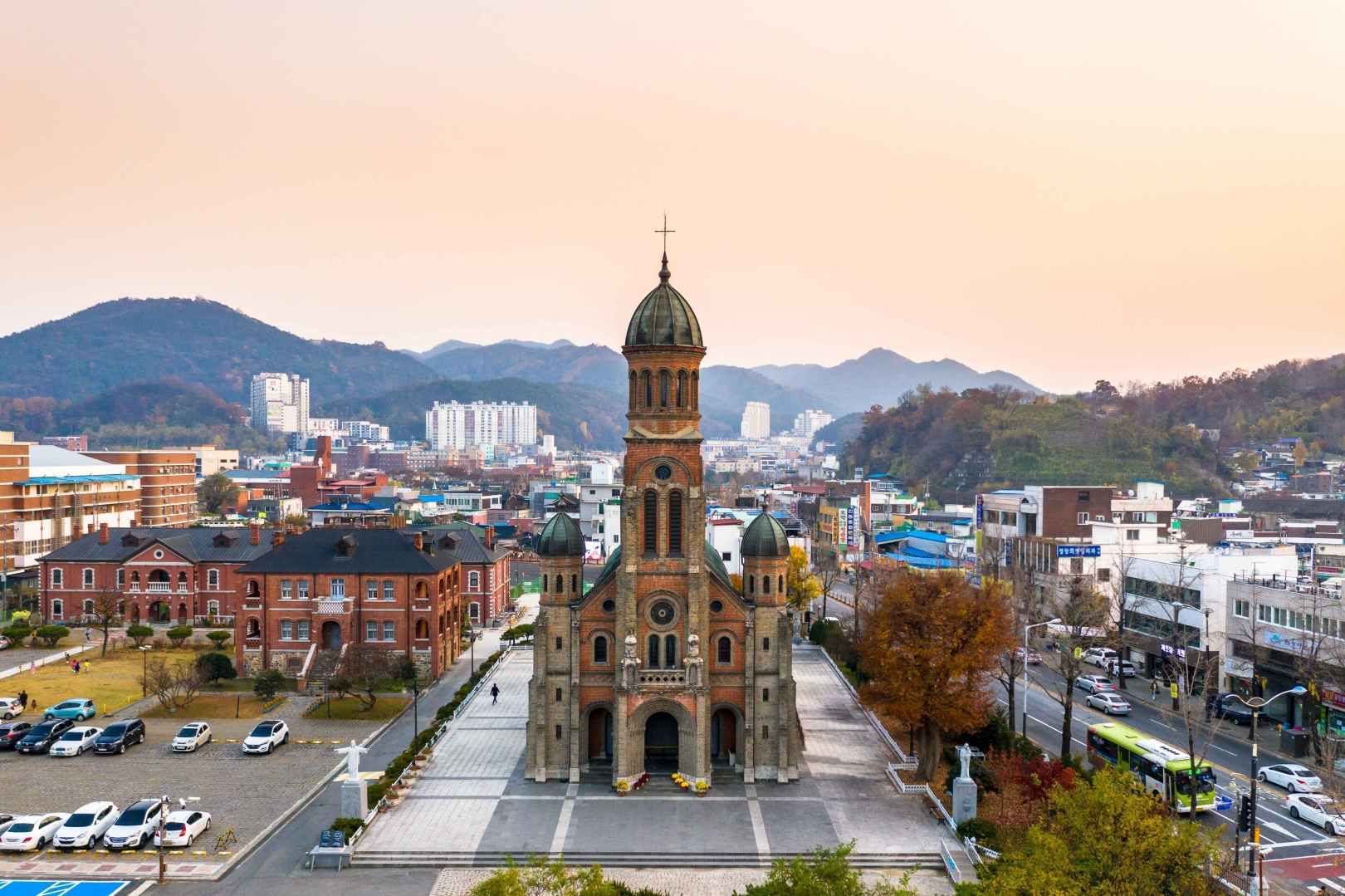
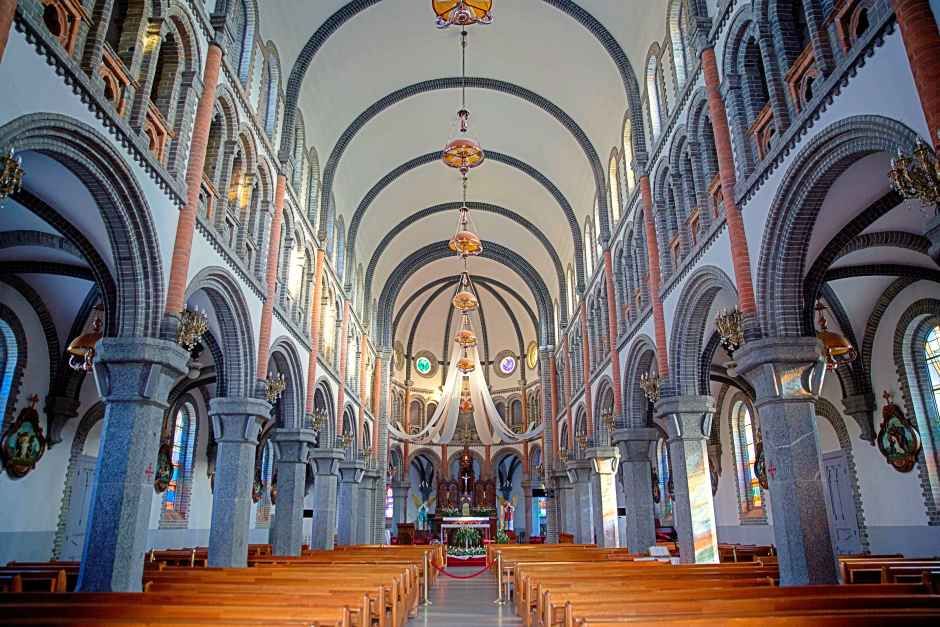

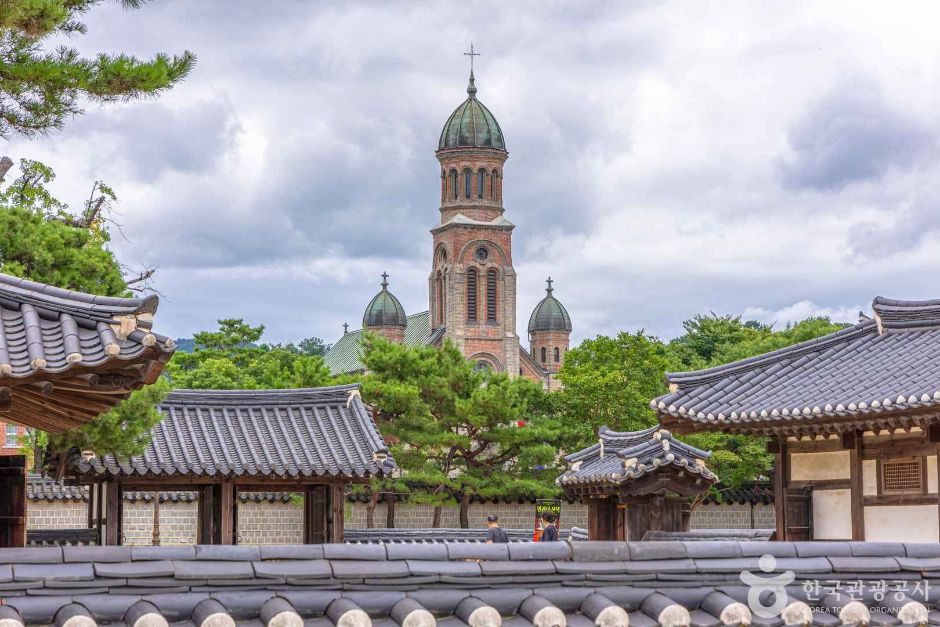
As you explore Jeonju Hanok Village and Gyeonggijeon Shrine, Jeonju Jeondong Catholic Cathedral comes into view above the rooftops of traditional hanok houses. Completed in 1914, the cathedral is admired for its graceful blend of Romanesque and Byzantine architecture. Its red-brick walls, rounded dome, and imposing bell tower form a striking contrast with the traditional buildings around it, creating one of the village’s most distinctive views. The cathedral is a must-see on any visit to Jeonju Hanok Village, with its snow-covered winter scenery especially popular among photographers.
[Jeonju Jeondong Catholic Cathedral]
- - Address: 51 Taejo-ro, Wansan-gu, Jeonju-si, Jeonbuk-do (전북특별자치도 전주시 완산구 태조로 51)
- - Hours: 09:00-17:00
- - Website: www.jeondong.or.kr (Korean only)
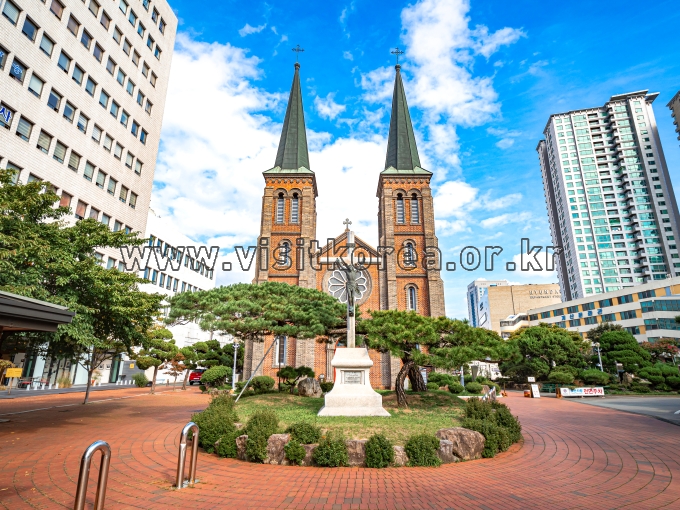

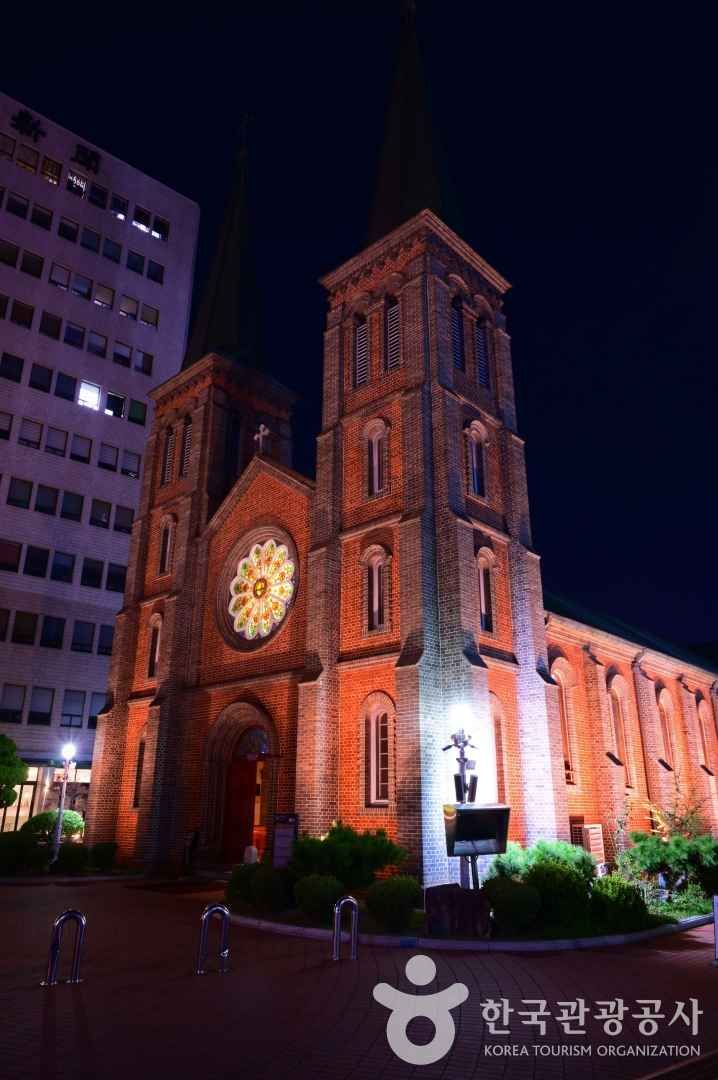
Daegu Gyesan Cathedral is a highlight of the Daegu Modern History Streets (Tour of Modern Streets), which offers a glimpse into the city’s modern cultural heritage. Originally built as a traditional hanok, the cathedral blends Romanesque and Gothic styles. After it was destroyed by fire, it was rebuilt in its present Western-style form in 1902. Inside, visitors can see stained-glass windows made in France as well as the remains of Korean Catholic martyrs, both of which add to the cathedral’s historical significance. The building is shaped like a Latin cross when viewed from above.
- - Address: 10 Seoseong-ro, Jung-gu, Daegu (대구광역시 중구 서성로 10)
- - Hours: 06:30-closing time varies
- * Hours may vary depending on the Mass schedule
- - Website: www.gyesancathedral.kr (Korean only)
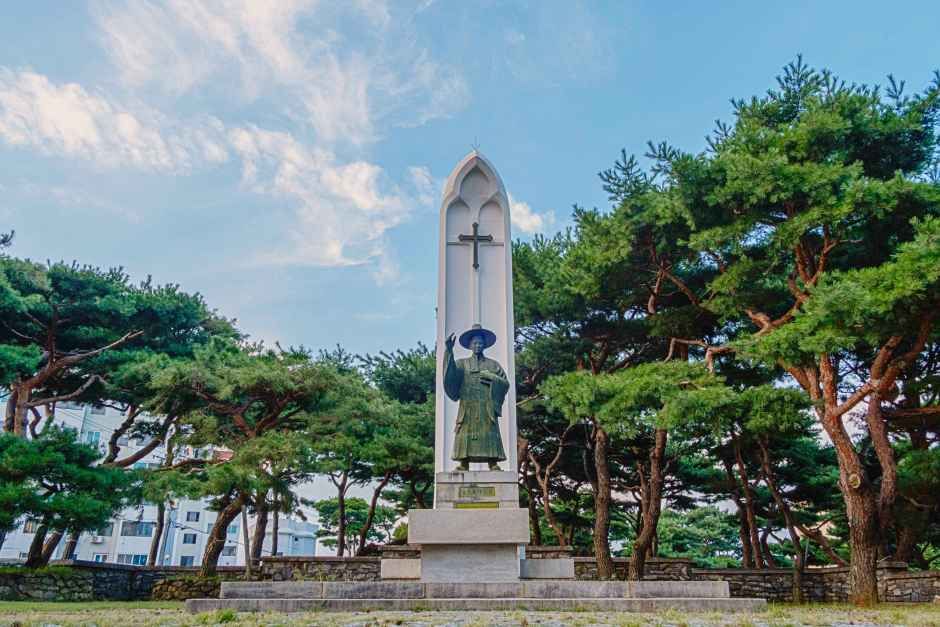
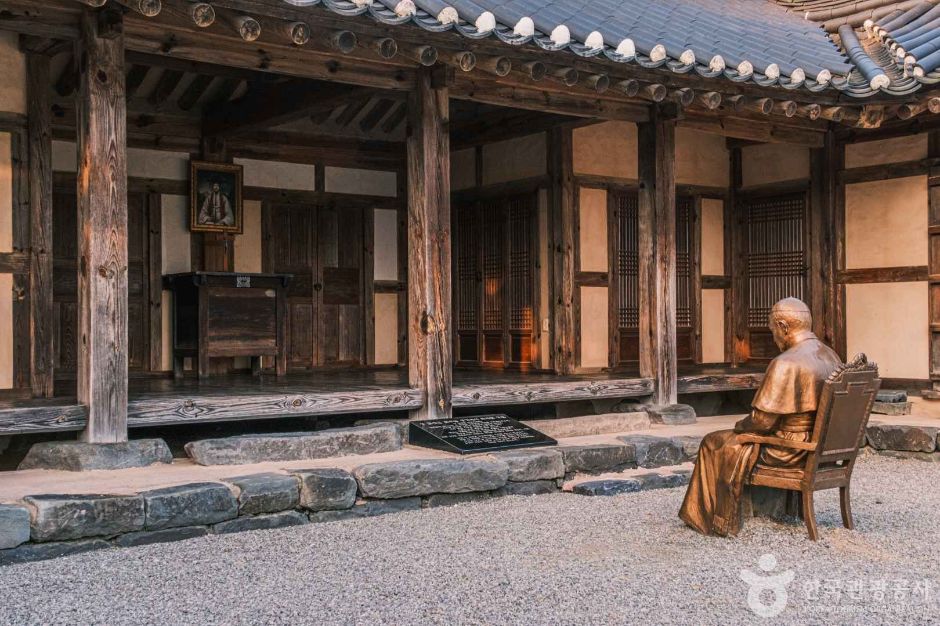
In August 2014, Pope Francis chose Korea for his first visit to Asia after becoming pope, visiting several places of great historical significance. One was Solmoe Martyrs Shrine, the birthplace of Korea’s first Catholic priest Andrew Kim Dae-geon. He was martyred for his faith in 1846 at the age of 25 and canonized in 1984. Today, the site is home to memorials honoring Saint Andrew Kim as well as a statue of Pope Francis, offering visitors a meaningful introduction to the history of Catholicism in Korea.
- - Address: San 45-3 Songsan-ri, Ugang-myeon, Dangjin-si, Chungcheongnam-do (충청남도 당진시 우강면 송산리 산45-3)
- - Hours: 07:00-closing time varies
- * Hours may vary depending on the Mass schedule
- - Website: www.solmoe.or.kr (English, Japanese, Chinese)
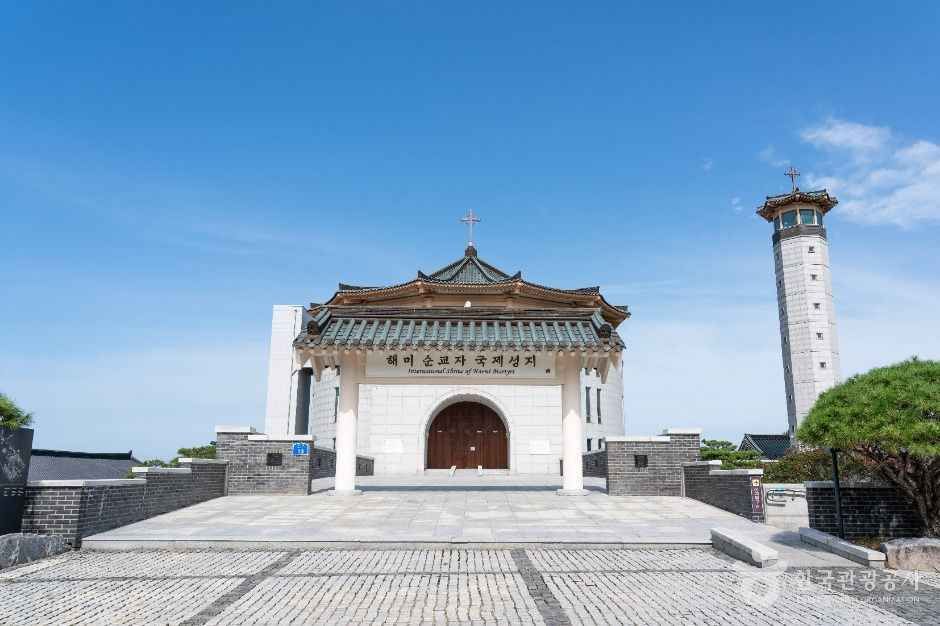
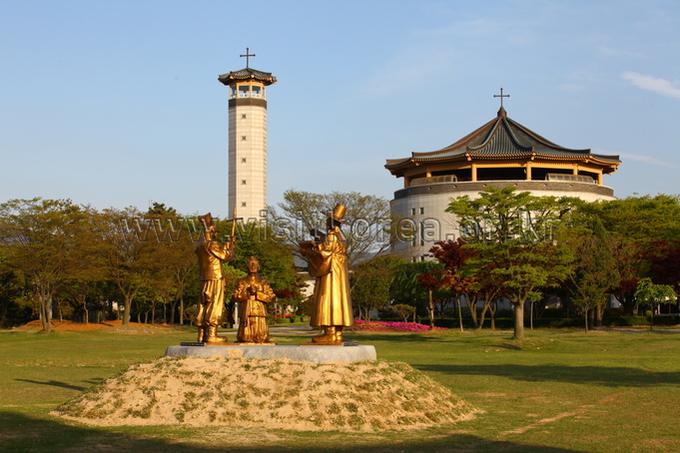
Pope Francis also visited the International Shrine of Haemi Martyrs in Seosan, where he met with bishops from across Asia. He later celebrated the closing Mass of the 6th Asian Youth Day at nearby Haemieupseong Walled Town. Haemi was the first—and still the only—Catholic site in Korea to be designated as an international shrine. During the persecution of Catholics in the Joseon period, many believers were martyred without their names or identities ever being recorded. Today, the site is widely known for honoring these nameless martyrs.
[International Shrine of Haemi Martyrs]
- - Address: 13 Seongji 1-ro, Haemi-myeon, Seosan-si, Chungcheongnam-do (충청남도 서산시 해미면 성지1로 13)
- - Hours: 07:00-closing time varies
- * Hours may vary depending on the Mass schedule
- - Website: www.haemi.or.kr (English, Chinese)

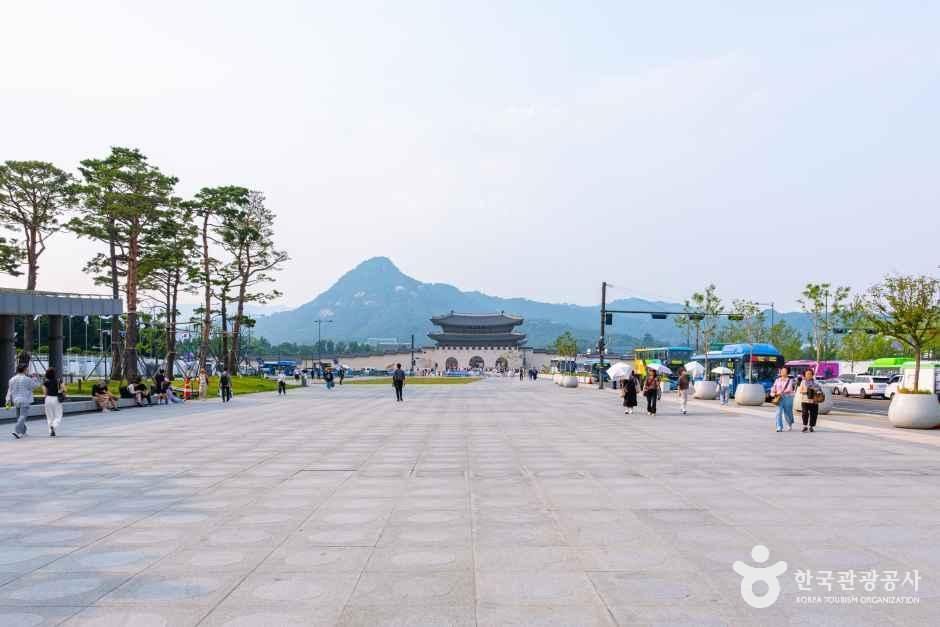
Pope Francis also visited the Seosomun Martyrs’ Shrine area including Seosomun Historical Park and Seosomun Shrine History Museum, where he prayed in memory of the martyrs. The park occupies the site of a former execution ground outside the walls of the Joseon capital, with the museum tracing the history of Catholic martyrdom in Korea. Later, he celebrated a Mass at Gwanghwamun Square for the beatification of Korea’s first Catholic martyr Paul Yun Ji-chung and 123 fellow martyrs.
- - Address: 5 Chilpae-ro, Jung-gu, Seoul (서울특별시 중구 칠패로 5)
- - Website: www.seosomun.org
- - Address: 172 Sejong-daero, Jongno-gu, Seoul (서울특별시 종로구 세종대로 172)
- - Website: uri.seoul.go.kr (English)
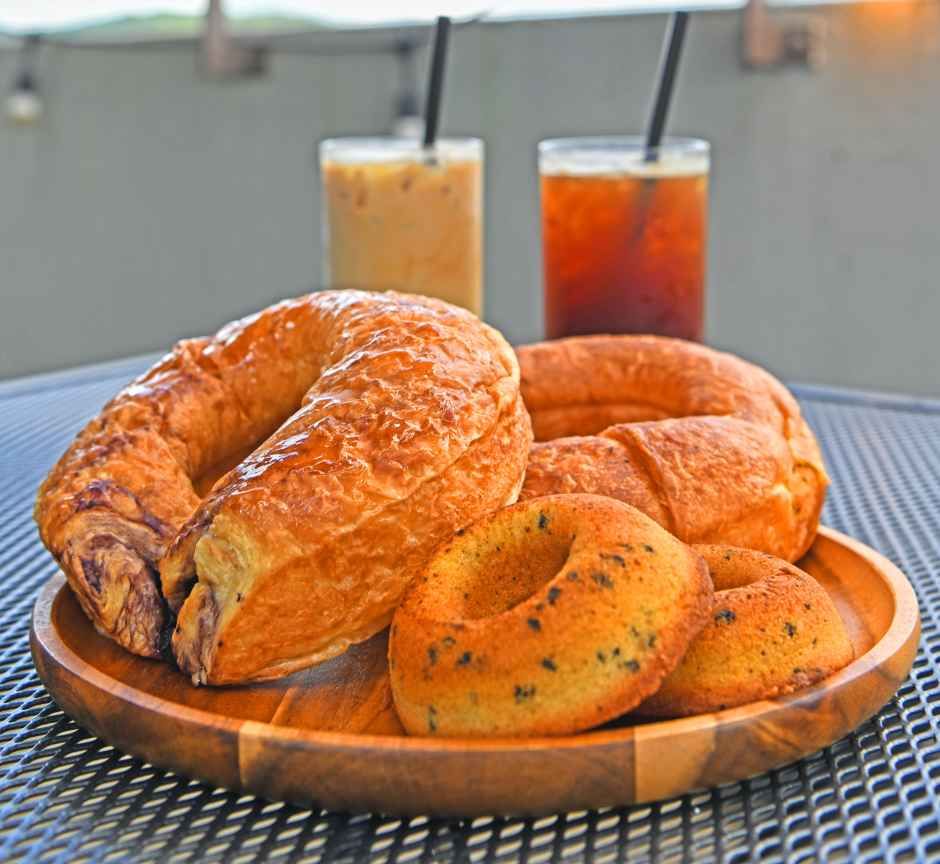
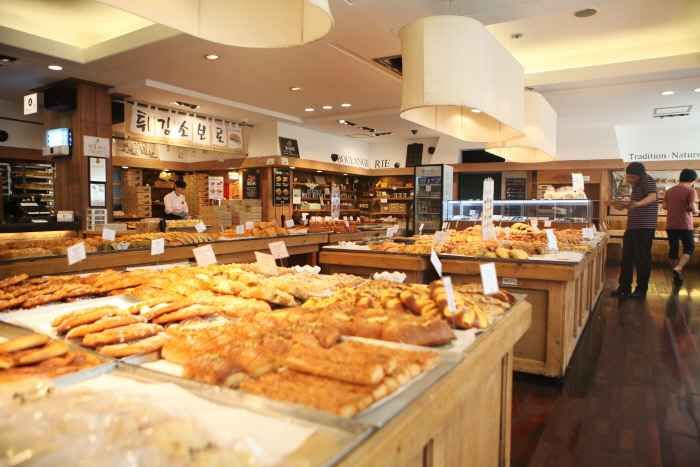
Korea’s ties with the popes can be found not only at churches and holy sites but also at two well-known bakeries. Kissring Provence Bakery at Imjingak Resort (Pyeonghwa Nuri Park) in Paju served Kissring—a bread made with Seosan’s signature six-clove garlic—for dessert during a gathering of Asian bishops in Seosan in 2014. It later became known as “Pope’s Bread.” That same year, Daejeon’s renowned bakery Sungsimdang provided bread for Pope Francis’s meals. As the bakery celebrated its 70th anniversary in 2026, Pope Leo XIV sent a message of blessing in recognition of its long-standing support for the local community and the Catholic Church.
[Kissring Provence Bakery in Paju]
- - Address: 148-73 Imjingak-ro, Munsan-eup, Paju-si, Gyeonggi-do (Peace Gondola, 2F Imjingak Station Building) (경기도 파주시 문산읍 임진각로 148-73 (평화곤돌라 탑승장 2층))
- - Hours: Tuesday-Sunday 08:00-20:00 / Monday 08:00-18:00
[Sungsimdang Main Branch in Daejeon]
- - Address: 15 Daejong-ro 480beon-gil, Jung-gu, Daejeon (대전광역시 중구 대종로480번길 15)
- - Hours: 08:00-22:00
✅ A Major Catholic Event in 2027: World Youth Day Seoul 2027
- Young Catholics from around the world will gather in Seoul for World Youth Day 2027 to be held from August 3 to 8, 2027. First launched in 1984, World Youth Day has grown into one of the Catholic Church’s largest international events bringing together believers from across the globe. Pope Leo XIV is also expected to attend, adding to the anticipation surrounding the event.
- - Website: World Youth Day Seoul 2027 (English, Spanish, French, Portuguese, Italian)
FAQs About Catholic Pilgrimage Sites in Korea
- Q. Can international visitors attend Mass in Korea?
- A. Yes. Some churches hold Masses in languages other than Korean. Check the Catholic Bishops’ Conference of Korea’s [Multilingual Mass Guide] for schedules and locations.
- Q. Can non-Catholics visit churches and holy sites in Korea?
- A. Yes. Most Catholic churches and holy sites in Korea welcome visitors of all faiths. During Mass, however, visitors should remain quiet and avoid taking photos inside the church.
- Q. Are there any Catholic pilgrimage routes to explore in Korea?
- A. Yes. The Seoul Catholic Pilgrimage Route was the first in Asia to be recognized officially by the Vatican as an international pilgrimage destination. It includes three themed walking courses and a route following the final journey of St. Andrew Kim Dae-geon.
- Q. Can I visit Solmoe Martyrs Shrine and International Shrine of Haemi Martyrs on the same day?
- A. Yes. Both are in Chungcheongnam-do and can be visited in a single day by car. Public transportation may involve several transfers and long waits, so [Renting a car] or staying overnight is recommended.