- Log in
-
- Sydney Overseas Office
- London Overseas Office
- Toronto Overseas Office
- Los Angeles Overseas Office
- New York Overseas Office
- Ulaanbaatar Overseas Office
- Dubai Overseas Office
- New Delhi Overseas Office
- Manila Overseas Office
- Jakarta Overseas Office
- Hanoi Overseas Office
- Kuala Lumpur Overseas Office
- Singapore Overseas Office
- Bangkok Overseas Office
- Map
- Sydney Overseas Office
- London Overseas Office
- Toronto Overseas Office
- Los Angeles Overseas Office
- New York Overseas Office
- Ulaanbaatar Overseas Office
- Dubai Overseas Office
- New Delhi Overseas Office
- Manila Overseas Office
- Jakarta Overseas Office
- Hanoi Overseas Office
- Kuala Lumpur Overseas Office
- Singapore Overseas Office
- Bangkok Overseas Office
Contents View
-
-
-
Three Major Traditional Korean Holidays: Seollal, Dano, and Chuseok
-
02/10/2026
-
863
0
0
-
-
-
-
Korea celebrates a variety of traditional holidays that reflect its long history and rich folk culture. Major holidays that represent Korea include Seollal (Lunar New Year’s Day), Jeongwol Daeboreum (First Full Moon Day), Hansik (Cold Food Day), Dano (First Fifth Day), Dongji (Winter Solstice Day), and Chuseok (Korean Thanksgiving Day). Among these cultural holidays, Seollal and Chuseok are the most widely celebrated. Deeply rooted in Korea’s folk culture, Seollal and Chuseok are accompanied by extended public holidays, allowing visitors to experience Korea’s festive atmosphere along with a wide range of traditional events.
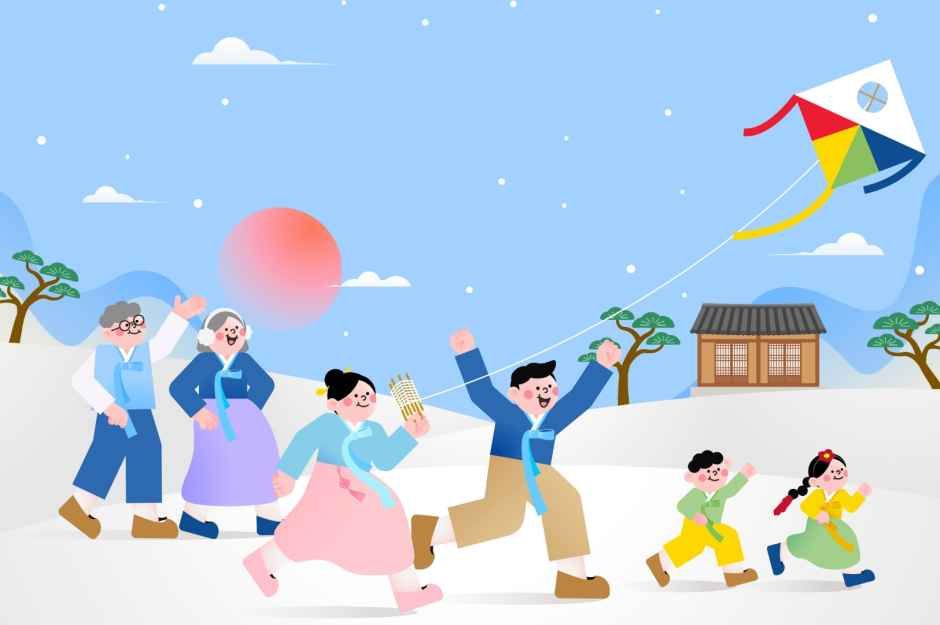
Flying a kite on the day of Seollal ⓒClipart Korea
Seollal (January 1 on the Lunar Calendar)
Seollal, the Lunar New Year’s Day, is celebrated on January 1 based on the lunar calendar, typically falling in February on the Gregorian calendar. The Seollal holiday period lasts for three consecutive days, with the main holiday observed between two additional public holidays, giving many Koreans the opportunity to return to their hometowns and reunite with family. It is also a time when Koreans honor their ancestors through charye (ritual rite) and show respect to elders through sebae (deep bow). Other Seollal customs include sharing a bowl of tteokguk with family and enjoying traditional folk games such as yunnori and neolttwigi.
During this period, a wide range of events are held nationwide, particularly at cultural landmarks such as royal palaces, including Gyeongbokgung Palace and Deoksugung Palace, as well as museums and folk villages. Many royal palaces offer free admission during this time, making it an excellent opportunity for visitors to explore Korea’s cultural heritage.
Dano (May 5 on the Lunar Calendar)
Dano is celebrated on May 5 based on the lunar calendar, which usually falls in June on the Gregorian calendar. The holiday originated from early summer rituals in agricultural communities, where people prayed for a plentiful harvest. Traditional customs include eating wheel-shaped rice cake, women washing their hair in water boiled with changpo (sweet flag), and men demonstrating their strength through ssireum (traditional Korean wrestling).
The most prominent celebration of this holiday is the Gangneung Danoje Festival, held in Gangneung. Inscribed on the list of UNESCO Intangible Cultural Heritage of Humanity, the festival features hands-on folk activities such as geunetagi (traditional rope swing), ssireum, and tug-of-war, along with a variety of traditional performances.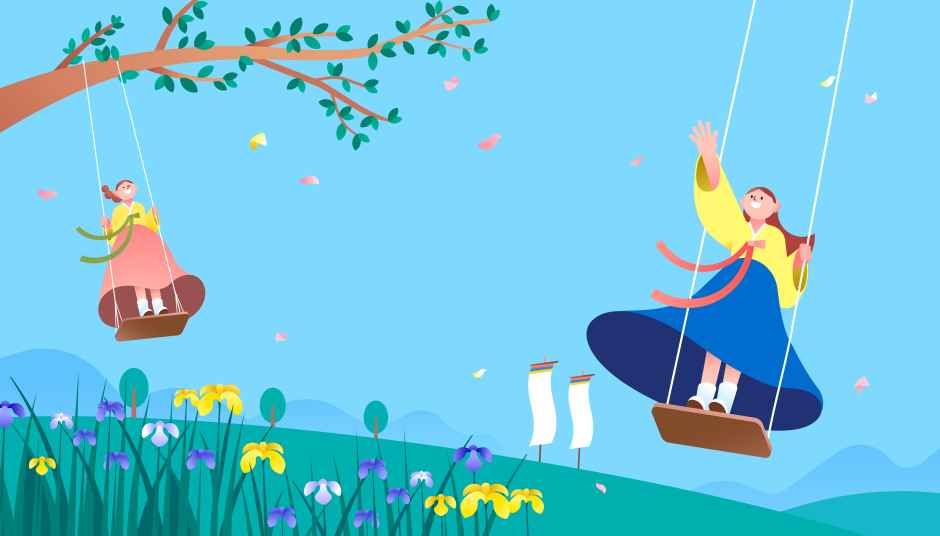 Rope swinging on the day of Dano ⓒClipart Korea
Chuseok (August 15 on the Lunar Calendar)
Alongside Seollal, Chuseok is considered one of the most important holidays in Korean culture and is often referred to as Korean Thanksgiving Day. Celebrated on August 15 of the lunar calendar, Chuseok usually falls in September or October on the Gregorian calendar. On this day, families gather in the morning to honor their ancestors with food offerings, followed by a visit to the ancestral grave, and conclude the day by making wishes under the full moon.
Representative Chuseok foods include songpyeon (half-moon-shaped rice cake with red beans, beans, or sesame seeds), japchae, various types of namul (seasoned greens) and jeon (Korean pancake), and freshly harvested fruits such as apples and pears. Another highlight of the holiday is Ganggangsullae, a folk ritual recognized as a UNESCO Intangible Cultural Heritage of Humanity, which is performed to pray for abundance and safety, as participants form a large circle and dance under the full moon.
As with Seollal, the Chuseok holiday period spans three consecutive days, with the main holiday observed between two additional public holidays. Royal palaces also offer free admission during the Chuseok holiday period.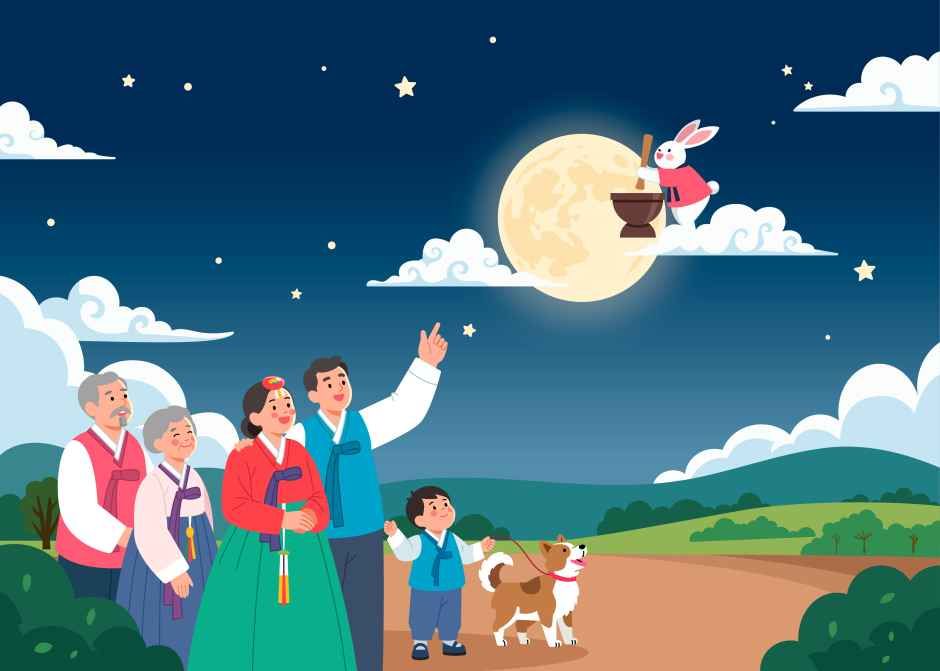 Wishing upon the full moon in hanbok on Chuseok ⓒClipart Korea
Other noteworthy cultural holidays include Jeongwol Daeboreum (January 15 on the lunar calendar), Hansik (April 5 on the Gregorian calendar; the 105th day from Dongji), and Dongji (December 22 on the Gregorian calendar). In December 2023, the National Heritage Service designated the five major traditional holiday observances—Seollal & Daeboreum (as a single observance), Hansik, Dano, Chuseok, and Dongji—as National Intangible Cultural Heritages.
* This page was last updated on February 5, 2026.
* 1330 Korea Travel Helpline: +82-2-1330 (Korean, English, Japanese, Chinese, Russian, Vietnamese, Thai, and Indonesian)

1330 Helpline Call/Chat

Start a FREE Online Call(No charges for calls on Wi-Fi /
Data charges may apply)

Open 1330 Helpline Chat(Download not required)