- Log in
-
- Sydney Overseas Office
- London Overseas Office
- Toronto Overseas Office
- Los Angeles Overseas Office
- New York Overseas Office
- Ulaanbaatar Overseas Office
- Dubai Overseas Office
- New Delhi Overseas Office
- Manila Overseas Office
- Jakarta Overseas Office
- Hanoi Overseas Office
- Kuala Lumpur Overseas Office
- Singapore Overseas Office
- Bangkok Overseas Office
- Map
- Sydney Overseas Office
- London Overseas Office
- Toronto Overseas Office
- Los Angeles Overseas Office
- New York Overseas Office
- Ulaanbaatar Overseas Office
- Dubai Overseas Office
- New Delhi Overseas Office
- Manila Overseas Office
- Jakarta Overseas Office
- Hanoi Overseas Office
- Kuala Lumpur Overseas Office
- Singapore Overseas Office
- Bangkok Overseas Office
- HOME
- Contents View
-
-
-
Visa & Travel Requirements
-
04/03/2023
-
310.1K
28
30
-
-
-
-
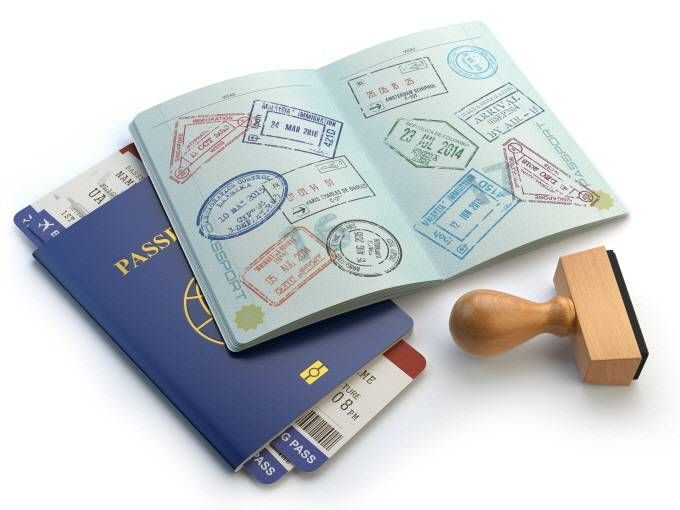
Foreign nationals entering the Republic of Korea (hereinafter Korea) are required to possess a valid passport and a valid Korean visa issued by the Korean Embassy through the Diplomatic Missions of Korea in their country or region, or an E-Visa through the Visa Portal. However, there are many foreign nationals who are permitted visa-free entry for a limited period of time under certain conditions.
You may enter Korea without a visa if you are:
- • Reentering Korea with a valid re-entry permit before the permit’s expiration date, or waived of a re-entry permit;
- • A national of a country or region that has a Visa Waiver Agreement with the Republic of Korea and meet the requirements for exemption under the agreement;
- • Visiting Korea for international friendship, sightseeing or in the interests of Korea, etc., with entry permission you have obtained otherwise, as prescribed by Presidential Decree;
- • Departing Korea with a refuge travel document issued, and enter before the effective period of such certificate expires.
Visas

A visa is an entry permission granted by the jurisdiction you are traveling to. A visa has basic information about the traveler, such as the visa type, purpose of visit, status, sojourn period, etc. All foreign nationals must hold a valid Korean visa to enter Korea, unless they qualify for visa exemption under the Visa Waiver Agreement.
Travelers exempt from the visa requirement must apply for and obtain a K-ETA (Korea Electronic Travel Authorization), a travel authorization for eligible foreign nationals from countries and regions under Korea’s visa waiver program, before entering Korea.
Visa Types
- • Single-entry Visa: You can enter once before the expiration date
- • Double-entry Visa: You can enter twice before the expiration date (6 months)
- • Multiple-entry Visa: You can enter multiple times before the expiration date (1 year, 3 years, 5 years)
Visa Application Check Points
- ✓ Check if you need to obtain a visa based on your citizenship
- ✓ If you are not eligible for a visa exemption, apply for a visa based on your visiting purpose and period
- ✓ If you are eligible for a visa exemption and do not need a visa to enter Korea, apply for and obtain a K-ETA before you board the plane or ship
♤ Where to Apply for a Visa
* For up-to-date visa information and requirements, please check the Korea Visa Portal website.
Korea Visa Portal >>
(Korean, English, Chinese)HiKorea, e-Government for Foreigners >>
(Korean, English, Chinese)Where to Ask for Help
For inquiries related to visas, call the Immigration Contact Center at +82-1345 from abroad, or 1345 without area code for domestic calls in Korea. Assistance is available only on weekdays from 09:00-22:00.
- * Call hours 09:00-18:00 - Assistance is offered in Korean, English, Chinese, Japanese, Vietnamese, Thai, Mongolian, Indonesian, French, Bengali, Urdu, Russian, Nepali, Cambodian, Burmese, German, Spanish, Filipino, Arabic, and Sinhala
- ** Call hours 18:00-22:00 – Assistance is offered in Korean, English, and Chinese
K-ETA (Korea Electronic Travel Authorization)
If you hold a passport that exempts you from the visa requirement, you must obtain a K-ETA before boarding a plane or ship. Once you get your K-ETA, it will be valid for three years or until your passport’s expiration date, whichever is first, and you can use the same K-ETA for multiple visits until it expires. The K-ETA validity period does not override the visa-free stay period guaranteed by the Visa Waiver Agreement; the visa-free stay period varies by country and region, so make sure to check in advance.
Please be aware that an approved K-ETA does not guarantee your entry into Korea, and the final decision is made by the Korean Immigration Officer at the port of entry.
Temporary Exemption of K-ETA
K-ETA is exempted for foreign nationals of designated countries or regions until December 31, 2026 to boost Korea tourism. The complete list of countries and regions can be found at the K-ETA website.
Countries and Regions Exempted from K-ETA- - Asia: Japan, Thailand, Hong Kong, Singapore, Macau
- - North America: United States (including Guam), Canada
- - Europe: United Kingdom, Germany, France, Italy, Netherlands, Spain, Poland, Sweden, Finland, Norway, Belgium, Denmark, Austria
- - Oceania: Australia, New Zealand
* During the K-ETA sign up process, a pop-up window will notify you if you are exempted from applying K-ETA when you scan your passport’s biographic page.
* For up-to-date information on K-ETA, please check the official K-ETA website.♤ The Official K-ETA Website >>
(Korean, English, Japanese, Chinese, French, Spanish, Malay, Thai)♤ Check K-ETA Eligibility >>
(Korean, English, Japanese, Chinese, French, Spanish, Malay, Thai)Q-Code, Quarantine Pre-Entry System
If you are entering from or have traveled to one of the Quarantine Inspection Required Areas, you must either enter your information in Q-Code in advance or fill out and submit a Health Questionnaire.
You can enter your Q-Code information starting seven days prior to your arrival to Korea. If you complete your Q-Code registration before you board the flight, you can skip the Health Questionnaire and just show your Q-Code QR code instead during the quarantine screening.
Q-CODE Website >>
(Korean, English, Japanese, Chinese, Vietnamese)< FAQ >
- A. Most foreign nationals need a valid passport and a Korean visa to enter Korea. However, you may enter without a visa if: your country has a Visa Waiver Agreement with Korea and you meet all exemption requirements; you hold a valid re-entry permit; you are entering with an official invitation from the Korean central government; or you hold a refuge travel document issued by Korea. Citizens of countries under the Visa Waiver Program must still obtain a K-ETA (Korea Electronic Travel Authorization) before boarding, unless their country is on the current K-ETA temporary exemption list. To confirm requirements for your specific nationality, check the Korea Visa Portal at www.visa.go.kr.
- A. Korean visas are categorized by the number of permitted entries: Single-entry visa — you may enter Korea once before the visa expiration date; Double-entry visa — you may enter twice before the expiration date, valid for 6 months; Multiple-entry visa — you may enter multiple times before the expiration date, available in 1-year, 3-year, and 5-year terms. Choose the visa type that matches your travel purpose and the number of times you plan to enter Korea. For a complete list of visa categories by purpose of visit, check the Korea Visa Portal at www.visa.go.kr.
- A. K-ETA (Korea Electronic Travel Authorization) is a mandatory travel authorization for foreign nationals whose countries qualify for Korea's visa waiver program. If you are visa-exempt, you must apply for and receive a K-ETA approval before boarding a plane or ship to Korea — it cannot be obtained at the port of entry. Once approved, your K-ETA is valid for 3 years or until your passport expires, whichever is earlier, and allows multiple visits within that period. Note: an approved K-ETA does not guarantee entry into Korea; the final admission decision is made by the Korean Immigration Officer at the port of entry. Apply at the official K-ETA website: www.k-eta.go.kr (available in Korean, English, Japanese, Chinese, French, Spanish, Malay, and Thai).
- A. K-ETA is temporarily waived until December 31, 2026 for nationals of the following countries and regions: Asia — Japan, Thailand, Hong Kong, Singapore, Macau; North America — United States (including Guam), Canada; Europe — United Kingdom, Germany, France, Italy, Netherlands, Spain, Poland, Sweden, Finland, Norway, Belgium, Denmark, Austria; Oceania — Australia, New Zealand. During the K-ETA application process, you will automatically be notified of your exemption status when you scan your passport's biographical page. For the most current and complete list, check the official K-ETA website at www.k-eta.go.kr.
- A. You can apply for a Korean visa through the Korean Embassy or Consulate in your country, or online through the Korea Visa Portal at www.visa.go.kr (available in Korean, English, and Chinese). For general inquiries, contact the Immigration Contact Center: call +82-1345 from abroad, or dial 1345 within Korea, on weekdays from 09:00 to 22:00. From 09:00 to 18:00, multilingual assistance is available in 20 languages including English, Chinese, Japanese, Vietnamese, Thai, Mongolian, Indonesian, French, Russian, German, Spanish, and Arabic. From 18:00 to 22:00, service is available in Korean, English, and Chinese only.
- A. Q-Code is Korea's Quarantine Pre-Entry System. Travelers entering Korea from, or who have recently visited, a designated Quarantine Inspection Required Area must either complete their Q-Code health registration in advance or fill out a Health Questionnaire upon arrival. Q-Code registration opens 7 days before your arrival date. If you complete your Q-Code before boarding your flight, you can show your Q-Code QR code at the quarantine screening checkpoint instead of filling out the Health Questionnaire. Register at qcode.kdca.go.kr (available in Korean, English, Japanese, Chinese, and Vietnamese). Travelers from non-designated areas do not need a Q-Code.
- A. The visa-free stay period in Korea varies by nationality and depends on the Visa Waiver Agreement between your country and Korea. Each agreement specifies different permitted stay durations. To find out the exact visa-free stay period for your nationality, check the Korea Visa Portal at www.visa.go.kr or contact the Immigration Contact Center at +82-1345 from abroad (weekdays 09:00-22:00 KST). Note that your K-ETA validity period (up to 3 years) does not override the visa-free stay period set by the Visa Waiver Agreement — you must still leave before your permitted stay expires on each visit.
This page was last updated on April 21, 2026, and therefore information may differ from what is presented here.


Start a FREE Online Call
(No charges for calls on Wi-Fi /
Data charges may apply)

Open 1330 Helpline Chat(Download not required)