- Log in
-
- Sydney Overseas Office
- London Overseas Office
- Toronto Overseas Office
- New York Overseas Office
- Ulaanbaatar Overseas Office
- Dubai Overseas Office
- New Delhi Overseas Office
- Manila Overseas Office
- Jakarta Overseas Office
- Hanoi Overseas Office
- Kuala Lumpur Overseas Office
- Singapore Overseas Office
- Bangkok Overseas Office
- Map
- Sydney Overseas Office
- London Overseas Office
- Toronto Overseas Office
- New York Overseas Office
- Ulaanbaatar Overseas Office
- Dubai Overseas Office
- New Delhi Overseas Office
- Manila Overseas Office
- Jakarta Overseas Office
- Hanoi Overseas Office
- Kuala Lumpur Overseas Office
- Singapore Overseas Office
- Bangkok Overseas Office
- HOME
- Things to Do
- Browse by Theme
- LuxuryKorea
-
-
-
Vegetarian diets of Buddhist culture : Korea Temple Food Center
-
01/02/2025
-
31
0
0
-
-
-
-
Korea’s temple food contains the philosophy of traditional Korean temples, which are also Korea’s representative vegetarian diet. They are so globally renowned that even “Le Cordon Bleu,” one of the world’s top three culinary schools located in Paris, France, made them into an official course of plant-based culinary arts. You can learn how to cook K-temple foods, taste them, and hear the stories of temple food at the Korea Temple Food Center under the Cultural Corps of Korean Buddhism.
Vegetarian diets of Buddhist culture
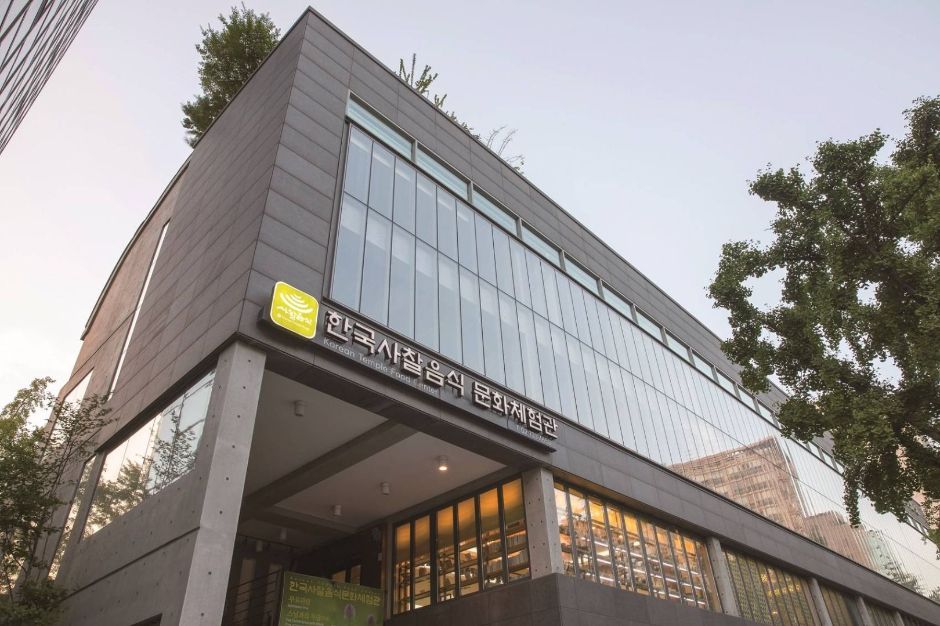
Buddhist doctrines are based on the truth that every life should be respected; thus, none shall be harmed. With this very truth, Korea’s temples never use any kind of meat or strong spices when cooking. Thanks to this, K-temple food is a vegetarian diet you can freely enjoy. They are made with fruits, vegetables, and whole grain ingredients, reducing your blood pressure, risk of heart attack, and weight because of their limited calories.
You can experience the taste and wisdom of K-temple food that continued for about 1,700 years since Buddhism was introduced in the Korean peninsula in the 4th century at the Korea Temple Food Center. It runs cooking classes for various K-temple food, including seasonal food, K-sauces (gochujang [red chili paste], doenjang [soybean paste], and ganjang [soy sauce]), and holiday food for Seollal (Lunar New Year’s Day) and Chuseok (Harvest Moon Day). In addition, you can make some traditional Korean tea and confectioneries and talk with a Buddhist monk while enjoying them.K-Temple Food, chosen by Le Cordon Bleu
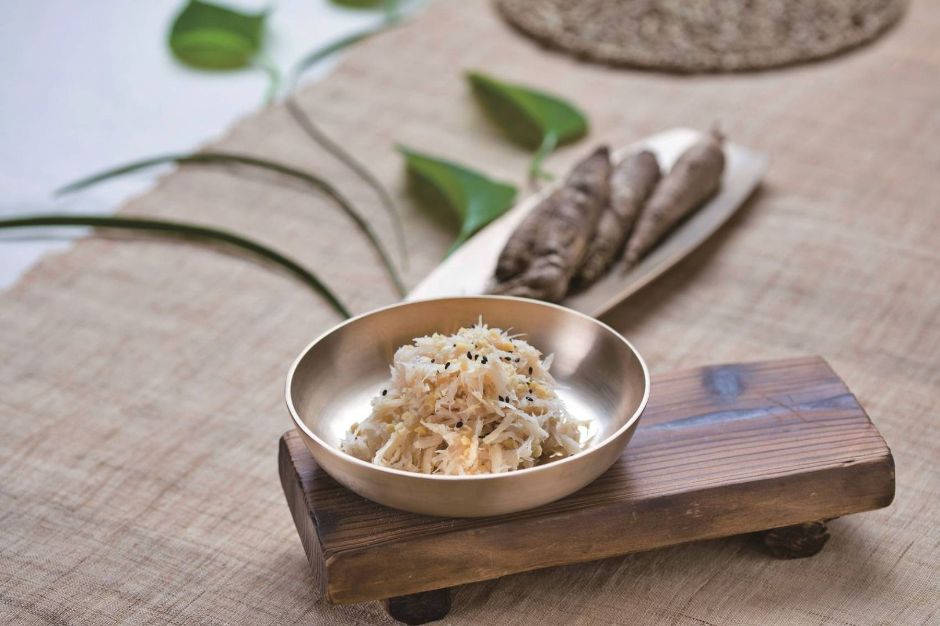
The Korean Temple Food Center runs daily cooking classes for Koreans and foreigners. Many tourists visit the center, learn K-temple food, and experience “baru gongyang,” the Buddhist way to express one’s gratitude for food. During this solemn ceremony, you need to put an appropriate amount of food (rice, soup, clean water, and some side dishes) into four bowls (baru), eat with no sounds, and leave nothing in your baru.
In 2021, Le Cordon Bleu London made an official course of plant-based culinary arts of K-temple foods and so did Le Cordon Bleu Paris. In addition, in 2023, Chef Éric Briffard, the headmaster of Le Cordon Bleu Paris, visited the Korea Temple Food Center in person. He watched the classes, actively learned about the recipes, and enjoyed K-temple food at a professional temple food restaurant, paying keen attention to them. He said that Korea’s temple food is not just a simple vegetarian diet but a healthy diet with philosophy.
The center’s culture and experience zones
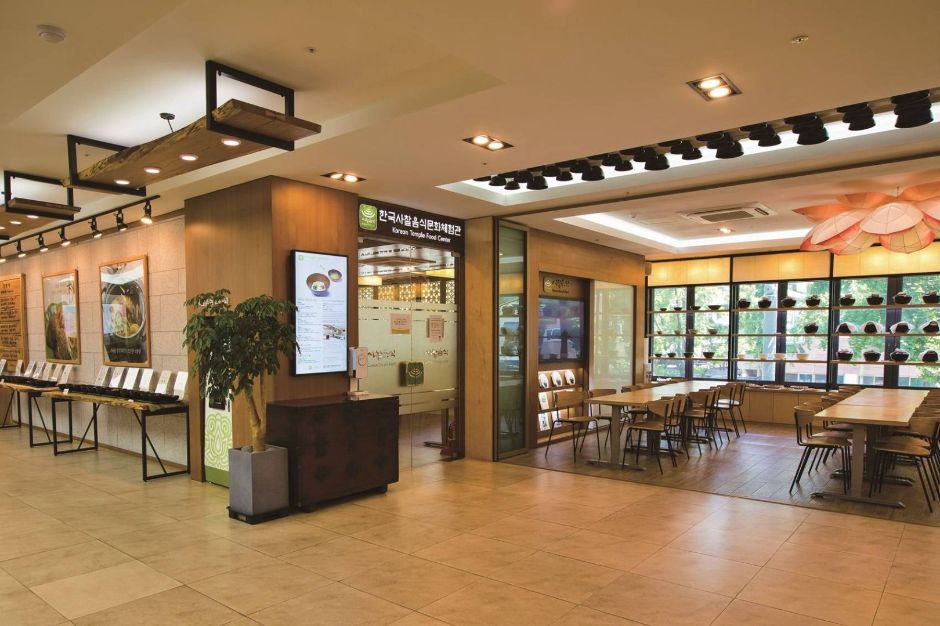
1. Culture and exhibition zones : The center’s culture zone welcomes you first when you enter the entrance. Any visitor can take its pamphlets that contain typical recipes for K-temple food. It also has some specialized books about them. Its exhibition zone that realized a gongyanggan (Buddhist dining room) of a traditional Korean temple also looks impressive, where traditional kitchen tools, replicas of K-temple food, and detailed recipes can be seen.
2. Experiences (* Reservations are necessary)
2-1. Daily classes: K-temple food class (every Saturday morning in English), traditional Korean tea confectionery-making class, conversation with a Buddhist monk, simple K-temple food experience, and beginner’s guide to K-temple food
2-2. Monthly classes (of 4 weeks): Seasonal food class and Buddhist monk’s secret side dishes
2-3. Regular programs: Gochujang (red chili paste) making class, temple food for Chuseok, and the marine temple food of Summer
 Address (2nd floor, Anguk Building), 39, Yulgok-ro, Jongno-gu, Seoul
 Operating hours 10:00 - 21:00 (Different for each class; it takes about two hours for two temple food.)
 Website edu.koreatemplefood.com
 Inquiries +82-2-733-4650
 Nearby tourist attractions
Gyeongbokgung Palace
Jogyesa Temple
Insa-dong
National Folk Museum of Korea
Namsan Seoul Tower
Hangang Park
Deoksugung Palace
Namdaemun Market
Cheongwadae (Blue House)


Start a FREE Online Call
(No charges for calls on Wi-Fi /
Data charges may apply)

Open 1330 Helpline Chat(Download not required)