
Current language
English
- Log in
-
- Sydney Overseas Office
- London Overseas Office
- Toronto Overseas Office
- Los Angeles Overseas Office
- New York Overseas Office
- Ulaanbaatar Overseas Office
- Dubai Overseas Office
- New Delhi Overseas Office
- Manila Overseas Office
- Jakarta Overseas Office
- Hanoi Overseas Office
- Kuala Lumpur Overseas Office
- Singapore Overseas Office
- Bangkok Overseas Office
- Map
Popular search
- Sydney Overseas Office
- London Overseas Office
- Toronto Overseas Office
- Los Angeles Overseas Office
- New York Overseas Office
- Ulaanbaatar Overseas Office
- Dubai Overseas Office
- New Delhi Overseas Office
- Manila Overseas Office
- Jakarta Overseas Office
- Hanoi Overseas Office
- Kuala Lumpur Overseas Office
- Singapore Overseas Office
- Bangkok Overseas Office
K-Local Food Trip 33
- HOME
- Plan Your Trip
- Food
-
-
-
Pike Eel: A High-Protein Delicacy from the Summer Sea
-
02/20/2025
-
161
0
0
-
-
-
-
Pike Eel: A High-Protein Delicacy from the Summer Sea
When & Where

Pike eels are at their best from June to September, when they are most active.

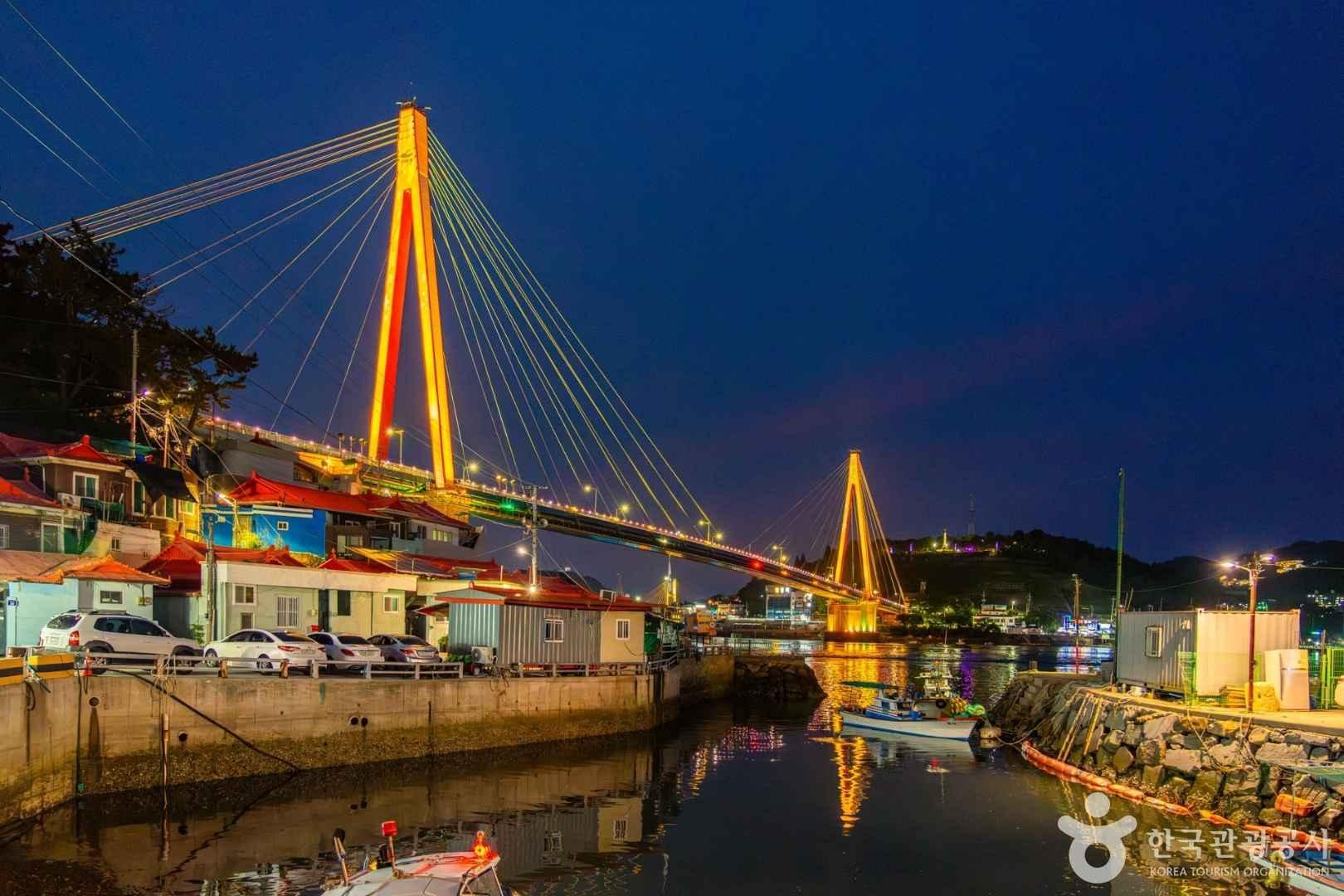
Restaurants specializing in pike eel dishes are in Yeosu and Wando in Jeollanam-do and Tongyeong and Namhae in Gyeongsangnam-do. In particular, you can find the Yeosu Pike Eel (Hamo) Street below the Dolsandaegyo Bridge.
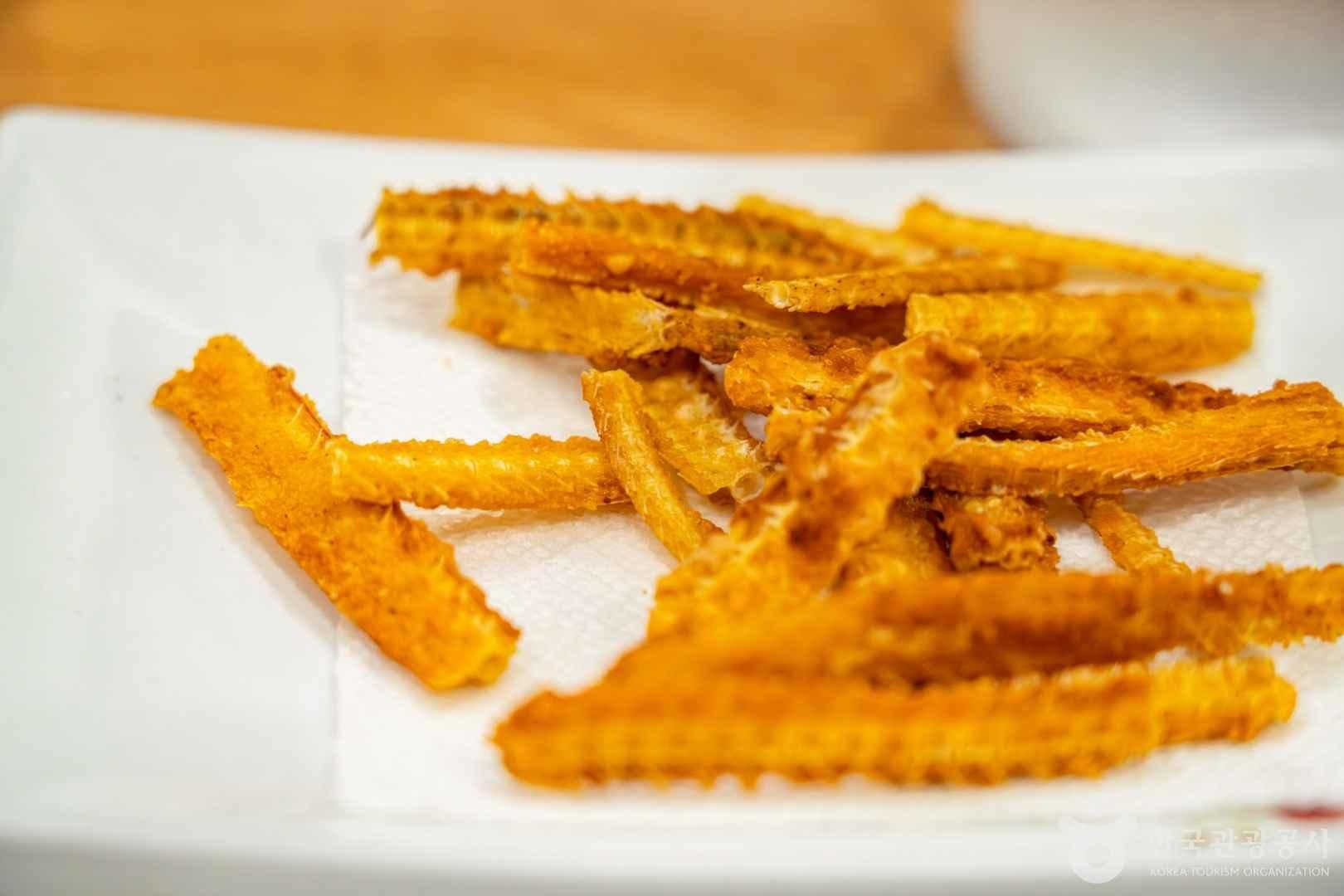
There are three types of eels that are eaten in Korea: freshwater eel, conger eel, and pike eel. You can expand the category to include hagfish, a popular dish in the Busan region. However, hagfish is not a type of eel, despite being known as an eel (“jangeo”) in Korean (“kkomjangeo”).
Healthy with High Protein Levels
Eel is a popular food across the four seasons, but it is most popular in summer because of its high protein content, which amounts to 67% of its total nutrition content. The fact that it is rich in protein also means that it is rich in amino acids like glutamic acid and aspartic acid, which give the eel its flavor.
Eel is also known to be low in calories despite its high protein content. Compare this to chicken, another high-protein foodstuff. Chickens have about 230 Kcal per 100g, while pike eel has about 170 Kcal at the same weight. That is 26% less.
Characteristics of Pike Eel
Pike eels look more threatening than freshwater or conger eels. For instance, in Jasan eobo (Report on the Fish Species of Heuksan Island), written by late Joseon era scholar Jeong Yak-jeon, it is noted on pike eels that “its snout is long like that of a pig, and its teeth are uneven like those of a dog. Its robust teeth and bone allow it to bite onto humans.” The key part of this is “robust teeth.” Though conger eels, a sea-dwelling eel, also have teeth, their teeth cannot be compared to pike eels. The Korean name for pike eel, “gaetjangeo,” refers to the fierce fangs of dogs (“gae”). Its Japanese name, “hamo,” comes from “kamu” (かむ), meaning to bite. Indeed, a bite from a pike eel can cause injury, so you have to be careful.
Perhaps due to these characteristics, fishermen primarily catch mud eels using a method called “junak,” where a line is equipped with about 100 hooks baited with lures. This method takes advantage of the strong biting behavior of mud eels when they take the bait.
Where to Get Pike Eels
Pike eels are caught across the southern coast of Korea. Goheung in Jeollanam-do and Goseong in Gyeongsangnam-do are two regions famous for summer pike eels. Yeosu, located between the two regions, is also famous for its pike eels. Gyeongdo Island in Yeosu has more than 30 fishing ships specializing in eel fishing, and the sea near Gyeongdo Island (between Dolsando Island and Geumodo Island) is a known habitat for pike eel.
The island also has a number of restaurants specializing in pike eel dishes. Despite its small size, the island is located quite close to Gukdong Port, and there are multiple departures to and from the island from the early morning, which, coupled with the golf courses on the island, make the restaurants on the island quite popular. If you cannot visit Gyeongdo Island, you can head to the Yeosu Pike Eel (Hamo) Street under Dolsandaegyo Bridge.
How to Enjoy Pike Eels
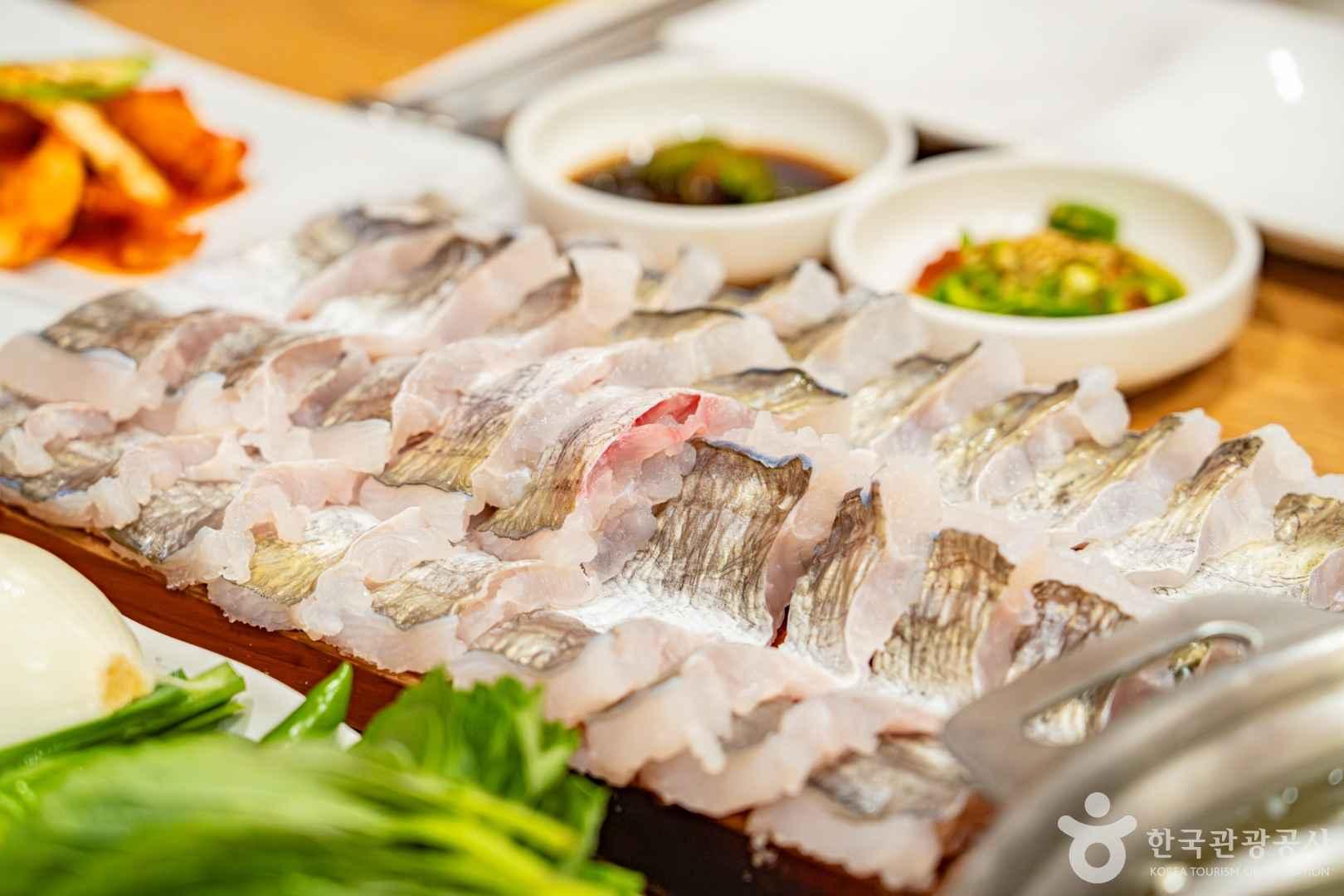
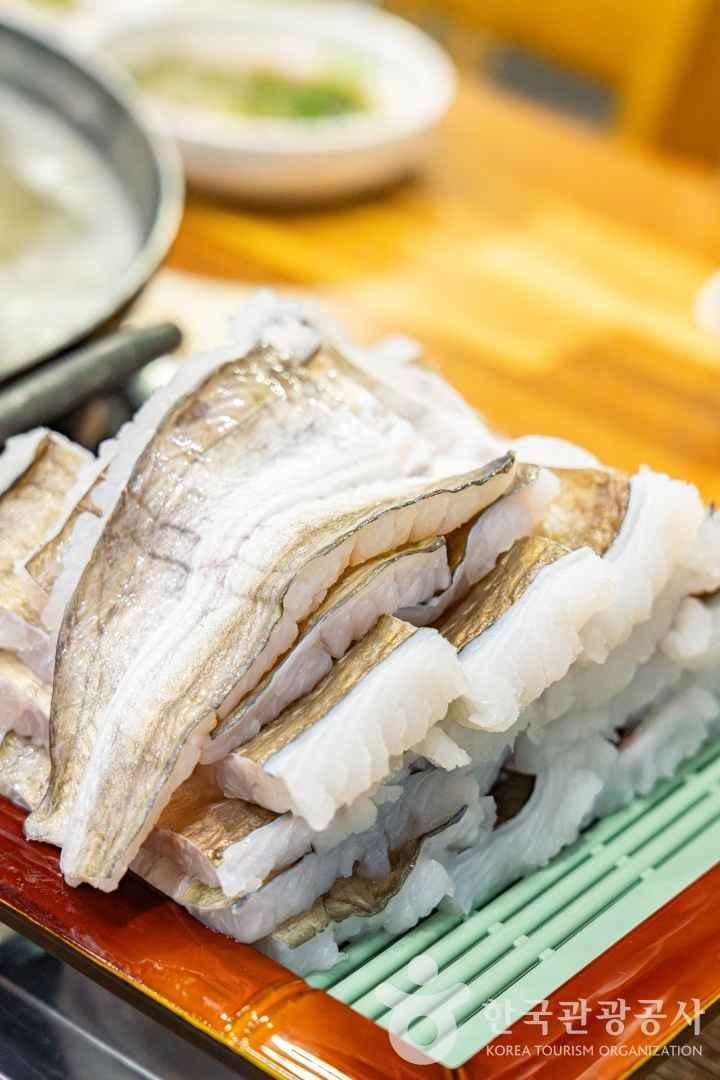
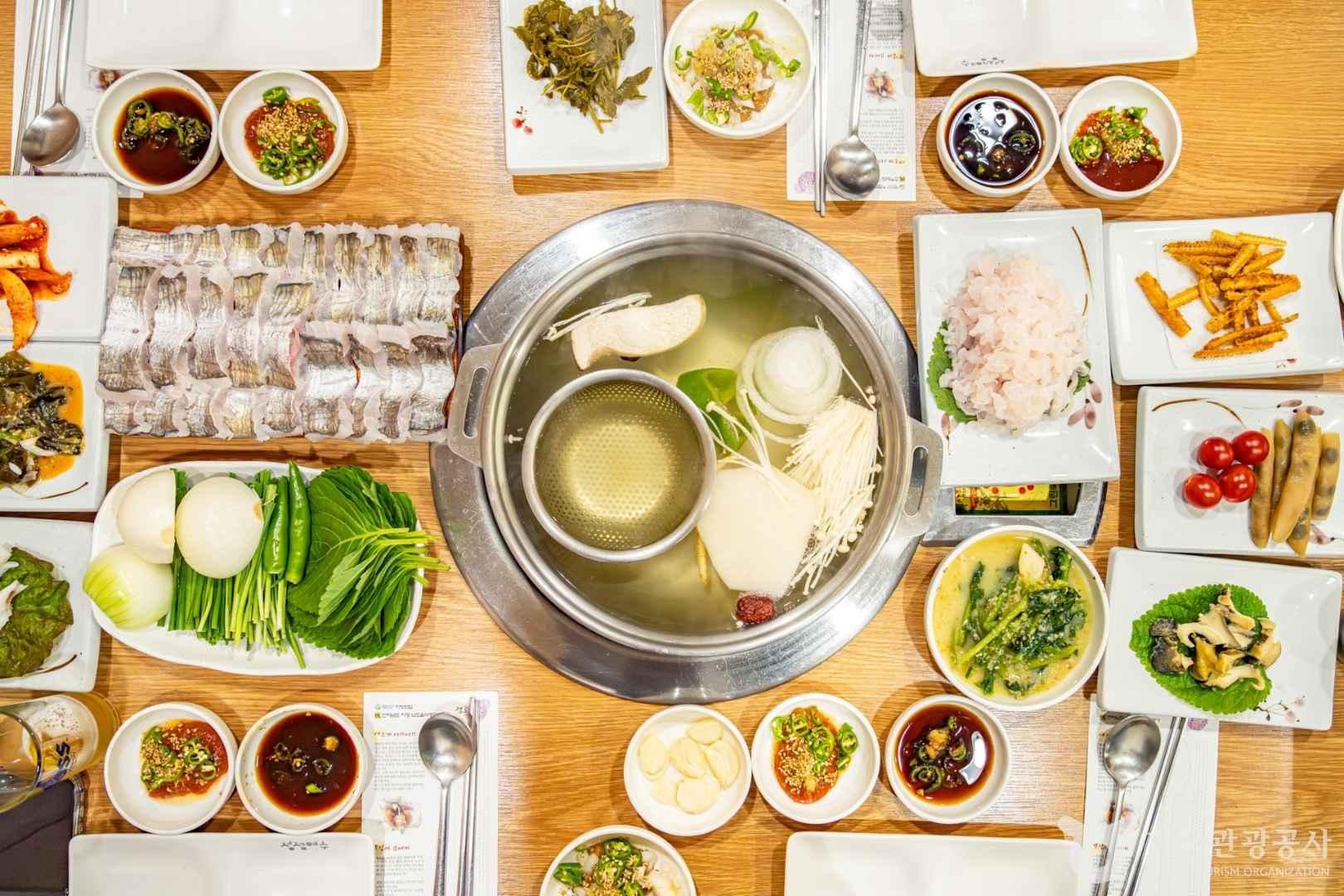
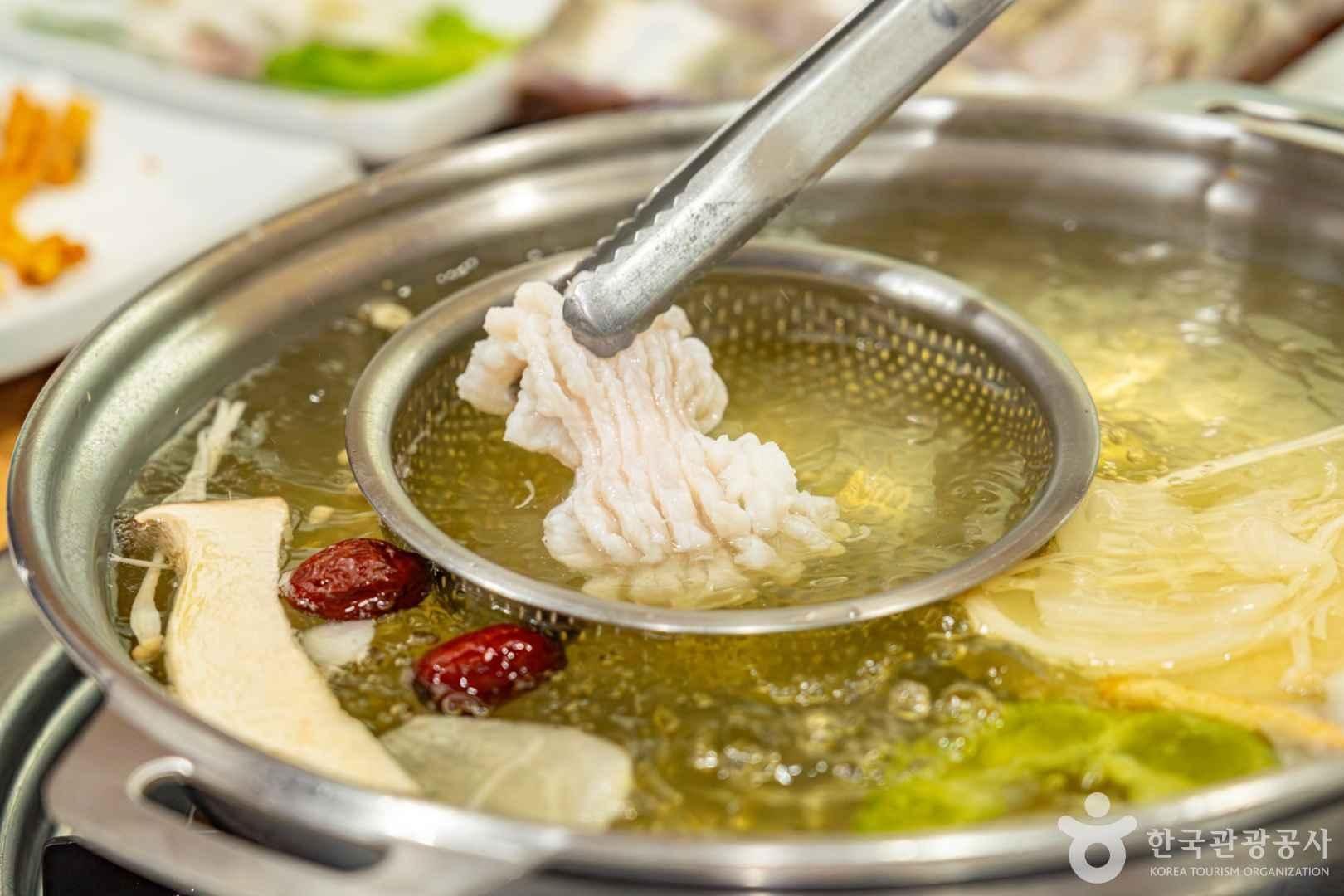
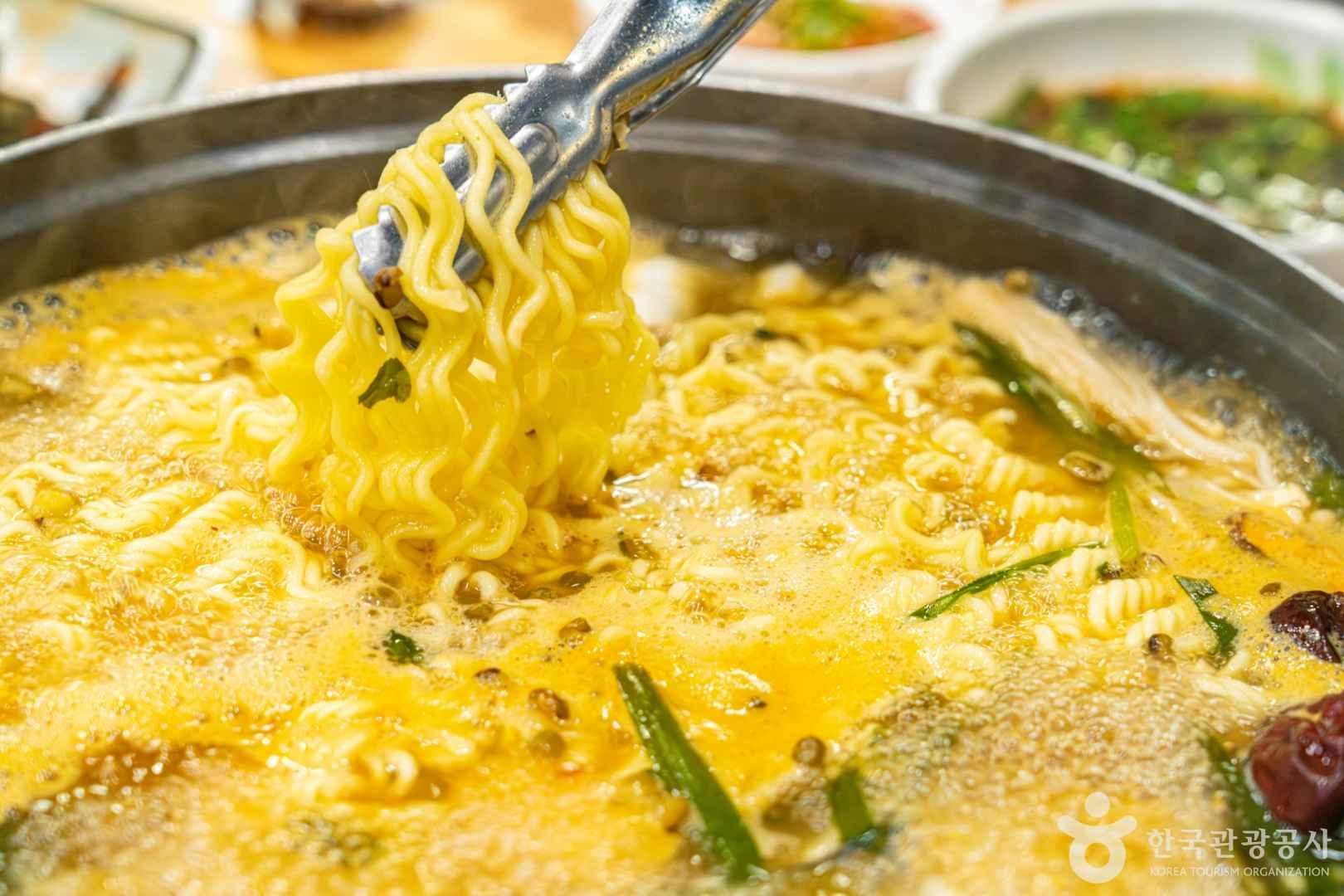
Pike eels are most frequently enjoyed in the form of a shabu-shabu. To prepare the pike eels for shabu-shabu, the head and bones are removed, and the flesh is scored at about 5 mm intervals without cutting into the skin. The head and the bones are then made into a broth with vegetables. Dip the meat into the boiling broth to parboil the meat and enjoy.
Pike eels can be enjoyed after only about 10 seconds in boiling broth. Boiling the meat in hot broth contracts the gelatin structure in the skin due to the heat. At the same time, the flesh attached to the skin forms noticeable cuts, wrapping the meat into a flower-bud-like shape. Once cooked, you can put the meat on a raw onion slice and enjoy it as one. Onions go well with pike eel because their harvest coincides with the pike eels in season.
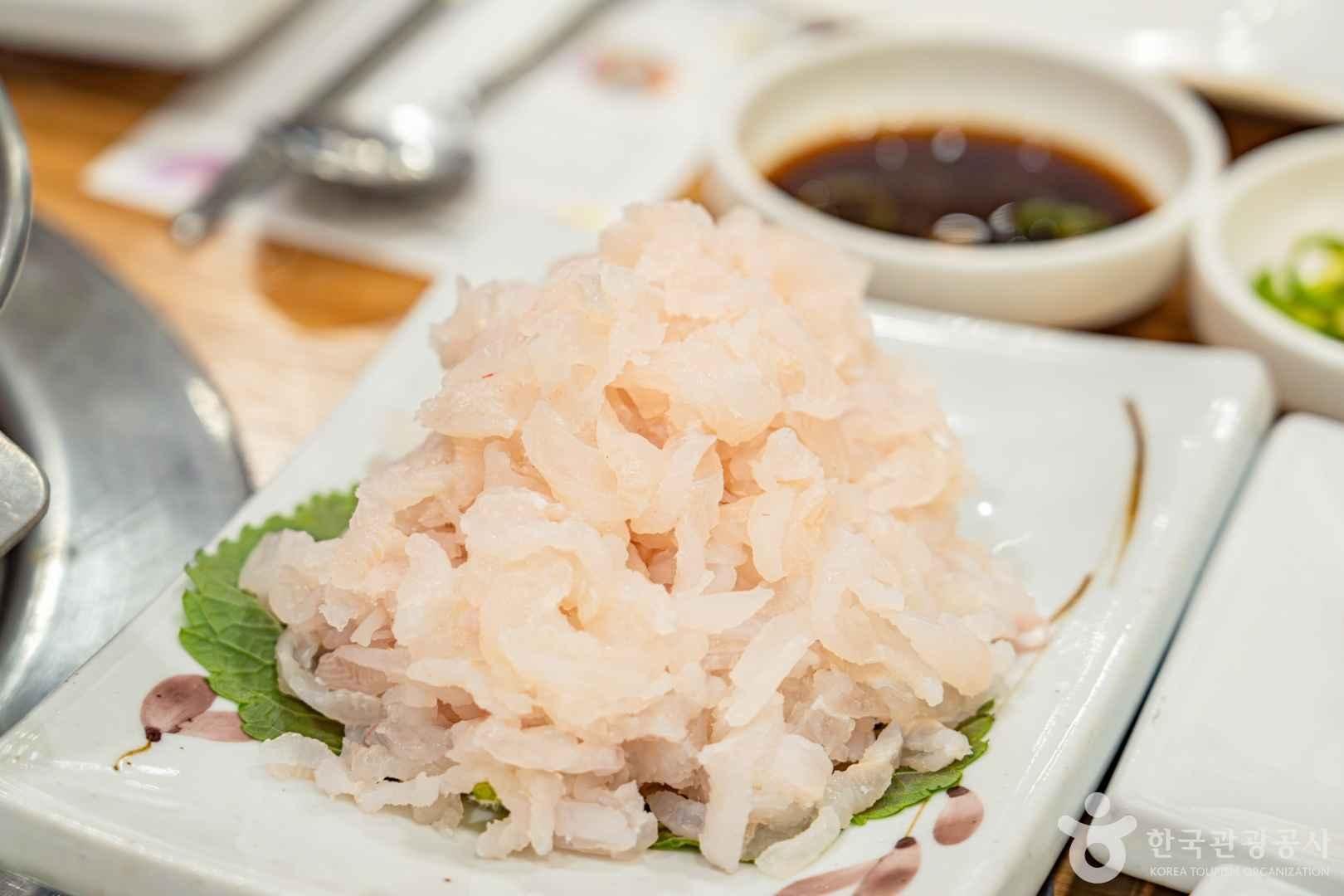
Another dish equally popular as gaetjangeo shabu-shabu is gaetjangeo hoe (sliced raw pike eel). As you chew on the gaetjangeo hoe, you feel the delectable buildup of savory flavors. Wrap the slices in vegetables or enjoy with salt or soy sauce to add even more flavor to the meat. Or, tag in one of Yeosu’s specialties, gatgimchi (leaf mustard kimchi), for a truly exquisite feast.
Restaurants Information
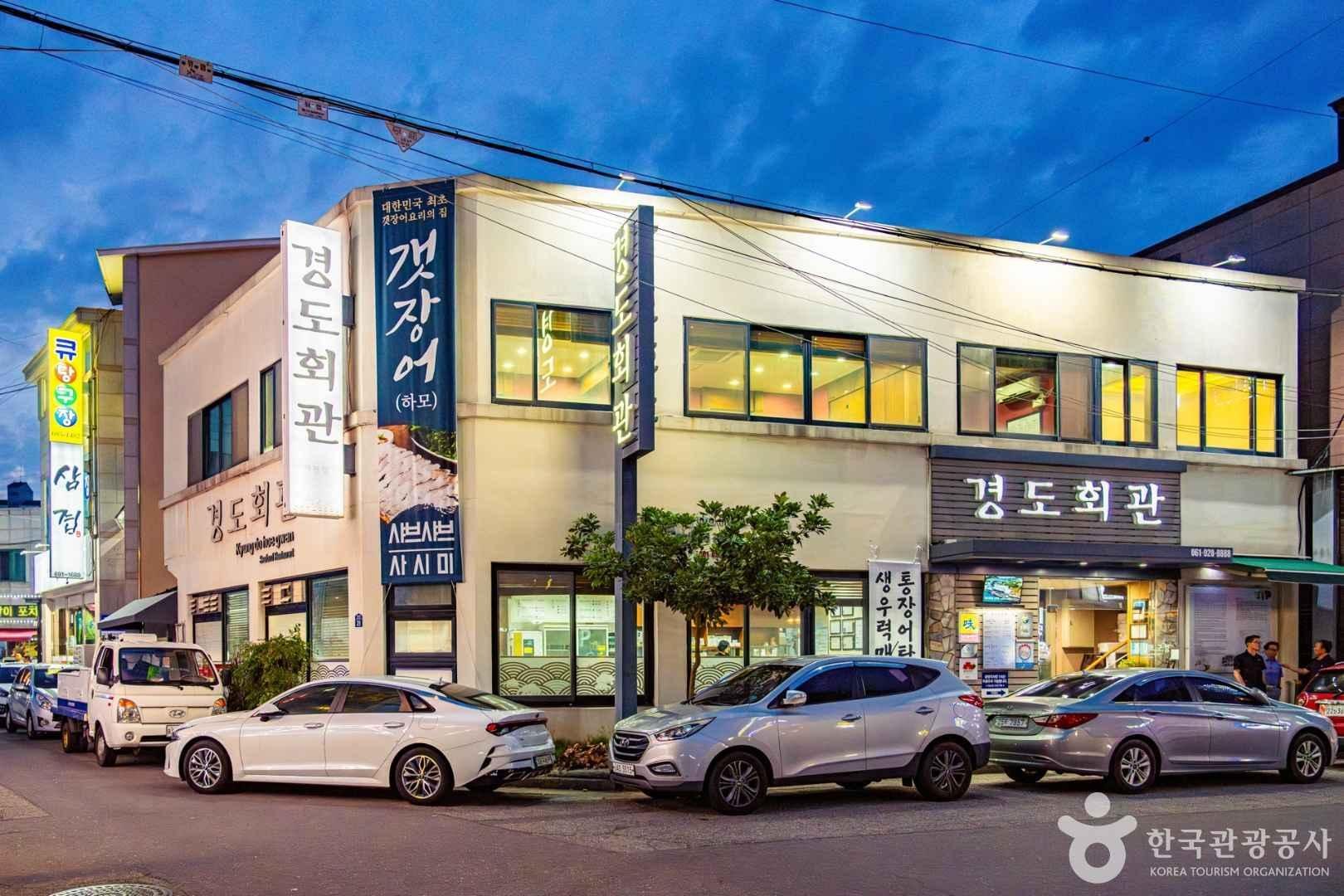
Gyeongdo Hoegwan Yeocheon Branch
If entering Gyeongdo Island on a ferry is not an option, you can dine here instead. The restaurant serves the same pike eel dishes as the one served at Gyeongdo Hoegwan Main Branch. It also has private rooms, so this restaurant is ideal if you visit with a group or want to dine in a quiet ambience.

Address:
23 Sicheongseo 3-gil, Yeosu-si, Jeollanam-do
Contact:
+82-61-920-8888
Signature Menu:
Gaetjangeo Shabu-Shabu (small) 100,000 KRW / (large) 130,000 KRW /
Gaetjangeo Sashimi (sliced raw pike eel) 100,000 KRW /
Gaetjangeo Hoemuchim (raw pike eel salad) (for 1; minimum order for 2) 16,000 KRW /
Gyeongdo Premium Menu (gaetjangeo shabu-shabu, sashimi, hoemuchim, Korean beef brisket, vegetables, etc.) 250,000 KRW
Getting There:
Approx. 3.1 km from Yeocheon Station (KTX, regular trains) on Jeolla Line/
Approx. 7 km from Yeosu Bus Terminal
Parking:
Free
Seating:
136 seats
Menu Languages:
Korean, English
Gyeongdo Hoegwan Main Branch
This pike eel restaurant on Gyeongdo Island is said to be the first place in Korea to offer gaetjangeo shabu-shabu. It is located at the entrance to Gyeongdo Quay at Oedong Village, and you can enjoy a panoramic view of Yeosu as you dine. The restaurant serves pike eel dishes made with pike eel caught by the owner, and from late April to early November, it serves gaetjangeo shabu-shabu, also known as “hamo yubiki.”
Address:
2-2 Daegyeongdo-gil, Yeosu-si, Jeollanam-do
Contact:
+82-61-666-0044
Signature Menu:
Hamo Sashimi (sliced raw pike eel) 90,000 KRW /
Hamo Yubiki (pike eel shabu-shabu) 130,000 KRW
Getting There:
Gukdong Port (Daegyeongdo Passenger Terminal) – Take Daegyeongdo passenger ferry (departure every 10 minutes from 05:10 to 21:00, departure every 30 minutes from 21:00 to 24:00) → Approx. 50 m from Gyeongdo Quay
Parking:
No on-site parking; nearby parking available at the open space near quay
Seating:
150 seats
Menu Languages:
Korean, English
Experience Information
Yeosu Pike Eel (Hamo) Street
This is a collection of restaurants serving pike eel in Yeosu, located across from Gyeongdo Island, one of the region’s premier suppliers of pike eel. Because it is located below Dolsandaegyo Bridge, it is quite accessible and has a great view of the night sea. Each restaurant prepares its gaetjangeo shabu-shabu according to its own recipe. For instance, “Dangmeori Cheotjip” serves gaetjangeo shabu-shabu with beef brisket, while “Seonchangga Hoetjip” offers a great view of Yeosu night sea.
Address:
Namsannam 1-gil, Yeosu-si, Jeollanam-do
* Content creation & related inquiries:
Tourism Industry Strategy Team

1330 Helpline Call/Chat





Start a FREE Online Call
(No charges for calls on Wi-Fi /
Data charges may apply)
Open 1330 Helpline Chat(Download not required)
Open messenger app(Messenger app must be installed)