
Current language
English
- Log in
-
- Sydney Overseas Office
- London Overseas Office
- Toronto Overseas Office
- Los Angeles Overseas Office
- New York Overseas Office
- Ulaanbaatar Overseas Office
- Dubai Overseas Office
- New Delhi Overseas Office
- Manila Overseas Office
- Jakarta Overseas Office
- Hanoi Overseas Office
- Kuala Lumpur Overseas Office
- Singapore Overseas Office
- Bangkok Overseas Office
- Map
Popular search
- Sydney Overseas Office
- London Overseas Office
- Toronto Overseas Office
- Los Angeles Overseas Office
- New York Overseas Office
- Ulaanbaatar Overseas Office
- Dubai Overseas Office
- New Delhi Overseas Office
- Manila Overseas Office
- Jakarta Overseas Office
- Hanoi Overseas Office
- Kuala Lumpur Overseas Office
- Singapore Overseas Office
- Bangkok Overseas Office
K-Local Food Trip 33
- HOME
- Plan Your Trip
- Food
-
-
-
Snow Crab: Long, Meaty Legs from the East Coast
-
02/20/2025
-
151
0
0
-
-
-
-
Snow Crab: Long, Meaty Legs from the East Coast
When & Where

Snow crabs are caught from winter through spring (December to May), but the best time to enjoy them is when they are at their peak from January to February.

Hupo Port and Jukbyeon Port in Uljin, Gyeongsangbuk-do are home to many snow crab fishing boats. Naturally, the areas around these harbors are lined with snow crab specialty restaurants.
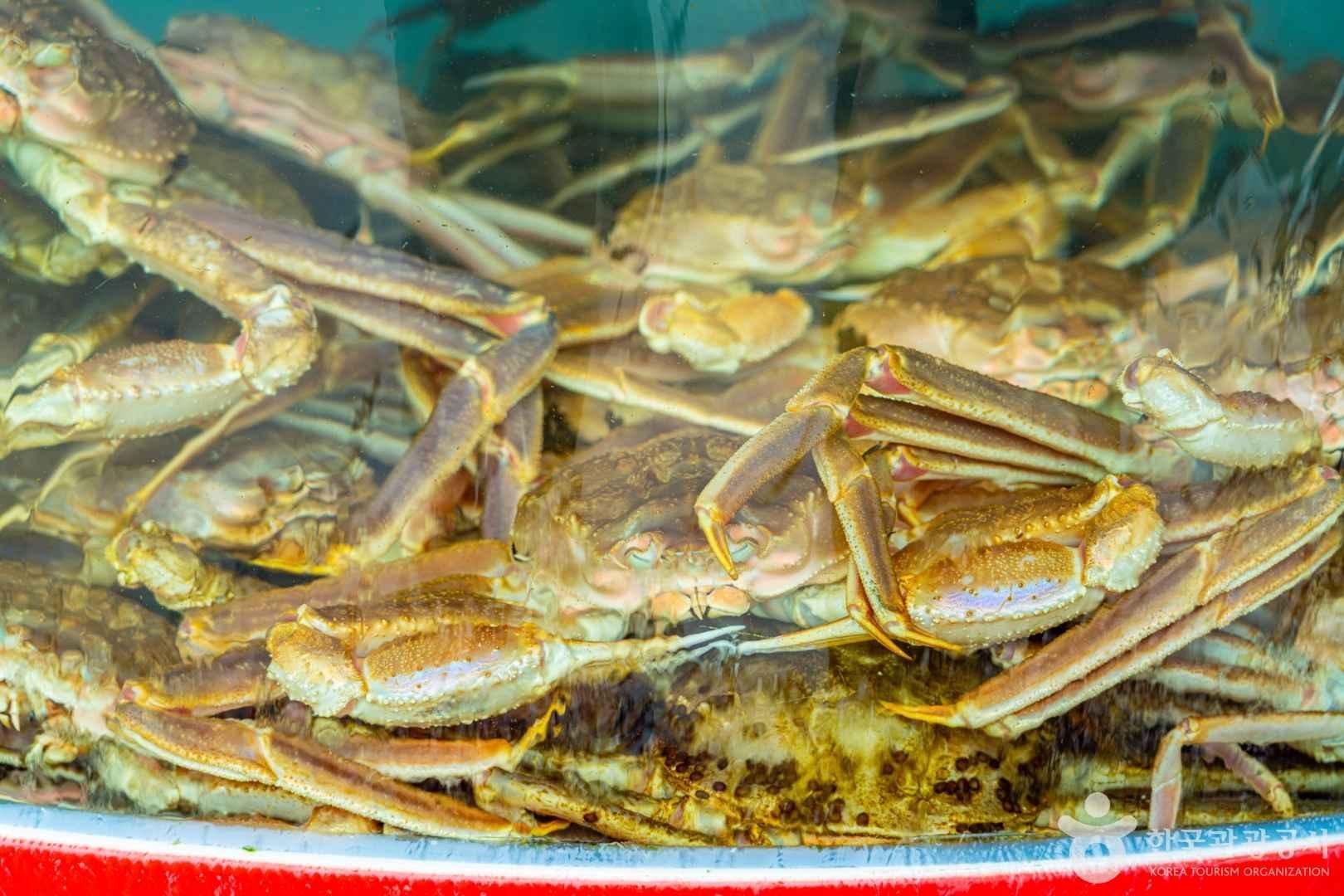
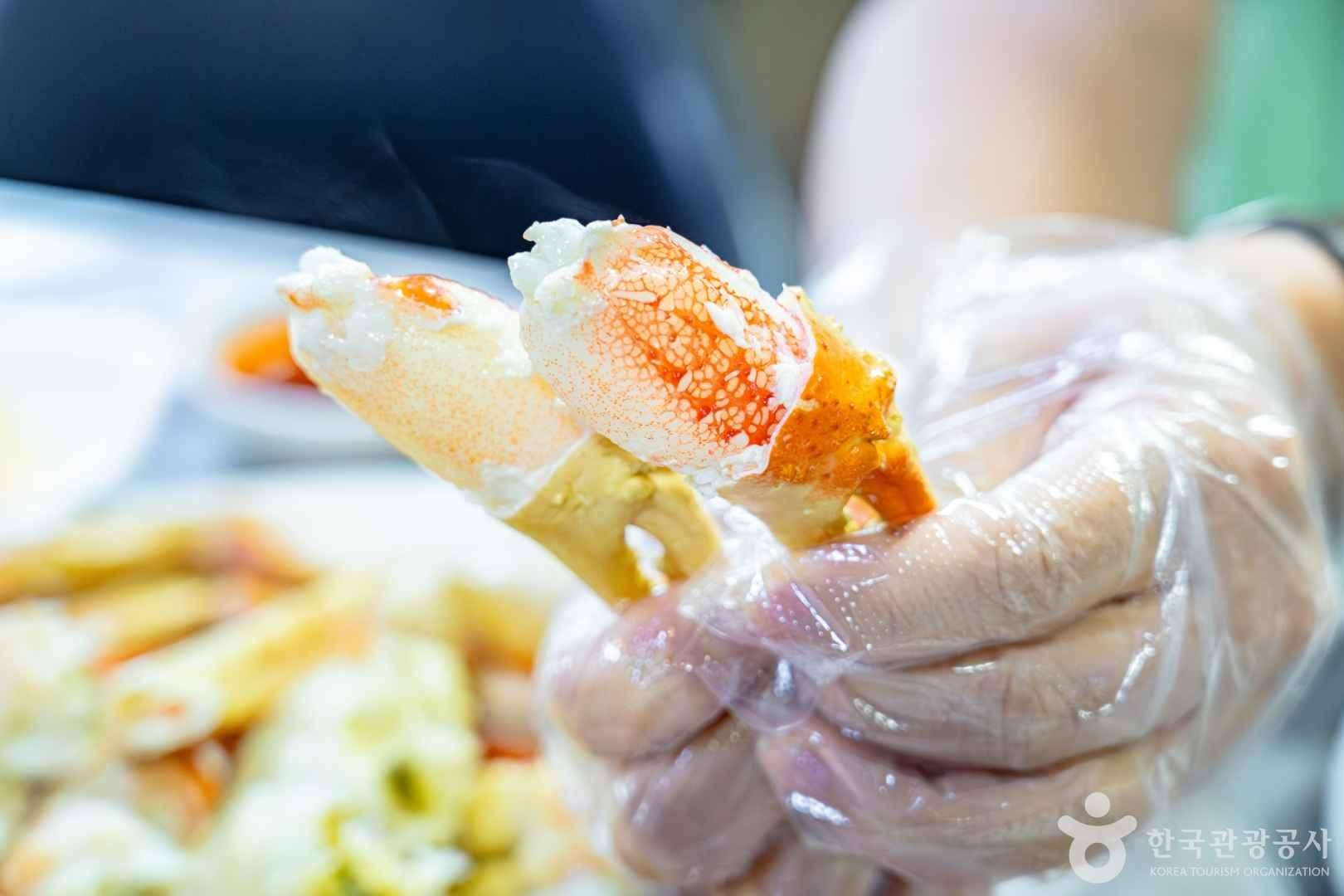
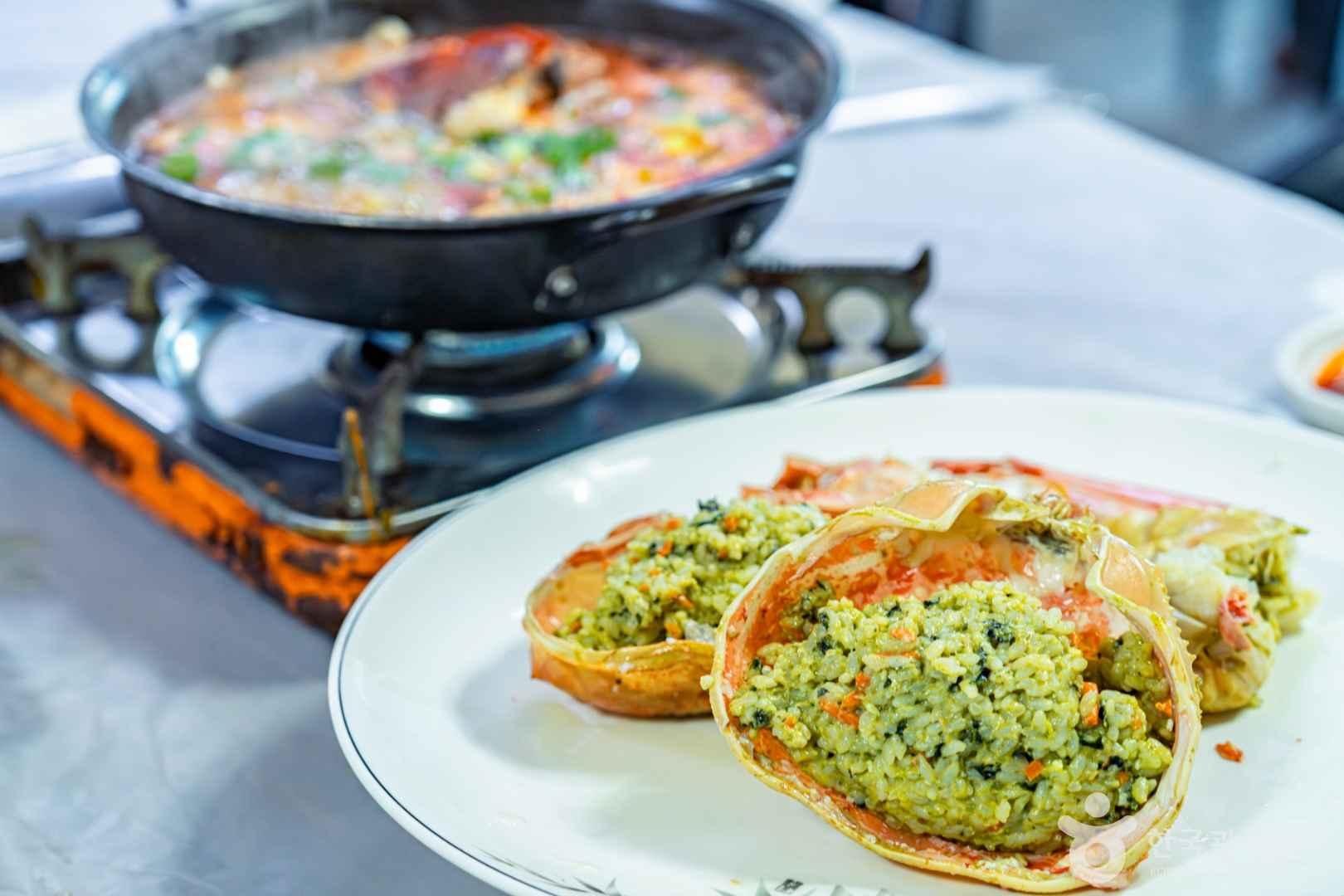
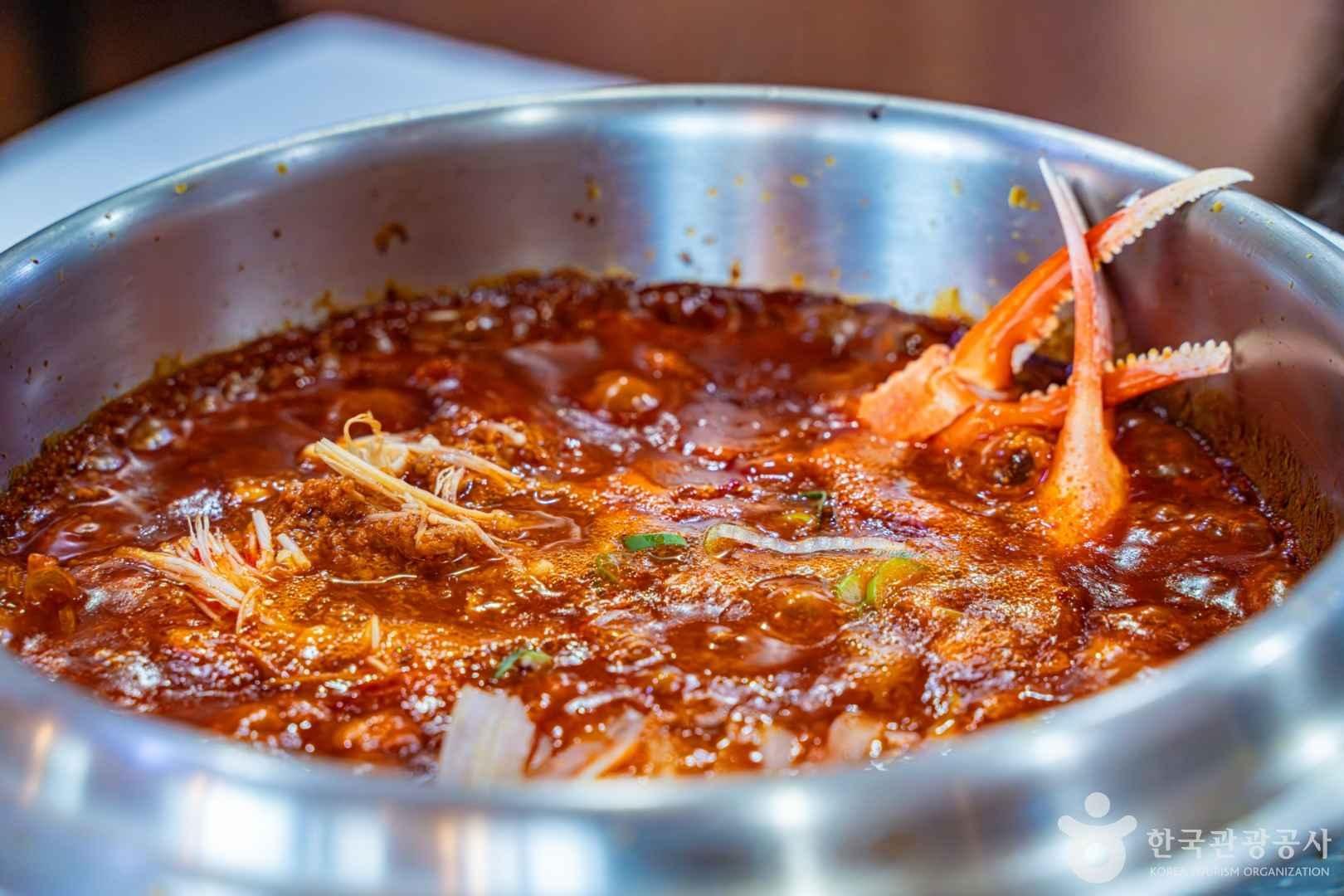
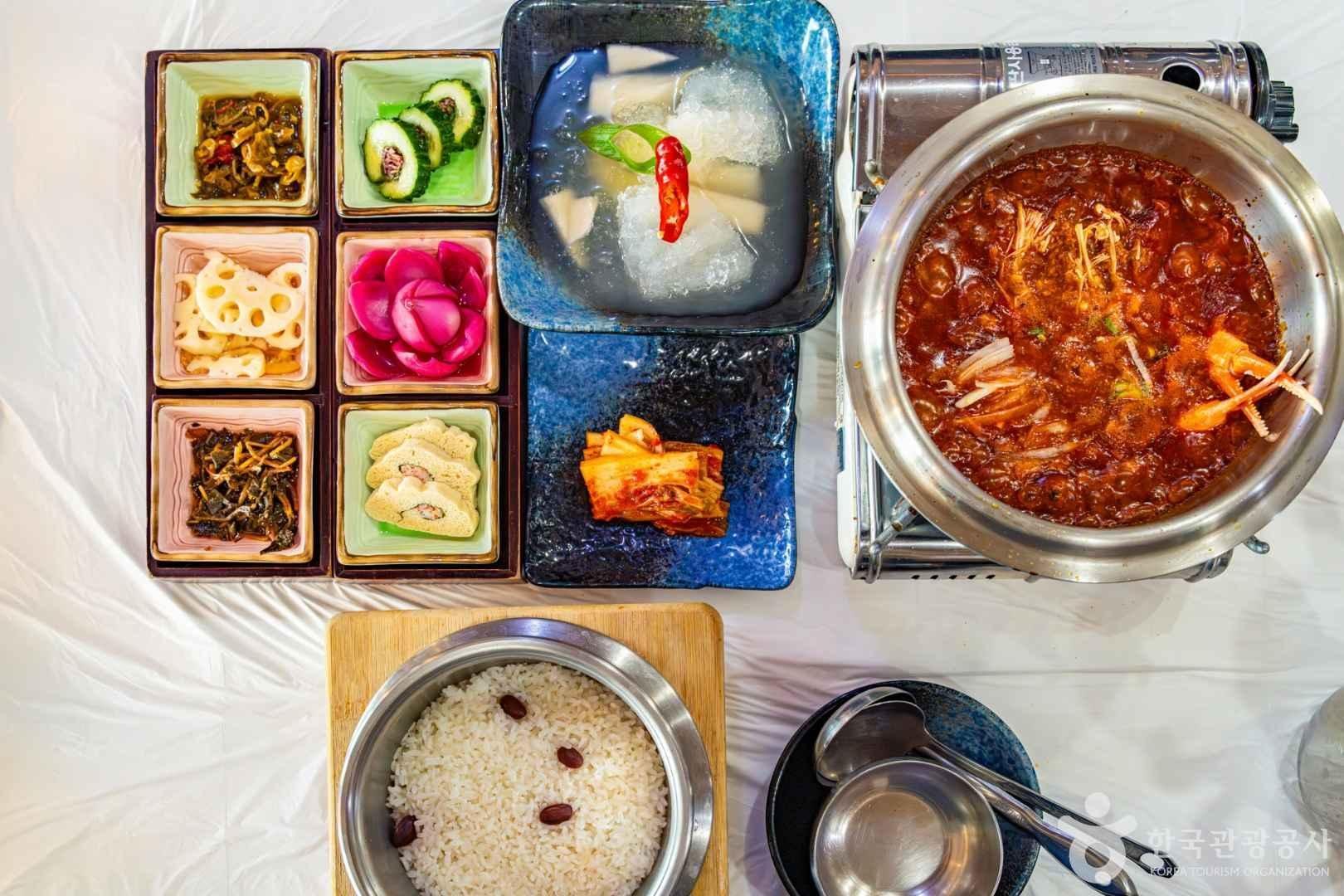
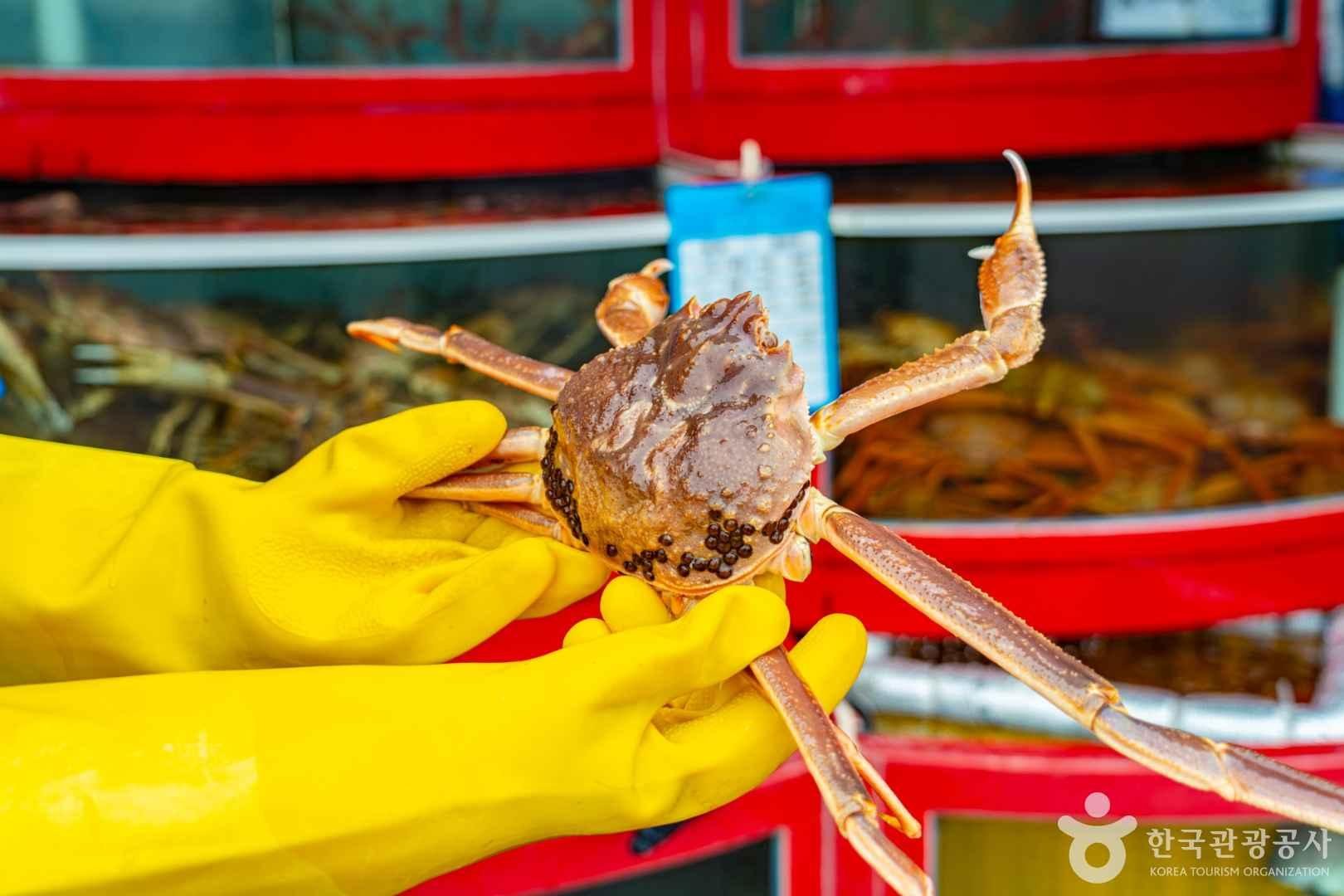
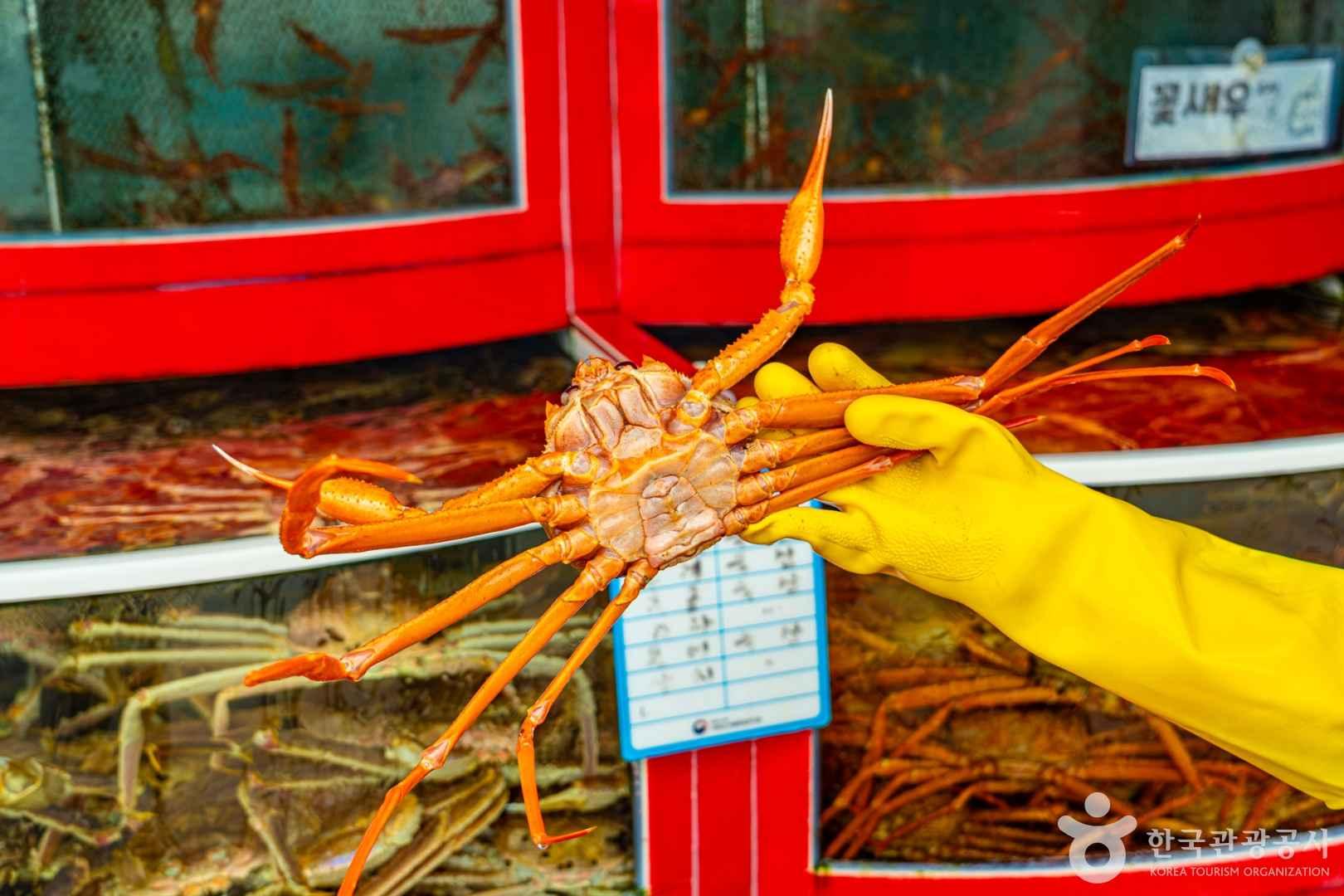
Snow crabs are a type of crustacean that typically inhabit depths of over 200 meters, particularly in areas with mud and sand. The northern Pacific, the Sea of Okhotsk, the Bering Sea, and the Gulf of Alaska are known as their primary habitats. In Korea, they can be found in the seas off the Gyeongsangbuk-do province and further north.
Origin of the Name “Daege”
It’s easy to assume that the name "daege" (snow crab) means "big crab," but the widely accepted theory is that it actually means "bamboo crab." The name dates back to the Goryeo period and it is said that while inspecting Chuksan-myeon in Yeongdeok, a government official saw a crab caught in a village with a view of Jukdosan Mountain and noted that its legs resembled bamboo branches (“daenamu” in Korean), thus giving it the name "daege."
How to Enjoy Snow Crab
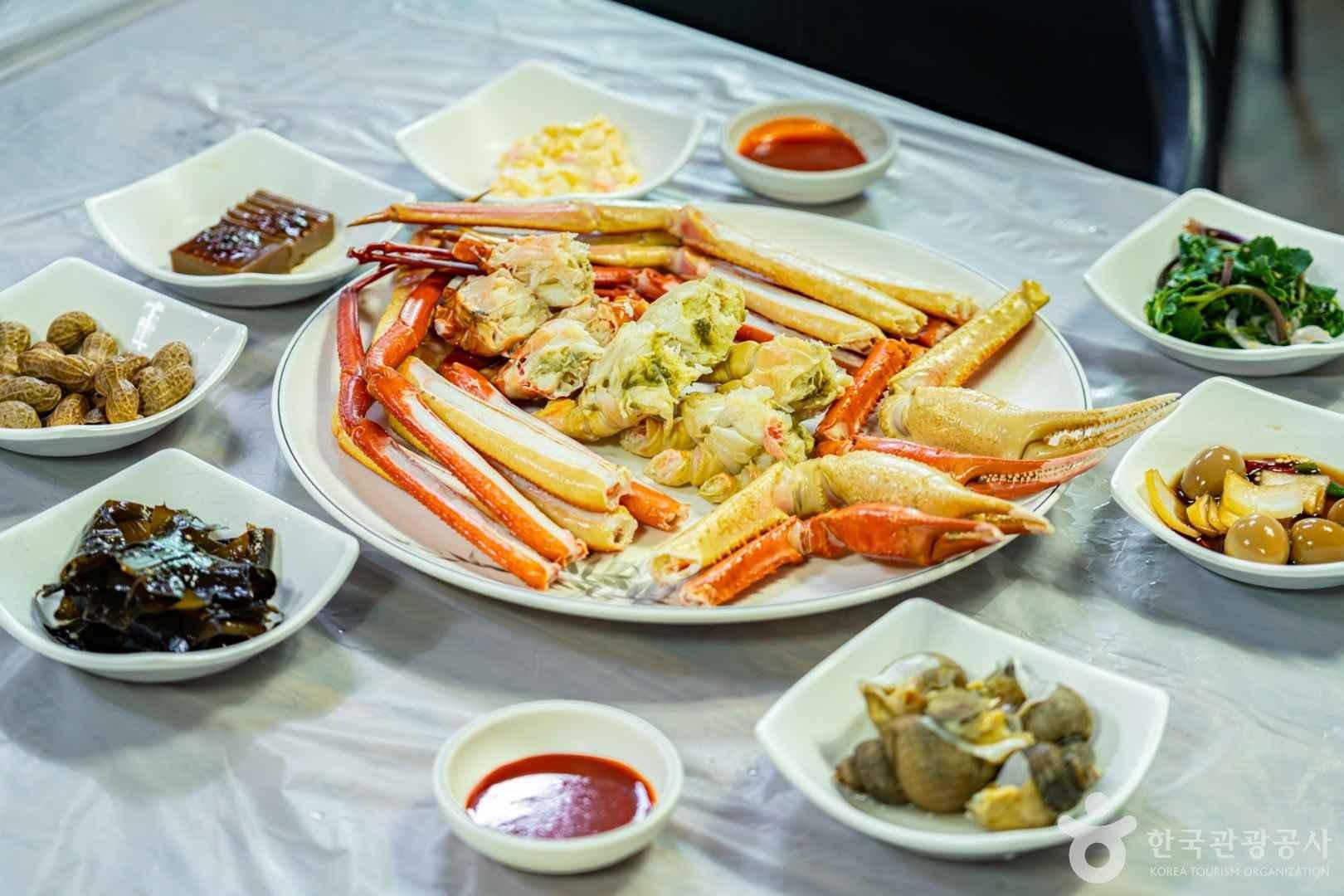
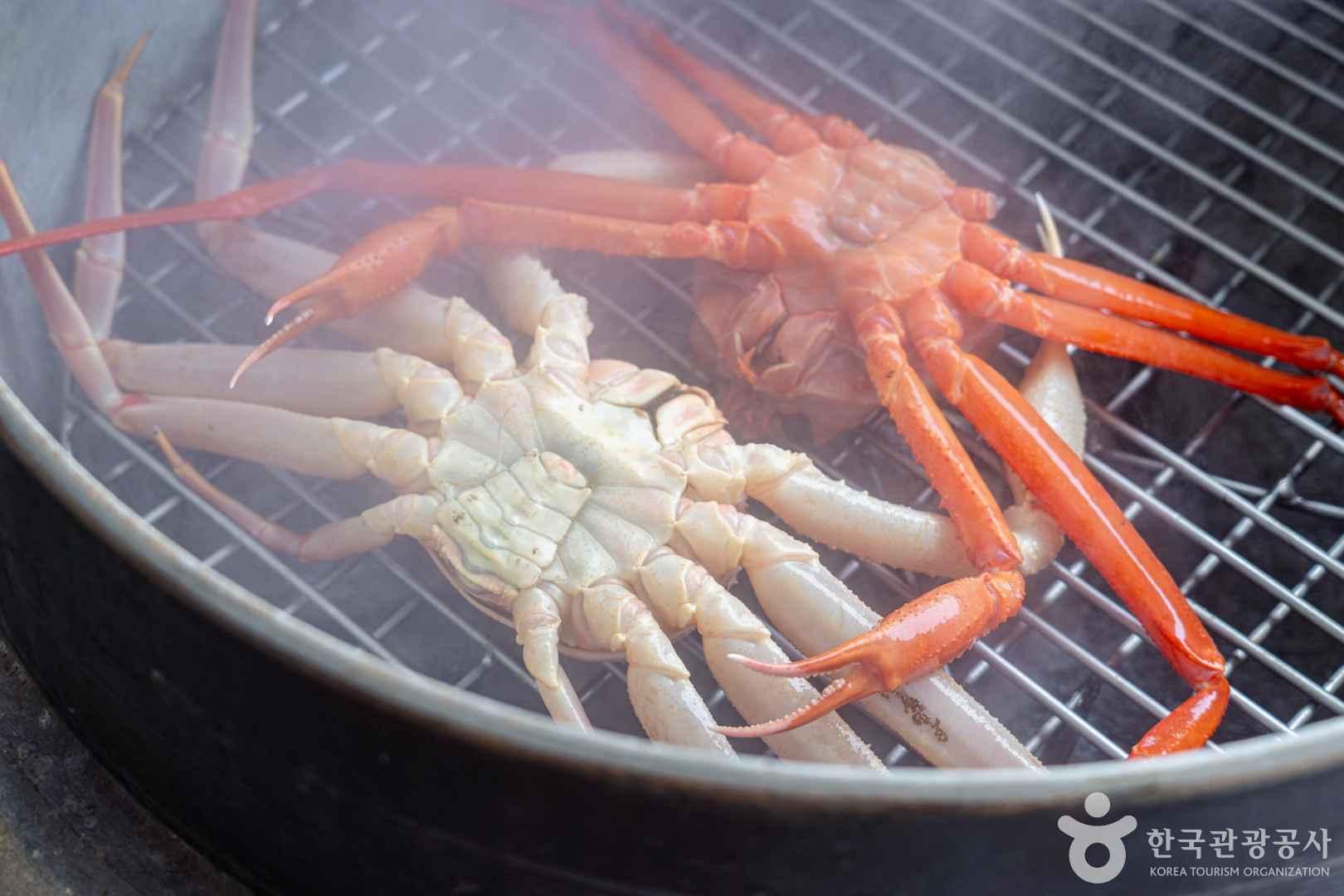
The most basic way to enjoy snow crab is by steaming it, a simple method that allows you to fully appreciate the flavor of the crab meat. To steam snow crab, you first need to submerge the live crab in freshwater to stun it. This step prevents the legs from falling off as the crab moves while being steamed and helps it release the seawater retained in its body. Once stunned, the crab is placed in a steamer and heated for about 20 minutes.
Around Hupo Port and Jukbyeon Port, there are many places where freshly purchased snow crabs can be steamed on the spot. When buying crabs, you can request a full table setting, and the freshly steamed crab will be prepared for you, often with personal guidance to a nearby restaurant.
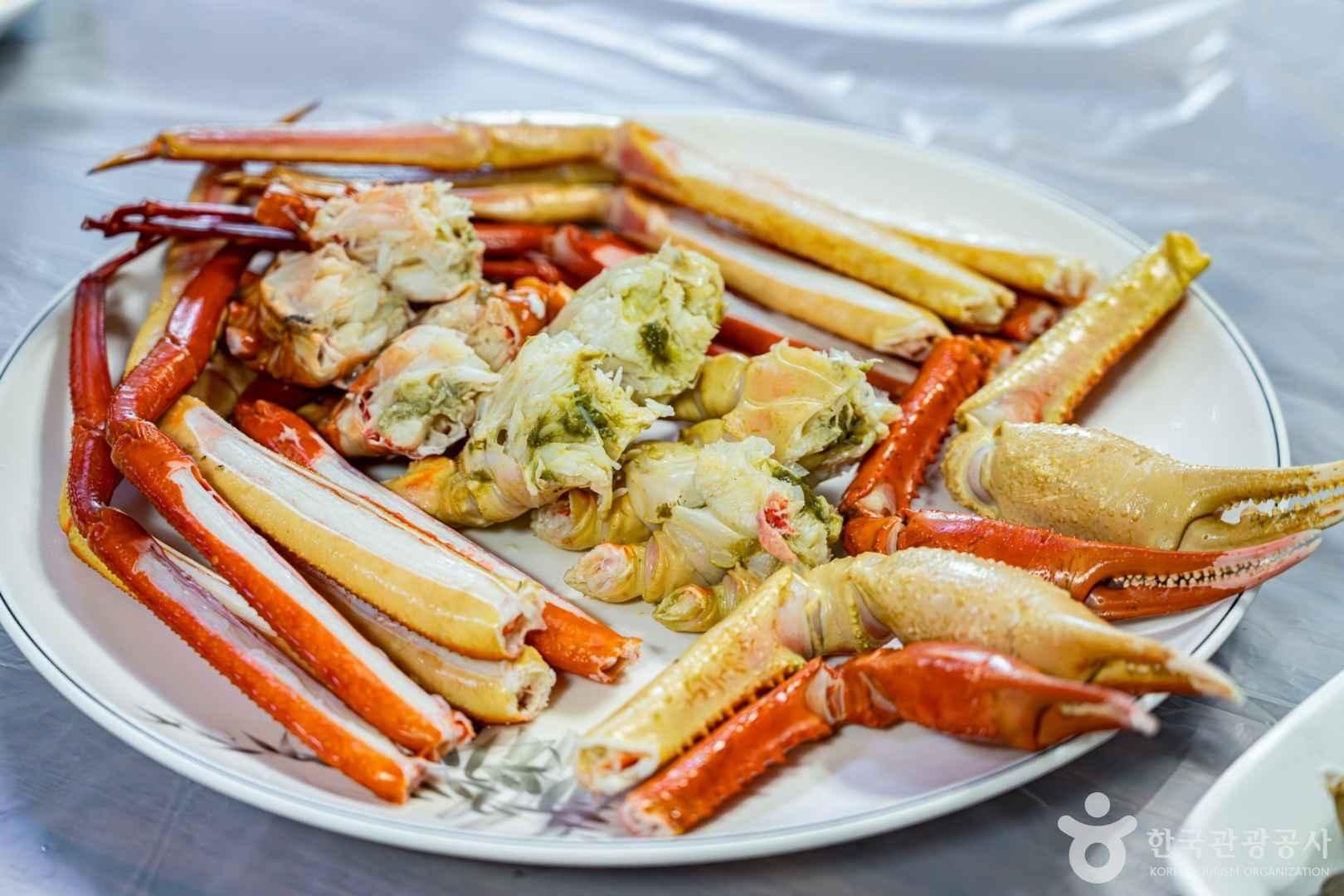
When ordering steamed snow crab at a restaurant, the crab is cooked and served in already cut, easy-to-eat portions. Snow crabs have legs attached to their bodies and by breaking the joints, the meat comes out easily. However, getting to the meat deep inside the long legs can be tricky, so special tools are provided at the table. These tools resemble chopsticks and have a slightly split tip to help pull out the meat more easily.
After eating, many enjoy mixing rice with the remaining crab intestine in the shell. This is known as “gettakjibap” (fried rice in crab shell), which is a savory dish considered a delicacy.
In the Uljin and Yeongdeok areas, some restaurants even add snow crab or red snow crab to ramyeon, which enhances the flavor of ramyeon because of the crab shell. Other snow crab dishes include daegetang (spicy snow crab stew), daege jjabagi (spicy-sweet braised crab legs), gesal bokkeumbap (crab fried rice), and gesal jjamppong (spicy seafood noodle soup with crab).
Red Snow Crab, Another Delicacy of the East Sea
In the East Sea, red snow crabs are caught just as frequently as snow crabs. Red snow crabs have a bright red color and inhabit much deeper waters. As a result, they are typically caught at depths of over 400 meters. Since red snow crabs are caught in greater quantities than snow crabs, they are usually about half the price. The flavor of red snow crabs is also quite different from that of snow crabs. Red snow crabs generally taste saltier, a difference attributed to the varying water pressure in their deeper habitats.
Restaurants Information
Wangbicheon Ige Daege (Wangbicheon Branch)
This restaurant offers a dish called “daege jjabagi” made with snow crabs. "Jjabagi" is a Gyeongsang-do dialect term for “jjageuri,” a dish made with snow crab meat, intestines, claws, and legs simmered in a thick broth of soybean paste and red chili paste. It is said to be a dish invented for preserving and enjoying snow crabs over a longer period when refrigeration was less common.

Address:
3630 Buryeonggyegok-ro, Geunnam-myeon, Uljin-gun, Gyeongsangbuk-do
Contact:
+82-54-787-8383
Signature Menu:
Daege jjabagi jeukseokbap (spicy snow crab stew with instant rice), 17,000 KRW (minimum order for two) /
gesal (gejang) dolsot bibimbap (crab hot stone pot bibimbap) 15,000 KRW
Getting There:
Approx. 2.4 km from Uljin Bus Terminal
Parking:
Available (up to 30 spaces)
Seating:
102 seats
Menu Languages:
Korean, English
Daesae Ramyeon
This restaurant specializes in ramyeon simmered with snow crab, shrimp, and other ingredients to create a rich umami flavor. They also offer ramyeon with red snow crab or octopus and during the season, you can order daegejjim (steamed snow crab).
Address:
245, Uljindaege-ro, Hupo-myeon, Uljin-gun, Gyeongsangbuk-do
Contact:
+82-507-1394-2060
Signature Menu:
Daesae ramyeon (snow crab and shrimp ramyeon, 2 servings) 35,000 KRW /
daege ramyeon (snow crab ramyeon) 17,000 KRW /
hongge ramyeon (red snow crab ramyeon) 13,000 KRW
Getting There:
Approx. 2.5 km from Hupo Terminal /
Approx. 270 m from Hupo Ferry Terminal
Parking:
Available (up to 6 spaces)
Seating:
20 seats
Menu Languages:
Korean
Experience Information
Hupo Port
At Hupo Port, there are many shops that handle a variety of seafood, including snow crabs and red crabs, which are brought into the port. Many of these shops also double as restaurants, where you can enjoy freshly prepared dishes after purchasing your seafood for a small table-setting fee.
Address:
169-58 Uljindaege-ro, Hupo-myeon, Uljin-gun, Gyeongsangbuk-do
Operating Hours:
Varies by restaurant
Parking:
Hanmaeum Plaza Public Parking Lot
Jukbyeon Fish Market
This is a small-scale traditional market where a fifth-day market is held on days ending in 3 and 8 of each month. Although smaller than Hupo Port, it is easy to find shops and restaurants offering a variety of seafood, including snow crabs.
Address:
180 Jukbyeonjungang-ro, Jukbyeon-myeon, Uljin-gun, Gyeongsangbuk-do
Operating Hours:
Varies by restaurant
Parking:
Jukbyeon Port parking lot
* Content creation & related inquiries:
Tourism Industry Strategy Team

1330 Helpline Call/Chat





Start a FREE Online Call
(No charges for calls on Wi-Fi /
Data charges may apply)
Open 1330 Helpline Chat(Download not required)
Open messenger app(Messenger app must be installed)