
Current language
English
- Log in
-
- Sydney Overseas Office
- London Overseas Office
- Toronto Overseas Office
- Los Angeles Overseas Office
- New York Overseas Office
- Ulaanbaatar Overseas Office
- Dubai Overseas Office
- New Delhi Overseas Office
- Manila Overseas Office
- Jakarta Overseas Office
- Hanoi Overseas Office
- Kuala Lumpur Overseas Office
- Singapore Overseas Office
- Bangkok Overseas Office
- Map
Popular search
- Sydney Overseas Office
- London Overseas Office
- Toronto Overseas Office
- Los Angeles Overseas Office
- New York Overseas Office
- Ulaanbaatar Overseas Office
- Dubai Overseas Office
- New Delhi Overseas Office
- Manila Overseas Office
- Jakarta Overseas Office
- Hanoi Overseas Office
- Kuala Lumpur Overseas Office
- Singapore Overseas Office
- Bangkok Overseas Office
K-Local Food Trip 33
-
-
-
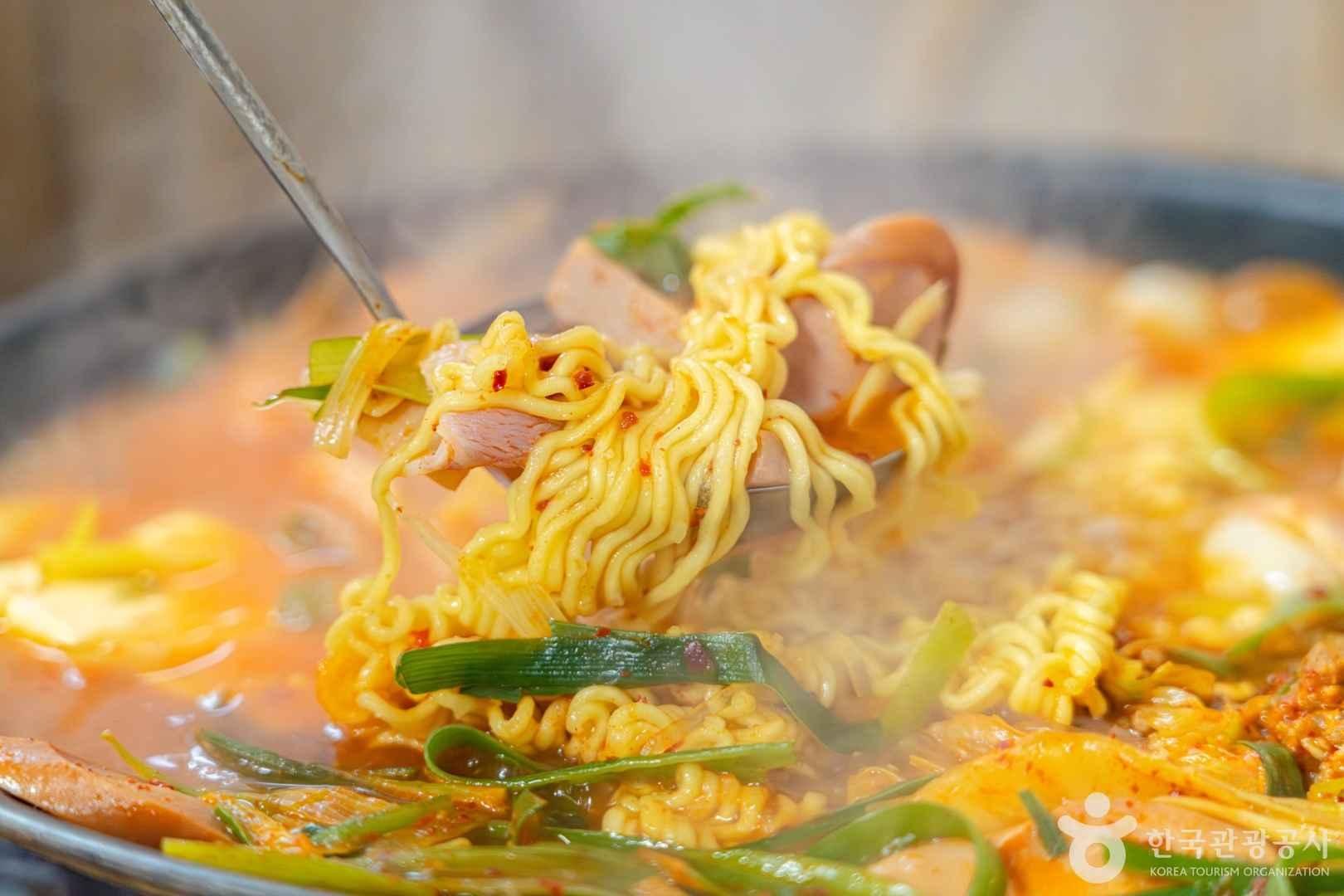
Budaejjigae: The West meets Korea in a Pot
-
02/20/2025
-
877
0
0
-
-
-
-
Budaejjigae: The West meets Korea in a Pot
When & Where

Budaejjigae, or sausage stew, is enjoyed year-round, though it’s especially satisfying in winter (December–March) when kimchi, its main ingredient, is at its peak flavor. The cold weather also enhances the experience of savoring a warm pot of jjigae.

Budaejjigae originated near the U.S. Army garrison in Uijeongbu, and today, Uijeongbu Budaejjigae Street near Exit 2 of Uijeongbu Jung-ang Station on the U Line is a popular destination to enjoy it.
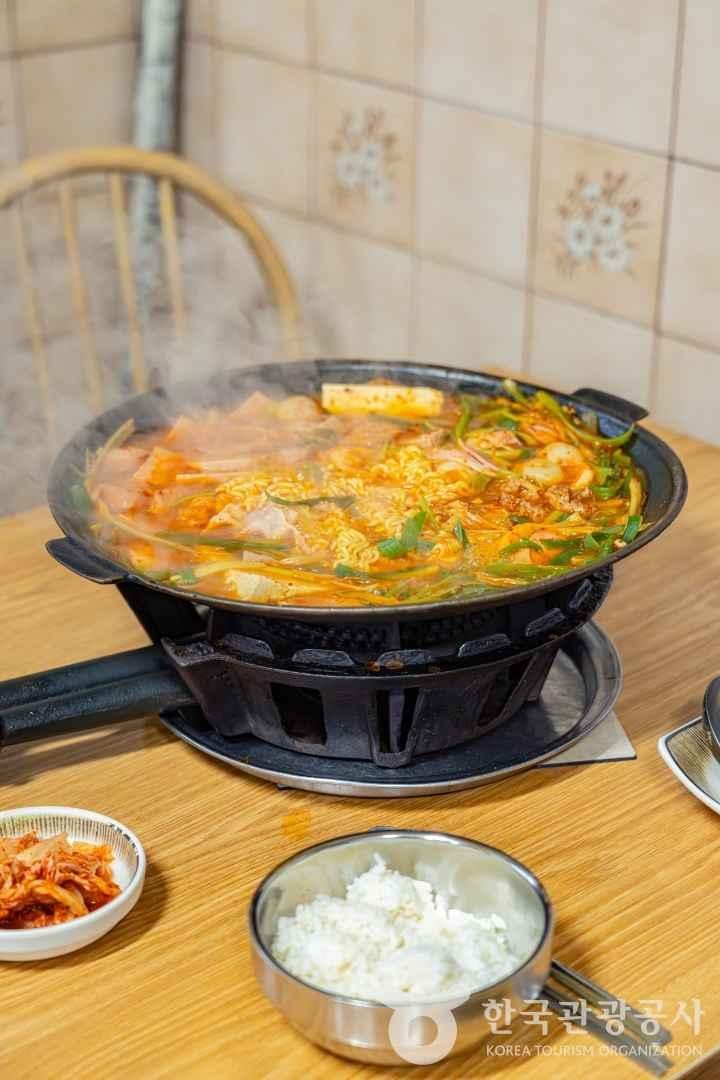
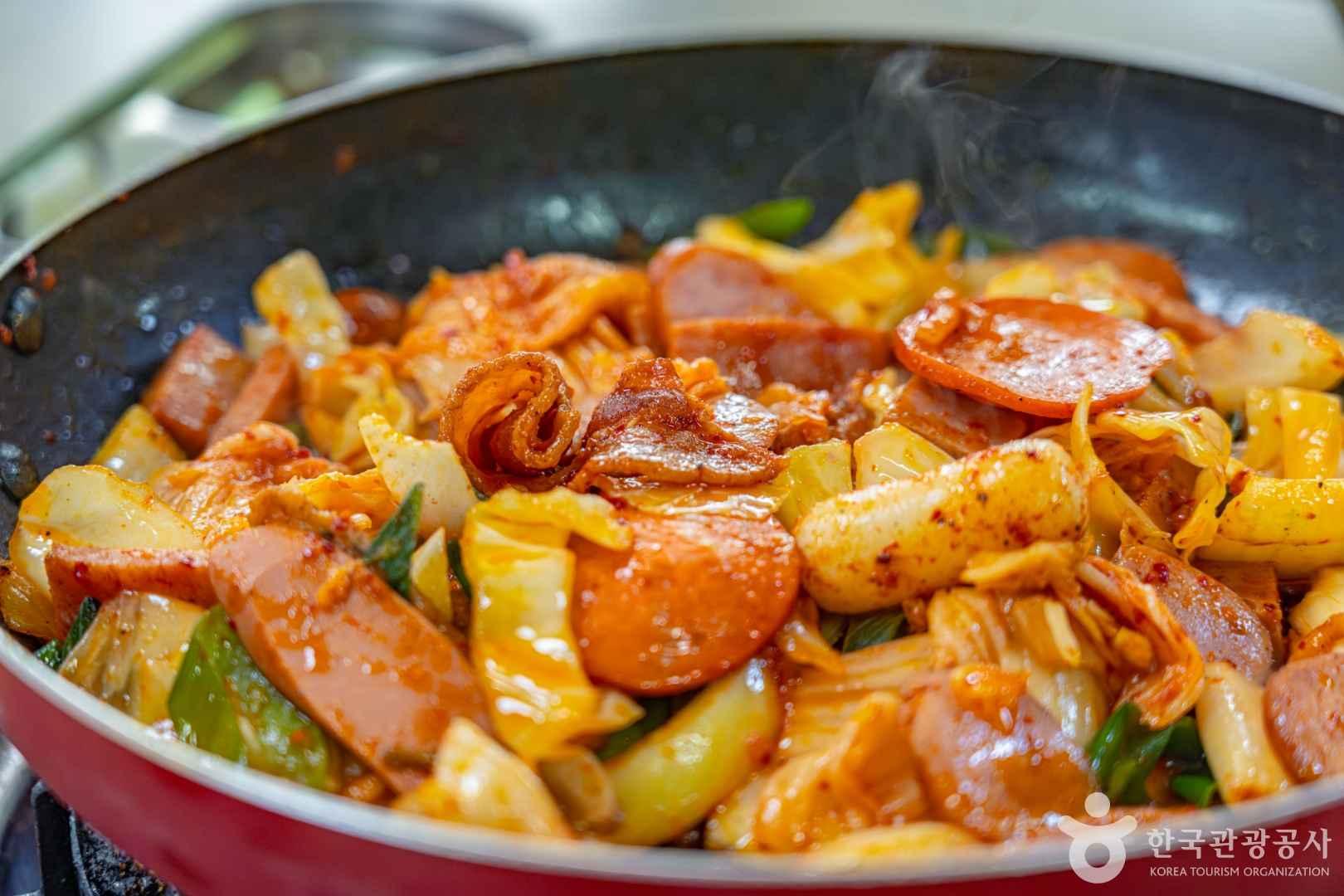
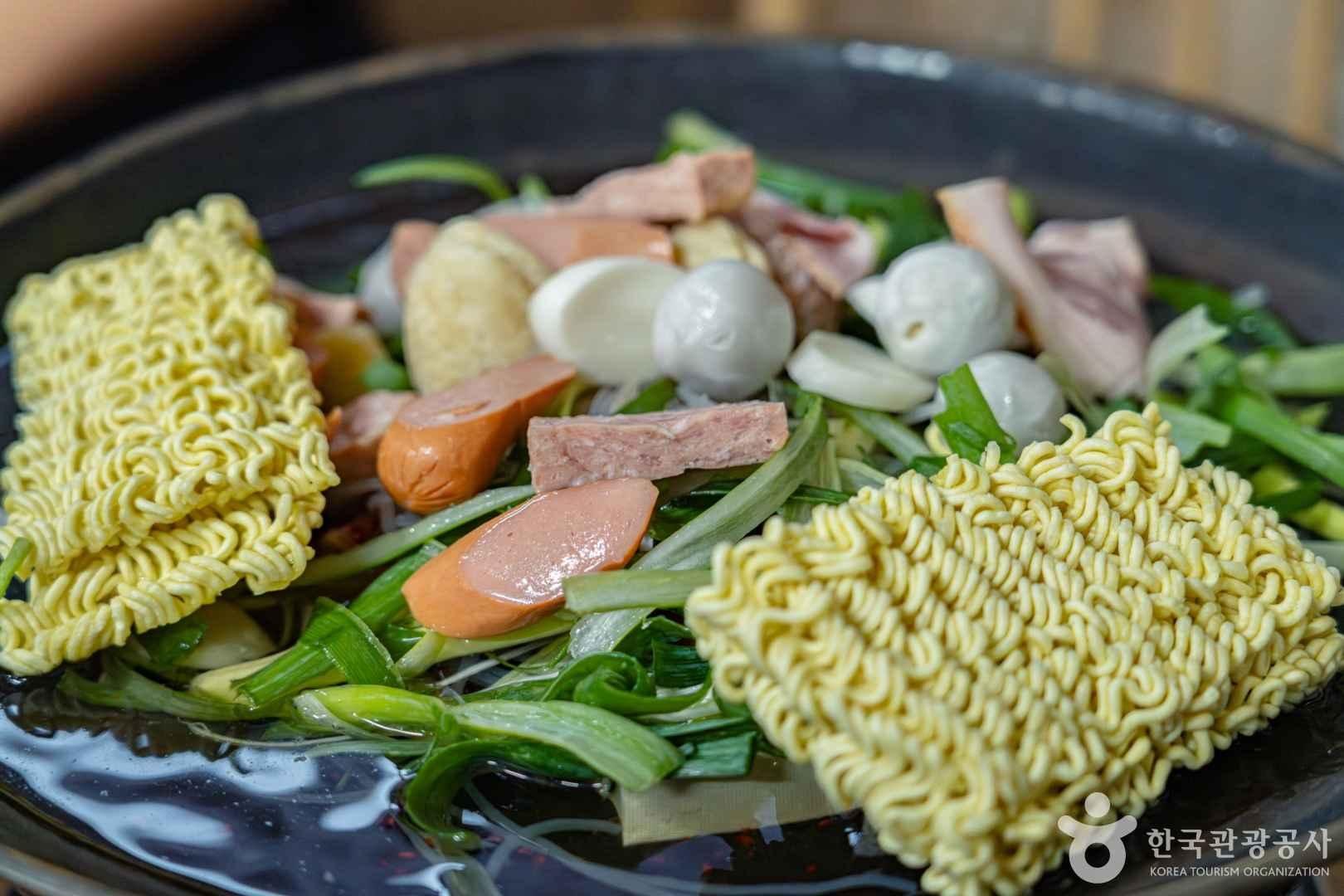
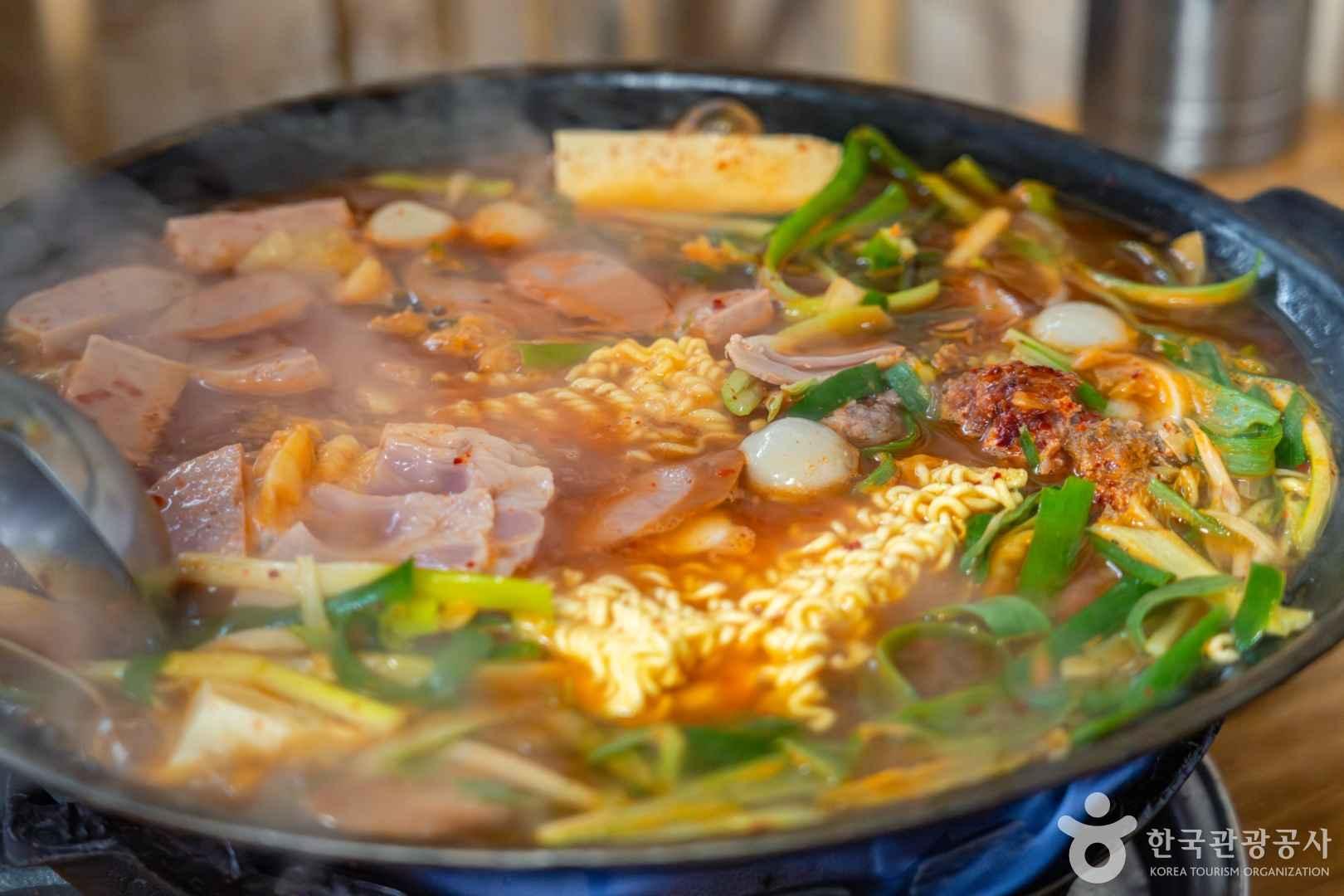
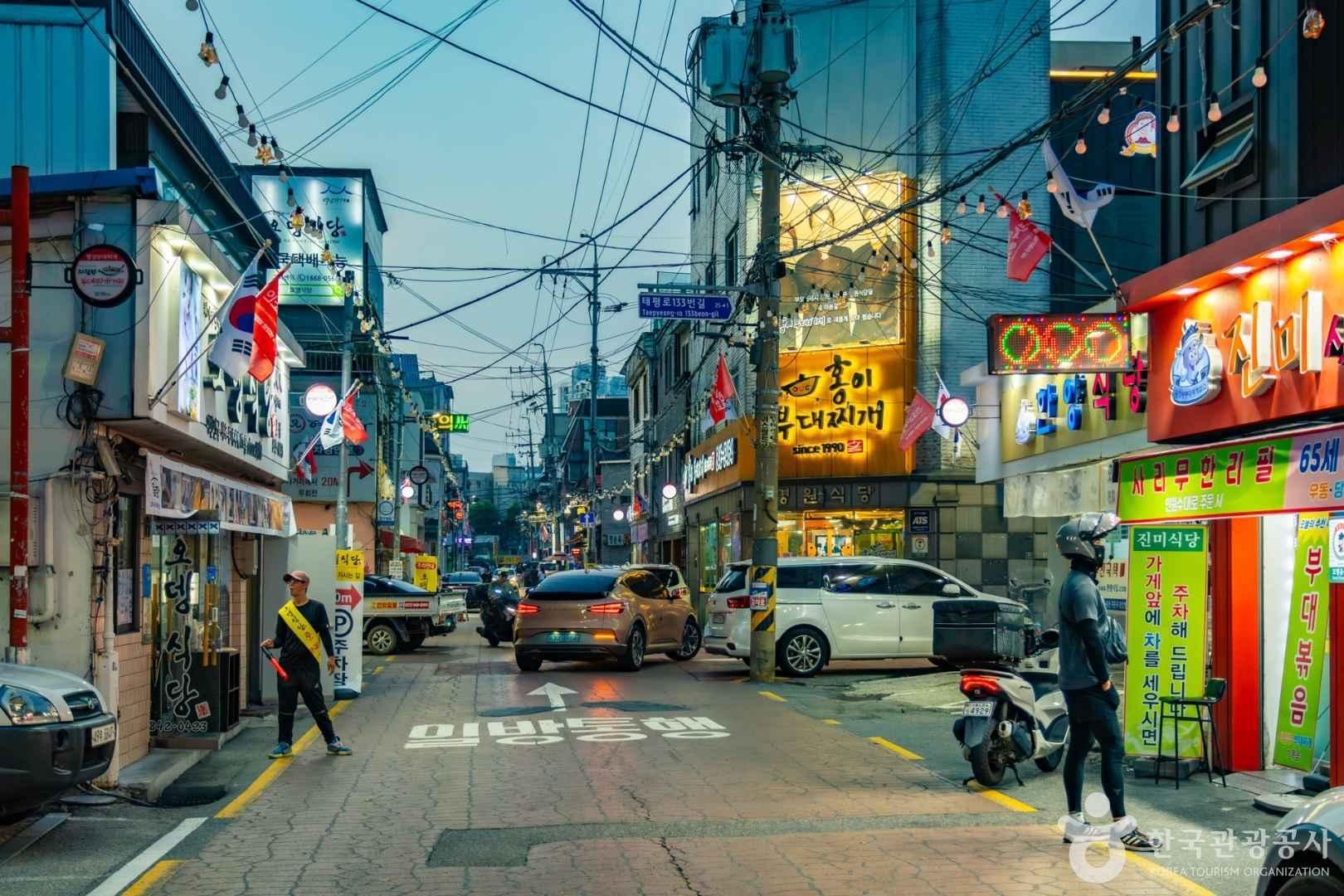
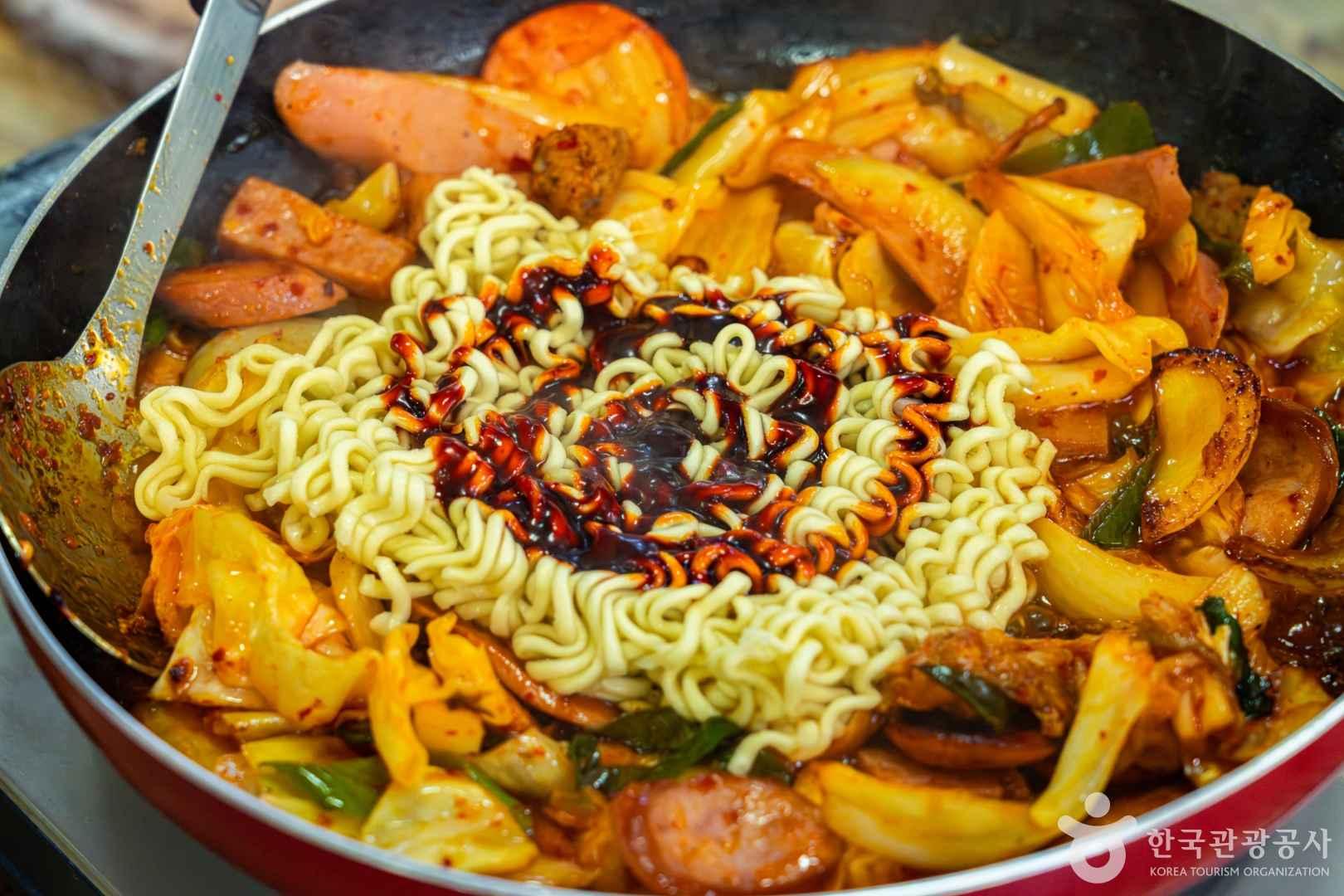
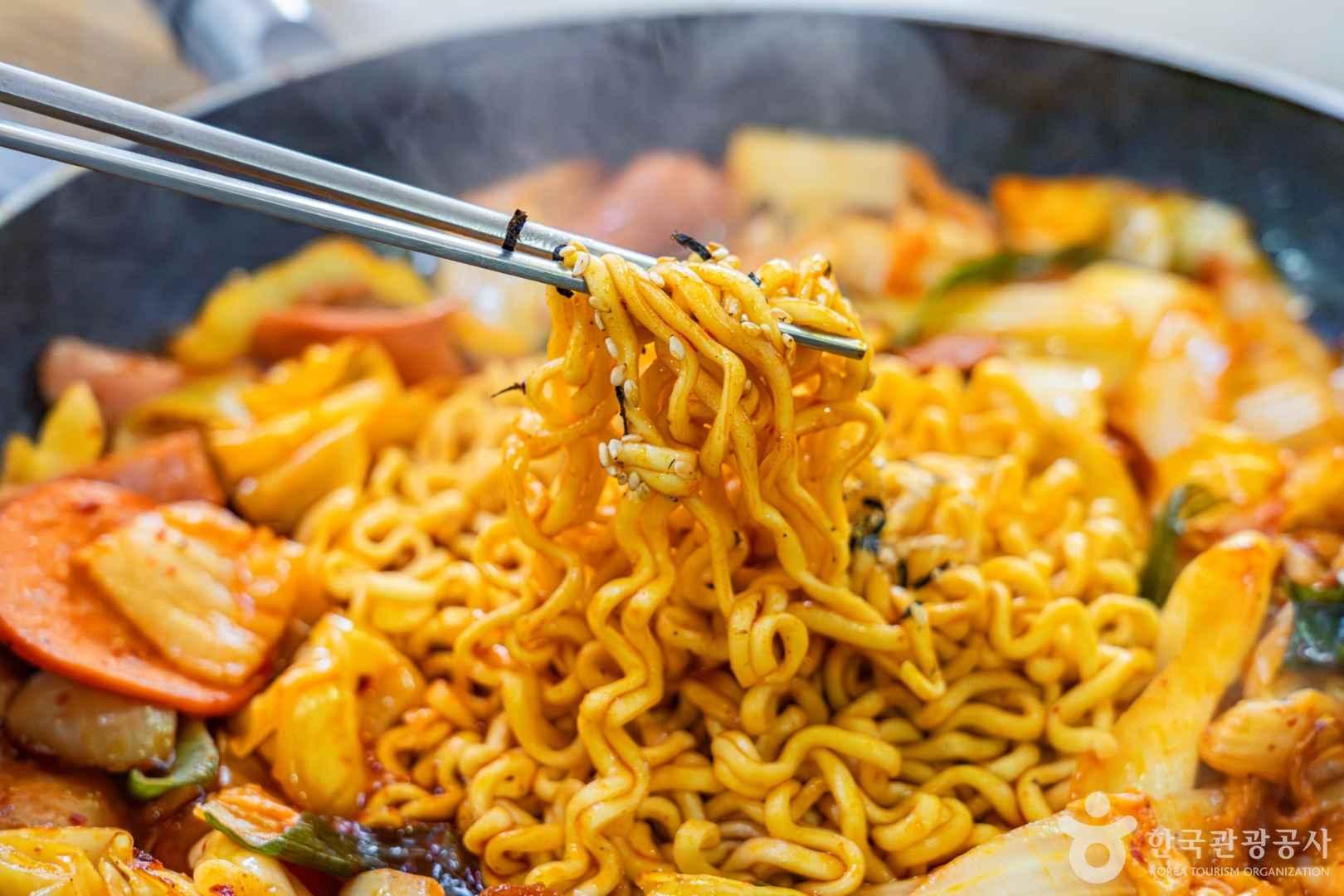
Budaejjigae combines Korean-style kimchi jjigae with Western ingredients like sausage and ham, blending flavors from both cultures. Created in the latter half of the 20th century during a turbulent period in Korean history, this dish symbolizes the fusion of Western ingredients with Korean culinary techniques. Much like K-Culture today, Budaejjigae reinterprets global culture through a distinct Korean sensibility.
History of Budaejjigae
Budaejjigae originated from a jjigae made with aged kimchi, enriched with sausages, ham, and canned beans sourced from American military bases. Following the Korean War, Uijeongbu became home to large U.S. Army garrisons, and by the 1960s, restaurants specializing in budaejjigae began to flourish around Uijeongbu Jeil Market, giving rise to the iconic Budaejjigae Street. In 2008, the city commemorated this legacy by installing a large arched sign reading “Uijeongbu Budaejjigae Street.” Other regions known for budaejjigae include Pyeongtaek and Songtan, also influenced by a large American military presence.
Budaejjigae was not initially enjoyed as a stew. In its early days, it was a stir-fried dish, with sausages, vegetables, kimchi, red pepper paste, red pepper powder cooked together in a frying pan. Over time, it evolved into the hearty stew known today by adding broth to this stir-fried base called budaebokkeum.
Harmony of Ingredients
Koreans often transform aged kimchi into kimchi jjigae, a stew typically made with pork or canned tuna. Ingredients like bean curd, rice cakes, and glass noodles can be added according to preference, with kimchi serving as the unifying element that brings these diverse ingredients together.
Budaejjigae takes this harmony further by incorporating sausages and ham. Kimchi provides a tangy, fiber-rich base but is low in protein and fat, while sausage and ham supply these nutrients abundantly, though they lack fiber. This balance not only complements the nutritional profile of the dish but also enhances its flavor; the bold, spicy notes of Korean seasoning and kimchi cut through the richness of ham and sausage, adding depth and a satisfying kick.
Where to Enjoy Authentic Budaejjigae
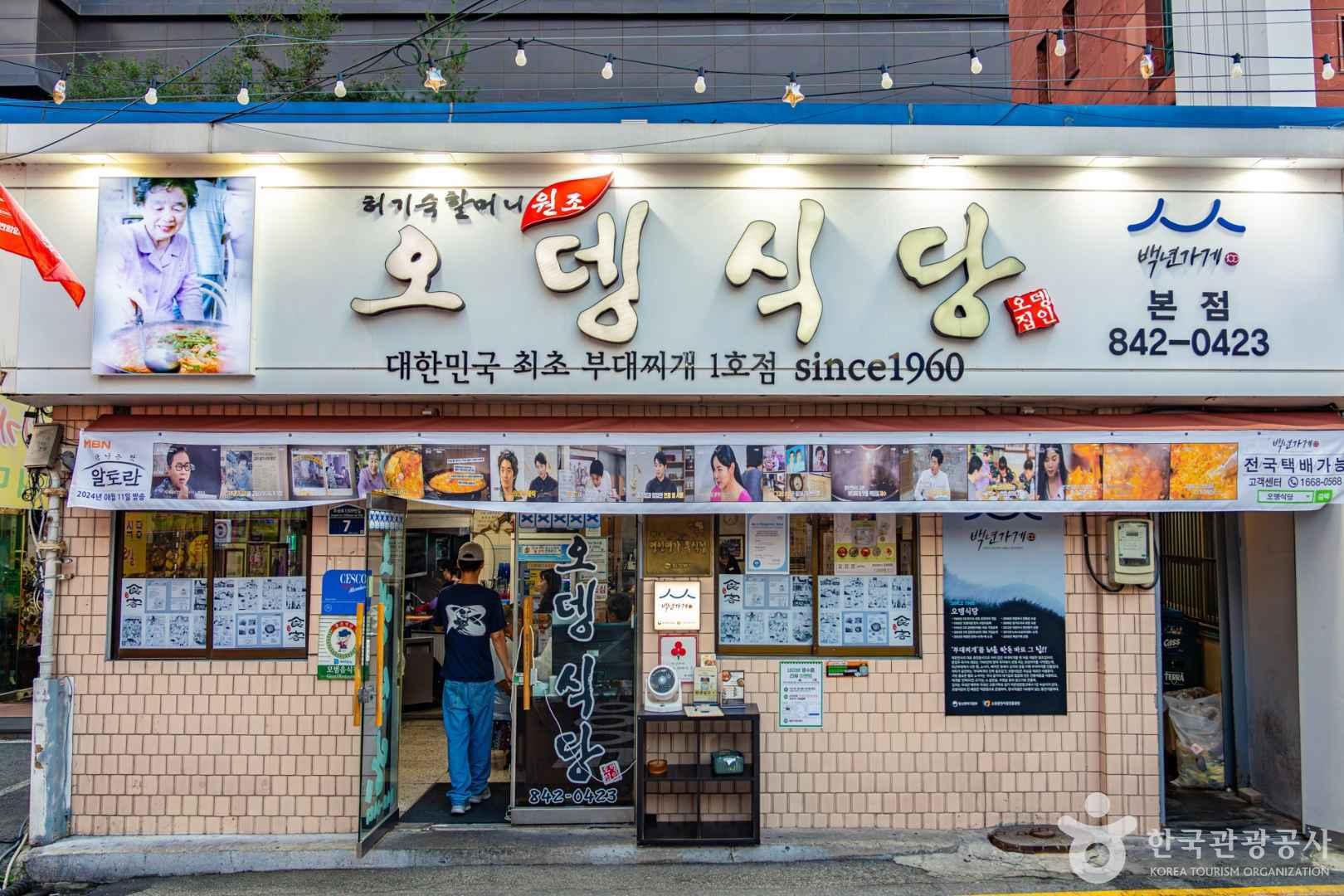
Although budaejjigae may have a shorter history than other traditional jjigae varieties, it has become a cornerstone of Korean cuisine and can be found throughout the country. However, the dish remains closely tied to the city of Uijeongbu. The iconic "Odeng Sikdang," located at Uijeongbu Budaejjigae Street, is often considered the birthplace of budaejjigae. Originally opened as a small stall in 1960 selling eomuk (fish cake), Odeng Sikdang rose to fame for its unique take on jjigae, blending American ingredients with kimchi. This fusion transformed it into the celebrated budaejjigae restaurant known today.
In addition to Odeng Sikdang, numerous budaejjigae restaurants line the streets of Uijeongbu. Although the ingredients are no longer sourced from American bases, the restaurants continue to make their own kimchi and stay true to the traditional flavors.
Budaejjigae Perfected with “Sari”
Another feature of budaejjigae is the option to customize it with a variety of toppings, known as “sari” in Korean culinary culture. This tradition allows diners to enhance completed dishes with extra ingredients. For budaejjigae, you can choose from the usual collection of noodles like ramyeon, glass noodles, and udon, as well as mandu (dumplings), rice cakes, and minced meat. For those eager to try a bit of everything, modum-sari (an assortment of toppings) is the perfect choice.
Once the jjigae has boiled for a while, it’s best to start with the noodles, as they can become overcooked quickly. When the spicy broth has fully infused the ham and sausage, the jjigae can be enjoyed either as a hearty meal with steamed rice or as a flavorful accompaniment to alcoholic beverages.
Restaurants Information
Odeng Sikdang Uijeongbu Main Branch
The origins of Uijeongbu’s budaejjigae tradition trace back to a humble food stall, now operated by the third generation. As budaejjigae grew in popularity, this modest stall evolved into a dedicated restaurant specializing in the iconic dish.

Address:
7 Hoguk-ro 1309beon-gil, Uijeongbu-si, Gyeonggi-do
Contact:
+82-31-842-0423
Signature Menu:
Budaejjigae – 11,000 KRW /
2-person Set Menu – 31,000 KRW /
Cheolpan Budaebokkeum (spicy stir-fried sausage on hot iron plate)
Getting There:
Approx. 70 m from Exit 2 of Uijeongbu Jung-ang Station on U Line
Parking:
Available (up to 30 spaces)
Seating Capacity:
48 seats
Menu Languages:
Korean, English, Japanese, and Chinese
Website:
www.odengsikdang.com (language: Korean)
Jeongtong Budaegogi
Opened in 1973, this budaejjigae restaurant is known for its exceptional flavor, achieved through spicy kimchi and a carefully crafted broth. Another popular menu item is budaebokkeum, a stir-fried, soupless version of the classic jjigae.
Address:
1102 Hoguk-ro, Uijeongbu-si, Gyeonggi-do
Contact:
+82-31-872-7814
Signature Menu:
Budaejjigae (single serving) – 10,000 KRW /
Budaebokkeum (for two) – 24,000 KRW
Getting There:
Approx. 1 km from Exit 1 of Heungseon Station on U Line
Parking:
Available (up to 6 spaces)
Seating Capacity:
60 seats
Menu Languages:
Korean
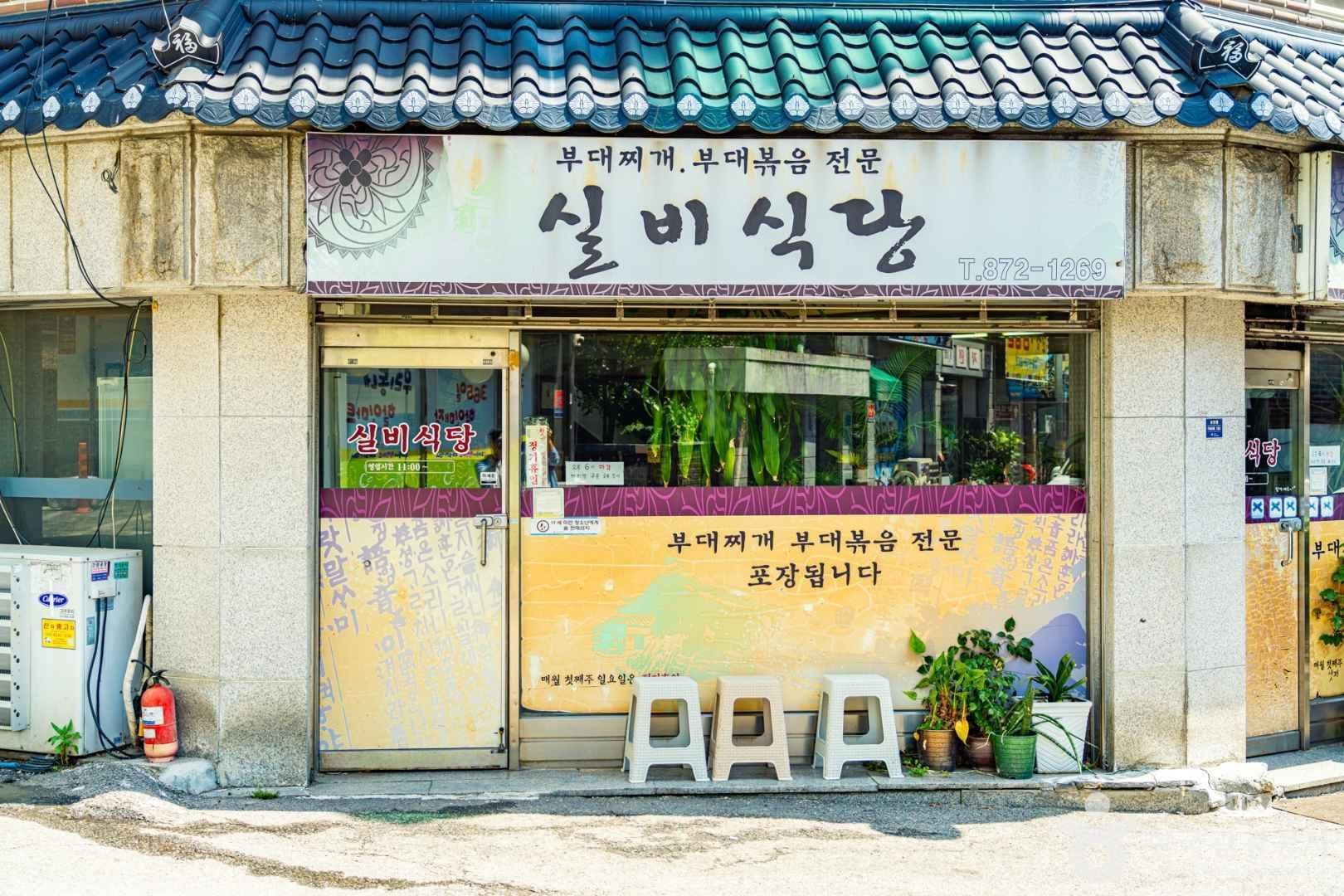
Silbi Sikdang
Opened in 1965, Silbi Sikdang uses its unique sauce to create special budaejjigae and budaebokkeum.
Address:
12 Hoguk-ro 1123beon-gil, Uijeongbu-si, Gyeonggi-do
Contact:
+82-31-872-1269
Signature Menu:
Budaejjigae – 10,000 KRW /
Budaebokkeum – 10,000 KRW
Getting There:
Approx. 800 m from Exit 1 of Heungseon Station on U Line
Parking:
Available (up to 4 spaces)
Seating Capacity:
30 seats
Menu Languages:
Korean
* Content creation & related inquiries:
Tourism Industry Strategy Team

1330 Helpline Call/Chat

Start a FREE Online Call(No charges for calls on Wi-Fi /
Data charges may apply)

Open 1330 Helpline Chat(Download not required)



Open messenger app(Messenger app must be installed)