- Log in
-
- Sydney Overseas Office
- London Overseas Office
- Toronto Overseas Office
- Los Angeles Overseas Office
- New York Overseas Office
- Ulaanbaatar Overseas Office
- Dubai Overseas Office
- New Delhi Overseas Office
- Manila Overseas Office
- Jakarta Overseas Office
- Hanoi Overseas Office
- Kuala Lumpur Overseas Office
- Singapore Overseas Office
- Bangkok Overseas Office
- Map
- Sydney Overseas Office
- London Overseas Office
- Toronto Overseas Office
- Los Angeles Overseas Office
- New York Overseas Office
- Ulaanbaatar Overseas Office
- Dubai Overseas Office
- New Delhi Overseas Office
- Manila Overseas Office
- Jakarta Overseas Office
- Hanoi Overseas Office
- Kuala Lumpur Overseas Office
- Singapore Overseas Office
- Bangkok Overseas Office
- HOME
- Things to Do
- Travel Highlights
-
-
-
South Korea Workation Guide:
Embrace the Digital Nomad Lifestyle-
02/28/2024
-
47.7K
2
2
-
-
Korea_Tour
Korea_Tourism
-
-
-

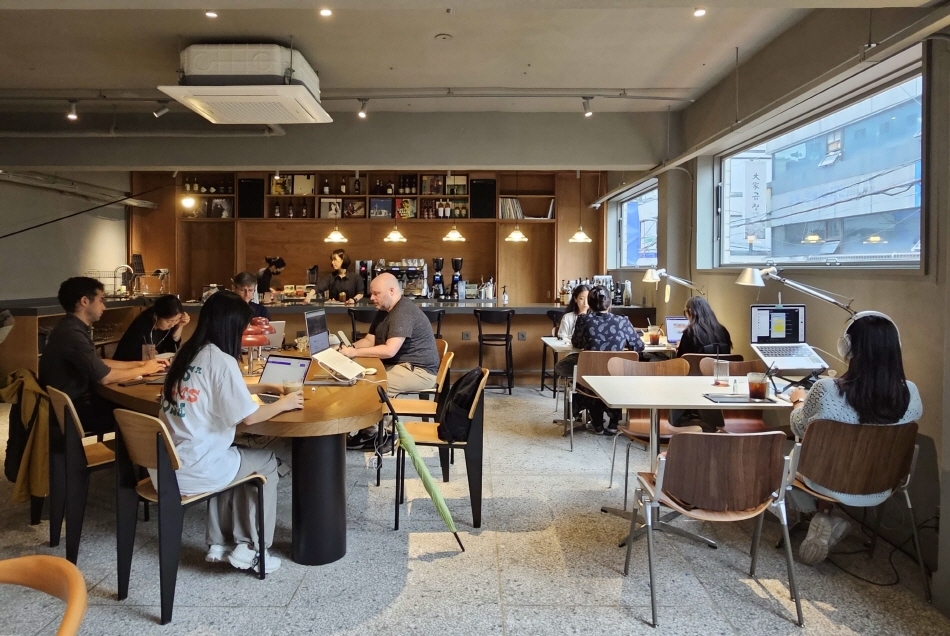
You dream of traveling, but still need to keep working? You’re not alone. As remote work becomes more common around the world, more professionals are combining work with travel and embracing the digital nomad lifestyle.
South Korea offers an appealing environment for a workation, combining fast digital infrastructure, safe and convenient cities, rich cultural experiences, distinctive food and café culture, and easy access to both nature and urban life.What are the advantages of a Workation?
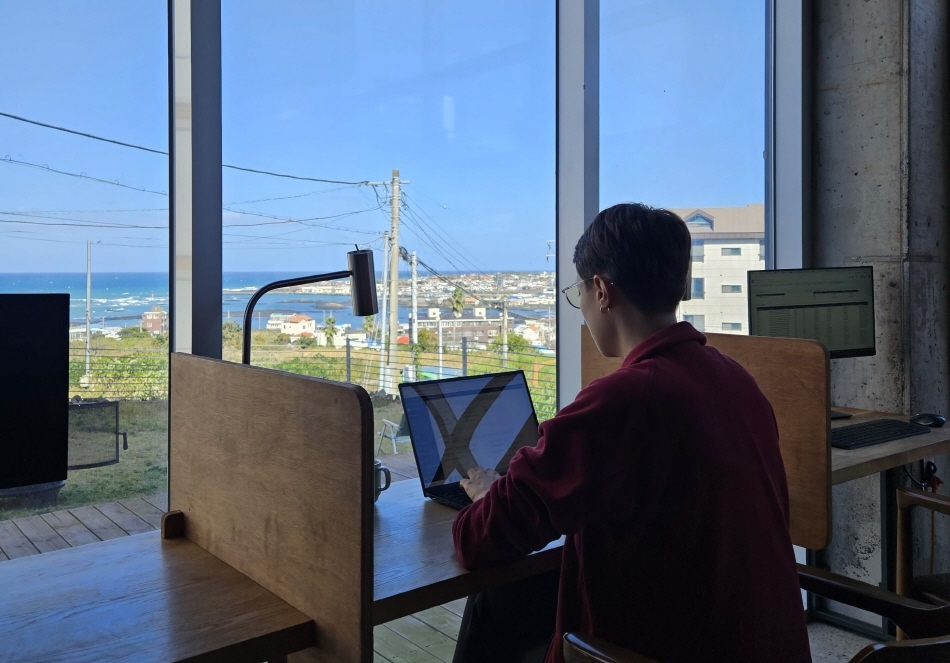
A workation can offer a different rhythm from working at home or from the office:
- • Work-Life Balance: Finish your workday and step directly into a new neighborhood, café, beach, mountain trail, or cultural experience.
- • Fresh Environment and Productivity: A change of surroundings can help break routine, encourage creativity, and create new ways of working.
- • Networking and Community: Coworking and coliving spaces make it easier to meet other remote workers, entrepreneurs, creators, and local communities.
Why is South Korea an ideal Workation for you?

South Korea combines advanced digital infrastructure with convenient transportation, modern cities, diverse natural landscapes, and a distinctive local culture.
Here are six reasons to consider Korea for your next workation:
- • Safety and Convenience: Korea is known for its safe urban environment and highly developed public infrastructure, making everyday life relatively easy for international visitors.
- • Vibrant Café Culture: Cafés are everywhere, and many provide Wi-Fi, power outlets, and comfortable spaces where remote workers can spend a few productive hours.
- • Strong Digital Infrastructure: High-speed internet and widespread mobile connectivity make Korea well suited to remote work.
- • Everyday Convenience: Convenience stores, restaurants, cafés, delivery services, and other amenities are widely available, including many late-night and 24-hour options.
- • Efficient Public Transportation: Extensive subway, bus, rail, and intercity transport networks make it easy to work in one city while exploring other parts of the country.
- • Rich Food and Culture: From traditional markets and regional dishes to contemporary cafés, music, design, and cultural heritage, Korea offers plenty to explore beyond working hours.
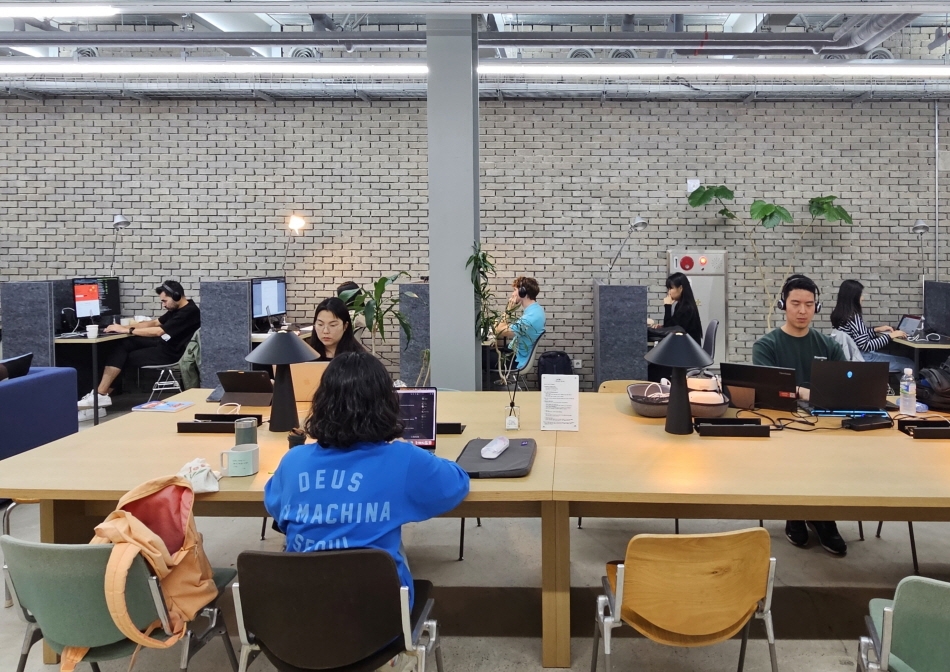
Many local governments in Korea also operate workation programs designed to attract remote workers and longer-stay visitors.
For example, Busan operates a dedicated workation program connecting coworking spaces, accommodation options, local experiences, and events. Current programs and benefits can be found on the Busan Workation website.
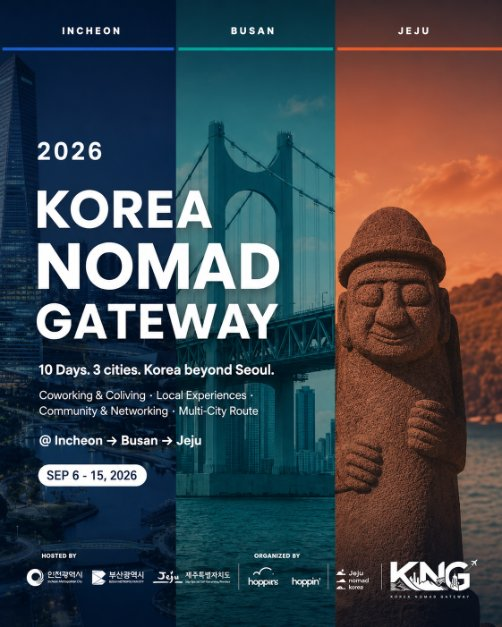
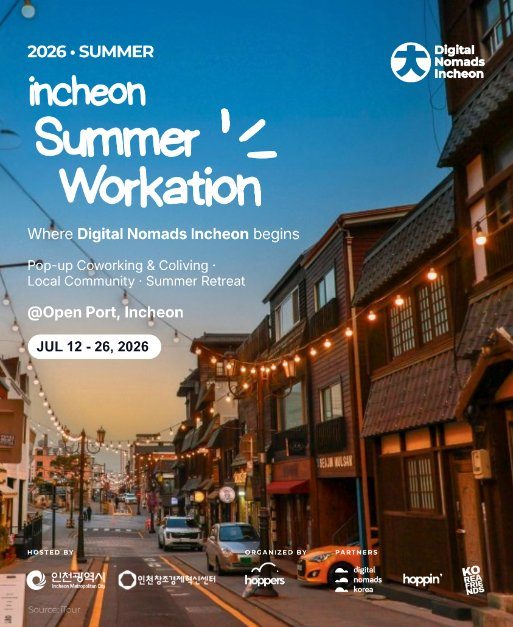
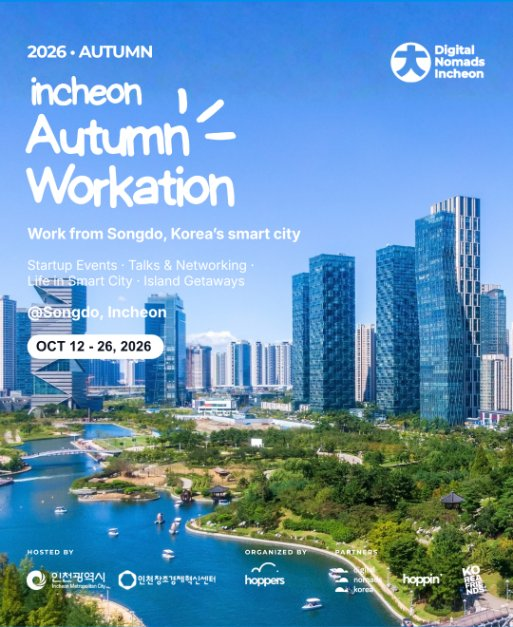
Incheon also runs Digital Nomads Incheon, a workation program designed for international remote workers to experience different parts of the city while working and connecting with local communities. The program brings together coworking, local experiences, and community activities across areas such as Songdo, the historic Incheon Open Port district, and Ganghwado Island. Current programs can be found on the Digital Nomads Incheon website.Another example is Korea Nomad Gateway, a government-supported multi-city workation connecting Incheon, Busan, and Jeju. Designed for international remote workers, the program combines coworking, local experiences, and community activities across three different regional bases, offering participants a way to experience Korea beyond a single destination. Current program information can be found on the Korea Nomad Gateway website.
You can also consider workation and community programs organized by Hoppin and NomadHer for a more immersive local experience. Hoppin operates workation programs and community events connected with Digital Nomads Korea , a community of international and local digital nomads in Korea. NomadHer organizes travel experiences for female solo travelers from around the world.
These programs can be a useful way to meet like-minded people and connect with local communities while traveling in Korea.
Do I need a visa for Workation in Korea?

Entry and visa requirements vary depending on your nationality, length of stay, and purpose of visit. Travelers should always check the latest immigration requirements before traveling to Korea.
South Korea offers the F-1-D Workation Visa, commonly known as the Digital Nomad Visa, for eligible foreign remote workers.
Originally introduced as a pilot program in 2024, the visa transitioned to full implementation on June 30, 2026, with revised income requirements and an extended maximum period of stay.
The F-1-D visa is initially granted for up to one year and may be extended one year at a time, allowing eligible applicants to stay in Korea for a maximum of three years.Applicants generally need to:
- • Be 18 years old or older
- • Work remotely for an overseas company or operate a business based outside Korea
- • Have at least one year of work experience in the relevant industry
- • Meet the applicable income requirement based on age and intended place of residence in Korea
- • Hold medical insurance covering at least KRW 100 million for medical treatment and repatriation
The visa is intended for remote work connected to employment or business outside Korea; local employment activities in Korea are restricted under this visa.
For applications under the current 2026 standard, Korea’s 2025 GNI per capita is KRW 52,416,000. The minimum annual income requirement varies by age and intended place of residence:
- • Ages 18–34
- • Seoul Metropolitan Area: at least KRW 78,624,000 (1.5× GNI per capita)
- • Non-metropolitan areas or designated population-declining/at-risk regions: at least KRW 52,416,000 (1× GNI per capita)
- Ages 35 and above
- Seoul Metropolitan Area: at least KRW 104,832,000 (2× GNI per capita)
- Non-metropolitan areas or designated population-declining/at-risk regions: at least KRW 78,624,000 (1.5× GNI per capita)
The Seoul Metropolitan Area includes Seoul, Incheon, and Gyeonggi-do Province. Additional requirements may apply when accompanying family members are included in the application.
Because visa requirements and income thresholds can change, applicants should confirm the latest official requirements through the Korea Visa Portal and the Korean embassy or consulate responsible for their place of residence.
For a practical guide to the visa and living in Korea as a remote worker, see Digital Nomads Korea’s Digital Nomad Visa Guide.What about a Working Holiday Visa?
For eligible nationalities, the H-1 Working Holiday Visa may also be an option for an extended stay in Korea.
Age limits, maximum stay, employment conditions, quotas, and other requirements vary depending on the agreement between Korea and each participating country or region. Travelers should therefore check their country-specific requirements through the Korea Working Holiday Info Center or the Korean embassy or consulate responsible for their place of residence.
More info
- 1330 Korea Travel Helpline: +82-2-1330
- 1330 Text Chat: https://m.site.naver.com/1rEid
- (Korean, English, Japanese, Chinese, Russian, Vietnamese, Thai, and Indonesian)
* This column was made and managed by the Europe, Americas, Oceania Team of Korea Tourism Organization.
* This column was last updated in February 2024, and therefore information may differ from what is presented here. We advise you to confirm details before visiting.
-


Start a FREE Online Call
(No charges for calls on Wi-Fi /
Data charges may apply)

Open 1330 Helpline Chat(Download not required)