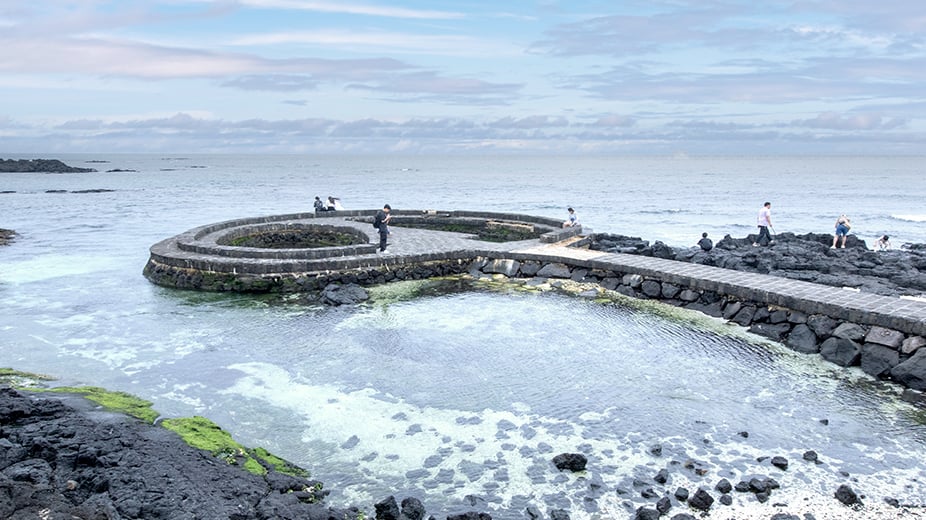
Romance flows in Jeju. Blue waves crash and break into brilliant white on the beach, while the Jungsangan region hosts a green celebration of nature with its lush forests. From parasitic cones that unfold like gentle petals blooming out of the earth to waterfalls that descend majestically from the sky, no matter where you go in Jeju, you can feel the beauty of nature touch your heart.
Jeju is an island shaped by volcanoes, stretching 41km from south to north and 73km from east to west. Its volcanic nature can be found in the nearly 370 parasitic cones that dot the island, lava tubes, spring water (yongcheonsu) rising from between the rocks or strata, and the Gotjawal, woods where trees and rocks blend together. The scenery is unique and unforgettable, making it one of the top travel destinations not only in Korea but also globally. According to data released by Statistics Korea, 15.28 million tourists visited Jeju in 2019 before the COVID-19 outbreak, of which 1.72 million were international visitors. The main attraction of Jeju that attracts so many people is, of course, nature. Whether you're climbing Hallasan Mountain, touring the parasitic cones, or swimming in the ocean, you are always surrounded by dazzling views. Jeju has been recognized for its outstanding beauty with three UNESCO recognitions, starting with its designation as a Biosphere Reserve in 2002, Korea's first World Natural Heritage Site in 2007, and as a World Geopark in 2010.
But nature is not the end of Jeju. It’s a paradise for active travelers, with plenty of things to do, like surfing, snorkeling, and horseback riding. Trend-leading and chic cafés and select shops add to the joy of traveling. Restaurants serving dishes made with black pork, cutlass fish, and other foodstuff nurtured by the island deliver amazing flavors. Thus, your trip to Jeju satisfies your five senses.
Jeju black pork is known among Koreans as a musthave specialty in Jeju for its superlative quality and taste, differing significantly from pork grown in the mainland. There are plenty of restaurants serving grilled black pork in jeju, and there’s no shortage of appetizing products made with processed black pork as well.
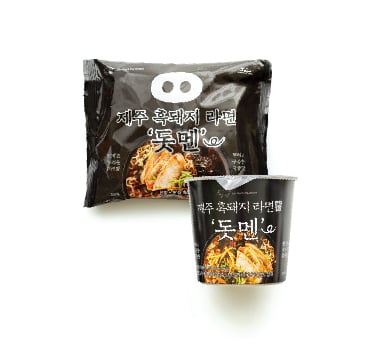 | RAMYEON Surprisingly, this ramyeon is made with black pork. The broth captures the deep flavors of black pork, in which plump and chewy noodles swim as vehicles of that flavor. Don’t forget to add some cold rice to the soup after finishing the ramyeon. Cold rice soaks up all the good stuff from the broth, and before long, you will be staring into the base of the bowl.
|
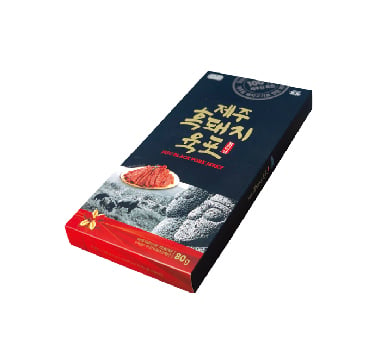 | BLACK PORK JERKY What could be a better snack for a traveler than a jerky? Black pork jerky is a worthy part of any gourmand trip in Jeju. It is sourced from Jeju black pigs grown with eco-friendly means, and the oak smoking process gives the jerky an excellent flavor and fragrance. What’s more, it is made according to traditional Korean methods, where the meat is first trimmed of fat, sliced thin, and spiced in soy sauce and other condiments.
|
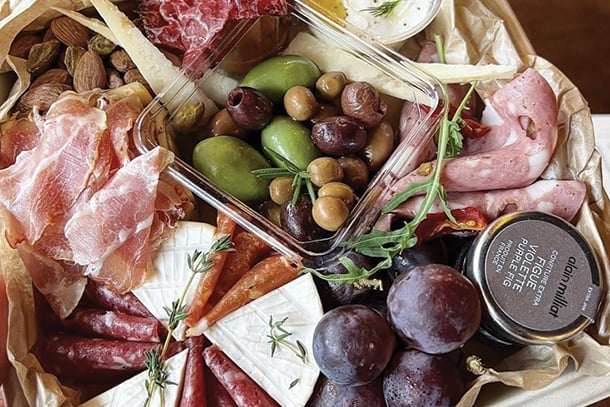
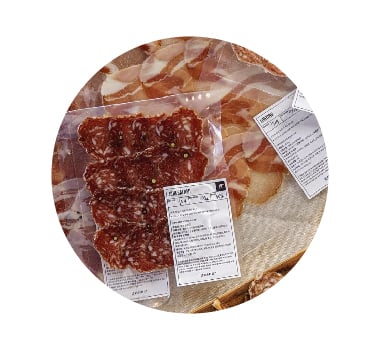 | CHARCUTERIE Now, this is a gourmet experience special to Jeju: Handmade Charcuterie, made by a chef trained in Europe using premium Jeju black pork, elevates the flavors of your trip in Jeju. The plate includes the full range of favorites such as salami, jambon, mortadella, prosciutto, and sausages, all the best ways to enjoy the flavors of Jeju black pork.
|