
- Log in
-
- Sydney Overseas Office
- London Overseas Office
- Toronto Overseas Office
- Los Angeles Overseas Office
- New York Overseas Office
- Ulaanbaatar Overseas Office
- Dubai Overseas Office
- New Delhi Overseas Office
- Manila Overseas Office
- Jakarta Overseas Office
- Hanoi Overseas Office
- Kuala Lumpur Overseas Office
- Singapore Overseas Office
- Bangkok Overseas Office
- Map
- Sydney Overseas Office
- London Overseas Office
- Toronto Overseas Office
- Los Angeles Overseas Office
- New York Overseas Office
- Ulaanbaatar Overseas Office
- Dubai Overseas Office
- New Delhi Overseas Office
- Manila Overseas Office
- Jakarta Overseas Office
- Hanoi Overseas Office
- Kuala Lumpur Overseas Office
- Singapore Overseas Office
- Bangkok Overseas Office
Wellness Story
-
-
-
Awon Museum & Hotel
-
07/18/2024
-
1.6K
2
3
-
-
wellness
-
-
-
Meet a New Version of Yourself Through Pure Rest
: Awon Museum & Hotel in Wanju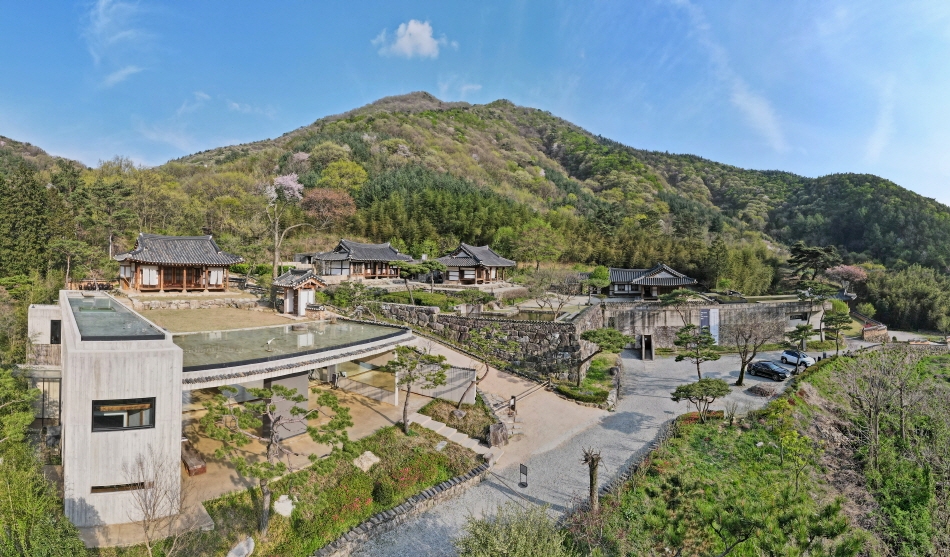
Rest is not just about staying still. While staying still may signify the end of a motion, rest is the starting point of a new beginning. In an age and society characterized by bustling movement, rest is not a choice but a necessity for well-being. It allows you to empty yourself and create space for new energy. Awon Museum & Hotel is a space dedicated to this concept of rest.
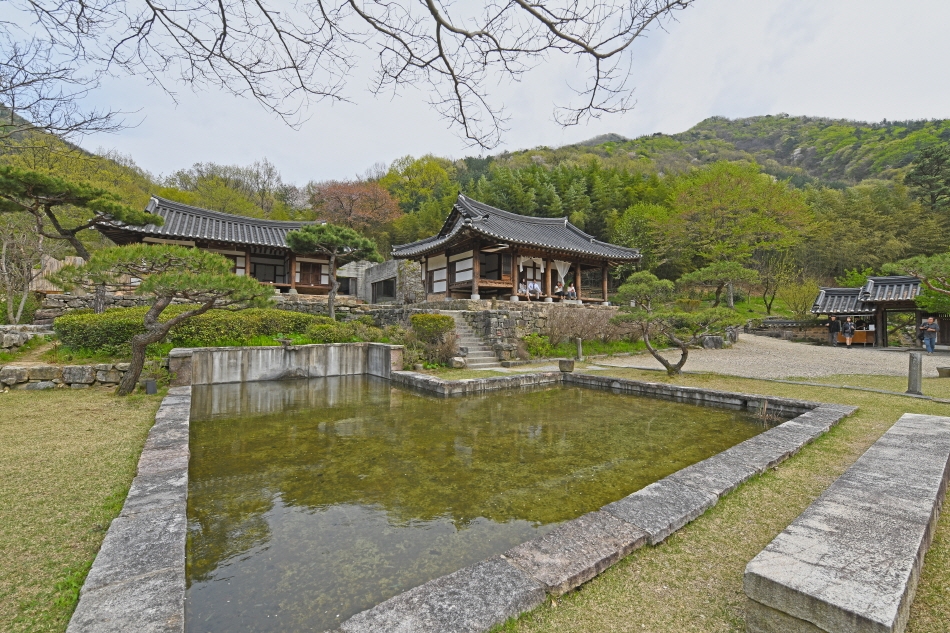
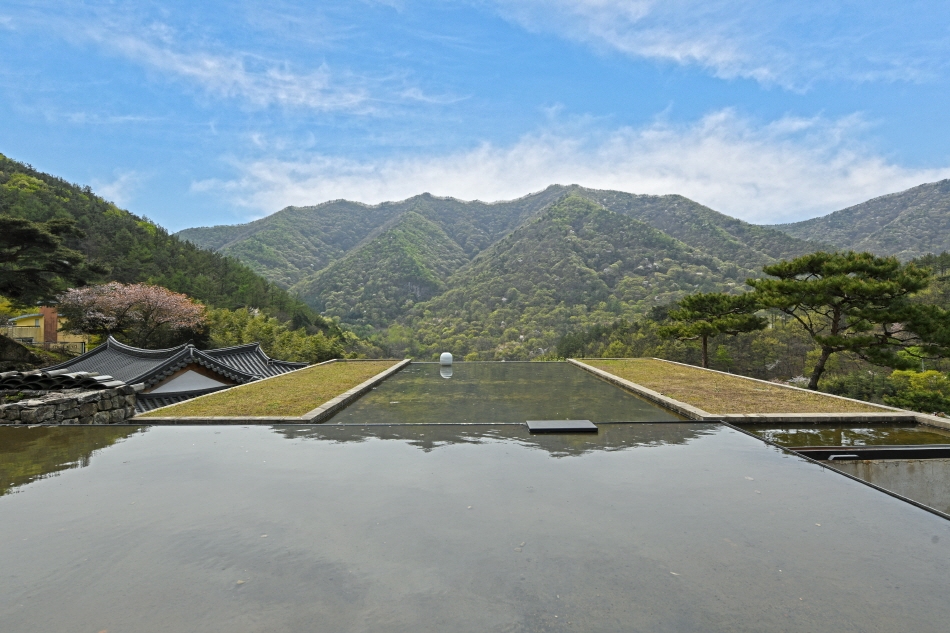
The name “Awon” (我園) means “our garden”. Gardens are quite rare in Korea, where many people live in rectangular concrete apartments. Here, mountain birds gather at windowsills in the morning, and trees, rooted in fine earth, fill the space with new colors throughout the seasons. The beauty of the pond, with its breeze-ruffled surface, is simply enchanting. Old houses add a unique charm to the gardens, making them truly shine. Awon’s houses, relocated and rebuilt from Jinju, Gyeongsangnam-do, and Hampyeong, Jeollanam-do, embody stories that are at least 200 years old and up to 250 years old. Their beauty has been showcased worldwide through the “2019 BTS Summer Package in Korea”, courtesy of BTS.
“Our Garden”, Where the Past and the Present Coexist
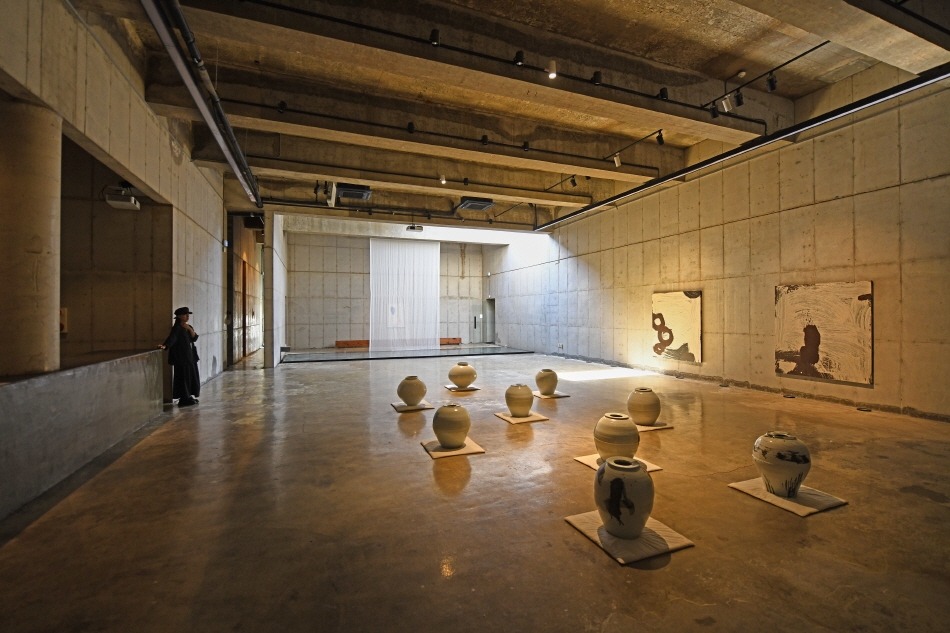
Awon Museum & Hotel was built on a slope with retaining walls supporting the garden and buildings. This allowed the creation of a museum and gallery space beneath the garden. Awon Museum, a media center within a hanok building, hosts two to three contemporary art exhibitions each year.
Climbing the narrow staircase that connects the museum and the garden leads travelers to a series of elegant historic houses. Manhyujeong stands to the left of the dainty gate. Opposite Manhyujeong are the Sarangchae and Anchae buildings. Byeolchae, an exposed concrete building behind Sarangchae, is the only modern style building in the complex. Seodang, the most recent addition to the complex, added in January 2023, is located next to Sarangchae. Its hanok building is designed as a detached space equipped with its own gate, stone fences, and individual garden.
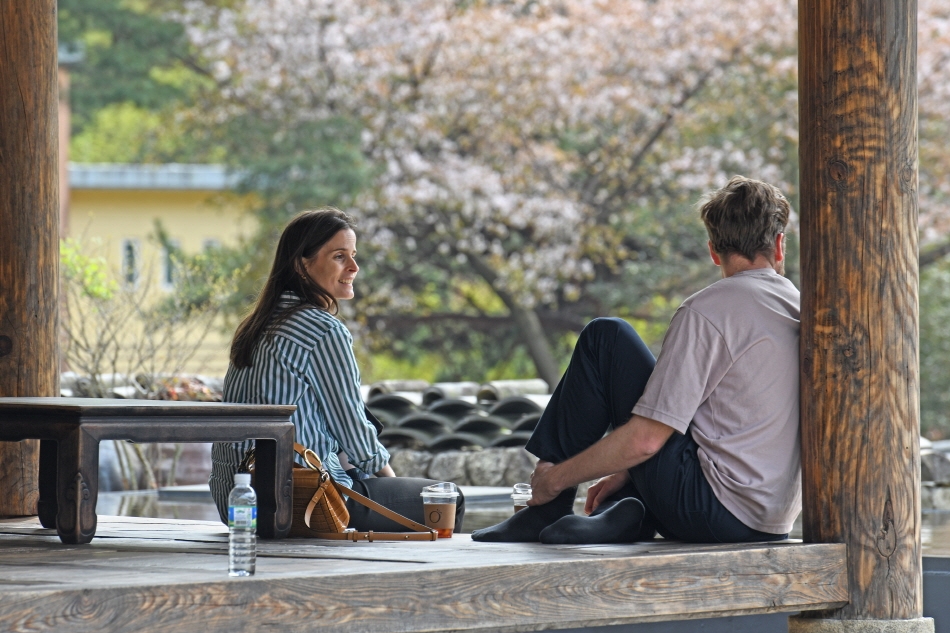
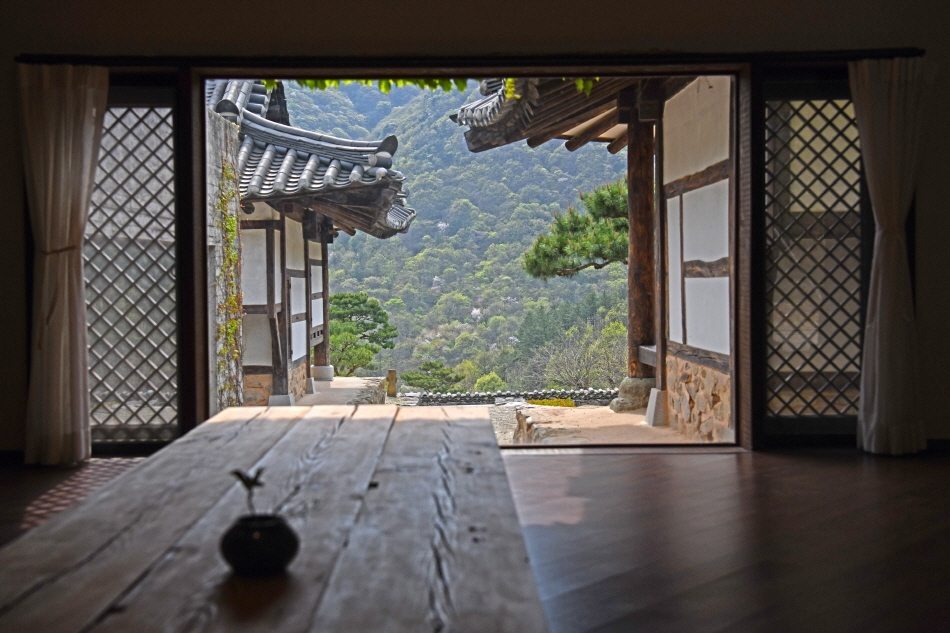
All spaces in Awon Museum & Hotel, except for the guest rooms, are open to the public during specific hours (12:00-16:00, KRW 10,000). During these hours, anyone can enjoy the beautiful view of Jongnamsan Mountain with a fragrant cup of coffee in the open spaces of each hanok.
Hotel Luxuries Added to the Elegance of Hanok Buildings
The true charm of Awon Museum & Hotel is best experienced with an overnight stay. While historic hanok buildings are often stereotyped as lacking comfort, the buildings at Awon Museum & Hotel defy this stereotype. All accommodation spaces were designed and remodeled with modern comfort in mind when they were relocated and rebuilt. This allowed for the preservation of the hanok buildings’ elegance, with amenities such as restrooms and outdoor bath facilities thoughtfully integrated into available spaces. Seodang, the latest addition to the complex, features a cypress bath in addition to the outdoor bath. Of course, all rooms offer great views from their windows.
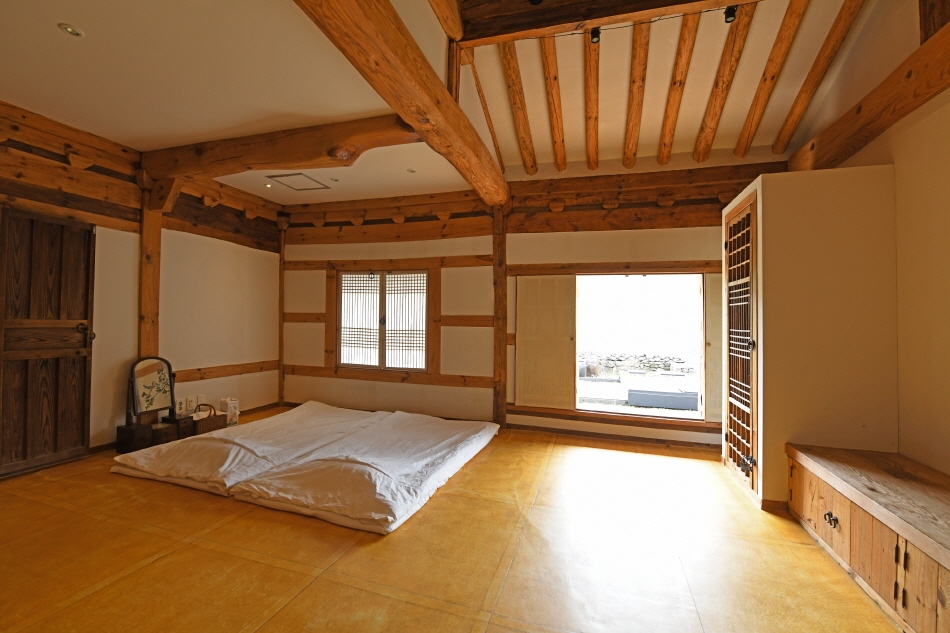
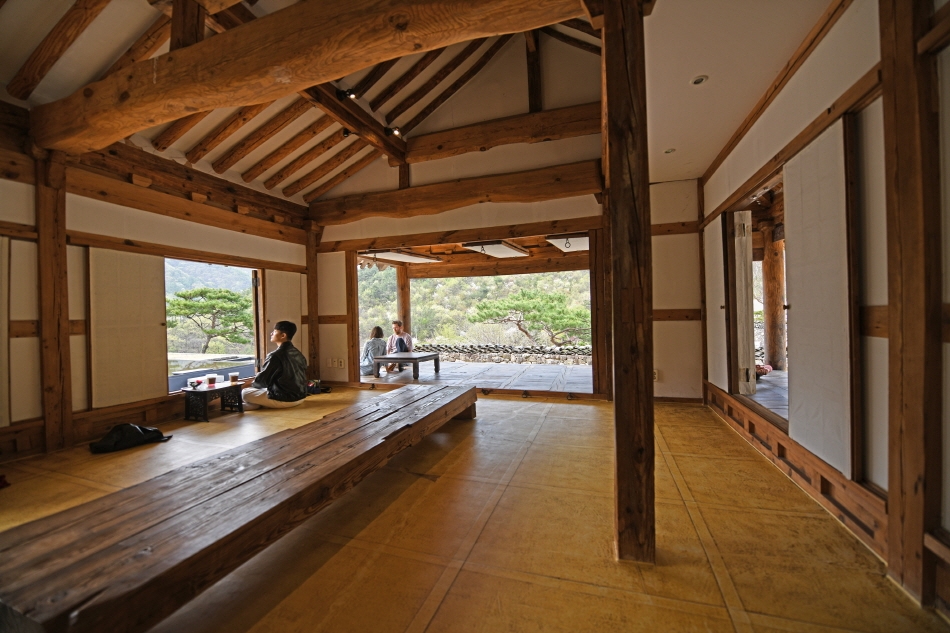
The rooms themselves are equipped with a full range of amenities, from air conditioning to electric kettles, hair dryers, tea sets, towels, toiletries, and bottled water. Manhyujeong and Byeolchae are both divided into different units, while all other buildings are offered as individual units. To ensure the comfort of all visitors and guests, Awon Museum & Hotel prohibits companion dogs and children under the age of 8 from entering or staying in the accommodation units.
Wellness Program
Awon Museum & Hotel offers complimentary breakfast and tea ceremony experience programs to all guests. The breakfast features an elegant bowl of scorched rice soup, freshly boiled every morning, accompanied by six seasonal side dishes, boiled eggs, and pour-over coffee (or tea). The side dishes avoid artificial flavoring, providing gentler, healthier flavors, much like an overnight stay at Awon Museum & Hotel. The tea ceremony program, held in the Tea Room at Manhyujeong, is designed as a comfortable conversation session with an expert on topics related to tea, featuring Hadong green tea.
NOTE
-
Address
516-7 Songgwangsuman-ro, Soyang-myeon, Wanju-gun, Jeollabuk-do
-
Inquiries
+82-63-241-8195
- Website
-
Opening Hours
16:00 (check-in) - 10:30 (check-out) / Breakfast 08:30
① Manhyujeong (Main Room): Double occupancy (up to 4) / Weekdays KRW 280,000 / Weekends KRW 310,000 / High-season KRW 340,000 / KRW 30,000 surcharge for each additional guest
② Manhyujeong (Side Room): Double occupancy (up to 2) / Weekdays KRW 250,000 / Weekends KRW 280,000 / High-season KRW 310,000
③ Manhyujeong (Tea Room): KRW 200,000 (no overnight stay)
④ Sarangchae: Double occupancy (up to 4) / Weekdays KRW 470,000 / Weekends KRW 500,000 / High-season KRW 530,000 / KRW 30,000 surcharge for each additional guest
⑤ Anchae: Double occupancy (up to 3) / Weekdays KRW 430,000 / Weekends KRW 460,000 / High-season KRW 490,000 / KRW 30,000 surcharge for each additional guest
⑥ Byeolchae A: Double occupancy (up to 4) / Weekdays KRW 470,000 / Weekends KRW 520,000 / High-season KRW 570,000 / KRW 50,000 surcharge for each additional guest
⑥ Byeolchae B: Double occupancy (up to 4) / Weekdays KRW 400,000 / Weekends KRW 450,000 / High-season KRW 500,000 / KRW 50,000 surcharge for each additional guest
⑧ Seodang: Double occupancy (up to 5) / Weekdays KRW 800,000 / Weekends KRW 900,000 / High-season KRW 1,000,000 / KRW 100,000 surcharge for each additional guest
※ Weekdays (Sunday – Thursday), weekends (Friday, Saturday, the day before holiday, holidays), high-season (April - May & July - August)
-
TranspTprtation
▪ [Bus] Seoul - Samnye, 15 times per day from Seoul Nambu Bus Terminal (06:15-20:05); duration - 2 hr. 10 min. - 3 hr. 10 min.; Take bus 381 from Samnye Bus Terminal Bus Stop and transfer to bus 806 at Moraenae Bus Stop. Disembark at Oseong Pungnyu School Bus Stop. Walk 120m to Awon Museum & Hotel.
▪ [Train] Yongsan Station-Samnye Station, Mugunghwa trains depart 8 times per day (05:46-22:45); duration - approx. 3 hr. 20 min.
Walk from Samnye Station to Samnye Useong Apartments Bus Stop. Take bus 337 and transfer to bus 806 at Moraenae Bus Stop. Disembark at Oseong Pungnyu School Bus Stop. Walk 120m to Awon Museum & Hotel.
[Recommended Tourist Sites]
Wibongsanseong Fortress
Wanju’s Wibongsanseong Fortress (historic site) was constructed in the first year of King Sukjong of Joseon (1675) by the order of Kwon Dae-jae, Provincial Governor and Magistrate of Jeolla, as an emergency site for the evacuation of the Portrait of King Taejo of Joseon, which is enshrined in Jeonju’s Gyeonggijeon Shrine. Indeed, the royal portrait and the memorial tablet were once evacuated to the fortress when Jeonju fell during the Donghak Peasant Revolution. Wibongsanseong Fortress has a perimeter of about 8,539 meters and a height of 1.8 to 2.6 meters. Most of the fortifications, gates, emplacements, walls, embrasures, and hidden passages are well preserved, making the fortress a valuable historical reference for the study of late Joseon fortification construction. Wanju County counts Wibongsanseong Fortress as one of the Six Views of Wanju, along with Wibongpokpo Falls and Wibongsa Temple.
NOTE
-
Address
Daeheung-ri, Soyang-myeon, Wanju-gun, Jeollabuk-do
-
nquiries
+82-63-240-4224
Songgwangsa Temple
Songgwangsa Temple is a non-mountainous temple located under Jongnamsan Mountain in Wanju. It shares its name and Chinese characters with Suncheon’s Songgwangsa Temple, one of the “Three Jewels Temples” of Korea. The most striking feature of Wanju’s Songgwangsa Temple is its Bell Tower, the only cross-shaped, two-story bell tower from the Joseon period, designated as a Treasure. Songgwangsa Temple also boasts many other nationally designated Treasures, such as the Daeungjeon Hall, the Clay Four Guardian Kings, and the Clay Seated Sakyamuni Buddha Triad and Excavated Relics of Songgwangsa Temple. In springtime, the path to the temple bursts into life with cherry blossoms, creating a grand spectacle.
NOTE
-
Address
255-16 Songgwangsuman-ro, Soyang-myeon, Wanju-gun, Jeollabuk-do
-
Inquiries
+82-63-261-7576
- Website
-
Address
-

1330 Helpline Call/Chat

Start a FREE Online Call(No charges for calls on Wi-Fi /
Data charges may apply)

Open 1330 Helpline Chat(Download not required)



 Medical Wellness