
- Log in
-
- Sydney Overseas Office
- London Overseas Office
- Toronto Overseas Office
- Los Angeles Overseas Office
- New York Overseas Office
- Ulaanbaatar Overseas Office
- Dubai Overseas Office
- New Delhi Overseas Office
- Manila Overseas Office
- Jakarta Overseas Office
- Hanoi Overseas Office
- Kuala Lumpur Overseas Office
- Singapore Overseas Office
- Bangkok Overseas Office
- Map
- Sydney Overseas Office
- London Overseas Office
- Toronto Overseas Office
- Los Angeles Overseas Office
- New York Overseas Office
- Ulaanbaatar Overseas Office
- Dubai Overseas Office
- New Delhi Overseas Office
- Manila Overseas Office
- Jakarta Overseas Office
- Hanoi Overseas Office
- Kuala Lumpur Overseas Office
- Singapore Overseas Office
- Bangkok Overseas Office
Wellness Story
-
-
-
Sobaeksan National Park Nature Center
-
07/18/2024
-
1.4K
0
0
-
-
wellness
-
-
-
Find True Wellness and Rest Among the Breath of Nature in Yeongju’s Sobaeksan National Park Nature Center
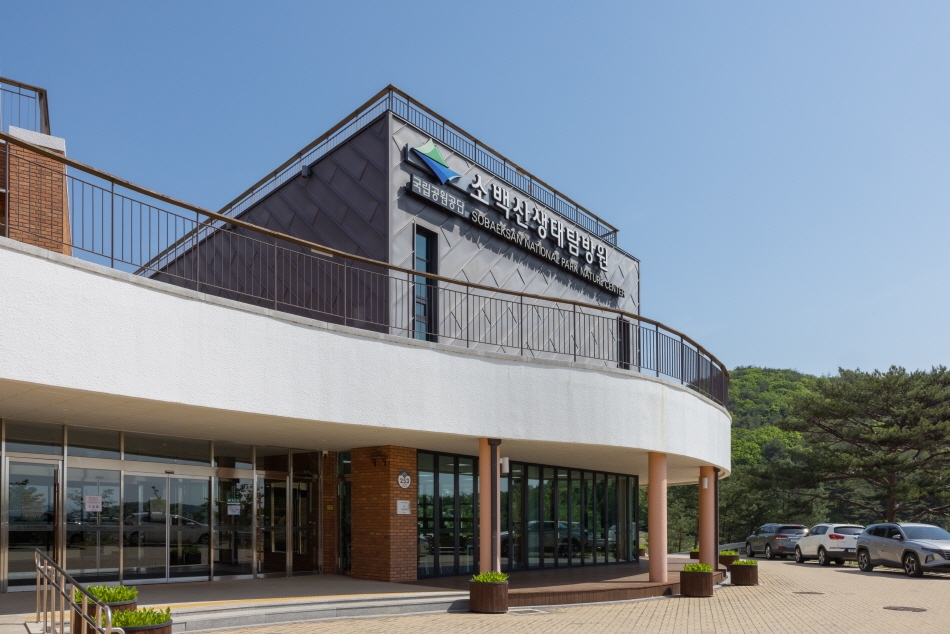
In Yeongju, Gyeongsangbuk-do, you can find a wellness spot that truly embodies the positive energy of Sobaeksan Mountain: Sobaeksan National Park Nature Center at the foot of the mountain, which offers rest to locals and healthy memories to tourists.
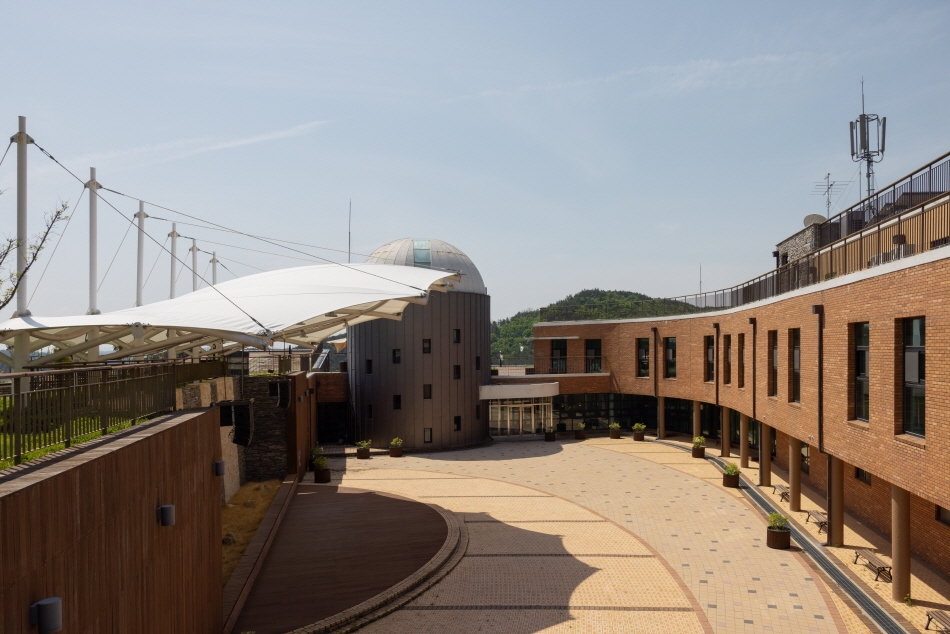
Located within Sobaeksan National Park, the Sobaeksan National Park Nature Center has become the foremost natural learning center in Yeongju since its opening in 2018. The center offers ecological education and tourist programs created through its connection to the beautiful nature of Sobaeksan Mountain, providing ecological welfare services for the people of Yeongju.
A Space of Healing Open to All
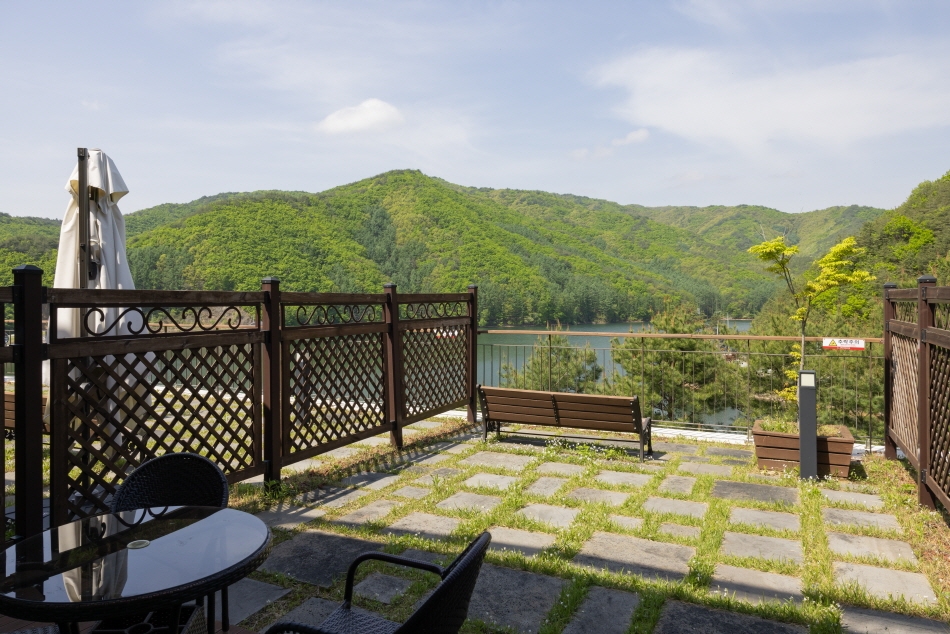
The first thing that welcomes visitors to the center is the pastoral view of the lake and the mountain. From there, visitors are further impressed by the seamless continuity between the beautiful scenery of the surrounding area and the elegantly maintained interior and exterior spaces of the Sobaeksan National Park Nature Center. On weekdays, the center is often rented out for group activities. Most visitors head there on weekends, typically with their families. As the Sobaeksan National Park Nature Center caters to a diverse group of visitors, it offers a wide variety of facilities to match.
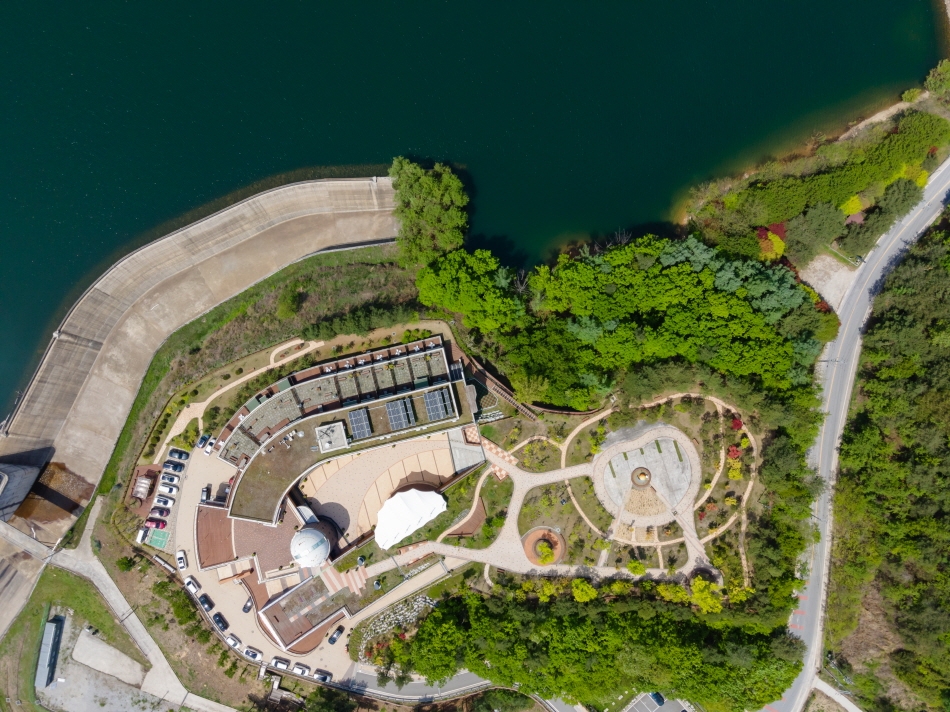
In addition to the 18 residence facilities for accommodations, there are classrooms and auditoriums for the center’s educational programs, a dining hall capable of serving 100 visitors, a sports center, outdoor performance space, gardens, and an observatory. Thanks to the variety of amenities on-site, visitors can rest, learn, enjoy, and stay to their heart’s content.
Most spaces are open to the public, with the exception of residence facilities, auditoriums, and other areas that require reservations. Thus, both the outdoor facilities, like the garden and the rooftop observatory, and the interior spaces, like the book café and the Healing Zone, serve as popular areas for local residents to catch their breath. The Healing Zone, in particular, is popular for its massage chairs and lower-body bathing equipment.
Become One with Nature with These Healing Programs
The Sobaeksan National Park Nature Center offers many visitor programs that allow the enjoyment of nature. It is a popular destination because of its accessible programs, which utilize the region’s natural beauty, rich history, and cultural resources.
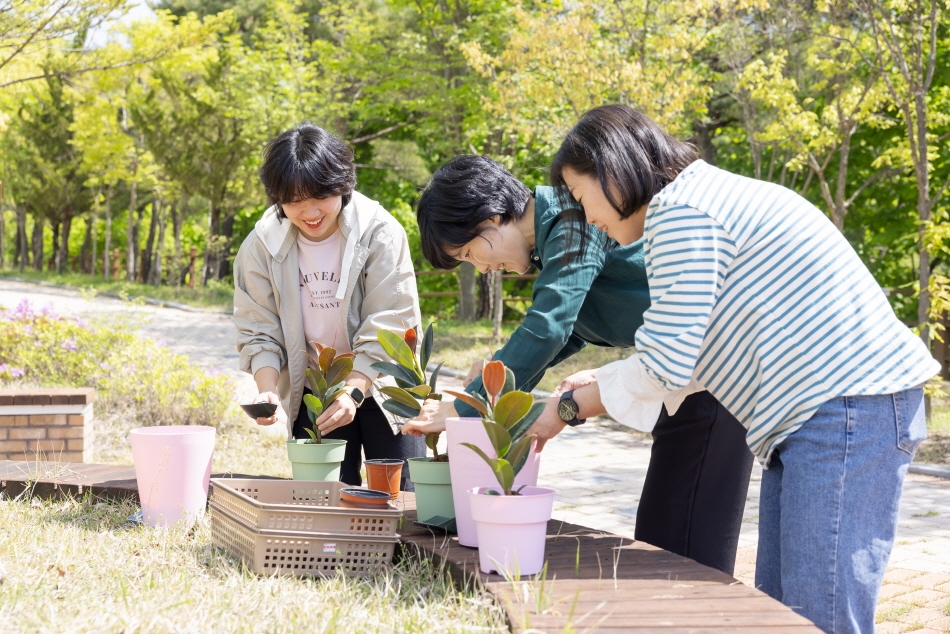
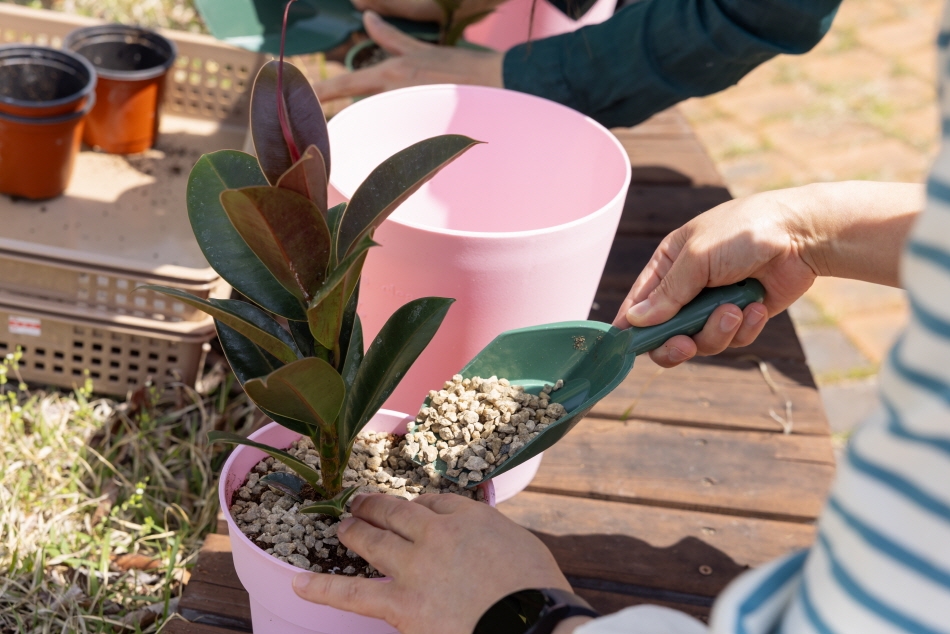
The most notable among them are the seasonal programs that bring participants into full contact with the four seasons of Sobaeksan Mountain. The spring program, which runs from March to June, includes a segment that highlights the value of national parks by adopting companion plants and a program where visitors can enjoy Buddhist culture and the peace found in nature at Muryangsujeon Hall of Buseoksa Temple. Companion plants used in the program are selected for their especially robust air purification qualities, and the pots used are made from recycled materials to promote carbon neutrality.
During the summer program, which runs from July to August, you can learn about the importance of endangered wildlife and biodiversity, explore the role of forests and insects, and take part in craft programs inspired by insects. In the fall program, which is offered from September to November, participants learn about the endangered Korean fox (Vulpes vulpes peculiosa) and take part in string art programs. The program also includes trekking trips along the Sobaeksan National Park’s Jarak Trail 1, which brings you close to the beautiful nature of Sobaeksan Mountain. Last but not least, the winter program, which runs from December to February, offers intriguing activities as well: one program tells the stories of star constellations and includes craft activities inspired by the Zodiac, while the other delves into the stories of Buseoksa Temple, one of Yeongju’s most famous sights and a UNESCO World Heritage Site. In addition, the center offers personalized programs like ginseng liquor and syrup-making using Punggi ginseng, a local specialty of Gyeongsangbuk-do Province; friendship-building programs for the youth; and healing programs for workers featuring meditation and relaxation.
Comfort and Sensibilities in a Single Package
Some may think that a stay in a nature center in a national park is bound to be boring and uncomfortable. After all, you’ll be stuck on a quiet mountainside in uncomfortable facilities, right? However, this misconception is quickly dispelled when you visit the Sobaeksan National Park Nature Center.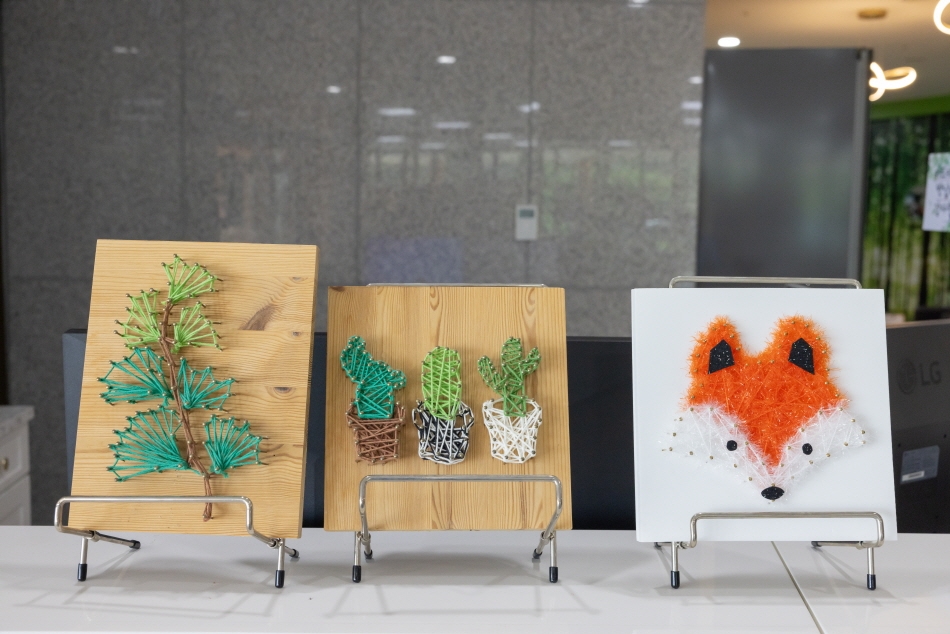
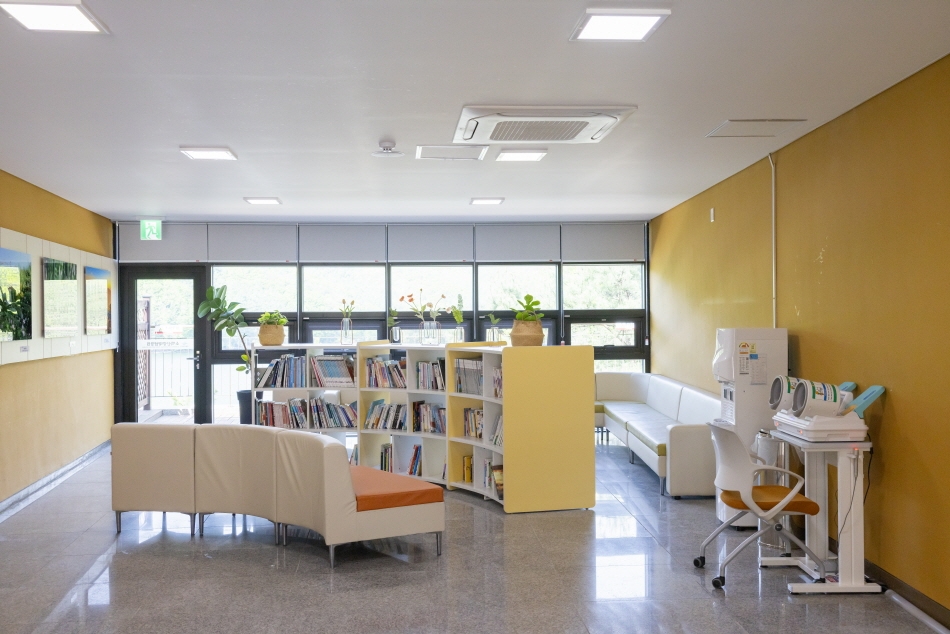
The lobby, which doubles as the information desk, has a styler for visitors and a laundromat for washing clothes after a hiking trip. Sofas located throughout the interior offer welcome rest and respite, along with blood pressure measuring stations, cell phone charging stations, and book stands. These amenities were designed from the ground up with visitor convenience in mind, reflecting the center’s prioritization of visitor experiences.
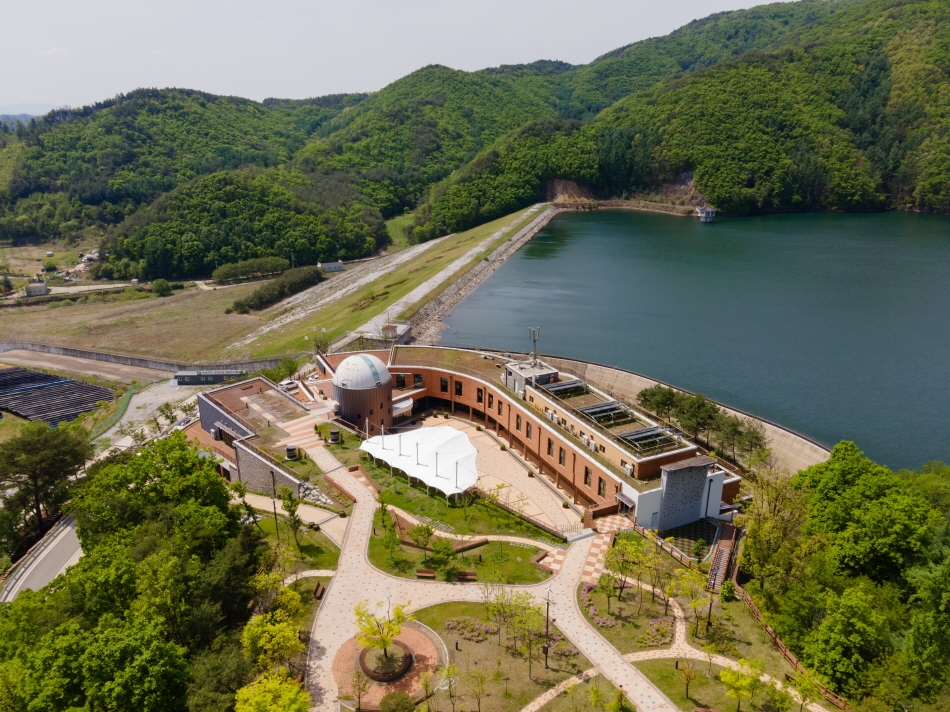
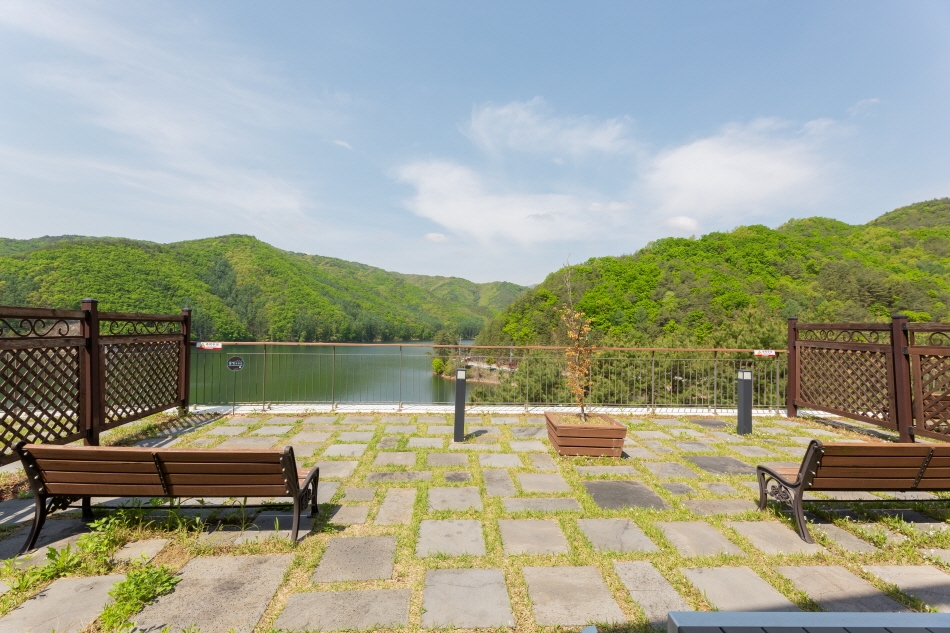
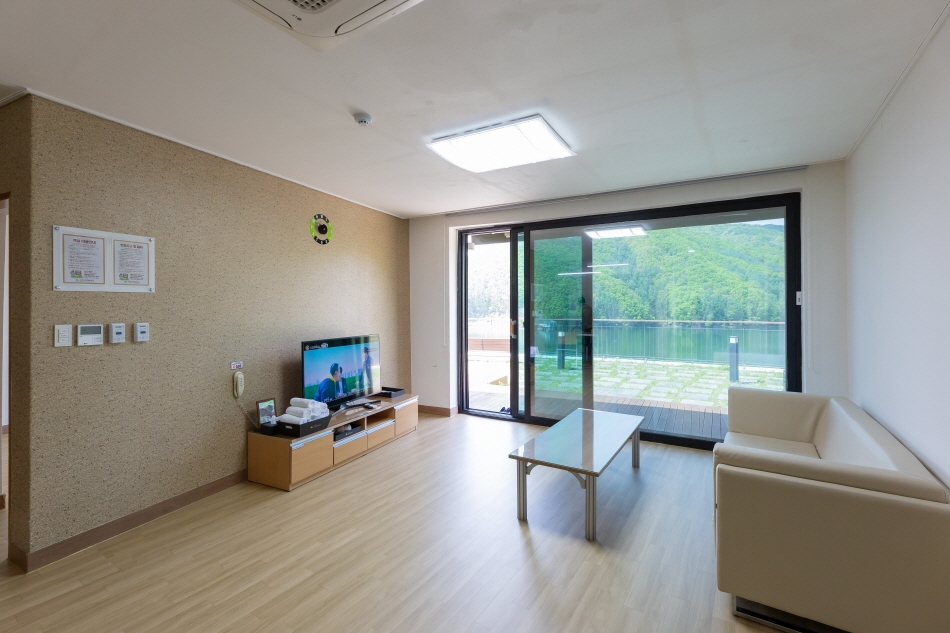
In addition, all rooms offer beautiful views of the mountain and the lake. The outdoor garden has photo areas for visitors as well. Each spot has a theme that makes it particularly beautiful, be it the reflection of light on water, moonlight, or sunlight, for your reference in photography.
Wellness Program
In conjunction with the city of Yeongju, the Sobaeksan National Park Nature Center offers one-night, two-day wellness tourism programs themed around “caring for your body and mind in peace”. A pilot run last March was received quite positively, so the program was elevated to a regular offering. The first day of the program features a hiking trip into Sobaeksan Mountain and forest meditation, while the following day includes a visit to Buseoksa Temple and cooking classes using Punggi ginseng. Detailed schedules can be found on the official website of the Sobaeksan National Park Nature Center and its social media channels.
NOTE
-
Address
253 Yeongdan-ro, Dansan-myeon, Yeongju-si, Gyeongsangbuk-do
-
Inquiries
+82-54-630-5500
- Website
-
Opening Hours
Every day 09:00–18:00
-
Fees
Reservations on website
① Accommodation: Type A (for 4 people) KRW 66,000, Type B (for 6 people) KRW 99,000, Type C (for 8 people) KRW 132,000
② Facility rental: Auditorium KRW 220,000–440,000, Lecture Hall KRW 137,500–275,000
③ Experience Programs: Teenagers KRW 3,960–15,620, Adults KRW 5,390–21,450
④ For other group and special programs, please contact us.
-
Transportation
[Train] KTX Cheongnyangni-Yeongju (1 hr. 40 min.), Mugunghwa (3 hr.)
[Recommended Tourist Sites]
Yeongju’s Pride and Joy: The Thousand-Year Temple of Buseoksa
Choi Sun-woo, a member of the first generation of art historians in Korea, is known for his book titled “Leaning on the Baeheullim Pillars of Muryangsujeon Hall”. This title also gives a great overview of Buseoksa Temple’s scenery. Built in the 16th year of King Munmu of Silla’s reign, Buseoksa Temple took its present form during the reign of King Gongmin of Goryeo. Muryangsujeon Hall, in particular, represents Buseoksa Temple and is a prime example of Goryeo-era Buddhist architecture. When visitors ascend to the temple at sunset, the crimson light drapes between the ridges of Taebaeksan Mountain, Bonghwangsan Mountain, and Sobaeksan Mountain, creating unforgettable scenery.NOTE
-
Address
345 Buseoksa-ro, Buseok-myeon, Yeongju-si, Gyeongsangbuk-do
-
Inquiries
+82-54-633-3464
- Website
-
Wellness Program
Program in conjunction with the Sobaeksan National Park Nature Center (in-person and virtual): Participants meet the guide at the entrance to Buseoksa Temple and take a guided tour of the temple complex. Virtual programs assign participants online missions with
small prizes at the end.
Follow the Footsteps of Korea’s Confucian Scholars in Sosuseowon Confucian Academy
Sosuseowon Confucian Academy is a notable part of Yeongju’s prized cultural heritage. It is the first Royally Chartered Confucian Academy in Korea, the alma mater of many Confucian scholars who continued the tradition during the Joseon period. It is still home to the Munseonggong Shrine, Treasure No. 1402 of Korea; Myeongnyundang Lecture Hall, Treasure No. 1403 of Korea; and Hakgujae and Jirakjae, the students’ dormitory and study hall. It also has the Sosu Museum, which details the cultural heritage of Confucianism in Korea, offering an in-depth dive into Korea’s history.
NOTE
-
Address
Naejuk-ri, Sunheung-myeon, Yeongju-si, Gyeongsangbuk-do
-
Inquiries
+82-54-369-5852
- Website
-
Address
-

1330 Helpline Call/Chat

Start a FREE Online Call(No charges for calls on Wi-Fi /
Data charges may apply)

Open 1330 Helpline Chat(Download not required)



 Medical Wellness