
- Log in
-
- Sydney Overseas Office
- London Overseas Office
- Toronto Overseas Office
- Los Angeles Overseas Office
- New York Overseas Office
- Ulaanbaatar Overseas Office
- Dubai Overseas Office
- New Delhi Overseas Office
- Manila Overseas Office
- Jakarta Overseas Office
- Hanoi Overseas Office
- Kuala Lumpur Overseas Office
- Singapore Overseas Office
- Bangkok Overseas Office
- Map
- Sydney Overseas Office
- London Overseas Office
- Toronto Overseas Office
- Los Angeles Overseas Office
- New York Overseas Office
- Ulaanbaatar Overseas Office
- Dubai Overseas Office
- New Delhi Overseas Office
- Manila Overseas Office
- Jakarta Overseas Office
- Hanoi Overseas Office
- Kuala Lumpur Overseas Office
- Singapore Overseas Office
- Bangkok Overseas Office
Wellness Story
-
-
-
Gyeongwonjae Ambassador
-
07/18/2024
-
307
0
0
-
-
wellness
-
-
-
Luxury Wellness Experience in a Five-Star Hanok
Hotel: Gyeongwonjae Ambassador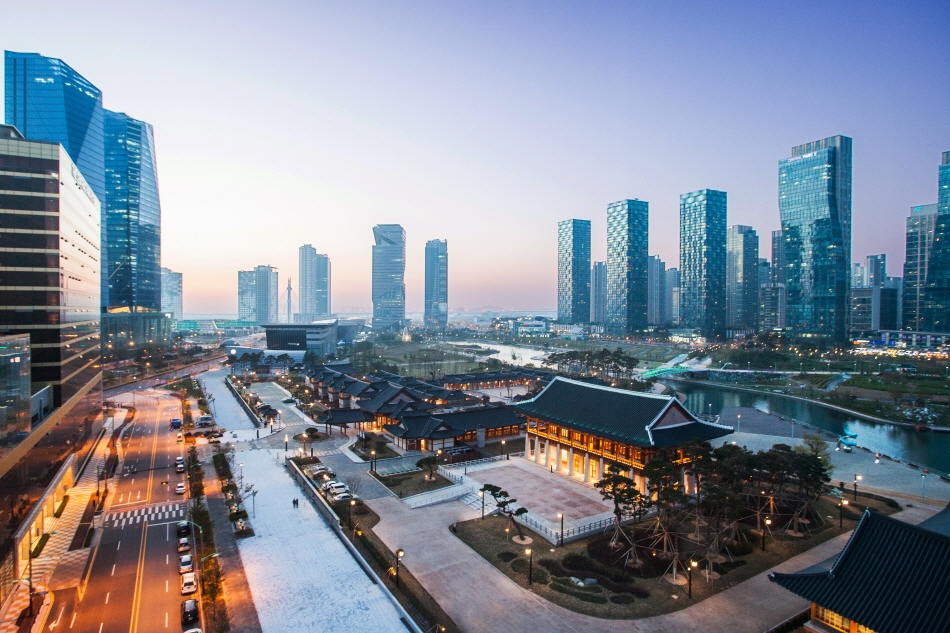
At first glance, Gyeongwonjae Ambassador may appear somewhat out of place: A classical hanok hotel nestled amidst a forest of cutting-edge skyscrapers. However, this juxtaposition aligns perfectly with its concept, “a walk through time on the Korean peninsula." This unique blend of tradition and modernity has earned Gyeongwonjae not only the distinction of being the first five-star hanok hotel in Korea but also the prestigious “Stars of Korean Tourism" award from the Korea Tourism Organization. Remarkably, it has achieved this claim despite lacking many contemporary hotel amenities such as swimming pools, saunas, and bars.
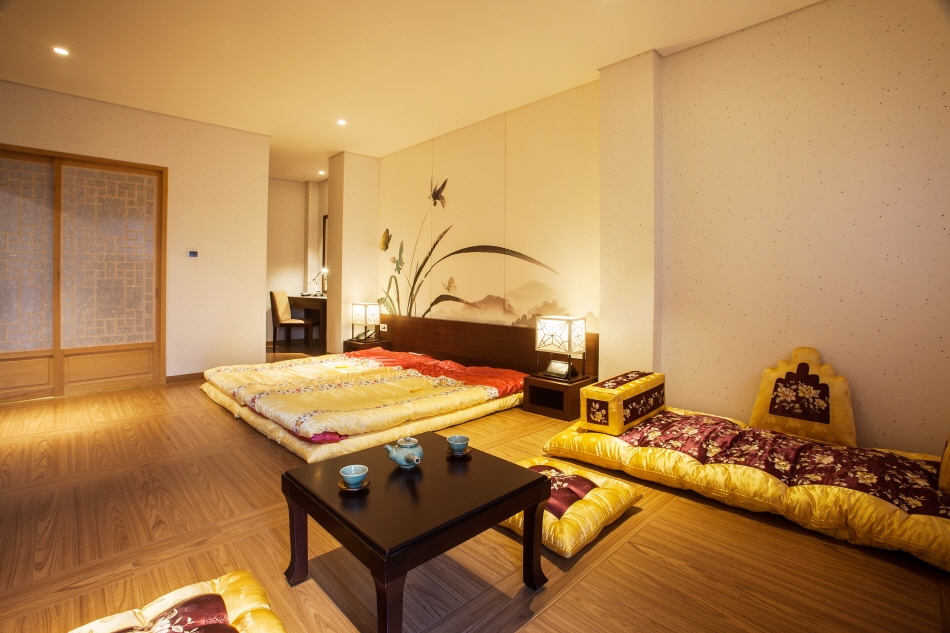
A stay at Gyeongwonjae offers a unique experience that can only be found in a hanok, a space that encapsulates Korean traditions. The single-story building, with its low eaves and absence of flamboyant dancheong (decorative coloring), exemplifies the aesthetic of unadorned humility that characterizes Korean culture. It harmoniously blends into the surrounding nature. Guests can partake in a traditional tea ceremony followed by a rejuvenating soak in a cypress bathtub filled with water infused with traditional Korean medicinal materials, clearing the mind of clutter and promoting natural healing.
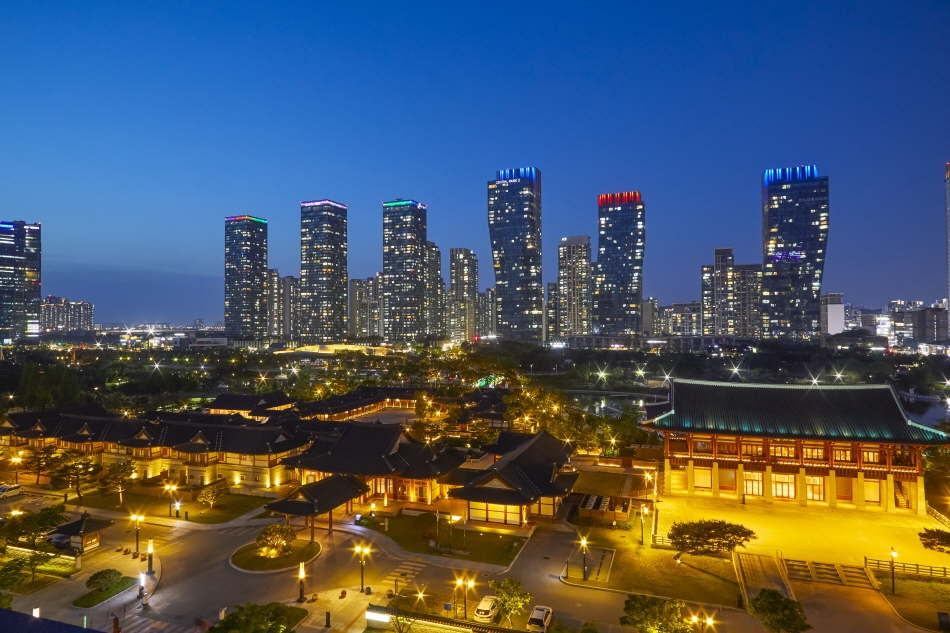
Luxury Wellness with Masterful Touches
Gyeongwonjae’s hanok building may appear humble, but it is rich in substance. This is immediately evident upon encountering Gyeongwollu, the guesthouse, the first building one sees upon entering the hotel. Resembling the Gyeonghoeru Pavilion of Gyeongbokgung Palace, Gyeongwollu is inspired by the Muryangsujeon Hall of Buseoksa Temple, a prime example of Goryeo period architecture. It follows the jusimpo (column-top complex bracket) format of the Muryangsujeon Hall, with each baeheullim (entasis) pillar topped by a beak-shaped gongpo (bracket sets). The pillars themselves are capped by a paljak jibung (hip-and-gable roof) and supported by stone bases, akin to the Gyeonghoeru Pavilion. This architectural style seamlessly blends Goryeo and Joseon influences.
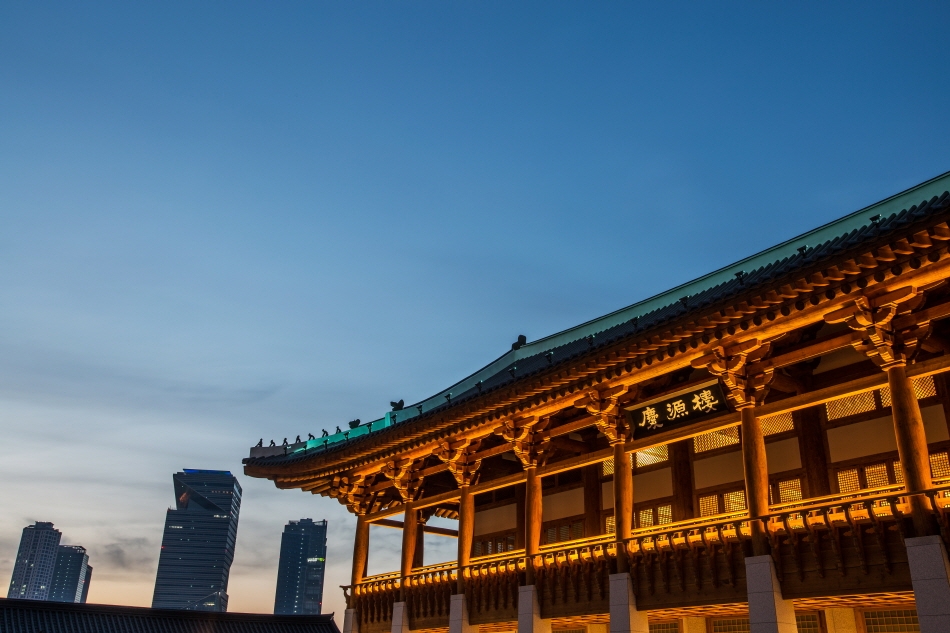
Gyeongwonjae’s elegance is the result of craftmanship by masters. The construction was led by Daemokjang (master of traditional wooden architecture) Choi Gi-yeong, the holder of Korea’s Important Intangible Cultural Property No. 74, who led restoration works on esteemed cultural heritage sites such as Changgyeonggung Palace, Namhansanseong Fortress, and Sudeoksa Temple. The roof was crafted by Korea’s only Beonwajang (master of traditional tile roofing), Lee Geun-bok. Traditional lacquering was done by Chiljang Kim Seong-ho, while Mokgongjang Ga Pung-guk, a master of traditional woodcraft, handled the traditional Korean windows and doors. Im Chung-hyu, a master craftsman of traditional furniture-making, created Gyeongwonjae’s furniture. With such masterful involvement, Gyeongwonjae’s reputation as one of the premier hanok hotels is well-deserved.
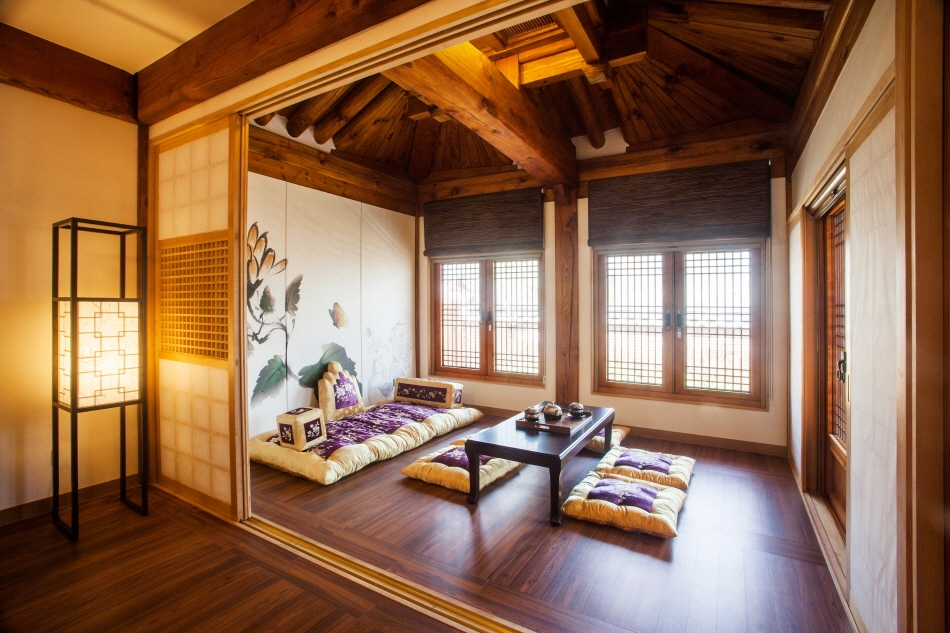
Gyeongwonjae’s relationship to traditions is not one of blind adherence. The hotel, for instance, offers four types of traditional tea alongside top-notch espresso machines in each room, and the cypress bathtubs in the bathrooms, while not strictly part of Korean tradition, add a touch of luxury. Guests can choose from bath salts made from traditional medicinal materials or Dead Sea salt, known for its benefits in alleviating joint pain and skin conditions. These elements collectively define the “luxury wellness" experience at the hotel.
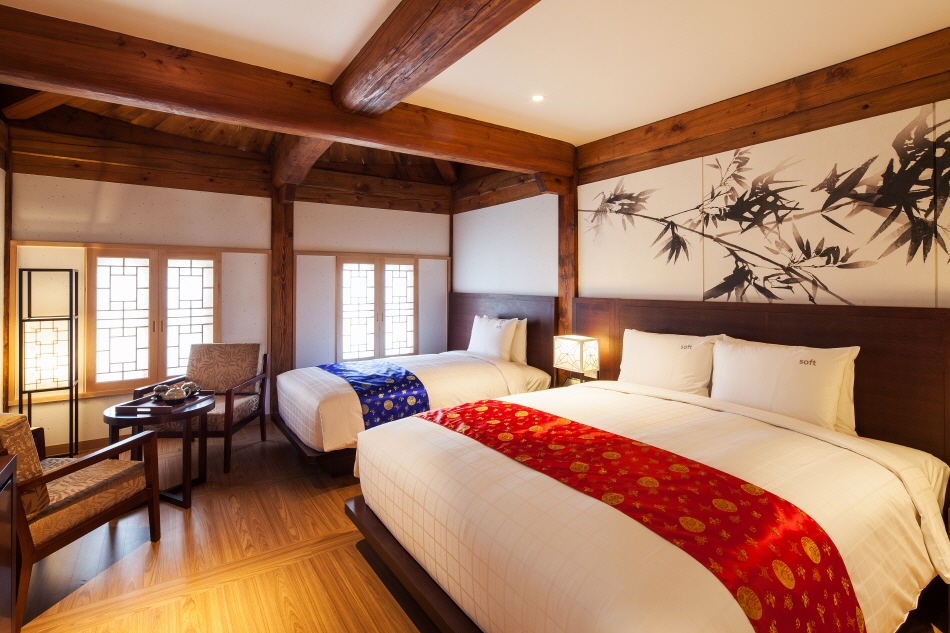
Completing Wellness with Attentive Service
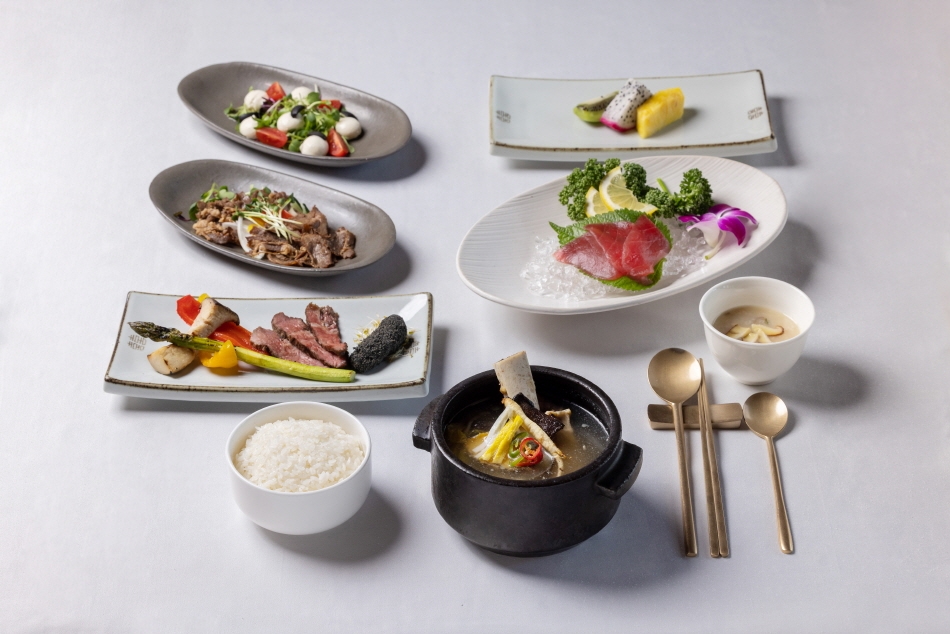
An unsung hero of the hotel’s acclaim is its Korean restaurant, “Sura". Sura offers a la carte menus such as bibimbap, galbi soup, and mushroom bulgogi, as well as Korean table d’hote menus featuring 7, 9, or 12 side dishes and the Surasang set, all crafted with regional and seasonal ingredients whenever possible. The food menu is complemented by a beverage menu featuring a wide selection of traditional Korean liquors, from Ganghwa turmeric makgeolli (unfiltered rice wine) and Dangjin fresh makgeolli to Munbaeju, Omegisul, Sogokju, Andong Soju, and Jindo Hongju.
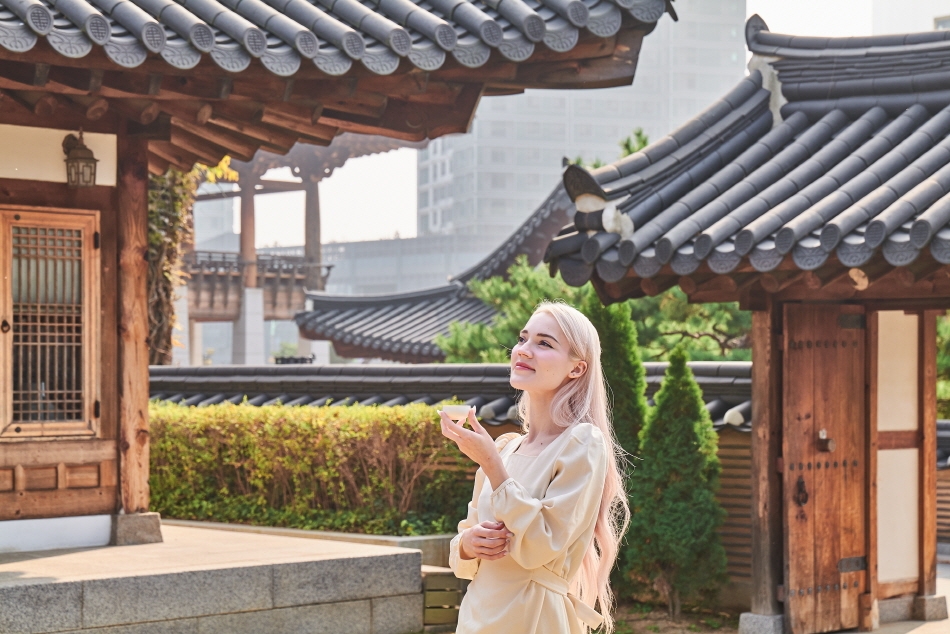
Traditional weddings hosted at Yeongbinmadang, the hotel’s courtyard in front of Gyeongwollu, are part of Gyeongwonjae’s efforts to preserve traditional culture. Additionally, guests can enjoy hanbok experiences and traditional games. Wearing hanbok, eating hansik (Korean food), and playing traditional games in a hanok building crafted by masters of Korean artistry encapsulates the wellness vision pursued by Gyeongwonjae. This vision is further enhanced by walking trails that complement the hanok building and surrounding trees.
What truly completes Gyeongwonjae’s wellness experience is the attentive service offered to guests. Upon check-in, guests are personally escorted to their rooms, and throughout their stay, they benefit from a "happy call" service that prioritizes their needs. This personalized service builds a wealth of data about customers, paving the way for even more specialized products and services in the future. A testament to the effectiveness of the hotel’s service is the story of Sheikh Saud Bin Saqr Al Qasimi of the Emirate of Ras Al Khaimah, who left a tip larger than the hotel fee after his stay.
Wellness Program
The centerpiece of Gyeongwonjae’s wellness programs is the hanok building of the hotel itself, created by masters of Korean art. Created by the hands of traditional craft masters and holders of Important Intangible Cultural Properties of Korea, the rooms radiate the deep aesthetics and elegance of traditional hanok buildings. Even the traditional furniture and windows were made by masters, ensuring that a stay at Gyeongwonjae delivers the beauty of Korean culture in its purest form. Sampling the four different types of traditional tea and soaking in a traditional medicinal bath in a cypress tub is a healing experience. The stay becomes a form of therapy. Furthermore, the hotel plans to provide its own “Wellness Tour Package", complete with regional foods, aromatherapy with natural oils, and gua sha (a therapy that involves scraping your skin with a massage tool to help improve circulation).
NOTE
-
Address
200 Techno park-ro, Yeonsu-gu, Incheon
-
Inquiries
+82-32-729-1101
- Website
-
Opening Hours
Accommodations open all year round, Korean restaurant Sura 07:00-10:00 (breakfast), 11:30-14:30 (lunch), 17:30-21:30 (dinner), Walking trails 09:00-19:00 (March-October), 09:00-17:00 (November-February)
-
Transportation
6 minutes from Exit 3 of Central Park Station (Incheon Subway Line 1)
[Recommended Tourist Sites]
Take Refuge Among the Cutting-Edge Skyscrapers at Songdo Central Park
Songdo Central Park, where Gyeongwonjae is located, is a landmark and rest area in the middle of Songdo International Business District. Inspired by New York’s Central Park, it is a rectangular space of nature amidst a city of skyscrapers, creating a unique ambience where the cutting-edge coexists with nature. Songdo Central Park is almost twice the size of Yeouido Park in Seoul and is divided into five distinct areas. The park includes canals filled with seawater, offering cruise vessels, water taxi services, and canoeing.
NOTE
-
Address
160 Convensia-daero, Yeonsu-gu, Incheon
-
Inquiries
+82-32-456-2860
- Website
From a Derelict Salt Farm to an Eco-Friendly Site of Learning Sorae Ecology Park
The area formerly known as Sorae Salt Farm has been transformed into Sorae Ecology Park. The park includes a salt field, a tidal flat learning area, a wetland, and a bird-watching station, allowing visitors to see the process of sea salt production in action. The expansive wetland filled with red seepweed is spectacular. In summer, visitors can wade in the tidal flats and observe a variety of tidal creatures, while in winter, they can see mallards, snipes, cormorants, and other winter migratory birds from the bird-watching station.
NOTE
-
Address
77 Sorae-ro 154beon-gil, Namdong-gu, Incheon
-
Inquiries
+82-32-435-7076
- Website
-
Address
-

1330 Helpline Call/Chat

Start a FREE Online Call(No charges for calls on Wi-Fi /
Data charges may apply)

Open 1330 Helpline Chat(Download not required)



 Medical Wellness