- Log in
-
- Sydney Overseas Office
- London Overseas Office
- Toronto Overseas Office
- Los Angeles Overseas Office
- New York Overseas Office
- Ulaanbaatar Overseas Office
- Dubai Overseas Office
- New Delhi Overseas Office
- Manila Overseas Office
- Jakarta Overseas Office
- Hanoi Overseas Office
- Kuala Lumpur Overseas Office
- Singapore Overseas Office
- Bangkok Overseas Office
- Map
- Sydney Overseas Office
- London Overseas Office
- Toronto Overseas Office
- Los Angeles Overseas Office
- New York Overseas Office
- Ulaanbaatar Overseas Office
- Dubai Overseas Office
- New Delhi Overseas Office
- Manila Overseas Office
- Jakarta Overseas Office
- Hanoi Overseas Office
- Kuala Lumpur Overseas Office
- Singapore Overseas Office
- Bangkok Overseas Office
- HOME
- Enjoy Medical Korea
-
-
-
Proven Effects of Treating Carpal Tunnel Syndrome with Acupuncture by Brain Science
-
03/02/2023
1.3K
-
0
0
-
-
Orthopedics
Traditional_Korean_Medicine
Seoul
Korea_Medical_Tourism
traditional_herbal_medicine
Useful_Information
-
-
-
Research by a team composed of the Korea Institute of Oriental Medicine (KIOM) and Harvard Medical School demonstrated that acupuncture can change brain structures
A joint research team composed of Korean and US team members has proven for the first time that acupuncture, a traditional Korean medicinal treatment, improves median nerve (a type of peripheral nerve) sensory velocity and changes the brain structure, thus relieving pain. The joint research conducted in the US jointly by the Korea Institute of Oriental Medicine (KIOM) and a team under professor Vitaly Napadow at the Martinos Center for Biomedical Imaging of Harvard Medical School, a globally renowned research institute in the brain and medical imaging, was published in the neurological journal Brain.
Acupuncture controls nerves, facilitates blood circulation, improves inflammation, relieves pain, and boosts immunity. This minimally invasive treatment can control pain without serious side effects. Acupuncture can also be used to treat diseases such as lower back pain, sprains, frozen shoulders and arthritis, in addition to carpal tunnel syndrome. Foreigners can conveniently get acupuncture treatment at the International Healthcare Center of Kyung Hee University Korean Medicine Hospital (https://km.khmc.or.kr) and at Jaseng Hospital of Korean Medicine (https://www.jaseng.co.kr). They can also visit local traditional medicine clinics to treat their pain. The cost of an ordinary acupuncture treament ranges from 5,000 won to 10,000 won (approx. 3.6 dollars to 7.3 dollars) if covered by national health insurance, otherwise the cost is approximately 20,000 won (approx. 14.6 dollars), which is still inexpensive. The recommended frequency of treatment is twice or three times a week, for three to twelve weeks.What is Carpal Tunnel Syndrome?
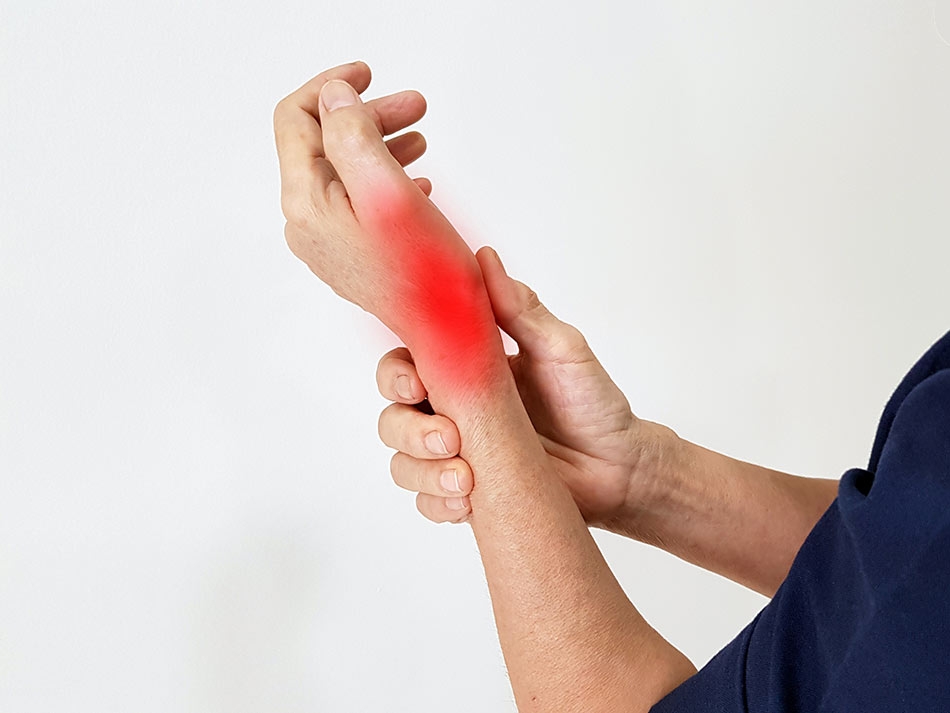
Carpal tunnel syndrome causes numbness and pain in the fingers and wrist due to median nerve problems. The syndrome occurs when the carpal tunnel, a narrow passageway in the wrist surrounded by bones and ligaments, thickens or is compressed due to higher pressure inside the carpal tunnel. As a result, the median nerve sensory velocity is lowered. This syndrome is common among housewives who frequently use their wrists, pregnant women, obese people, the elderly or patients with diabetes. Nowadays, office workers who use the computer for long periods of time frequently suffer this syndrome as well. According to US statistics, 1% to 5% of ordinary people and 5% to 21% of workers who frequently use their wrists have this syndrome. The survey also found that 18% of the workers who developed carpal tunnel syndrome quit their job within 18 months.
Major symptoms include numbness in the hand and pain in the wrist as the median nerve sensory velocity decreases. Usually, the thumb, index, middle or ring fingers feel numb, but not the little finger. You might feel a burning sensation on the fingers, particularly at night. You might experience weakness in the hand and may drop objects, or your hand might become stiff or tremble when you wake up in the morning. The pain can occur on the wrist when you raise your arm, or the arm, shoulder, and neck might also become painful.What is Acupuncture?
The origin of traditional Korean medicine dates back to before Christ in East Asia. The age-old traditional medicine has promoted health and treated diseases in Korea, with a focus on the harmony between humans and nature. Koreans have developed various treatment techniques that maintain the structural and functional balance of the human body. Traditional Korean medicine mainly consists of meridian theory-based acupuncture and medicinal treatment focused on early prevention and fundamental treatment of diseases.
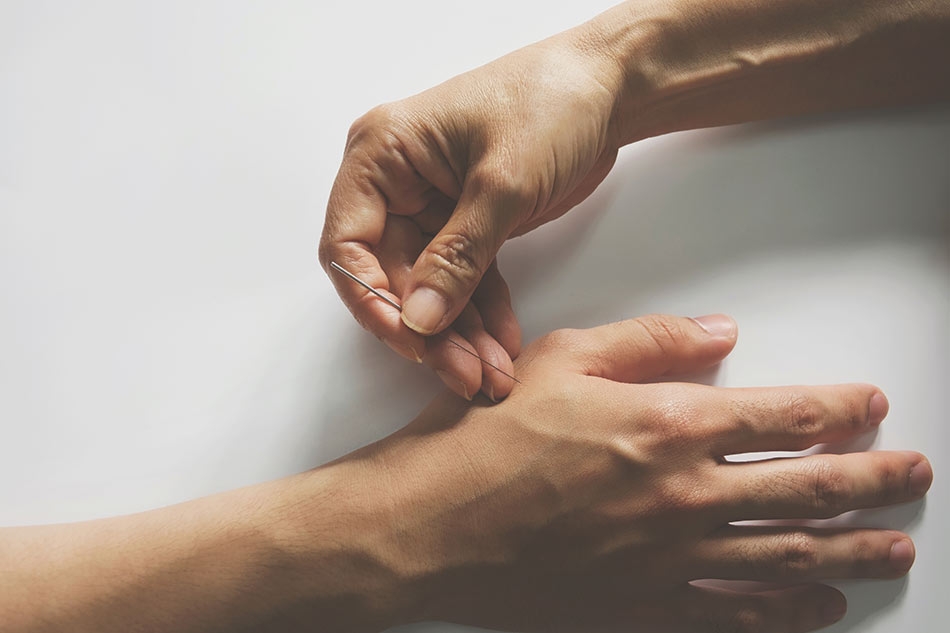
Acupuncture administers a thin needle on certain meridian points based on the condition of the internal organs, functions of meridians, the balance of yin and yang, and diagnosis by visual instruction, listening, palpation and inquiry. Carpal tunnel syndrome is a typical disease that can be significantly improved through acupuncture, according to clinical studies. If the median nerve is excessively damaged and surgery is necessary, then getting orthopedic treatment will be more effective. However, for common cases where there is pain and numbness, acupuncture can help with rapid recovery.Effects of Acupuncture Proven by Brain Science
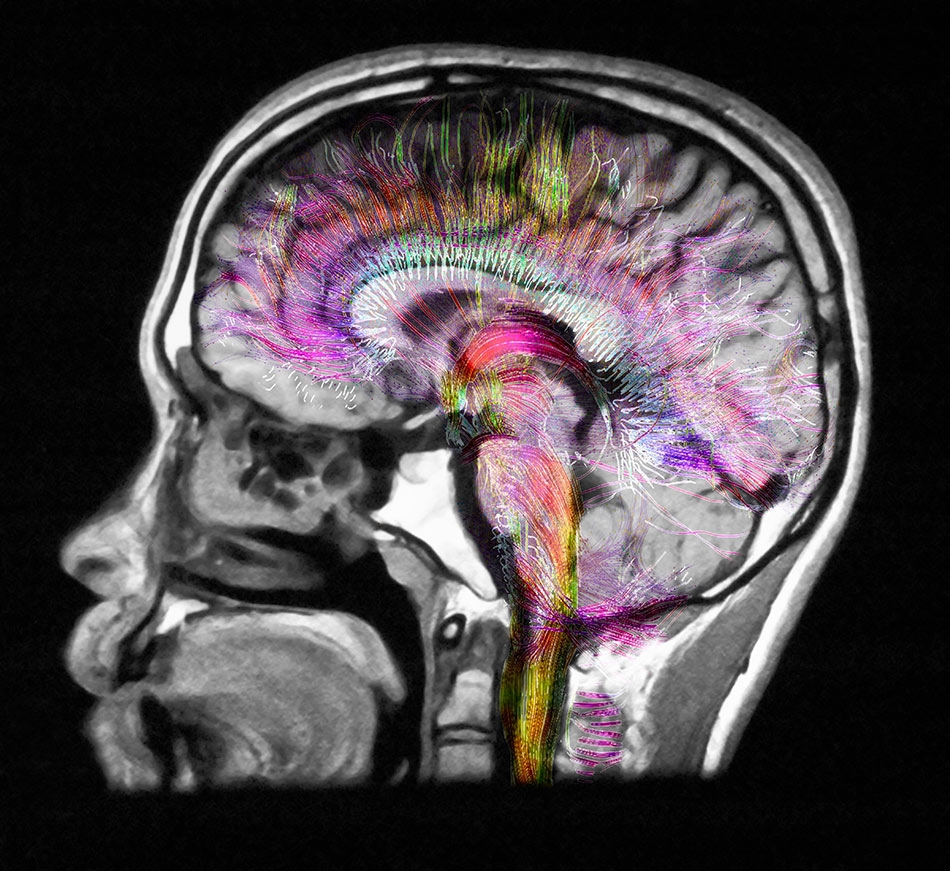
It is widely known through clinical studies that acupuncture can help relieve pain but demonstrating the effect using objective indices was difficult because data relied on patients’ subjective opinions. This time, the Korea Institute of Oriental Medicine (KIOM) -- a Korean government-invested research organization doing professional and systematic R&D on the theory, technology and practice of traditional Korean medicine -- and a research team from Harvard Medical School have proved using functional magnetic resonance imaging (fMRI) and diffusion tensor imaging (DTI) that acupuncture changes the brain’s sensory area in patients with carpal tunnel syndrome after three months of treatment. In other words, acupuncture can relieve wrist pain and improve median nerve functions, thus increasing conduction velocity. Also, acupuncture expands the brain area governing the numbed fingers and changes the structure of the brain’s white matter, according to brain science research.
The joint research team from the KIOM and from Harvard Medical School gathered 79 patients in the US with carpal tunnel syndrome and divided them into two groups: the verum acupuncture group with 56 patients and the sham acupuncture group with 23 patients. The former group was again divided into the local acupuncture group that received acupuncture mainly on the wrist where the pain was; and the distal acupuncture group, where acupuncture was administered on a distal site near the ankle on the side of the body opposite the painful wrist. Acupuncture therapy was provided for 16 sessions over 8 weeks. Participants received nerve conduction studies before and after getting acupuncture treatment to measure their median nerve sensory velocity. The degree of pain relief was checked through the Boston Carpal Tunnel Syndrome Questionnaire (BCTQ). In addition, the research team measured the digit 2/3 cortical separation distance in the primary somatosensory cortex and measured the brain’s structural changes using DTI.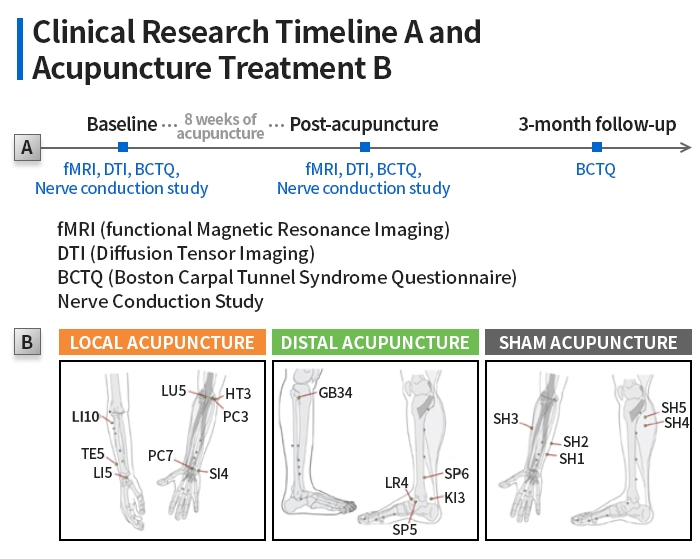
Local Acupuncture Local acupuncture is administered on local acupoints. 2 Hz of electro-acupuncture was applied on acupoints PC7 and TE5 for 20 minutes and then on three acupoints chosen among acupoints LI10, LI5, LU5, HT3, PC3, and SI4, depending on the patient’s condition.
Distal Acupuncture Distal acupuncture places needles away from the area of the pain, for instance, on the left ankle if the patient has pain on the right wrist. During the study, 2 Hz of electro-acupuncture was applied for 20 minutes on acupoints LR4 and SP6 near the foot on the opposite side of the painful wrist, and then on GB34, KI3 and SP5.
Streitberger Needle Non-penetrating placebo needles were administered on fake acupoints on the hands and feet and the needles were attached to a fake electromagnetic acupuncture machine. The patients were then told they were receiving electro-acupuncture.Effect of Treatment Lasted Only for the Verum Acupuncture Group After Three Months
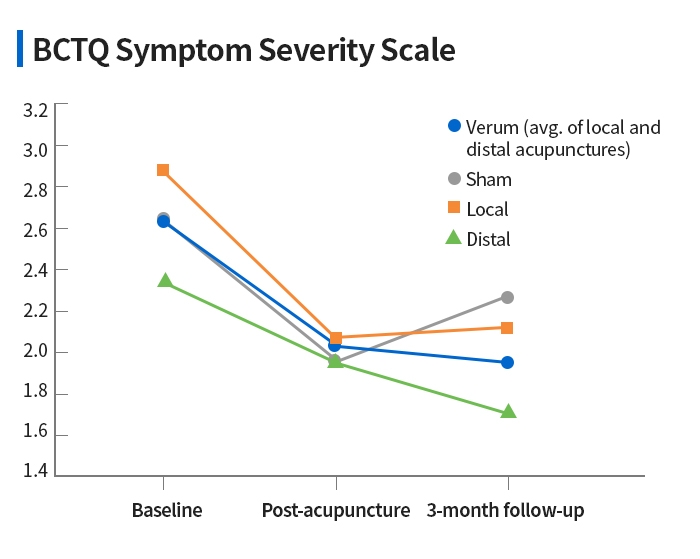
According to the Boston Carpal Tunnel Syndrome Questionnaire, participants in both the verum and sham acupuncture groups felt less pain after eight weeks of acupuncture treatment. Verum acupuncture relieved pain by 21.3% whereas sham acupuncture relieved pain by 22.7%. However, three months after the treatment, the effect was retained only for the verum acupuncture group where the symptom severity scale dropped by 25.1%. However, the treatment effect disappeared in the sham group whose symptom severity scale dropped by 11.1%.
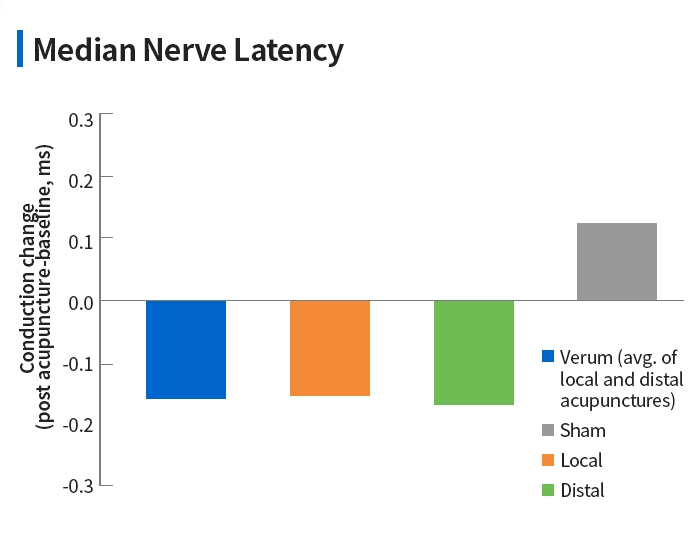
The research team measured the median nerve sensory velocity after eight weeks of acupuncture treatment, and the verum acupuncture reduced median nerve latency by 0.16 ms (local) and 0.17 ms (distal), respectively; whereas sham increased the latency by 0.12 ms. In other words, median nerve latency was improved only after verum acupuncture.
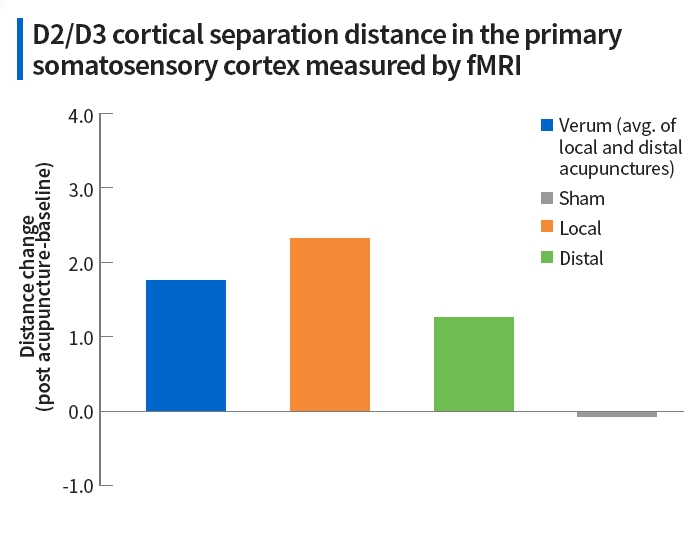
In addition, the research team used fMRI to measure the digit 2/3 cortical separation distance, a distance between angular points of the most activated areas in the brain’s primary somatosensory cortex by stimulating the index and middle fingers connected by the median nerve. It was revealed by previous studies that patients with carpal tunnel syndrome have shorter digit 2/3 cortical separation distance compared to normal people. According to the above research, the distance increased by 1.8 mm on average in the case of verum acupuncture, whereas the distance decreased by 0.1 mm in the case of sham acupuncture, which is not a meaningful change.
Lastly, the research team used DTI to investigate the structure of brain’s white matter in patients suffering from carpal tunnel syndrome. The white matter in the primary sensory area, which is related to the hands, was changed along with the median nerve latency only after verum acupuncture. Changes in the white matter after getting sham acupuncture had nothing to do with nerve conduction changes.
Acupuncture Brings Changes in the Brain’s Sensory Area
The research unveiled for the first time through fMRI that only verum acupuncture changes the median nerve sensory velocity, and it also changes the primary sensory area in the brain. With this, the mechanism of how acupuncture changes the brain’s sensory area and treats the syndrome by controlling the nerves was proven scientifically.
Acupuncture treatment, a minimally invasive treatment, can control pain from carpal tunnel syndrome without significant side effects. The above study used electro-acupuncture but combining it with bee venom acupuncture or herbal acupuncture that controls pain can create even quicker treatment effects. There have been no major side effects reported in clinical research on acupuncture treatment. Sometimes slight bleeding or inflammation can occur on areas where acupuncture was administered, but in most cases, it heals naturally.※ The above patient cases are from the Korea Institute of Oriental Medicine (KIOM) (https://www.kiom.re.kr).
note
Reviewed by Hyung-jun Kim, KM Science Research Division of Korea Institute of Oriental Medicine
Written by Reporter Jung-yoon Kim -











- Medical Tourism Business Center
- · E-mail : [email protected]


Start a FREE Online Call
(No charges for calls on Wi-Fi /
Data charges may apply)

Open 1330 Helpline Chat(Download not required)