- Log in
-
- Sydney Overseas Office
- London Overseas Office
- Toronto Overseas Office
- Los Angeles Overseas Office
- New York Overseas Office
- Ulaanbaatar Overseas Office
- Dubai Overseas Office
- New Delhi Overseas Office
- Manila Overseas Office
- Jakarta Overseas Office
- Hanoi Overseas Office
- Kuala Lumpur Overseas Office
- Singapore Overseas Office
- Bangkok Overseas Office
- Map
- Sydney Overseas Office
- London Overseas Office
- Toronto Overseas Office
- Los Angeles Overseas Office
- New York Overseas Office
- Ulaanbaatar Overseas Office
- Dubai Overseas Office
- New Delhi Overseas Office
- Manila Overseas Office
- Jakarta Overseas Office
- Hanoi Overseas Office
- Kuala Lumpur Overseas Office
- Singapore Overseas Office
- Bangkok Overseas Office
- HOME
- Contents View
-
-
-
Set off on a Jeollanam-do Journey
-
04/25/2019
-
656
0
0
-
-
-
-

The Jeollanam region in the southwestern part of the Korean peninsula is the perfect destination for travelers looking to delve deeper into Korea. Using the high-speed KTX and one’s own two feet, you can easily step off the beaten path and visit places perhaps lesser known but no less stunning. From history to art to delicious market foods, grab your ticket and head off to enjoy all Jeollanam-do has to offer!

Tip) Save with the Namdo Pass
The Namdo Pass is a must-have item for anyone visiting the Jeollanam-do region. The pass offers discounts of up to 55% on major tourist attractions, KTX tickets, accommodations, rental cars, and restaurants. The card comes in three increments (10,000 won / 30,000 won / 50,000 won), and up to 2 million won can be loaded in advance for easy use later. More details on the available benefits can be found through the Namdo Pass website (namdopass.co.kr / Korean only). Namdo Pass can be purchased from the KTX Travel Center at participating stations (Yongsan, Gwangju-Songjeong, Yeosu, Mokpo, Suncheon), as well as sales locations within Gwangju Market and Jeollanam-do Provincial Office.
Gwangju-Songjeong Station
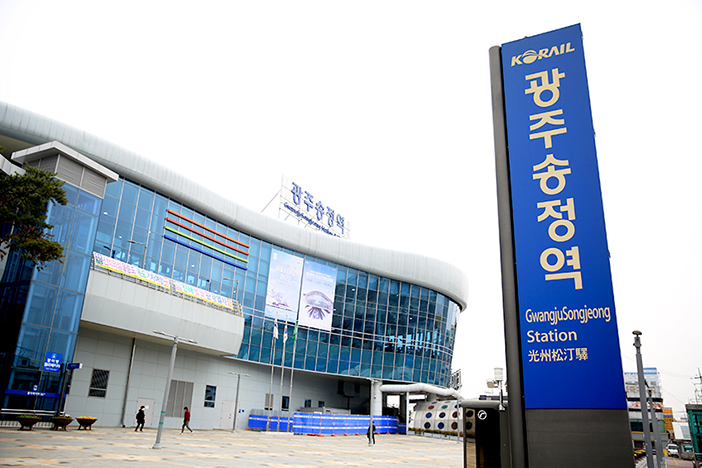
Gwangju-Songjeong Station is a major station on the Honam Line, connecting Seoul and Mokpo on the southwestern coast. The station serves KTX, SRT, ITX-Saemaeul, and Mugunghwa trains. The KTX train in particular allows passengers to travel from Yongsan Station in Seoul to Gwangju in just over one and a half hours.
Tip) Getting to attractions from Gwangju-Songjeong Station
- ☞ Subway: Exit 1 to Gwangju Subway Line 1
- ☞ Bus: Exit 1
- Gwangju-bound buses: Seated02, Songjeong19, Songjeong29, Songjeong33, Songjeong93, Songjeong96, Songjeong97, Songjeong98, Songjeong99, Songjeong100, Songjeong197, Songjeong296, Jinwol75, Imgok90, Imgok290, Seonun101, Jingok196, Maeul701, Maeul720-1
- Naju-bound buses: 160, 600, 601, 602, 603, 1160 - ☞ Taxi: Exit 1
- Gwangju-Songjeong Station
- ☞ Address: 201, Sangmu-daero, Gwangsan-gu, Gwangju (광주광역시 광산구 상무대로 201)
- ☞ Amenities: Convenience store, food & beverage sales, parking lot, etc
- ☞ Inquiries: +82-62-941-3278 (Korean only)
Recommended attractions


When traveling to Gwangju by train, the first stop has to be 1913 Songjeong Station Market! If you envision finding local farmers selling their produce to grandmas on a mission, think again! Located just across the road from Gwangju-Songjeong Market, this attraction aims to give a modern flair to traditional markets. Set along an open boulevard, the shops here sell the common street foods found at Korean markets, as well as modern takes such as a baguette hamburger and red ginseng yogurt. The most popular item is bulkkochaengi, a fried roll of sorts made from strips of samgyeopsal (grilled pork belly) around a filling of kimchi and vegetables. The smoky fire-taste achieved during the second flash-fire is accented by the sauce added like a marinade. For souvenir gifts, be sure to stop by Yeokseosaso, a gift shop named using the local dialect.

If you’re interested in learning about the history and cultural arts of Gwangju, plan a visit to Yangnim History & Culture Village. The area features unique architecture from the modern history era, as well as a forest comprised of grand trees over 100 years old. There are a total of 12 main attractions to visit depending on your interests but the one most recommended to all is Penguin Village, located just behind Yangnim-dong Community Service Center. Despite the name, you won’t find many penguins here; the name actually comes from the cute waddle of the older generation who live in the village, similar to that of penguins. The village features colorful murals and common items from the 70’s and 80’s on display. Thanks to the nature of the narrow alleyways, visitors can enjoy exploring and looking for the best spots to take pictures without worrying about others getting in the frame.
Recommended food

Known as the City of Food, the number of tasty dishes in Gwangju is limitless! If time however is limited, be sure to try Songjeong tteokgalbi (grilled rib patties) first. Located a short 10-minute walk from Gwangju-Songjeong Station, the streets around Gwangsan-gu Office are lined with tteokgalbi restaurants. After ordering, try the many side dishes that come with the meal, but leave plenty of room for the main dish! Once the tteokgalbi arrives, try it alone or wrapped in lettuce and sesame leaves along with garlic, Korean chili peppers, and doenjang (soybean paste).
- 1913 Songjeong Station Market
- ☞ Address: 38, Songjeong-ro 16beon-gil, Gwangsan-gu, Gwangju (광주광역시 광산구 송정로16번길 38)
- ☞ Directions: Walk approx. 3 min from Gwangju-Songjeong Station, Exit 5
- ☞ Operating hours: Mon-Thu 11:00-22:00 / Fri-Sun 11:00-23:00 * Closed second and fourth Monday of each month
- ☞ Inquiries: +82-62-942-1914 (Korean only)
- ☞ Website: 1913songjungmarket.modoo.at (Korean only)
- Yangnim History & Culture Village
- ☞ Address: 201-64, Yangnim-dong, Nam-gu, Gwangju (광주광역시 남구 양림동 201-64)
- ☞ Directions: Walk approx. 15 min from Namgwangju Station (Gwangju Subway Line 1), Exit 3
- ☞ Operating hours: Open 24 hours (Hours vary by shop)
- ☞ Inquiries: +82-62-607-4502 (Korean only)
- ☞ Website: visityangnim.kr (Korean only)
Naju Station

Naju Station on the Honam Line is a busy station, servicing 29 KTX and 18 SRT trains every day. The line between Naju and Mokpo Stations is also being expanded to include Muan International Airport from October 31. While the current Naju Station is quite nice, the old Naju Station is worth a visit due to its historical importance; the former station was the starting point for the Gwangju Student Independence Movement.
Tip) Getting to attractions from Naju Station
☞ Intercity bus: Main exit
☞ Taxi: Main exit
☞ Naju City Tour: 2 courses available on Saturdays (advanced reservation required)
* Tickets: 4,000 won (adult fare)
* Reservations: www.narabus.co.kr (Korean only)- Naju Station
- ☞ Address: 56, Najuyeok-gil, Naju-si, Jeollanam-do (전라남도 나주시 나주역길 56)
- ☞ Amenities: Convenience store, Lost-and-Found, food & beverage sales, parking lot
- ☞ Inquiries: +82-61-332-7788 (Korean only)
Recommended attractions

The top attractions of Naju are Geumseonggwan Hall, a guesthouse operated by the Naju Government Office for visiting officials during the Goryeo and Joseon periods, and Geumhakheon House, a reconstruction of the private residence of the Naju Moksa (highest government official in the region). We recommend starting at Geumseonggwan Hall for a history tour and then enjoying the peaceful five-minute walk to Geumhakheon House. You’ll be able to find the residence when you spot a grand hackberry tree towering over all the other trees. There are also many cherry blossom trees in the area, making it a popular attraction in spring. Unlike Geumseonggwan Hall, guests can actually spend the night at Geumhakheon House. Book a night here to feel like a traveling dignitary from the Joseon dynasty!
Recommended experience


Naju is famous for their natural dyeing, recognized as Important Intangible Cultural Heritage No. 115, and is known for developing silk weaving techniques and discovering a way to create a deep navy color for fabrics. As such, Naju is home to the Natural Dyeing Culture Center. You can easily lose track of time exploring the exhibit hall, materials room, shop, and experience hall here. The experience hall in particular offers many opportunities to make your very own souvenir, ranging from naturally dyed scarves and items of clothing to coloring and woodcraft kits.
Recommended food
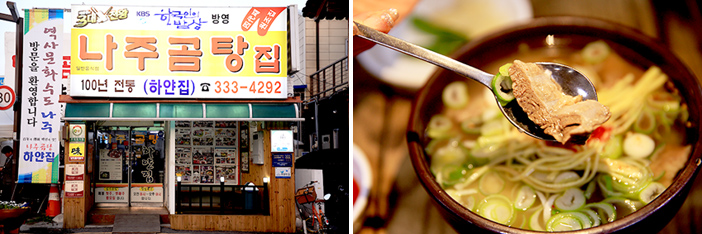
Naju is also famous for gomtang (beef bone soup). What makes Naju’s version of gomtang so special is their use of plate and shank cuts of beef for the flavoring of the broth instead of the standard beef bones used in other regions. It has also remained true to its original recipe throughout the years, drawing people back again and again. The area around Geumseonggwan Hall and Geumhakheon House is filled with gomtang restaurants, making it an easy choice when visiting!
- Geumseonggwan Hall
- ☞ Address: 8, Geumseonggwan-gil, Naju-si, Jeollanam-do (전라남도 나주시 금성관길 8)
- ☞ Directions: Take Bus No. 160 from Naju Station Bus Stop to Jungang-ro Bus Stop and walk approx. 5 min
- ☞ Operating hours: 10:00-17:00 (Open all year round)
- ☞ Admission: Free
- ☞ Inquiries: +82-61-339-8613 (Korean only)
- Moksanaea (Geumhakheon House)
- ☞ Address: 13-8, Geumseonggwan-gil, Naju-si, Jeollanam-do (전라남도 나주시 금성관길 13-8)
- ☞ Directions: Take Bus No. 160 from Naju Station Bus Stop to Jungang-ro Bus Stop and walk approx. 10 min
- ☞ Operating hours
- Tour: 09:00-18:00 (Closed Mondays)
- Accommodations: Check-in 14:00 / Check-out 11:00 (Not available Mondays) - ☞ Fees
- Admission: Free
- Accommodations: 50,000~150,000 won
* Reservations accepted via phone (+82-61-332-6565), internet (www.naju.go.kr/moksanaea / Korean only), or on-site
* Same-day reservations accepted until 17:00 (16:00 on Sundays) - ☞ Inquiries: +82-61-332-6565 (Korean only)
- ☞ Website: www.naju.go.kr/moksanaea (Korean only)
- Natural Dyeing Culture Center
- ☞ Address: 379, Baekho-ro, Dasi-myeon, Naju-si, Jeollanam-do (전라남도 나주시 다시면 백호로 379)
- ☞ Directions: Take Bus No. 503, 504, or 505 from Naju Station Bus Stop to Baekha Bus Stop and walk approx. 2 min
- ☞ Operating hours
- March-October: 09:00-18:00
- November-February: 09:00-17:00 - ☞ Admission: Free (Separate fees apply to programs)
- ☞ Inquiries: +82-61-335-0091 (Korean only)
- ☞ Website: www.naturaldyeing.or.kr (Korean, English, Japanese, Chinese)
- Naju Gomtang Street
- ☞ Address: Area of Geumgye-dong, Naju-si, Jeollanam-do (전라남도 나주시 금계동)
- ☞ Directions: Take Bus No. 160 from Naju Station Bus Stop to Jungang-ro Bus Stop and walk approx. 5 min
Muan International Airport

Muan International Airport, opened November 8, 2007, is the only international airport in the Jeollanam-do region. The airport is located next to the beautiful coast in a natural setting so pure that you’ll find it hard to believe it’s that easy to reach.
Tip) Getting to attractions from Muan International Airport
☞ Bus:Gate 1
- To Gwangju Bus Terminal: 12 buses daily, 06:30~01:30
- To Muan Bus Terminal: 5 buses daily 10:30~20:20
- To Mokpo Bus Terminal: 12 buses daily, 06:30~01:00
- To Samhakdo Island: 11 buses daily, 07:10~22:10
☞ Taxi: Gate 1- Muan International Airport
- ☞ Address: 970-260, Gonghang-ro, Muan-gun, Jeollanam-do (전라남도 무안군 망운면 공항로 970-260)
- ☞ Amenities: Duty-free store, convenience store, food & beverage sales, bank, currency exchange booth, information desk, complaint submission kiosk, free cell phone charging station, nursing room, parking lot, etc.
- ☞ Inquiries: +87-1661-2626 (Korean, English)
- ☞ Website: www.airport.co.kr/muan (Korean, English, Japanese, Chinese)
Recommended attractions
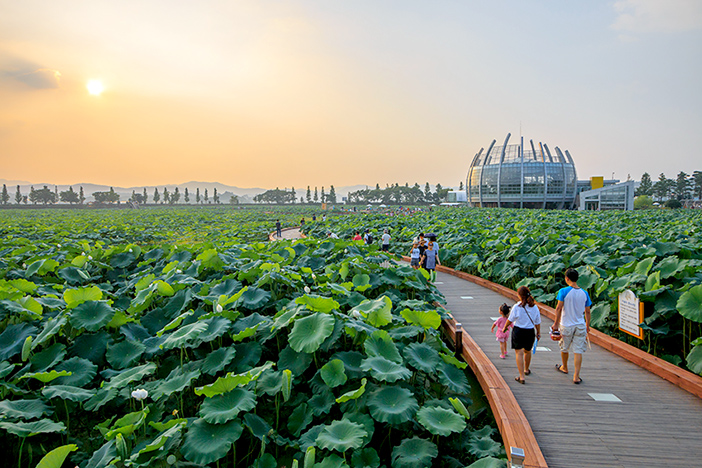
There are plenty of lotus ponds throughout Korea but none quite as grand as Hoesan White Lotus Habitat. The area is roughly 330,000 square meters in size, making it the largest white lotus habitat in Asia. Walking paths meander through the pond, making it easy to see the beautiful flowers up close; the best time to see the blossoms is between July and September! The surrounding park also has a water playground, auto campground, greenhouse and more for a full eco-trip.

It would be a waste to travel through Muan International Airport and not visit the beach. If you only have a little bit of time, we recommend Tommeori Beach, located just south of the airport. The white sandy beach is backed by a lush pine forest that hides restaurants serving hoe (sliced raw fish). Because this beach is relatively unknown, you can enjoy what feels like a private beach-side vacation. For travelers with a bit more time and lot more energy, head to Holtong Beach to enjoy water sports such as windsurfing and skiing! This section of water is known for being calm, with very small waves, making it perfect for these activities.
Recommended food

All the best local foods in Muan have one thing in common: octopus! The restaurants around Muan Bus Terminal in particular focus on this ingredient for their dishes, ranging from nakji hoe muchim (spicy raw octopus salad) and bibimbap topped with octopus to nakji yeonpotang (octopus soup) and galnaktang (beef rib and octopus soup).
- Hoesan White Lotus Habitat
- ☞ Address: 333, Baekryeon-ro, Muan-gun, Jeollanam-do (전라남도 무안군 일로읍 백련로 333)
- ☞ Directions: Take Bus No. 1000 from Muan International Airport to Cheonggyegogae Bus Stop → Transfer to Bus No. 232-6 and get off at Duryemi Bus Stop → Walk approx. 2 min (Travel time approx. 1 hr 50 min)
- ☞ Operating hours: 09:00-18:00 (Open all year round)
- ☞ Admission: Adults 4,000 won / Teenagers 3,000 won / Children 1,000 won
- ☞ Inquiries: +82-61-285-1323 (Korean only)
- Tommeori Beach
- ☞ Address: Piseo-ri, Mangun-myeon, Muan-gun, Jeollanam-do (전라남도 무안군 망운면 피서리)
- ☞ Directions: Take Bus No. 1000 from Muan International Airport to Tommeori Resort Bus Stop and walk approx. 10 min
- ☞ Admission: Free
- ☞ Inquiries: +82-61-450-5706 (Korean only)
- Holtong Beach
- ☞ Address: Oryu-ri, Hyeongyeong-myeon, Muan-gun, Jeollanam-do (전라남도 무안군 현경면 오류리)
- ☞ Directions: Take Bus No. 220-4 from Muan International Airport to Mangun Bus Stop → Transfer to Bus No. 210-1 and get off at Masanhwaleojip-ap Bus Stop → Walk approx. 20 min
- ☞ Admission: Free
- Muan Octopus Street
- ☞ Address: 31-1, Ppeolnakji-gil, Muan-gun, Jeollanam-do (전라남도 무안군 무안읍 뻘낙지길 31-1)
- ☞ Directions: Take Bus No. 220-4, 220-6, or 222-5 from Muan International Airport to Muan Terminal Bus Stop and walk approx. 1 min
Mokpo Station

Mokpo Station is the last stop on the Honam Line and is the westernmost station in Korea. For many passengers, it’s just a stepping stone to the many islands that dot the southern coast. The station was expanded in April 1, 2004 to include KTX, SRT, ITX-Saemaeul, and Mugunghwa trains.
Tip) Getting to attractions from Mokpo Station
☞ Bus: Main exit
☞ Taxi: Main exit
☞ Mokpo City Tour: Once daily Tuesday-Sunday, 09:30 departure (advanced reservation required)
* Tickets: 5,000 won (adult fare; admission to attractions not included)
* Reservations: +82-61-270-8599 (Korean only) / www.mokpo.go.kr/tour (Korean only)- Mokpo Station
- ☞ Address: 98, Yeongsan-ro, Mokpo-si, Jeollanam-do (전라남도 목포시 영산로 98)
- ☞ Amenities: Convenience store, food & beverage sales, parking lot, etc.
- ☞ Inquiries: +82-1544-7788 (Korean only)
Recommended attractions

Gatbawi Rock and the coastal walkway to reach it are a must when visiting Mokpo. Gatbawi Rock, Natural Monument No. 500, is said to look like two men wearing gat (traditional Korean hat). In the past, people had to ride a boat if they wanted to see the rocks. However, with the installation of a coastal footpath, visitors can easily walk to the rocks over the sea, enjoying the breeze on their way.
Gatbawi Culture Town is within walking distance, perfect for travelers who enjoy getting to know the local culture and arts. The tourism complex is comprised of the National Maritime Museum, Mokpo Culture & Arts Center, Mokpo Natural History Museum, Local Culture Hall, and Namnong Memorial Hall.Recommended foods

If you’re a foodie, you have to try Mokpo’s top nine dishes: sebal nakji (whiparm octopus), hongeo samhap (fermented skate and pork with kimchi), kkotge muchim (spicy swimming crab salad), mineo hoe (sliced raw croaker), galchi jorim (stewed beltfish), byeongeo hoe (sliced raw silver pomfret) & jjim (steamed silver pomfret), junchi muchim (spicy Chinese herring salad), agutang (monkfish soup) & jjim (spicy stewed monkfish), and ureokganguk (dried rockfish soup). The best place to go if you want to try all these dishes is Mokpo Jayu Market! The market sells all the local foods and fresh seafood, along with clothing at inexpensive prices. The best days to visit are Fridays and Saturdays, when the Namjin Night Market takes place! Before leaving Mokpo, stop by Colombang Bakery near the station to pick up some tasty bread. One of the top five bakeries in Korea, Colombang Bakery is famous for their cream cheese baguette and shrimp baguette.
- Gatbawi Rock
- ☞ Address: 166-1, Namnong-ro, Mokpo-si, Jeollanam-do (전라남도 목포시 남농로 166-1)
- ☞ Directions: Take Bus No. 15 from Mokpo Station to Jungbawi Bus Stop and walk approx. 1 min
- ☞ Operating hours: Open 24 hours
- ☞ Admission: Free
- Gatbawi Culture Town
- ☞ Address: Area of 135, Namnong-ro, Mokpo-si, Jeollanam-do (전라남도 목포시 남농로 135)
- ☞ Directions: Take Bus No. 15 from Mokpo Station to National Maritime Museum Bus Stop and walk approx. 4 min
- ☞ Operating hours: 09:00-18:00 (Namnong Memorial Hall 10:00-18:00)
* Closed Mondays
* Hours and closed days may vary by business - ☞ Admission: Varies by business
- ☞ Inquiries (Mokpo Tourist Information): +82-61-270-8598 (Korean only)
- Mokpo Jayu Market (Namjin Night Market)
- ☞ Address: 122, Jayu-ro, Mokpo-si, Jeollanam-do (전라남도 목포시 자유로 122)
- ☞ Directions: Take Bus No. 15 or 500 from Mokpo Station to Jayu Market Bus Stop and walk approx. 3 min
- ☞ Operating hours
- Jayu Market: 09:00-20:00 (Closed third Sunday of every month)
- Namjin Night Market: Winter 18:00-22:00 / Summer 19:00-23:00 (Only operates Friday-Saturday; hours vary by shop) - ☞ Inquiries: +82-61-245-1615 (Korean only)
More info
- ☞ 1330 Korea Travel Hotline: +82-2-1330 (Korean, English, Japanese, Chinese, Russian, Vietnamese, Thai, Malay)
* This column was last updated in April 2019, and therefore some information may differ from what is presented here. We advise you to check details before visiting.


Start a FREE Online Call
(No charges for calls on Wi-Fi /
Data charges may apply)

Open 1330 Helpline Chat(Download not required)