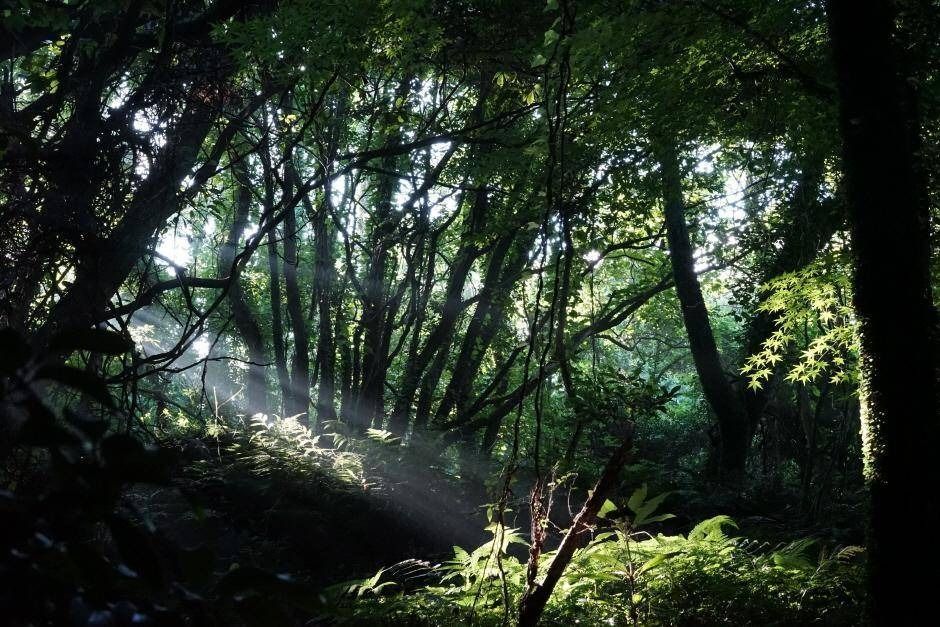
Jeju is a treasure trove of ecosystems that have been recognized as UNESCO Biosphere Reserves, World Natural Heritage Sites, and Global Geoparks. The Hwansangsup Forest, Gotjawal is a great place to experience Jeju’s natural virgin forests, and it has gained even more attention from the story of a family who realized the healing power of forests by cultivating a forest that had been neglected because it was a stone field.
A place where Jeju’s mysterious ecosystems come alive
Hwansangsup Forest, Gotjawal is the perfect place to experience Jeju’s unique volcanic terrain and ecology. “Gotjawal” is the local word for Jeju’s natural virgin forest, combining the words “got,” meaning forest, and “jawal,” meaning rocks and grasses intertwined to form a lush undergrowth. In the past, the area was considered a stony wasteland, but now that the environment has become more important, Gotjawal is considered as the lungs of Jeju and is believed to play an important role in preserving and protecting the island. The mysterious terrain carved by lava is home to a wide variety of flora and fauna, creating a unique ecosystem that is unique in the world and is highly valued for conservation.
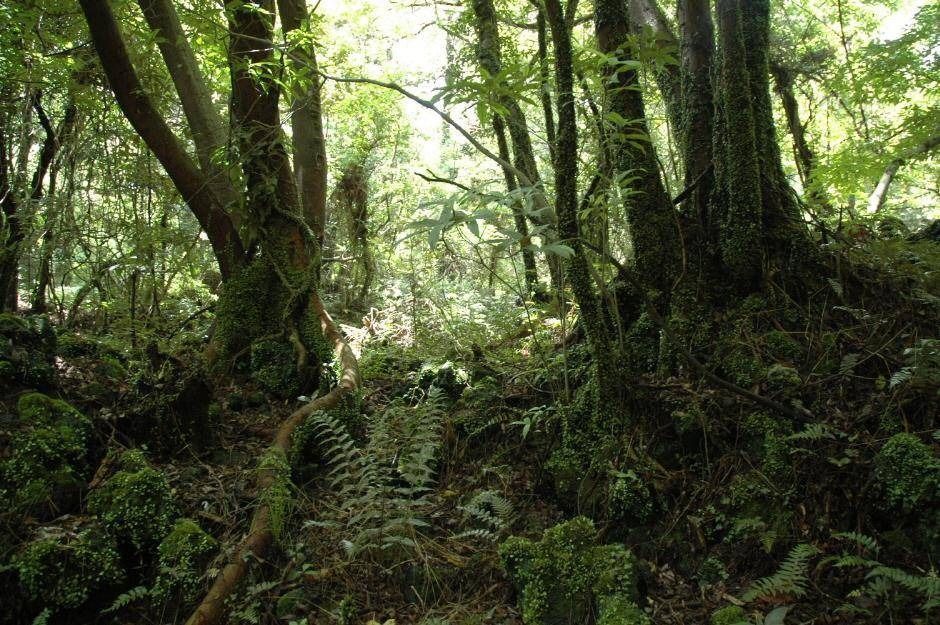
Hwansangsup Forest, Gotjawal is located at the edge of the lava flow that erupted from Donerioreum Parasitic Cone, 5 km away. As the lava with high viscosity solidified, it split into large and small chunks of rock, creating an uneven terrain and a cross-section of the World Natural Heritage–designated geopark. Over the years, seeds flown in from Hallasan Mountain and elsewhere have taken root in this rough, rocky land, creating a unique forest that is hard to find anywhere else. Having preserved the appearance of a primeval forest untouched by humans, Gotjawal is an ecological treasure trove of Jeju’s ferns and other plants. It is the only forest in the world where polar southern plants and tropical northern plants coexist, and the temperature stays within 15 degrees in both summer and winter, so it feels cool in summer and warm in winter. From the holes in the forest, energy from the depths of the earth flows out, and even amid a heavy winter snowfall, the area is not covered in snow, making it even more mysterious.
This evergreen forest is a natural wonderland where the seasons are reversed. The trees shed their leaves in the spring instead of the fall, and you can see them piled up well into the summer and fall. Even in winter, strawberries bloom in the forest, giving it the name Hwansangsup Forest. This phenomenon is a testament to Gotjawal’s ability to maintain a mild climate throughout the year. In addition, the trees that live on the stony ground without a handful of soil show their strength by extending their roots through rocks and above the ground. The green bean ferns that grow intertwined with each tree remind us of nature’s way of giving and living together.
A family saves the forest and the forest saves the family.
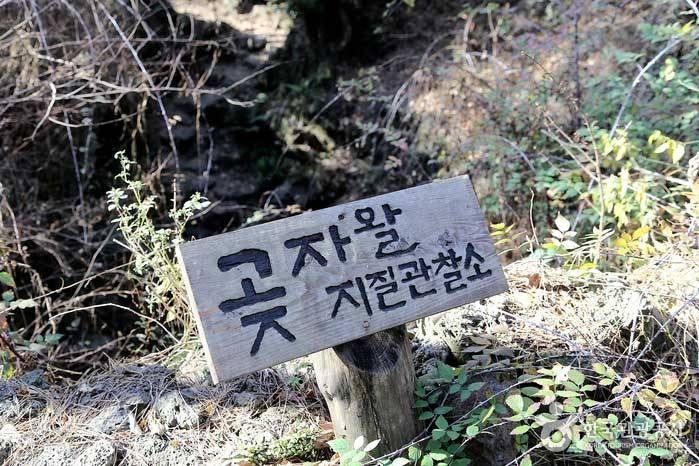
Hwansangsup Forest, Gotjawal is the result of the hard work of one family; from the father who built the trails and cared for the trees without any heavy machinery and his wife who was his constant companion, to the daughter who quit her job to help her parents, and the son-in-law who made a lifelong connection with the forest. Their dramatic story was aired on KBS’s Screening Humanity in 2016, and in 2023, the daughter, who has been a forest guide, compiled the stories into a book titled Between the Forests. Among the stories about Hwansangsup Forest, Gotjawal, the one related to the Healing Forest is the most impressive. Her father, who was paralyzed on his left side from a stroke and lost his mobility, almost hid himself from the public because of depression and lived in the forest, but after two to three years of moving stones to make a path and clearing tangled bushes and trees, he recovered his health. This shows the healing power of Jeju’s forests.
 Programs
1. Forest with storiesForest interpretation is held every hour for about 50 minutes. A docent is assigned to each bus when a group booked in advance (09:00, 10:00, 11:00, 12:00, 13:00, 14:00, 15:00, 16:00, 17:00)
2. Healing footbath therapy in the forestA footbath therapy using natural Jeju herbal ingredients takes about 40 minutes to complete, and complimentary tea is provided. About 110 individual footbaths are available on the 1st and 2nd floors of the building. Footbath programs are held every hour on the hour and every 30 minutes.
3. Experience programsPrograms include making a wooden necklace, planting Jeju wild plants in pots, and making a small Gotjawal terrarium, a mini natural stone, and indigo sky dyed handkerchiefs (available for groups of 15 or more with advance reservation).
 Address
594-1, Nokchabunjae-ro, Hangyeong-myeon, Jeju-si, Jeju-do
 Inquiries
+82-64-772-2488


 Nearby tourist attractions
O’sulloc Tea Museum
Spirited Garden
Sanbangsan Mountain & Yongmeorihaean Coast
Songaksan Trail