- Log in
-
- Sydney Overseas Office
- London Overseas Office
- Toronto Overseas Office
- Los Angeles Overseas Office
- New York Overseas Office
- Ulaanbaatar Overseas Office
- Dubai Overseas Office
- New Delhi Overseas Office
- Manila Overseas Office
- Jakarta Overseas Office
- Hanoi Overseas Office
- Kuala Lumpur Overseas Office
- Singapore Overseas Office
- Bangkok Overseas Office
- Map
- Sydney Overseas Office
- London Overseas Office
- Toronto Overseas Office
- Los Angeles Overseas Office
- New York Overseas Office
- Ulaanbaatar Overseas Office
- Dubai Overseas Office
- New Delhi Overseas Office
- Manila Overseas Office
- Jakarta Overseas Office
- Hanoi Overseas Office
- Kuala Lumpur Overseas Office
- Singapore Overseas Office
- Bangkok Overseas Office
- HOME
- Where to Go
- Destinations
-
-
-
Hallasan Mountain (한라산)
-
1
13
-
-
-
-
![]()
![]()
![]()
![]()
![]()
![]()
![]()
![]()
![]()
![]() 1 / 10
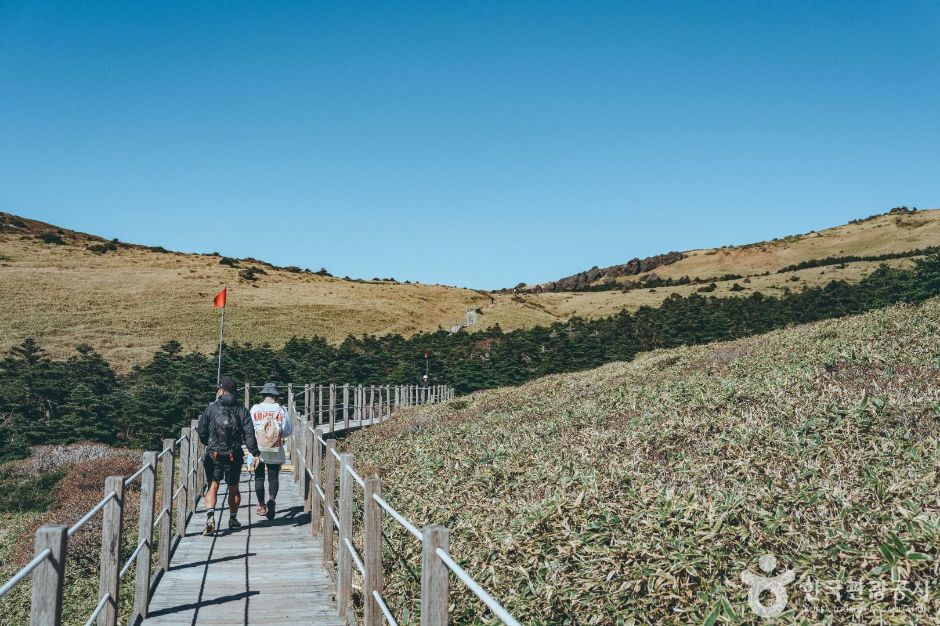
Hallasan Mountain means "a mountain high enough to pull down the Milky Way." Since ancient times, it was also called Yeongjusan because it was believed to be inhabited by immortals, and it has been regarded as one of Korea's three sacred mountains, along with Geumgangsan and Jirisan Mountains. Furthermore, due to its diverse vegetation distribution, it serves as a treasure trove of flora and fauna of high academic value; it was designated and protected as a Natural Monument in October 1966.
Hallasan Mountain, located in the center of Jeju Island—a young volcanic island from the Quaternary period—was volcanically active until 25,000 years ago, and parasitic volcanoes known as Oreum are distributed around it, creating a unique landscape. The breathtaking scenery embraced by Hallasan Mountain includes the snow-covered Baengnokdam Crater Lake, the majesty of Wanggwanneung, waterfalls hidden deep within the valleys, and Yeongsilgiam, which is steeped in the legends of Seolmundae Halmeoni and the Five Hundred Generals; it was designated as a National Park in March 1970. Due to geographical factors such as its location on an isolated island in the North Pacific and the influence of altitude, Hallasan Mountain exhibits a vertical distribution of vegetation ranging from temperate to polar climate zones.What's nearby Here are some recommended destinations nearby! Attractions within 50 kilometers are arranged in the order of closest distance.Map Directions



Start a FREE Online Call
(No charges for calls on Wi-Fi /
Data charges may apply)

Open 1330 Helpline Chat(Download not required)