Magoksa Temple (마곡사)
|
||||||||||||||||||||||||||||||||||||||||||||||||||||||||||||
|
||||||||||||||||||||||||||||||||||||||||||||||||||||||||||||
|
| ||||||||||||||||||||||||||||||||||||||||||||||||||||||||||||
| Introduction | ||||||||||||||||||||||||||||||||||||||||||||||||||||||||||||
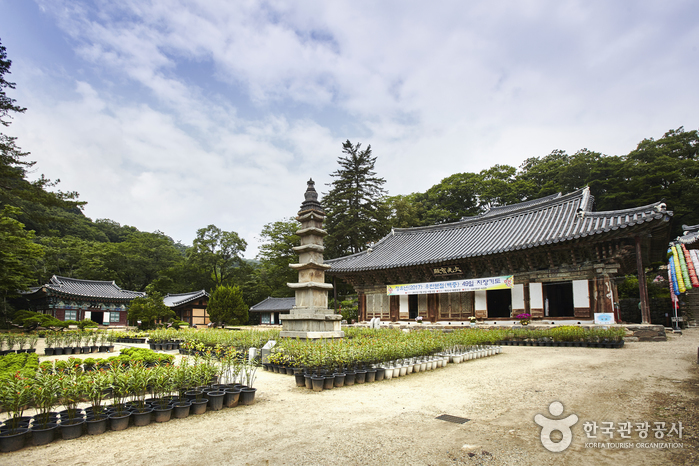
| Magoksa Temple was founded by Monk Jajangyulsa in 640, a representative temple of the Chungcheongnam-do Province. Magoksa is surrounded by a mountain and rivers curving a yin-yang shape. Perhaps because of such a shape, this temple was never damaged by any major wars during the Joseon Period (1392-1910). As much as the temple's fame, the beauty of the surrounding mountains is renowned especially the area surrounded by Mt. Taehwasan, where Taegeukcheon River flows in the shape of the yin-yang. It is most beautiful during the spring time, when the cherry blossoms, sansuyu, and magnolias fill the whole area.
One eye-catching sight at Magoksa Temple are the Ocheung Stone pagoda and the Chinese juniper trees scholar Kim-Gu (Korean politician and freedom activist) is said to have planted. The top of Ocheung Stone pagoda is decorated with bronze. This style was influenced by the Lama Buddhist sect of Tibet, and there are said to be only three of such structures left in the world. Inaddition Daegwongbojeon and Geuknakgyo are also worth a visit. |
||||||||||||||||||||||||||||||||||||||||||||||||||||||||||||
| Administration | ||||||||||||||||||||||||||||||||||||||||||||||||||||||||||||
| Magoksa Temple | ||||||||||||||||||||||||||||||||||||||||||||||||||||||||||||
| Telephone | ||||||||||||||||||||||||||||||||||||||||||||||||||||||||||||
| +82-41-841-6220~3 | ||||||||||||||||||||||||||||||||||||||||||||||||||||||||||||
| Fax | ||||||||||||||||||||||||||||||||||||||||||||||||||||||||||||
| +82-41-841-6227 | ||||||||||||||||||||||||||||||||||||||||||||||||||||||||||||
| Activity Information | ||||||||||||||||||||||||||||||||||||||||||||||||||||||||||||
| * Temple Stay in Magoksa The temple stay in Magoksa temple is so well known that it is even incorporated into the curriculum of one of the fields of studies at Chungang University. The temple offers customized programs for companies, families, couples, the unemployed, and disadvantaged social groups. The temple's top program is 'compassion meditation’; a form of group therapy in which participants reveal their inner hurt, learn to let go, and fill their hearts with compassion instead. Through this process, participants will not only experience inner peace, but project compassion to their friends, family, neighbors, and ultimately, all living beings. Participants will take part in the temple’s barugongyang meal, tea ceremony, and ullyeok (daily communal chores). Customized programs are available for groups with specific needs. Program Schedule Day 1 12:00 ~ 12:30 / Afternoon meal 12:30 ~ 13:00 / Registration 13:00 ~ 14:00 / Temple information 14:00 ~ 15:00 / Enrollment and orientation 15:00 ~ 17:00 / ‘Finding one's own merits’ 17:00 ~ 18:00 / Evening meal 18:00 ~ 19:00 / Evening service 19:00 ~ 21:00 / ‘This is me’ program 21:00 ~ / Sleep Day 2 03:30 ~ 04:30 / Early morning service 04:30 ~ 05:30 / Early morning walk in the mountains 05:30 ~ 06:00 / Seated meditation 06:00 ~ 07:00 / Morning meal 07:00 ~ 08:00 / Tea ceremony 08:00 ~ 09:00 / Ullyeok 09:00 ~ 11:30 / 'Spreading the Love' 12:00 ~ 13:00 / Afternoon meal 13:00 ~ / Return * Participation fee (1-night 2-day program): Relaxed program 30,000 won / Regular program 40,000 won |
||||||||||||||||||||||||||||||||||||||||||||||||||||||||||||
| Operating Hours | ||||||||||||||||||||||||||||||||||||||||||||||||||||||||||||
| Sunrise-sunset | ||||||||||||||||||||||||||||||||||||||||||||||||||||||||||||
| Parking Facilities | ||||||||||||||||||||||||||||||||||||||||||||||||||||||||||||
| Available Large car - 4,000 won / Small car - 2,000 won |
||||||||||||||||||||||||||||||||||||||||||||||||||||||||||||
| Admission Fees | ||||||||||||||||||||||||||||||||||||||||||||||||||||||||||||
| Individual - Adults 2,000 won / Youth 1,500 won / Children 1,000 won Group - Adults 1,600 won / Youth 1,200 won / Children 800 won |
||||||||||||||||||||||||||||||||||||||||||||||||||||||||||||
| Directions | ||||||||||||||||||||||||||||||||||||||||||||||||||||||||||||
| Take an intercity bus to Gongju (공주). From Gongju Bus Terminal, take Bus 610, 611 to Magoksa Temple Parking Lot (마곡사주차장) bus stop. Follow Magokcheon (Stream) for 800m to arrive at Magoksa Temple. |
||||||||||||||||||||||||||||||||||||||||||||||||||||||||||||
|
||||||||||||||||||||||||||||||||||||||||||||||||||||||||||||