Insadong and the surrounding area were the residences
of Joseon Dynasty (1392-1910) officials, extended
royal families, and the yangban aristocratic
class. The antique art shops that were established
here during the Japanese Colonial Period carried
everyday items of the privileged class as these
items became antiques in the face of modernity.
Since then, Insadong has been home to dozens of
art galleries and antique shops. Insadong's narrow
alleys branch out into all directions from one main
street.
To explore the interesting places
on these side alleys, it would be helpful to get
a map of Insadong at one of three Tourism Information
Centers that are located at the center and the two
ends of the main street. |
 |
 |
 |
Antique of Insadong 41%
of Korea's antique shops. These shops display and
sell quality antiques such as old paintings, ceramics,
woodenware, metalware, old furniture and many other
items. Among them, ceramics are found abundantly.
Numerous antique shops are renowned for specific
merchandise: Tongmungwan for old documents, Haedonggodoja
Research Institute for ceramics, Godosa for daily
utensils of the past, Dongmundang and Gonghwarang
for calligraphy supplies, and Naraksil and Gayajae,
famous for old furniture. |
 |
 |
 |
Art Galleries of Insadong
Art galleries began to settle in Insadong from the
1970s and presently account for more than 70 shops.
Galleries in Insadong display and sell modern art
pieces as well as antiques. The price of artwork
ranges from a few U.S. dollars to ten thousand U.S.
dollars. Exhibitions are held frequently in these
galleries and give good chances for Korean artists
to gather. Insa Art Center and Gyeongin Art Gallery
are famous in Insadong. |
 |
 |
 |
Hanbok Korean
Traditional Clothes, Ceramics, Handicrafts and Souvenirs
Most hanbok shops in Insadong sell a simplified
version of hanbok. Hanbok usually
costs about two hundred U.S. dollars, but the price
of high-quality hanbok could go up to a few
thousand U.S. dollars. Jilgyeongyi Wuriot is a famous
hanbok shop. Ceramics are another popular
shopping item in Insadong. Good quality ceramics
have a clean color and make a pure sound when tapped
with a finger. Bakyeongsukyo is a prominent
ceramics shop which was visited by Queen ElizabethⅡof
England. If hanbok or ceramics are too expensive,
traditional-style daily items might be a good option.
Wuri Segye, Sori Hana, and Tongin Gagye are good
shops to get souvenirs such as silk pouches, oriental
fans or mobile phone strings. Gana Art Shop inside
of Insa Art Center offers traditional high quality
items. Awon Gongbang is a good shop for metal crafted
products and the National Souvenir Center and Seoul
Souvenir Shop are specialized souvenir shops in
Insadong. |
 |
 |
 |
Food and Drink
Most restaurants in Insadong are on alleys near
Sudo Pharmacy. (Please refer to the map of Insadong).
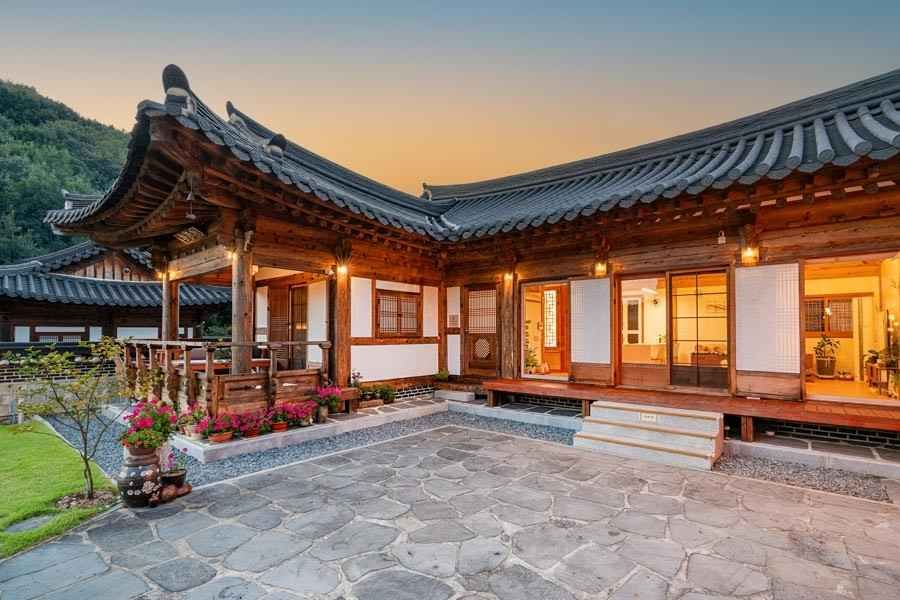
Traditional restaurants in Insadong serve Korean
dishes cooked without synthetic seasonings in remodeled
traditional Korean houses. Sanchon serves good temple
food along with a traditional performance. The restaurant
Jirisan is famous for delicious dishes that taste
of Korean home cooking. Sadongmyeonok is renowned
for manduguk, dumpling soup; Insadong Hangari
Sujebi is recognized for sujebi, clear soup
with wheat flakes; and Gaetmaeul Milbatjip is celebrated
for kalguksu, noodle soup. Yetchatjip, Gwicheon,
and Jeontong Dawon located inside of Gyeongin Art
Gallery are popular traditional teahouses. A fun
experience in Insadong is to try hotteok,
Chinese stuffed pancake, or ggultarae from
a street vendor. |
 |
 |
| [ Transportation and Map ] |
 |
- Seoul Subway Line 1, Jonggak
Station, 5 minute walk - Seoul Subway Line 1,
Jongno 3-ga Station, 5 minute walk - Seoul Subway
Line 3, Anguk Station, 5 minute walk |
 |
|
|
|