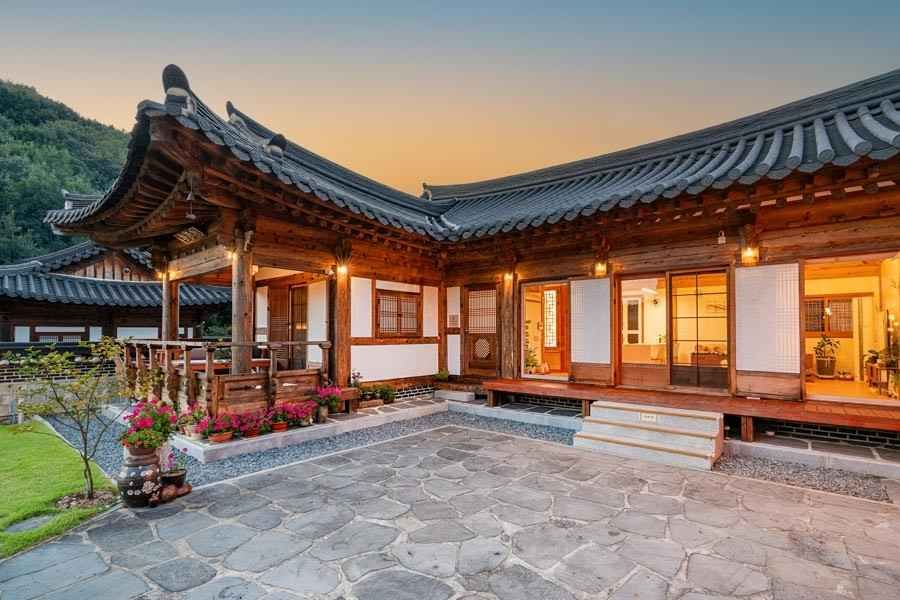
Korean Restaurant |
 |
|
Part 8- Foods for special celebrations
A rite of passage is a term from folklore that refers to various ceremonies and rituals, big and small, that a person goes through in his or her life from the time he or she is born. For these occasio...
|
|
 |
 |
|
Part 7- Local dishes
Topographically, Korea stretches out from north to south and is narrow from east to west. Therefore, the climate varies greatly from the northern region to the southern region.
|
|
 |
 |
|
Part 6- Kimchi, the fundamental Korean f...
In Korea, there is a saying "gimjang (kimchi for winter use) is half of one's winter provisions." No matter how sumptuous a banquet may be, a banquet spread without kimchi is unimaginable.
|
|
 |
 |
|
Part 5- Royal Cuisine – Who made royal c...
In the royal court, there were many court ladies. In Korean, a court lady is called gungnyeo, which is short for gungjung yeogwan (a lady officer of the royal court).
|
|
 |
 |
|
Part 4- Royal Cuisine- royal meal and ro...
What did kings of the Joseon Dynasty normally eat? Meals prepared for kings were specifically called sura, and a table set with sura is called surasang (sang means a dining table in Korean).
|
|
 |
 |
|
Part 3- Special Food for Seasonal Occasi...
Food for special occasions include festive foods that were enjoyed on holidays in particular months and seasonal dishes prepared with food produced in the current season.
|
|
 |
 |
|
Part 2- Seasonings and Style of Korean F...
When cooking, we use various ingredients to create the distinctive flavor of each dish while preserving the individual taste of each food used. We call these ingredients seasonings.
|
|
 |
 |
|
Part 1- Overview of Korean Food
With the success of the Korean drama Daejanggeum, or Jewel in the Palace, in Taiwan, Hong Kong, and Japan, the popularity or Korean food is rising in Asia.
|
|
 |