Hanok (traditional Korean house) is the most authentic Korean heritage. Since the 1970s, most hanok have disappeared because of the rise of apartment buildings. Jeonju Hanok Village is one of the few cities where traditional hanok remains intact. Everywhere you turn, you’ll find an elegant hanok. There are many historic sites, including Gyeonggijeon Shrine, which houses the portrait of King Taejo Yi Seong-gye, Omokdae Historic Site, hyanggyo (local Confucian school), and Jeondong Catholic Cathedral. You can try many unique experiences, such as calligraphy, pansori (epic chant), moju (unrefined rice wine) making, hanbok (traditional Korean clothes) experience, and hanok stays.
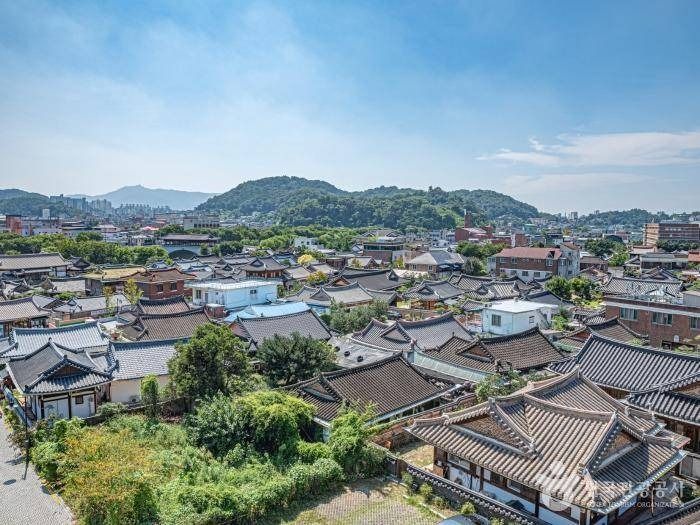
A city where Korean beauty comes alive
Pungnam-dong, Jeonju, is a neighborhood of more than 700 hanok buildings. During the Joseon Dynasty, Jeonju was home to the Jeollagamyeong Provincial Office. Its food, culture, and arts have been developed, and there are many cultural assets, such as the Gyeonggijeon Shrine, Omokdae Historic Site, and the history archives. Gyeonggijeon Shrine was built in 1410 to house the portrait of King Taejo Yi Seong-gye. It retains 600 years of history and grace. It has been featured in countless movies and dramas, including Masquerade, The Fatal Encounter, and Tears of the Dragon.
Located on a hilltop, the Omokdae Historic Site offers a panoramic view of the endless tiled roofs of Jeonju Hanok Village, making it a renowned spot. This is where King Taejo celebrated his victory over the Japanese army at Hwangsan. The Jeonjuhyanggyo Local Confucian School, built during the reign of King Gongmin of Goryeo, is full of antique beauty, including a two-story Manhwaru Pavilion, Daeseongjeon Shrine, and Myeongnyundang Lecture Hall. Pungnammun Gate, built in 1389, is the southern gate of Jeonjubuseong Fortress. When Jeonjubuseong Fortress was demolished in 1905, it was the only one of the four gates left. The beautiful Hongyemun Gate and gate tower show the status of the time.
Among the many hanok, one exotic building stands out. It’s Jeondong Catholic Cathedral, which was built over seven years starting in 1907. It was the first Romanesque and Byzantine-style building in Honam and is considered one of the three largest cathedrals in Korea, along with Myeongdong Cathedral in Seoul and Gyesan Cathedral in Daegu.
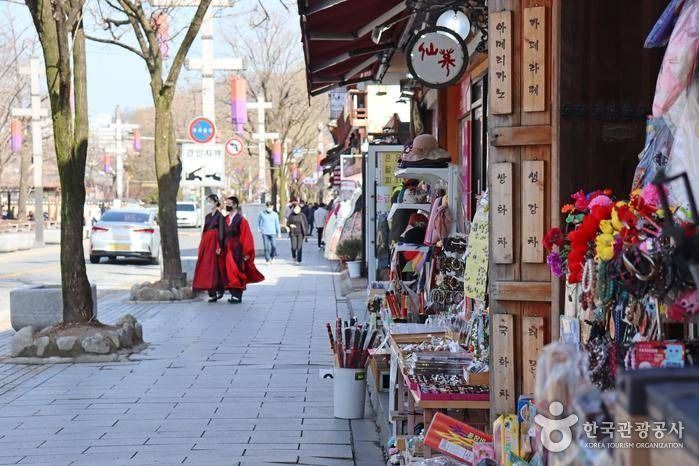
Filled with pleasant experiences, from traditional crafts to hanok stays
Tourists dressed in beautiful hanbok in the alleyways are smiling and taking pictures. The alleyways of Jeonju Hanok Village, with its stone walls and tiled roofs, are the perfect backdrop for hanbok photos. All you have to do is press the shutter, and you’ll have a life shot. Compared to other cities, there are more hanbok rental shops and various hanbok types.
Jeonju has long been called the home of artists, and traditional arts and culture, such as pansori and calligraphy, have developed. There are calligraphy classes where you can grind an ink stick on an inkstone and write with a brush, as well as ceramic art, fan making, and Korean paper art. You can also try to learn pansori or folk songs, and traditional performances such as gayageum (twelve-stringed zither) are held. It is also popular to make and taste moju (unrefined rice wine), a traditional liquor handed down from Jeonju. There are also many delicious Korean dishes such as Korean table d’hote, bean sprouts and rice soup, and noodle soup, as well as many must-try snacks such as Gilgeoriya, bibimbap croquettes, and honey-filled pancakes. There are more than 160 hanok lodging places where you can stay overnight in a hanok. Among them, Wangyijimil is a premium hanok hotel combining traditional hanok style and modern conveniences.
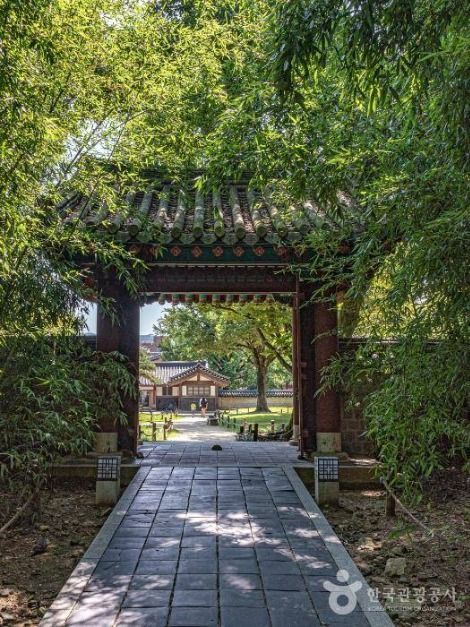
 Programs
Jeonju Hanok Village Culture Guided TourVisitors: 20 or more people from Korea, 10 or more people from abroadReservation period: 14 days in advanceHours: 10:00–16:00 (Choose from 1 to 8 courses within two hours for one course.)Contact: Tourist Information Center +82-63-284-1126, Jeonju City Hall Tourism Policy Division +82-63-281-2665Fees: Free (Gyeonggijeon Shrine entrance fee is separate)
 Address
(Hanok Village Tourist Information Center), 99, Girin-daero, Wansan-gu, Jeonju-si, Jeonbuk-do
 Inquiries
+82-63-282-1330
 Website
 Nearby tourist attractions
Jeonju National Museum
Samnye Culture Art Village
Iksan Mireuksa Temple Site
Archaeological Site in Wanggung-ri
Daedunsan Cable Car