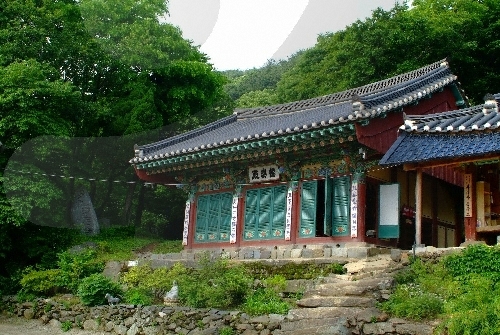
Buseoksa Temple (Seosan) (부석사 - 서산)
|
||||||||||||||||||||||||||||||||||||||||||||||||||||||||||||
|
||||||||||||||||||||||||||||||||||||||||||||||||||||||||||||
|
| ||||||||||||||||||||||||||||||||||||||||||||||||||||||||||||
| Introduction | ||||||||||||||||||||||||||||||||||||||||||||||||||||||||||||
| Located in Mount Dobisan in Seosan, Chungcheongnam-do, Buseoksa Temple was built in the Silla Era. The temple, which is also known as Seosan Buseoksa, is not as well known as Yeongju Buseoksa Temple in Gyeongsangbuk-do Province because of its size and lack of extensive historical documentation. The temple was built by the Great Monk Uisang in 677, the 17th year of King Munmu of Silla, and was later rebuilt by Great Monk Muhak during the Joseon Dynasty. The beautiful Geumdonggwaneumbosaljwasang, or seated gilt-bronze Buddha statue, which was housed in the Buseoksa Temple in 1330, is now located in a temple on Tsushima Island in Japan. The only remaining buildings of Buseoksa are the large Geungnakjeon Hall, Mongnyongjang (the monks' living quarters), Simgeomdang, and Anyangnu. Walking up from the main hall, visitors will find the Sansingak building, and a stone pagoda close to the entrance of the Mount Dobisan hiking trail. From the summit of Mount Dobisan, one can get an amazing view of the Seohae Sea beyond Ganwoldo and Anmyeondo islands, as well as Mount Gayasan. For this reason, the temple draws a large crowd of visitors despite its relatively small size. |
||||||||||||||||||||||||||||||||||||||||||||||||||||||||||||
| Telephone | ||||||||||||||||||||||||||||||||||||||||||||||||||||||||||||
| +82-41-662-3824 | ||||||||||||||||||||||||||||||||||||||||||||||||||||||||||||
| Current Status | ||||||||||||||||||||||||||||||||||||||||||||||||||||||||||||
| Chungcheongnam-do Cultural Asset No.195 | ||||||||||||||||||||||||||||||||||||||||||||||||||||||||||||
| Activity Information | ||||||||||||||||||||||||||||||||||||||||||||||||||||||||||||
| Temple Stay
The temple stay at Buseoksa runs under the theme 'Humans in the company of Nature.' The program focuses on having participants feel, share, and practice Buddha's teaching instead of studying it in a classroom setting. There are a variety of seasonal programs appropriate for families, friends, or couples. The winter program titled 'Birds, Nature, and Humans as One' is an opportunity to explore the winter habitat of migratory birds. By observing the movement of the birds and feeding them, participants practice the teaching of having love for all living things. The program also includes a trip to the forest to observe the local birds, guess the species through their songs, and learn about the meaning of various kinds of bird calls. Through this experience, participants can gain a deeper appreciation of life and recognize that human beings and nature are not two separate things, but rather one harmonious entity. In the spring, the temple stay program focuses on the wild flowers that cover the fields and mountain; in summer, the focus shifts to highlight the temple experience; and in the fall, a program designed around the beauty of the fall foliage further emphasizes the harmony of man and nature. Programs Day 1 15:00 Registration (distribution of uniforms, room allocation) 16:00 Orientation (Temple etiquette, general etiquette, and visit to the Prayer Hall) 17:30 Dinner 18:30 Evening Service 19:20 Tea Ceremony 20:30 Zen Meditation 22:00 Sleep Day 2 04:00 Rising and washing 04:20 Early Morning Service 06:00 Zen Meditation 07:00 Breakfast 08:00 Climbing up the Dobisan Mountain 09:00 Prayer beads making 09:30 Dancheong (temple decorative patterns) drawing 11:20 Cleaning 11:40 Drawing up a questionnaire 12:00 Lunch Participation Fees 1 Night/2 Day program: Adults: 40,000 won / Elementary school students: 30,000 won 2 Night/3 Day program: Adults: 70,000 won / Elementary school students: 50,000 won Inquiries: +82-70-8801-3824 |
||||||||||||||||||||||||||||||||||||||||||||||||||||||||||||
| Operating Hours | ||||||||||||||||||||||||||||||||||||||||||||||||||||||||||||
| Sunrise-Sunset | ||||||||||||||||||||||||||||||||||||||||||||||||||||||||||||
| Parking Facilities | ||||||||||||||||||||||||||||||||||||||||||||||||||||||||||||
| Available | ||||||||||||||||||||||||||||||||||||||||||||||||||||||||||||
| Admission Fees | ||||||||||||||||||||||||||||||||||||||||||||||||||||||||||||
| Free | ||||||||||||||||||||||||||||||||||||||||||||||||||||||||||||
| Facilities for the Handicapped | ||||||||||||||||||||||||||||||||||||||||||||||||||||||||||||
| Not available | ||||||||||||||||||||||||||||||||||||||||||||||||||||||||||||
| Interpretation Services Offered | ||||||||||||||||||||||||||||||||||||||||||||||||||||||||||||
| English | ||||||||||||||||||||||||||||||||||||||||||||||||||||||||||||
| Pets | ||||||||||||||||||||||||||||||||||||||||||||||||||||||||||||
| Permitted * Pets are not permitted inside buildings. |
||||||||||||||||||||||||||||||||||||||||||||||||||||||||||||
| Directions | ||||||||||||||||||||||||||||||||||||||||||||||||||||||||||||
| From Seoul
Central City Bus Terminal, take an intercity bus to Seosan (서산). From Seosan Bus Terminal, take a local bus bound for Buseok (부석). Get off at Buseok-myeon Samgeori (3-way Intersection, 부석 삼거리). Buseoksa Temple is about 2.5km away from the bus stop. |
||||||||||||||||||||||||||||||||||||||||||||||||||||||||||||
|
||||||||||||||||||||||||||||||||||||||||||||||||||||||||||||