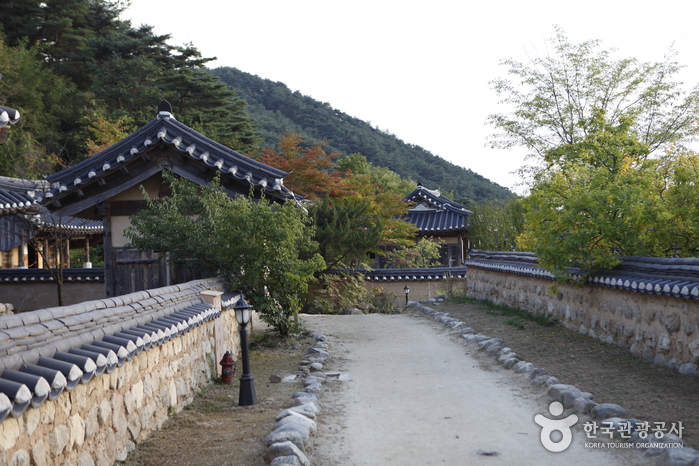
Seonbichon Village (선비촌)
|
||||||||||||||||||||||||||||||||||||||||||||||||||||||||||||
|
||||||||||||||||||||||||||||||||||||||||||||||||||||||||||||
|
| ||||||||||||||||||||||||||||||||||||||||||||||||||||||||||||
| Introduction | ||||||||||||||||||||||||||||||||||||||||||||||||||||||||||||
| Seonbichon Village (선비촌) in Yeongju, Gyeongsangbuk-do, the cradle of Korean Confucianism, is where the spirit and cultural heritage of Korea’s classical scholars, referring to those who were intellectually and morally capable of leadership within their chosen fields, is preserved. The village is the perfect place to learn about traditional Korea, and is famous for its classical scholars’ loyalty and filial piety.
Seonbichon Village offers a variety of fun and exciting exhibitions, participatory events and traditional culture hands-on programs. * Site area - 57,717㎡ * Building area - 2,651㎡ * Facilities – 7 tile-roofed houses, 5 straw-roofed houses, 1 tower, 2 pavilions, 2 Jeongryeogak pavilions, 1 Seonghwangdang Altar, 1 storehouse, 1 look-out shed, Jeojageori Market * Susinjega (수신제가) – Kim Sang-jin’s House, Haeudang Old House, Ganghakdang Village School ‘Susinjega’ refers to moral training and home management. You can realize the classical scholars’ self discipline amidst the ancient buildings and experience the traditional Korean educational system in person. * Ipsinyangmyeong (입신양명) – Duam’s Old House, the Head House of Indong Jang Clan ‘Ipsinyangmyeong’ means rising in the world and winning fame. Within these old houses you can take a look at the lifestyle of the classical scholars in Yeongju, who were engaged in diverse activities, acting as high-ranking officials. * Geomuguan (거무구안) – Kim Mun-gi’s House, Manjukjae House, Pavilion ‘Geomuguan’ means forgoing comfort and convenience in life. Within these old buildings, you can witness the integrity and spirit of classical scholars who strove to live idyllic and pastoral lives while criticizing the petty focuses of society. * Udobulubin (우도불우빈) – Kim Se-gi’s House, Kim Roe-jin’s House, Jang Hwi-deok’s House, Lee Hu-nam’s House, Kim Gyu-jin’s House, Servants’ Quarters of Duam’s Old House ‘Udobulubin’ refers to pursuing a faithful and upright life even in poverty. These old houses offer a glimpse at the humble and pure life of classical scholars who were not ashamed of being poor. |
||||||||||||||||||||||||||||||||||||||||||||||||||||||||||||
| master@sunbichon.net | ||||||||||||||||||||||||||||||||||||||||||||||||||||||||||||
| Closed | ||||||||||||||||||||||||||||||||||||||||||||||||||||||||||||
| Open 365 days a year | ||||||||||||||||||||||||||||||||||||||||||||||||||||||||||||
| Activity Information | ||||||||||||||||||||||||||||||||||||||||||||||||||||||||||||
| * Putting on traditional costumes (ex: Hanbok, coming-of-age / marriage / funeral / ancestor worship dress, etc.) * Straw bag weaving, Straw rope weaving, Kite making * Seodang Confucian Academy Program (Lessons on traditional etiquette, classical scholars’ lofty spirit, Chinese character and tea ceremony) * Restoration of Seonangje Ritual (A chance to experience shamanism using Seonghwangdang Altar) * Traditional plays (Yeongju Traditional Folklore Festival; Tuho (arrow throwing), Neol (Korean seesaw), Janggi (Korean chess), Paengi (top spinning), Juldarigi (tug of war), Ssireum (Korean wrestling), Yunnori and Jegichagi (Korean hacky sack)) |
||||||||||||||||||||||||||||||||||||||||||||||||||||||||||||
| Operating Hours | ||||||||||||||||||||||||||||||||||||||||||||||||||||||||||||
| November-February: 09:00-17:00 March-May & September-October: 09:00-18:00 June-August: 09:00-19:00 ※ Last admission is 1 hour before closing. |
||||||||||||||||||||||||||||||||||||||||||||||||||||||||||||
| Parking Facilities | ||||||||||||||||||||||||||||||||||||||||||||||||||||||||||||
| 145 parking spaces | ||||||||||||||||||||||||||||||||||||||||||||||||||||||||||||
| Parking Fees | ||||||||||||||||||||||||||||||||||||||||||||||||||||||||||||
| Free | ||||||||||||||||||||||||||||||||||||||||||||||||||||||||||||
| Admission Fees | ||||||||||||||||||||||||||||||||||||||||||||||||||||||||||||
| * Individual : Adults 3,000 won / Youths 2,000 won / Children 1,000 won * Group (more 30 people) : Adults 2,500 won / Youths 1,500 won / Children 800 won ※ including Seonbichon village, Sosuseowon, Sosu Museum |
||||||||||||||||||||||||||||||||||||||||||||||||||||||||||||
| Facilities for the Handicapped | ||||||||||||||||||||||||||||||||||||||||||||||||||||||||||||
| wheelchair rental services, parking spaces, restrooms | ||||||||||||||||||||||||||||||||||||||||||||||||||||||||||||
| Interpretation Services Offered | ||||||||||||||||||||||||||||||||||||||||||||||||||||||||||||
| English, Chinese, Japanese * Advanced reservations required |
||||||||||||||||||||||||||||||||||||||||||||||||||||||||||||
| Baby Stroller Rentals | ||||||||||||||||||||||||||||||||||||||||||||||||||||||||||||
| Available | ||||||||||||||||||||||||||||||||||||||||||||||||||||||||||||
| Pets | ||||||||||||||||||||||||||||||||||||||||||||||||||||||||||||
| Not permitted | ||||||||||||||||||||||||||||||||||||||||||||||||||||||||||||
| Directions | ||||||||||||||||||||||||||||||||||||||||||||||||||||||||||||
| From Dong
Seoul Bus Terminal, take an intercity bus to Yeongju. From Yeongju or Punggi Bus Terminal, take bus 27 (bound for Buseoksa Temple). Get off at Sosuseowon (Seonbichon Village). |
||||||||||||||||||||||||||||||||||||||||||||||||||||||||||||
|
||||||||||||||||||||||||||||||||||||||||||||||||||||||||||||