Gapsa Temple (갑사)
|
||||||||||||||||||||||||||||||||||||||||||||||||||||||||||||
|
||||||||||||||||||||||||||||||||||||||||||||||||||||||||||||
|
| ||||||||||||||||||||||||||||||||||||||||||||||||||||||||||||
| Introduction | ||||||||||||||||||||||||||||||||||||||||||||||||||||||||||||
| Gapsa Temple is located in Mt. Gyeryongsan National Park, about 19km from Gongju-si. It was established by monk Adohwasang in 420, during the Baekje Period (234-678), and is a well known temple for acquiring numerous cultural treasures.
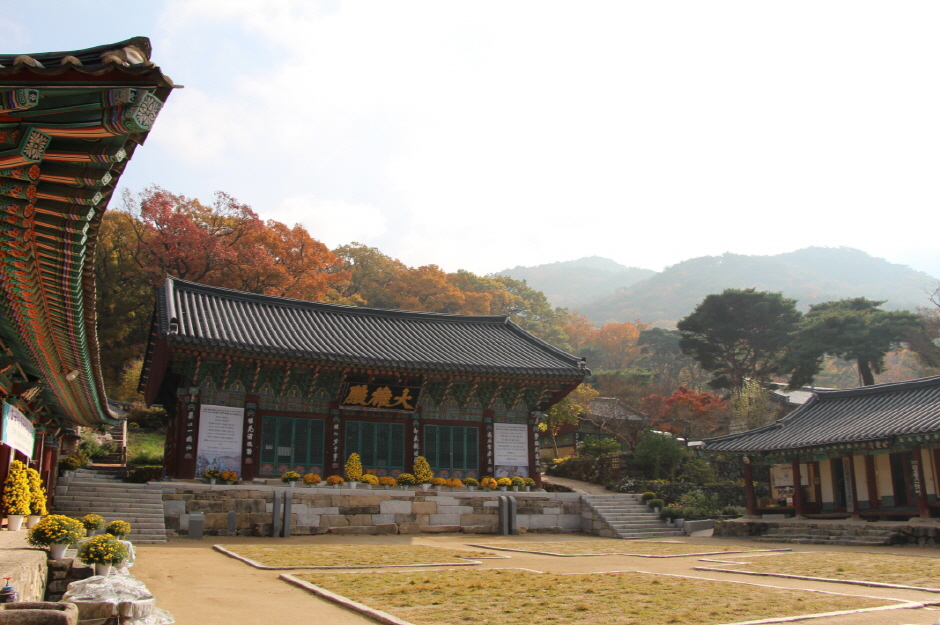
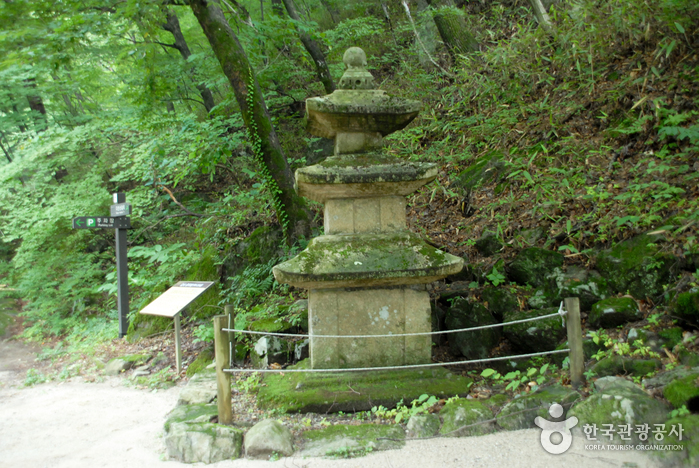
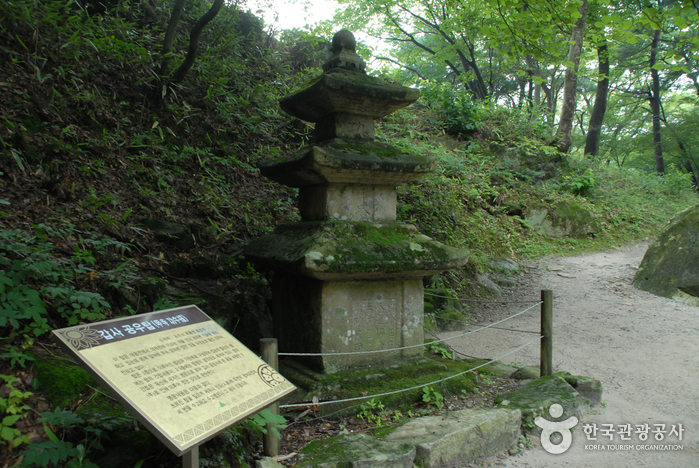
Once you pass the parking lot, you will come across a market area, the ticketing booth, and then pass through Iljumun, the main gate. The parking lot to Gapsa Temple is less than 2km, but the road passes a famous area known as Ori Forest. In the spring, the apricot flowers bloom, and in the summer, lush green forest covers the area. In the fall, the leaves turn into beautiful hue of crimson red to create a spectacular view of the road. When you enter Gapsa, the first thing that will catch your eye is the temple’s lecture hall. There is a big sign with words written in blue, “Gyeryonggapsa”, at the entrance of the building. Tt is part of Gapsa’s uniqueness as it cannot be seen elsewhere. To one side of the lecture hall is the Dongjonggak, which houses the Dongjong (copper bell). Daeungjeon, the main building, is behind the lecture hall. If you go left from Gapsa’s lecture hall, there are the Pyochungwon and Palsangjeon buildings. Pyochungwon is where portraits of the high priests Yeong-Gyu, Sa-Myeong, and Seo-San, (who also served as monk-soldiers during the Imjinwaeran war with Japan in 1592-1598 ) are kept. High priest Yeong-Gyu, especially, took lead in leading monks to become soldiers. Pyochungwon was created to honor them. Above Pyochungwon stands the Palsanjeon building. It is so named because Palsangdo, on which the life of Buddha was divided into eight parts and described with pictures, is preserved here. The spot where these two building are is the most beautiful area to view the autumn leaves. If you keep following the road past Gapsa Temple, the Gyeryongsan Mountain trail walk appears. There is a traditional Teahouse nearby, and the valley beside the place is also very beautiful. Across the valley you can see Gongu Tower. Follow the road going off to one side of the Gongu tower and Daejeokjeon, as well as Cheoldanggan will appear. Cheoldanggan is what is raised up between two Danggan pillars. Originally there were 28 Cheoltongs connected t each other, but four of them broke during Go-Jong’s reign, and now there are only 24 Cheoltongs left. Gapsa is famous for its beauty during the fall. Maple trees, gingko trees, and numerous other trees with large leaves are planted, and they create a very natural and beautiful autumn landscape. |
||||||||||||||||||||||||||||||||||||||||||||||||||||||||||||
| Telephone | ||||||||||||||||||||||||||||||||||||||||||||||||||||||||||||
| +82-41-857-8981 | ||||||||||||||||||||||||||||||||||||||||||||||||||||||||||||
| Hiking Course | ||||||||||||||||||||||||||||||||||||||||||||||||||||||||||||
| * Gapsa(갑사) - Youngmun Falls(용문폭포) - Geumjandi Hill(금잔디고개) - Nammaetap Pagoda(남매탑) - Dognhaksa(동학사) (4.7km / 3 hrs)
* Gapsa(갑사) - Yeoncheonbong(연천봉) - Gwaneumbong(관음봉) - Eunseon Falls(은선폭포) - Donghaksa(동학사) (5.5㎞ / 3 hrs 30 mins) * Gapsa(갑사) - Sambulbong peak(삼불봉) - Gwaneumbong peak(관음봉) - Eunseon Falls(은선폭포) - Donghaksa(동학사) (7.1km / 4 hrs) |
||||||||||||||||||||||||||||||||||||||||||||||||||||||||||||
| Activity Information | ||||||||||||||||||||||||||||||||||||||||||||||||||||||||||||
| Temple Stay in Gapsa Gapsa Temple has offered temple stay programs for foreigners since the 2002 FIFA World Cup in Korea. The temple is easily accessible from the major metropolitan regions and southern regions of Korea, drawing a variety of people of different origins, occupations, and ages. The one-night, two-day program is an introduction to typical Korean temple life. The most popular programs are the forest walk along the trails of Mount Gyeryongsan and the Buddhist martial arts class designed to strengthen the body. Those interested in ceramics can sign up in advance to take pottery classes during their temple stay. Participants can also make a rubbing, patterned after Gapsa's famed wooden printing blocks of Worinseokbo (Treasure No. 582) to take home as a souvenir. During the temple stay, participants will see junior and senior monks, devoted followers helping with temple upkeep, and monks attending early morning services. Individuals/groups that are interested in participating in the temple stay program are asked to please book in advance. To encourage family visitors, the temple has provided special family accommodations to ensure a more comfortable and enjoyable stay. * Types of program Regular program – Every weekend Tailored program – Based on personal needs or group requests * Program (Flexible, Free-form program if number of participants is 10 or less) Day 1 13:00 / Arrival 13:00 ~ 14:00 / Afternoon meal 14:00 ~ 15:00 / Check-in 15:00 ~ 16:00 / Enrollment 16:00 ~ 16:30 / Orientation on temple culture 16:30 ~ 17:30 / Greetings 17:30 ~ 18:30 / Evening meal 18:30 ~ 19:00 / Evening service 19:00 ~ 20:00 / Rest 20:00 ~ 21:00 / Cultural program (Learning 'barugongyang' meal practices) 22:00 ~ / Sleep Day 2 03:00 ~ 04:00 / Early morning service 04:00 ~ 05:00 / Zen meditation 05:00 ~ 06:00 / Barugongyang meal 06:00 ~ 07:00 / Forest bath 07:00 ~ 08:00 / Ullyeok (cleaning the premise) 08:00 ~ 10:00 / Cultural experience (tea ceremony, Buddhist martial arts, Takbon printing) 10:00 ~ 11:30 / Free time 11:30 ~ / Afternoon meal 12:00 ~ / Rest 13:00 ~ / Return * Participation fee: 1-night 2-day program, 40,000 won for adults, 30,000 won for youths, and 20,000 won for children |
||||||||||||||||||||||||||||||||||||||||||||||||||||||||||||
| Operating Hours | ||||||||||||||||||||||||||||||||||||||||||||||||||||||||||||
| 08:00 - 18:00 | ||||||||||||||||||||||||||||||||||||||||||||||||||||||||||||
| Parking Facilities | ||||||||||||||||||||||||||||||||||||||||||||||||||||||||||||
| Available * Parking Fees- Large car 6,000 won / Small car 4,000 won |
||||||||||||||||||||||||||||||||||||||||||||||||||||||||||||
| Admission Fees | ||||||||||||||||||||||||||||||||||||||||||||||||||||||||||||
| * Individual - Adults 2,000 won / Youth 700 won / Children 400 won * Group - Adults 1,800 won / Youth 600 won / Children 300 won |
||||||||||||||||||||||||||||||||||||||||||||||||||||||||||||
| Directions | ||||||||||||||||||||||||||||||||||||||||||||||||||||||||||||
| From Gongju, take direct bus to Gapsa, or regular bus. Travel time, 30 min.
From yuseong, take direct bus #2 to Gapsa, travel time, 50 min. |
||||||||||||||||||||||||||||||||||||||||||||||||||||||||||||
|
||||||||||||||||||||||||||||||||||||||||||||||||||||||||||||
| ||||||||||||||||||||||||||||||||||||||||||||||||||||||||||||